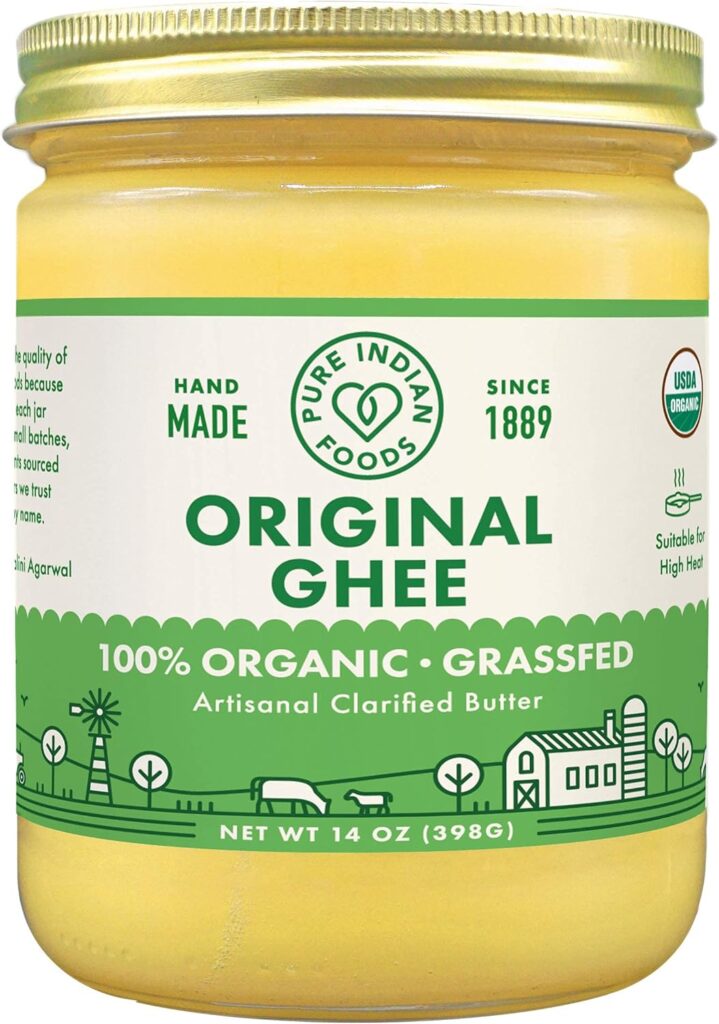
My first jar of grass-fed ghee was a disappointment. I’d been seeing ghee everywhere in the seed-oil-free crowd, finally pulled the trigger on the first brand I found at a health food store, and the flavor was overpowering. Almost gamey. A strong cheese-rind aftertaste that did not belong in scrambled eggs. I cooked with it twice, decided ghee wasn’t for me, and shoved the jar to the back of the cabinet.
It sat there for almost six months. Then a friend who actually cooks with ghee daily asked what brand I’d tried, made a face, and handed me a jar of 4th & Heart Original. Totally different product. Mild, buttery, faintly nutty. Worked the same way butter does in a pan, just without the burning. I made eggs that night and finally got it.
That’s the part nobody tells you about ghee: brand matters more than the category does. Some are clean and buttery and basically a butter upgrade. Others are heavy, cultured, almost cheese-like. Both are technically real ghee. They just deliver completely different flavors. If you start with the wrong one, you might write off the whole category like I almost did.
The other thing I learned in the deeper rabbit hole: when you start with grass-fed butter, ghee concentrates the parts that make pasture-raised dairy actually different. Vitamin K2. Butyrate. CLA. All real, all higher in grass-fed, all backed by published research, all worth a tiny bit more on the price tag.
Below are the five brands I now keep on my counter, sorted roughly mildest to most pronounced, plus what to look for on the label and how to tell the marketing from the real thing.
What makes ghee different from butter
Mostly the milk solids.
Butter is somewhere around 80% fat, 17% water, and 3% milk solids, which is mostly casein and whey proteins plus a little lactose. Those solids are the part that burns in a hot pan, and they’re the part most lactose-intolerant people react to. When you make ghee, you cook the butter long enough that the water evaporates and the milk solids settle out and brown. Strain those off and you’re left with the fat alone.
The practical fallout is the smoke point. Butter starts breaking down around 300 to 350°F. Pure butterfat holds up to 485°F. So if you’ve ever burned butter trying to sear a steak or get a real crust on chicken thighs, ghee just doesn’t have that problem. Hotter pan, more browning, no smoke alarm.
The other fallout is that lactose and casein are mostly gone with the solids. Most people who get bloated by butter or yogurt can eat ghee without issue. I’m not saying it’s safe if you have a real dairy allergy, the trace amounts can still bother sensitive people, but for everyday dairy intolerance it tends not to be a problem.
Flavor-wise, browning those milk solids on the way out leaves a nutty, slightly caramelized note in the finished ghee that you don’t taste in plain butter. Indian cooking has been doing this for thousands of years for a reason. It tastes like food, not like a stick out of a wrapper.
Why grass-fed specifically
Smaller deal than grass-fed beef, but still real.
The thing about grass-fed dairy is the cow ate the actual diet a cow evolved to eat. That changes the milk in a few measurable ways.
K2 is the headliner for me. Specifically the MK-4 form, which is dramatically higher in butter from grass-finished cows. K2’s job is sending calcium to your bones and teeth instead of letting it pile up in your arteries. The Rotterdam Study, which tracked over 4,800 adults for a decade, found that higher dietary menaquinone (K2) intake correlated with significantly reduced coronary heart disease mortality and aortic calcification.1 Grass-fed butter and ghee is one of the densest K2 sources you can actually buy in a regular grocery store.
Butyrate is the one I learned about more recently. It’s a short chain fatty acid that gets made when ruminants digest grass. Your own gut makes butyrate from fiber, and the cells lining your colon basically run on it.2 Whether eating preformed butyrate does the same thing as making your own is still a fair question, but the research has been leaning favorable.
CLA, the third one, is conjugated linoleic acid. The Dhiman group’s 1999 study in Journal of Dairy Science found that cows grazing pasture produced milk with around 500% more CLA than cows on grain-based diets.3 The human outcomes data on CLA is more mixed and I wouldn’t oversell it, but the preliminary signals around inflammation and body composition are at least interesting.
One thing you can see with your own eyes: grass-fed ghee is yellower. The beta-carotene from green forage shows up in the color, and you can tell side by side without doing any chemistry.
The premium for grass-fed is usually 20 to 50% over conventional ghee. For something you use a teaspoon at a time, that math is nothing. Just buy the grass-fed.
What to look for on the label
Five labels that mean something and a few that don’t.
“100% Grass-Fed”
The standard you actually want. The cows ate grass for their entire lives, including the winter (when grass-fed claims fall apart for some brands that grain-finish during cold months).
“Grass-Finished”
Specifically calls out the finishing diet, which is the period that matters most for the fat composition. Slightly stronger claim than just “grass-fed.”
“Pasture-Raised”
Means the cows had access to pasture but does not mean they were exclusively grass-fed. Some pasture-raised cows still get substantial grain in their diet. Not as strong a claim as 100% grass-fed.
Country of origin
Indian ghee is the traditional standard but quality varies wildly. New Zealand and Irish ghee tends to be reliably grass-fed because their dairy industry is largely pasture-based by default. American grass-fed ghee is improving rapidly.
Cultured vs uncultured
Cultured ghee is made from butter that was lacto-fermented before being clarified. The flavor is more pronounced. Some people find cultured ghee more digestible. Most ghee on Amazon is uncultured.
Things that don’t mean much
“Organic” is fine but separate from grass-fed. An organic grain-fed cow’s ghee is not particularly nutritious. Grass-fed without organic certification is more nutritious than organic without grass-fed.
“Ayurvedic” is mostly a marketing term in this category. Real Ayurvedic ghee preparation requires specific timing and methods that very few brands actually follow.
How to use ghee
If you’re new to cooking with ghee, the use cases are basically every cooking situation.
Sautéing: anything you’d do in butter or olive oil works in ghee, and the higher smoke point means you don’t have to baby the heat. Eggs: scrambled, fried, in an omelet. Ghee is the gold standard for eggs in my kitchen and I have not gone back to butter. Searing meat: hotter than butter can handle, so you get better browning without the burning. Roasting vegetables: melt a spoonful and toss with veg before going in the oven at 425°F. Bulletproof coffee or matcha: blend a teaspoon into hot coffee, the fat helps with sustained energy and a slower caffeine release. Spreading: melt it over toast, baked potatoes, popcorn. Baking: substitute 1:1 for butter in most recipes, especially anything that benefits from a nuttier flavor.
A jar of ghee lasts months at room temperature. You don’t need to refrigerate it. The water content is essentially zero, which means bacteria can’t grow. Just keep the lid clean and use a dry spoon.
Product recommendations
Five ghee brands that consistently deliver on the grass-fed claim and have been on my counter at one point or another. All are non-cultured unless noted. All are widely available on Amazon.
4th & Heart Original Ghee (the brand that mainstreamed ghee)
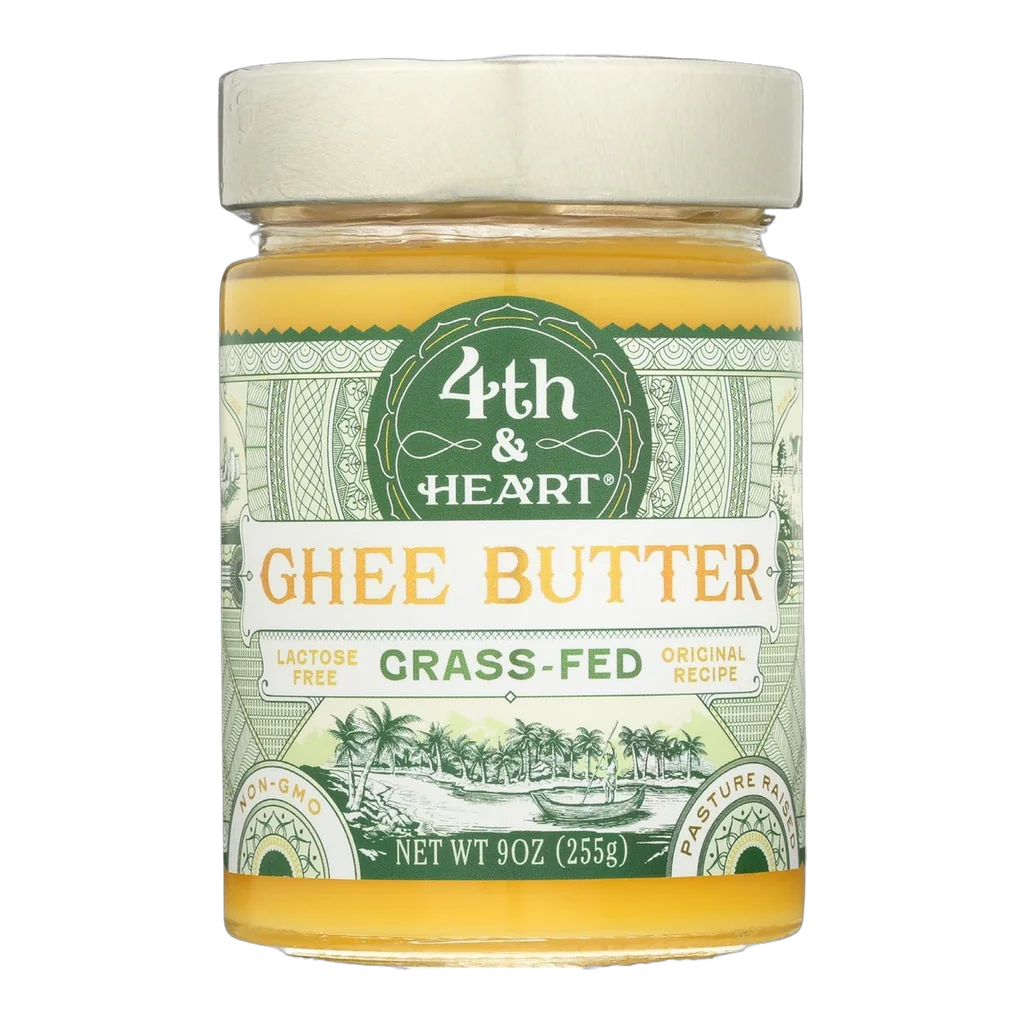
4th & Heart is what brought ghee mainstream. New Zealand grass-fed butter, made in California. The Original is what I’d recommend for first time buyers because it’s the closest to what conventional ghee tastes like. They also make Madagascar Vanilla, Himalayan Pink Salt, and a few culinary variants worth trying once you’re hooked. The jars are glass with metal lids, which is a small but meaningful detail in this category.
Source: New Zealand grass-fed butter, made in California.
Format: 9 oz glass jar, sold as a 6-pack on Amazon (about a year’s supply for a family of four).
Price: Around $81 for the 6-pack (under $14 per jar).
My take: Buy the 6-pack once and forget about it until next spring. The pack-of-six pricing is actually the cheapest way to buy 4th & Heart, since single jars at Whole Foods run $13 to $15 each.
Pure Indian Foods Grass-Fed Organic Ghee (the cultured gold standard)
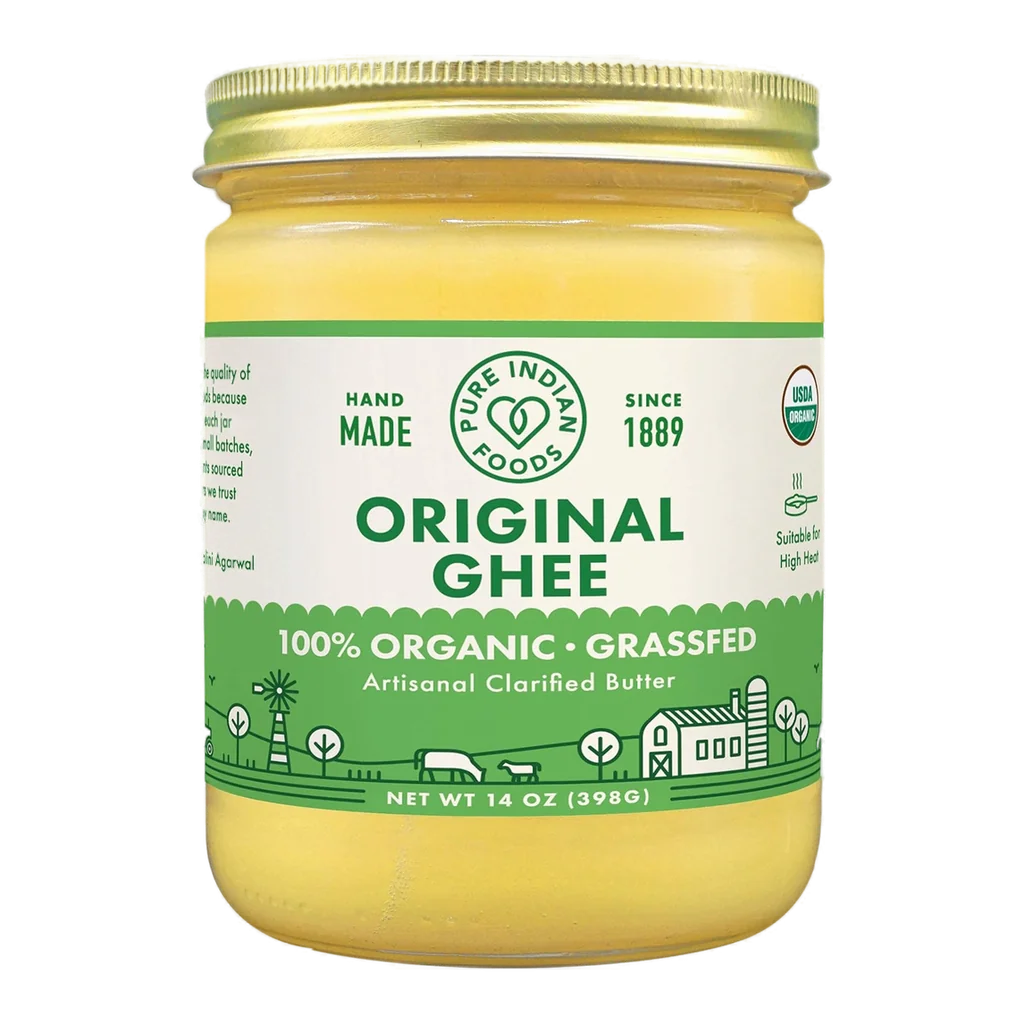
Pure Indian Foods is the small, family-owned brand that ghee enthusiasts often consider the gold standard. Made traditionally in small batches using cultured grass-fed butter from American grass-fed dairies. Certified organic. The flavor profile is more pronounced than 4th & Heart, with a deeper caramelized note from the cultured starter.
Source: American grass-fed butter, cultured, made in small batches.
Format: 14 oz glass jar.
Price: Around $26.
My take: If you want the most authentic Ayurvedic-style ghee experience, this is the brand. The trade off is price (substantially higher per ounce) and lower shelf availability outside Amazon.
Ancient Organics Ghee (the hand-stirred premium pick)
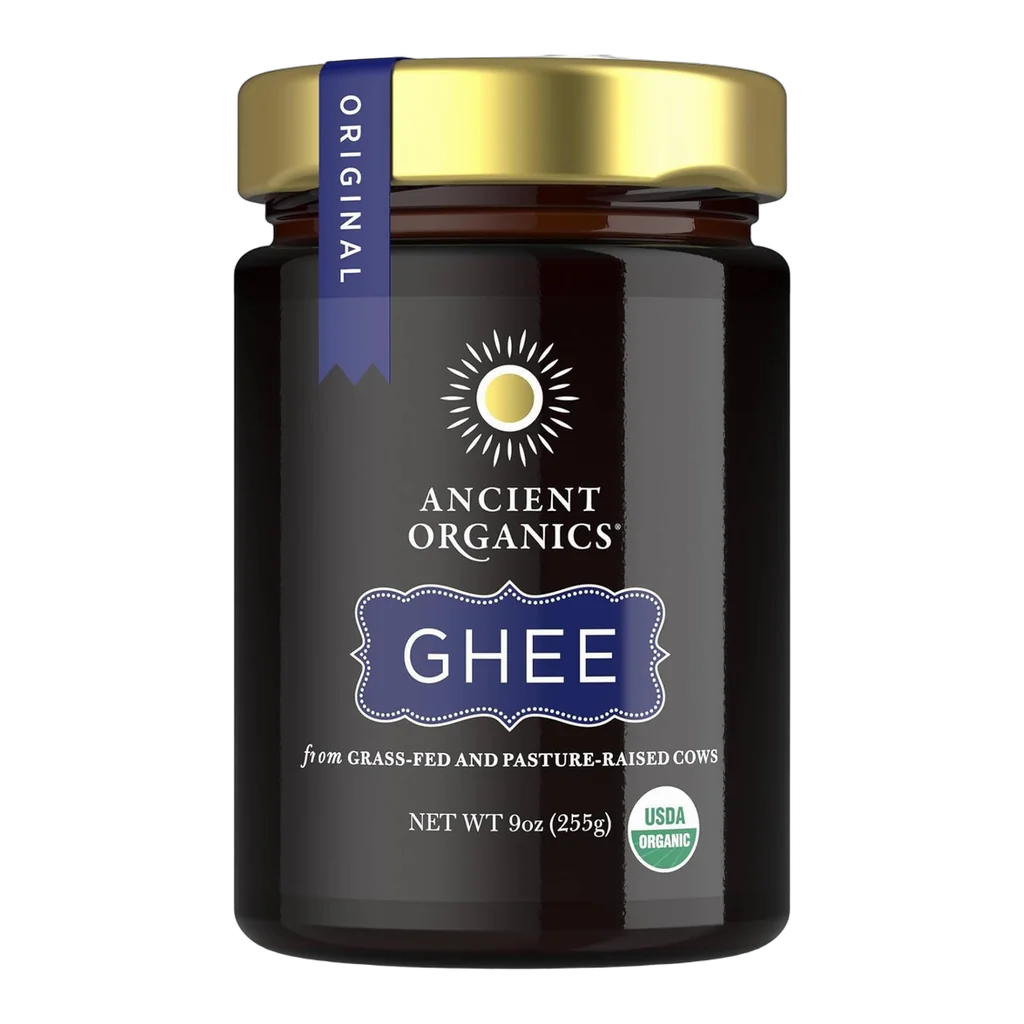
Ancient Organics is California-made, traditional Ayurvedic preparation, sourced from grass-fed cows. The brand has a cult following in the holistic and ancestral health communities and the quality justifies it. Cultured, hand-stirred during the simmer, packed in glass.
Source: California-made, traditional Ayurvedic preparation, grass-fed cows.
Format: 9 oz glass jar (single).
Price: Around $18.
My take: Compared to Pure Indian Foods, the flavor is slightly more delicate. Compared to 4th & Heart, it has more depth. If ghee is a daily staple in your kitchen, the experience is worth the upgrade.
Organic Valley Organic Ghee (the value pick)
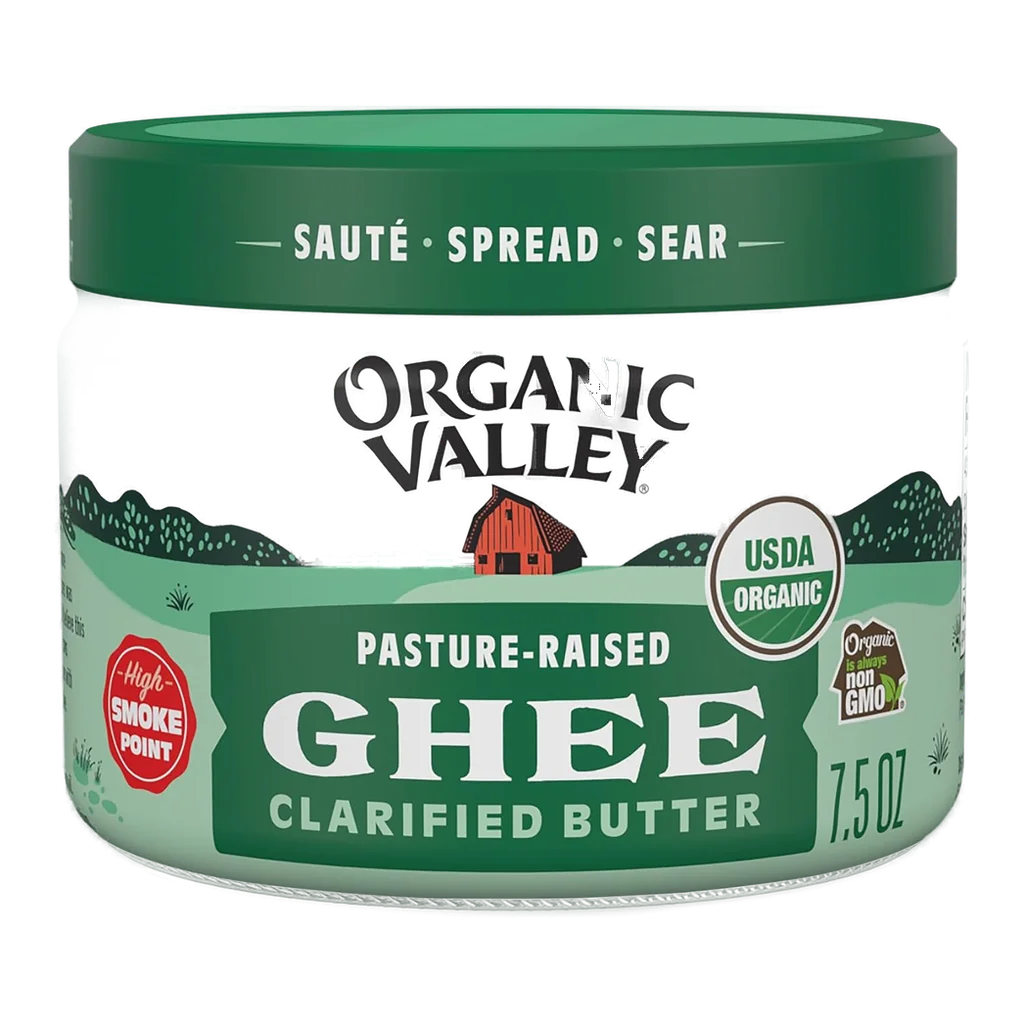
Organic Valley is the largest organic dairy cooperative in the US and they got into ghee a few years ago. Pasture-raised (not 100% grass-fed, but better than conventional), USDA organic, made from the same grass-fed butter line they sell in supermarkets.
Source: US-based dairy cooperative, pasture-raised, USDA organic.
Format: 7.5 oz glass jar.
Price: Around $15.
My take: The price point is significantly lower than the artisanal options and the quality is reliably good for everyday cooking. If you’re using ghee three times a day and need a workhorse jar that won’t bankrupt you, this is the value pick.
Bulletproof Grass-Fed Ghee (the bulletproof coffee crowd’s pick)
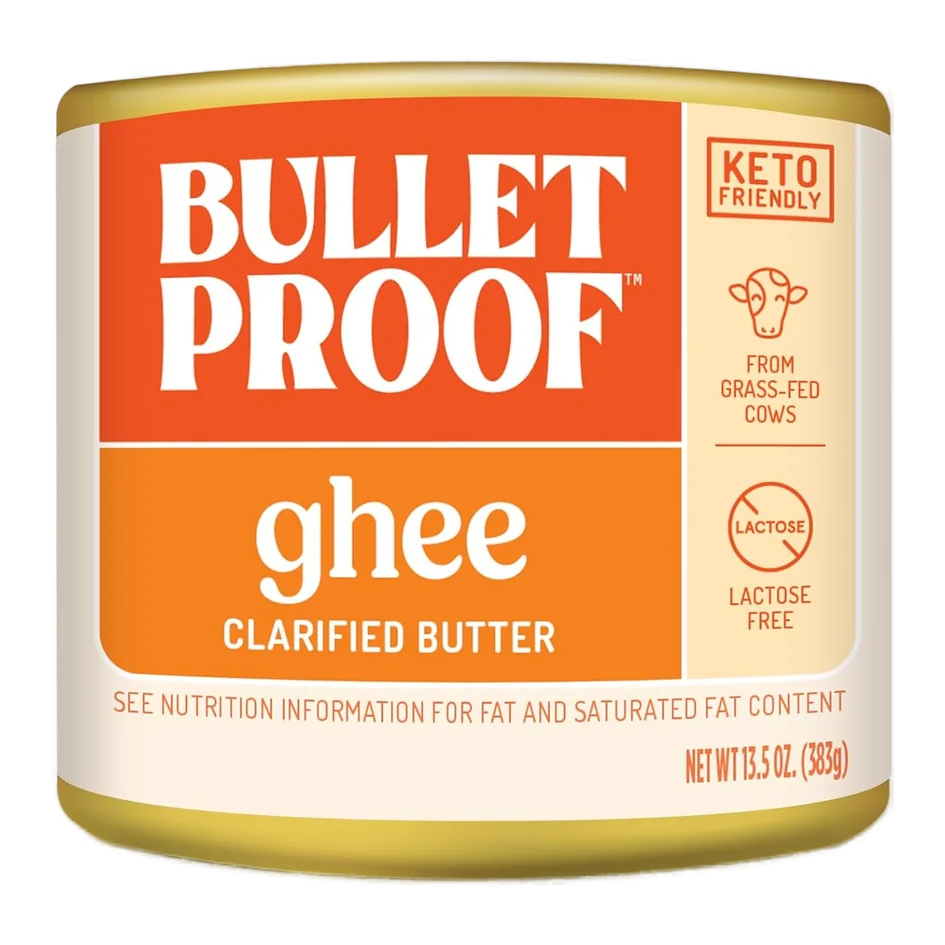
Bulletproof’s ghee comes from grass-fed cows in New Zealand, made traditionally with the milk solids fully removed. This is the brand most people associate with bulletproof coffee, and the formulation is optimized for blending into hot drinks (very smooth, no graininess). The flavor is mild and clean compared to cultured ghees.
Source: New Zealand grass-fed butter.
Format: 13.5 oz glass jar.
Price: Around $25.
My take: Premium pricing, but the brand reliability is consistent. If you’re already buying other Bulletproof products, the ghee fits the ecosystem. Otherwise, 4th & Heart costs less for similar quality.
What I use
My actual rotation:
- 4th & Heart Original on the counter for daily cooking
- Pure Indian Foods for the occasional treat or when guests are eating with me and I want them to taste the difference
- Organic Valley as the bulk option when 4th & Heart is out of stock
I keep one large jar in active use and a backup in the cabinet. A 16 oz jar lasts our family of four roughly two months.
FAQ
Is ghee dairy free?
Mostly. The clarification process removes lactose and casein, which are the two compounds that cause most dairy intolerance. For people with mild lactose intolerance, ghee is essentially safe. For people with severe casein allergies or true dairy allergies, the trace amounts that remain can still cause reactions in sensitive individuals. If you have a confirmed dairy allergy, test cautiously with a small amount.
How is ghee different from clarified butter?
Same fundamental product, slightly different process. Clarified butter is butter with the water and milk solids skimmed off. Ghee is clarified butter that has been simmered longer, allowing the milk solids to brown before being strained. The longer simmer gives ghee its nutty, toasted flavor. Clarified butter is more neutral.
Does ghee need to be refrigerated?
No. The water and milk solids that cause butter to spoil have been removed. A sealed jar of ghee is shelf-stable for over a year. Once opened, keep the lid clean and use a dry spoon (no water or food contamination) and it will last six months or more at room temperature. Refrigeration is not harmful but causes the ghee to harden.
Is ghee better for cooking than olive oil?
Different tools for different jobs. Ghee is better for high heat cooking (above 400°F) because olive oil starts to oxidize at those temperatures. Olive oil is better for cold applications and low to medium heat where you want the polyphenols intact. A well stocked kitchen has both.
Why does ghee turn solid in the jar?
Ghee is a saturated fat and solidifies at room temperatures below about 70°F. This is normal. To use, just scoop with a spoon. The solid form is actually what most Indian cooks prefer because it makes precise measurement easier.
Can I make ghee at home?
Yes, easily. Take a pound of unsalted grass-fed butter (Kerrygold works well), simmer it on low heat for 20 to 30 minutes, watching for the milk solids to settle and brown at the bottom of the pan. Strain through cheesecloth into a glass jar. Total cost is about half what good ghee costs commercially. The trade off is the time and the smoke from the simmering.
What about the saturated fat?
Ghee is approximately 60% saturated fat. This used to be considered a dietary villain. The current consensus, after decades of research, has shifted. A 2010 meta-analysis covering 347,747 subjects across 21 studies found no significant association between saturated fat intake and cardiovascular disease.4 A 2015 systematic review in the BMJ reached the same conclusion.5 The seed oil heavy industrial diet that replaced traditional fats is a much bigger concern in the current research. If you’re worried, ghee is a reasonable component of a balanced diet, not a daily 4-tablespoon supplement.
The bottom line
Ghee is the cooking fat that bridges the gap between butter (great flavor, low smoke point) and tallow (high smoke point, heavy flavor). It does almost everything well. The grass-fed versions concentrate the K2, butyrate, and CLA that make pasture based dairy nutritionally distinct.
4th & Heart is the no drama starter for most people. Pure Indian Foods is the cultured upgrade. Organic Valley is the value option. Ancient Organics is the splurge. Bulletproof is the brand loyalty pick if you’re already in their ecosystem.
A jar lasts months. The shelf stability is hard to overstate when you’re used to managing butter expiration. Once ghee is on your counter, butter starts to feel like the inconvenient option.
References
The claims about K2, butyrate, CLA, and saturated fat above are drawn from peer-reviewed research. The studies most directly relevant:
- Geleijnse JM, Vermeer C, Grobbee DE, et al. Dietary intake of menaquinone is associated with a reduced risk of coronary heart disease: the Rotterdam Study. J Nutr. 2004 Nov;134(11):3100-5. PubMed
- Hodgkinson K, El Abbar F, Dobranowski P, et al. Butyrate’s role in human health and the current progress towards its clinical application to treat gastrointestinal disease. Clin Nutr. 2023 Feb;42(2):61-75. PubMed
- Dhiman TR, Anand GR, Satter LD, Pariza MW. Conjugated linoleic acid content of milk from cows fed different diets. J Dairy Sci. 1999 Oct;82(10):2146-56. PubMed
- Siri-Tarino PW, Sun Q, Hu FB, Krauss RM. Meta-analysis of prospective cohort studies evaluating the association of saturated fat with cardiovascular disease. Am J Clin Nutr. 2010 Mar;91(3):535-46. PubMed
- de Souza RJ, Mente A, Maroleanu A, et al. Intake of saturated and trans unsaturated fatty acids and risk of all cause mortality, cardiovascular disease, and type 2 diabetes: systematic review and meta-analysis of observational studies. BMJ. 2015 Aug 11;351:h3978. PubMed