The Healthiest Oils for Frying (and Which Ones to Skip)

Your smoke point obsession is probably costing you thousands in unnecessary replacements. Here’s what actually matters.

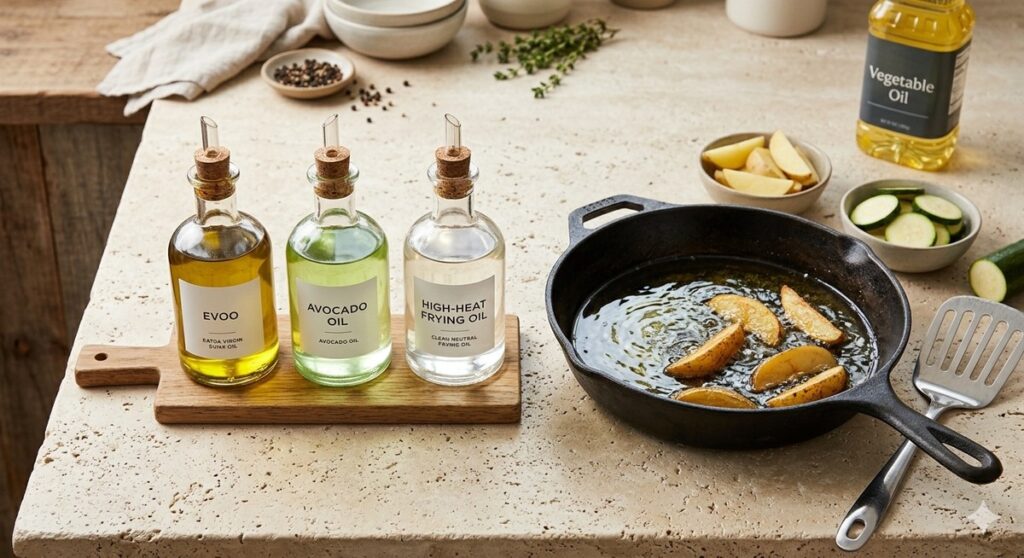
The healthiest oils for frying laid out on a kitchen counter

In This Article

How I Learned This the Hard Way

Three years back, I ruined a batch of chicken cutlets so badly my wife still brings it up. Some guy on YouTube said avocado oil could handle 500 degrees. So naturally I cranked my burner to high, tossed in the cutlets, and went to go check on my kid for two minutes. Came back to a kitchen so full of smoke the detector was screaming. Food went straight in the trash.

Now, was it the oil’s fault? Honestly, no clue. Maybe I grabbed a bad bottle. Maybe the burner was too hot for too long. I’ll never know for sure. But here’s what bugged me: the label said 500°F smoke point and I was well under that. The whole “high smoke point equals safe frying” thing that every cooking blog parrots? It clearly wasn’t the full picture.

That’s when I fell down the rabbit hole. Actual published studies, not the recycled blog advice that just copies other blog advice. What I found surprised me. The smoke point on the bottle barely tells you anything useful about how an oil behaves when you cook with it.

Why Smoke Point Isn’t the Whole Story

Smoke point is just the temperature where oil starts visibly smoking. Most people see a high number and think “safer frying.” That logic is completely backward.

Chemical breakdown kicks in way before you see any smoke. Oxidation, polymerization, all of it starts the second oil gets hot. By the time smoke appears, you’ve been cooking with degraded oil for a while. What you should actually care about is oxidative stability: how well an oil holds its molecular structure when you throw heat, oxygen, and time at it. Tallow? Rock solid for hours. Soybean oil? Falls apart in minutes. Same temperature, wildly different results.

The gap comes down to fatty acid composition. Saturated fats barely react to heat. Polyunsaturated fats, or PUFAs (soybean, corn, sunflower), oxidize fast and spit out aldehydes and polar compounds. Those are the actual villains. Not the smoke point number on the label. Find an oil that stays chemically intact when you heat it. That’s the question that actually matters.

The Big Oil Comparison

Oil Smoke Point Stability PUFA % Reusable? Verdict
Tallow 400-420°F Excellent 2-3% 8+ uses Best choice overall
Lard 370-400°F Excellent 10% 6+ uses Great for everything
Algae Oil 535°F Excellent 2-4% 8+ uses Highest stability
Avocado Oil 480-500°F Very Good 10-15% 5-7 uses Solid second choice
Ghee 450°F Excellent 5% 8+ uses Great for high-heat
Extra Virgin Olive Oil 350-410°F Good 10% 4-6 uses Medium heat only
Peanut Oil 440-450°F Moderate ~32% 2-4 uses Borderline, okay for occasional use
Coconut Oil 350-375°F Good 2% 8+ uses Flavor gets old
Soybean Oil 450°F Poor ~56% 1-2 uses High PUFA, degrades fast under heat
Corn Oil 450°F Poor ~53% 1-2 uses High PUFA despite decent smoke point
Sunflower Oil (linoleic) 440°F Poor ~64% 1-2 uses Very high PUFA, oxidizes quickly
Safflower Oil (linoleic) 510°F Poor ~73% 1-2 uses Highest PUFA on this list
Grapeseed Oil 420°F Poor ~69% 1-2 uses Very high omega-6 content
Cottonseed Oil 420°F Poor ~50% 1-2 uses Common in processed foods
Canola Oil 400°F Poor ~28% 1-2 uses Lower PUFA than most seed oils, still oxidizes
Rice Bran Oil 450°F Poor ~34% 1-2 uses Moderate PUFA, marketed as healthy
Sesame Oil 410°F Poor ~41% 1-2 uses Better as a finishing oil
Flaxseed Oil 225°F Very Poor ~68% Never fry Not a frying oil at all
Hempseed Oil 330°F Very Poor ~76% Never fry Not a frying oil at all
Pumpkin Seed Oil 320°F Poor ~46% Never fry Finishing oil only
Mustard Oil 480°F Poor ~21% 1-2 uses Contains erucic acid, restricted in some countries

What is PUFA? PUFA stands for polyunsaturated fatty acid. These are fat molecules with multiple double bonds in their carbon chain, which makes them chemically reactive. When you heat a high-PUFA oil, those double bonds break apart and form aldehydes, polar compounds, and other byproducts you don’t want in your food. Lower PUFA generally means the oil holds up better under heat. That said, PUFAs aren’t evil in a nutritional context. The American Heart Association and multiple clinical reviews note that replacing saturated fat with polyunsaturated fat (including linoleic acid) can improve LDL cholesterol markers. The issue here is specifically about frying stability, not whether PUFAs belong in your diet at all.

Key Insight: Notice how soybean, safflower, and sunflower oil have respectable smoke points but are marked as “Poor” stability? That’s the trap. High smoke point means nothing if the oil degrades chemically before it visibly smokes. You’re getting hit with aldehydes and polar compounds long before you see a wisp. PUFA % tells you more about frying performance than smoke point ever will.

What Actually Happens When You Overheat Oil

Push an oil past its stability limit and things go south fast. Three problems show up, and none of them are good.

Aldehydes come first. You know that sharp, acrid, “something is burning wrong” smell? That’s aldehydes. They form when unsaturated fatty acid chains crack apart under heat. They irritate your lungs, they make food taste bitter, and they accumulate in the oil over time. A 2025 NMR study tested olive oil against sunflower oil at 190°C. Sunflower had the higher smoke point. Olive oil produced far fewer aldehydes. Smoke point didn’t predict the outcome at all.

Worse, PUFAs start cranking out aldehydes within about ten minutes of frying. You won’t notice because you’re watching the food. But the chemistry is happening whether you see it or not.

Polar compounds are the second problem. These are oxidized molecules that build up in the oil with every frying round. There’s a magic number here: 25%. When polar compounds hit a quarter of the oil’s total composition, that oil is considered genuinely hazardous. Carcinogenic territory. Cheap seed oils can blow past that mark after one or two uses. Tallow? I’ve reused it a dozen times and it barely budges.

Third is polymerization, which is when oil molecules start bonding together into a sticky, thick mess. You’ll notice it as a varnish on your pan, a weird tackiness in the oil, or flavors from last week’s fish showing up in tonight’s chicken. Seed oils polymerize quickly. Animal fats barely do it at all.

Bottom line: the difference between a good frying oil and a bad one isn’t smoke point. It’s whether the oil keeps its act together at the molecular level or turns into a toxic stew.

The Best Oils for Frying (And Why)

1. Tallow (Beef Fat)

My default. I fry almost everything in tallow now and it’s kind of hard to go back. Rendered beef fat sounds old-fashioned until you actually cook with it.

The PUFA content is something like 2-3%, which is basically nothing. There’s hardly any fat in there that wants to react with heat. My thermometer usually reads 400-420°F when tallow starts smoking, and that range covers literally every frying job I’ve ever done at home. Same batch, strained between uses, going strong after months. No weird smells, no off tastes, nothing.

The food situation is worth mentioning too. Something about tallow makes fries taste like they did when I was a kid. There’s this underlying richness you don’t get from plant oils. Chicken comes out crispier on the outside, juicier inside. Fun fact: McDonald’s used beef tallow for their fries until the anti-saturated-fat wave hit in the 80s. Ask anyone old enough to remember the difference.

Yeah, it costs more upfront than a jug of canola. But you reuse it so many times that the per-session cost ends up lower. A five-pound tub lasts me months.

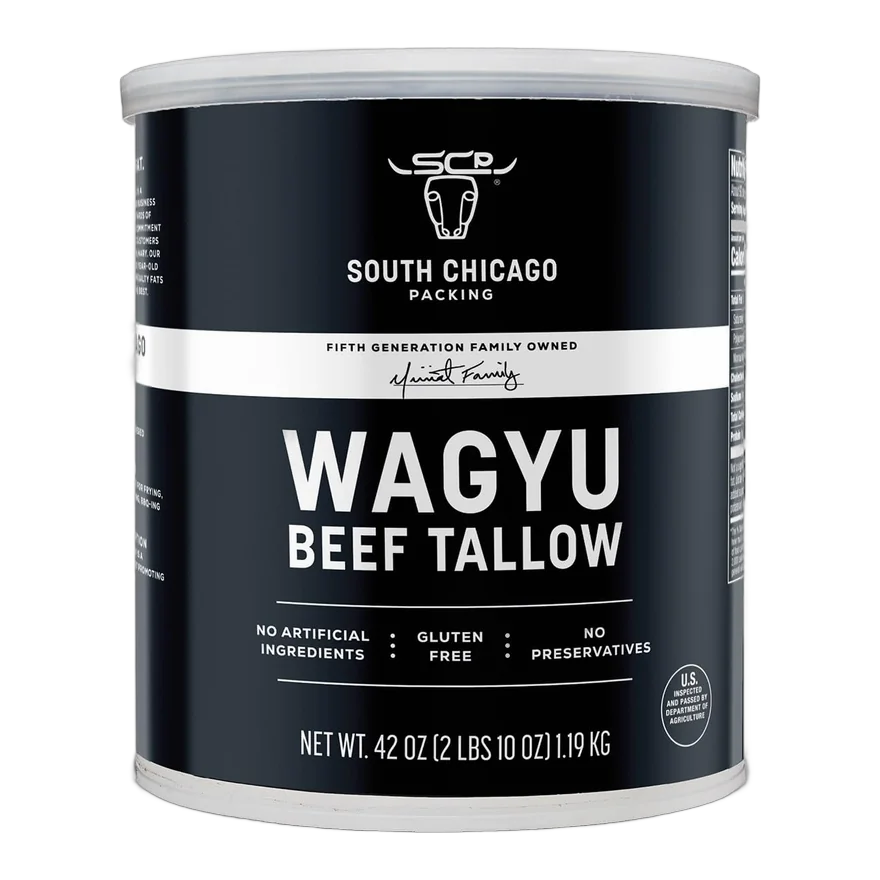
I buy Fatworks Tallow most of the time and also South Chicago Packing Wagyu Beef Tallow. The wagyu beef tallow is very economical and note, it’s American raised wagyu, not the actual Japanese wagyu. Grass-fed beef, nothing else in it. Simple products that just work.

2. Avocado Oil (Refined, Not “Light”)

If animal fat isn’t your thing, go here. Refined avocado oil is the best plant-based option for frying by a wide margin.

One thing that trips people up: you need the refined version. I cannot stress this enough. The bottles labeled “extra virgin” or “cold-pressed” still have reactive compounds in them that break down under serious heat. Refined avocado oil has been cleaned up. Neutral flavor, can take 480-500°F, no drama.

PUFAs land somewhere between 10-15%. Not tallow territory, but way better than any seed oil out there. I typically get five, sometimes seven frying rounds before the oil starts looking tired. For a plant-based option? That’s genuinely impressive.

Taste-wise it basically disappears, which is what you want. Your fried chicken should taste like fried chicken, not like the oil you cooked it in. Runs about the same price as a decent bottle of olive oil.

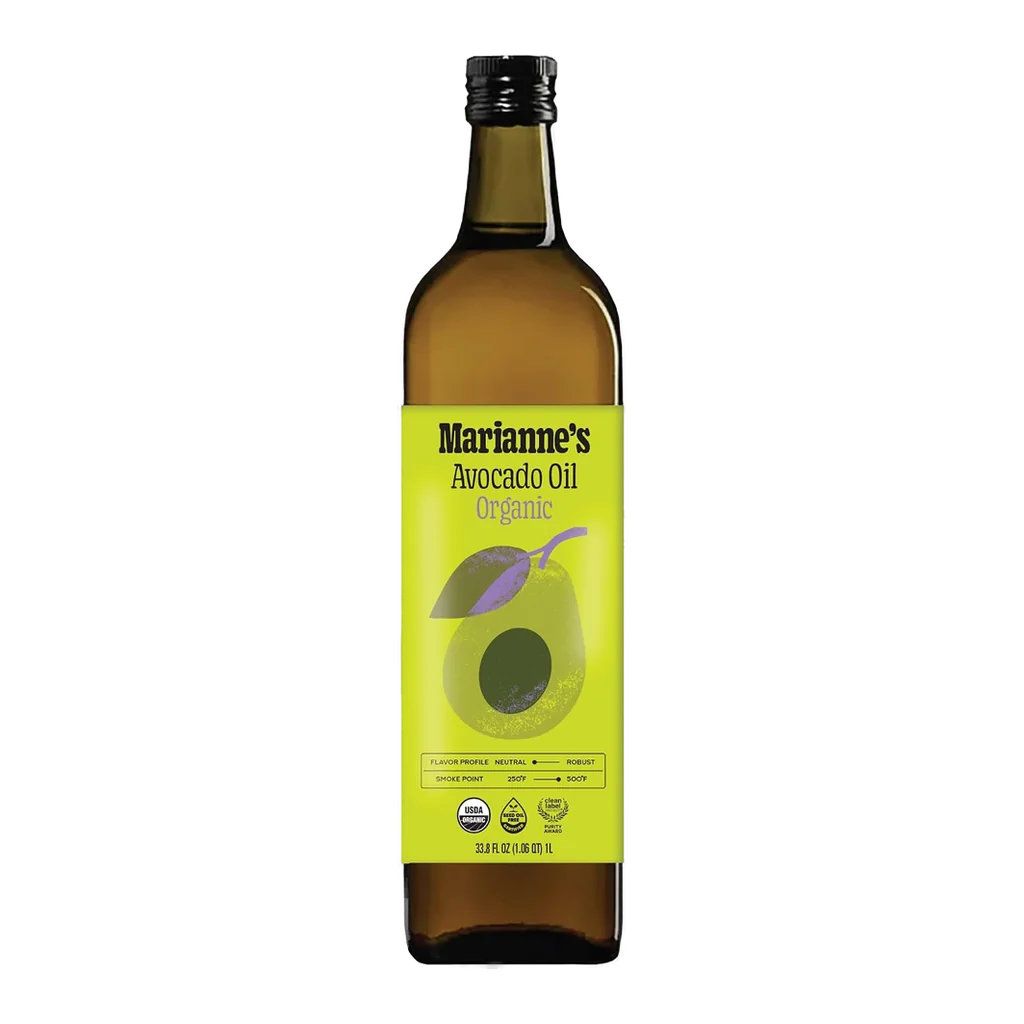
I keep Chosen Foods in the pantry. Clean label, no mystery ingredients, and every bottle I’ve bought has been consistent.

3. Algae Oil (The Underdog)

Nobody talks about algae oil and that bugs me because it’s probably the most impressive frying oil from a pure numbers standpoint.

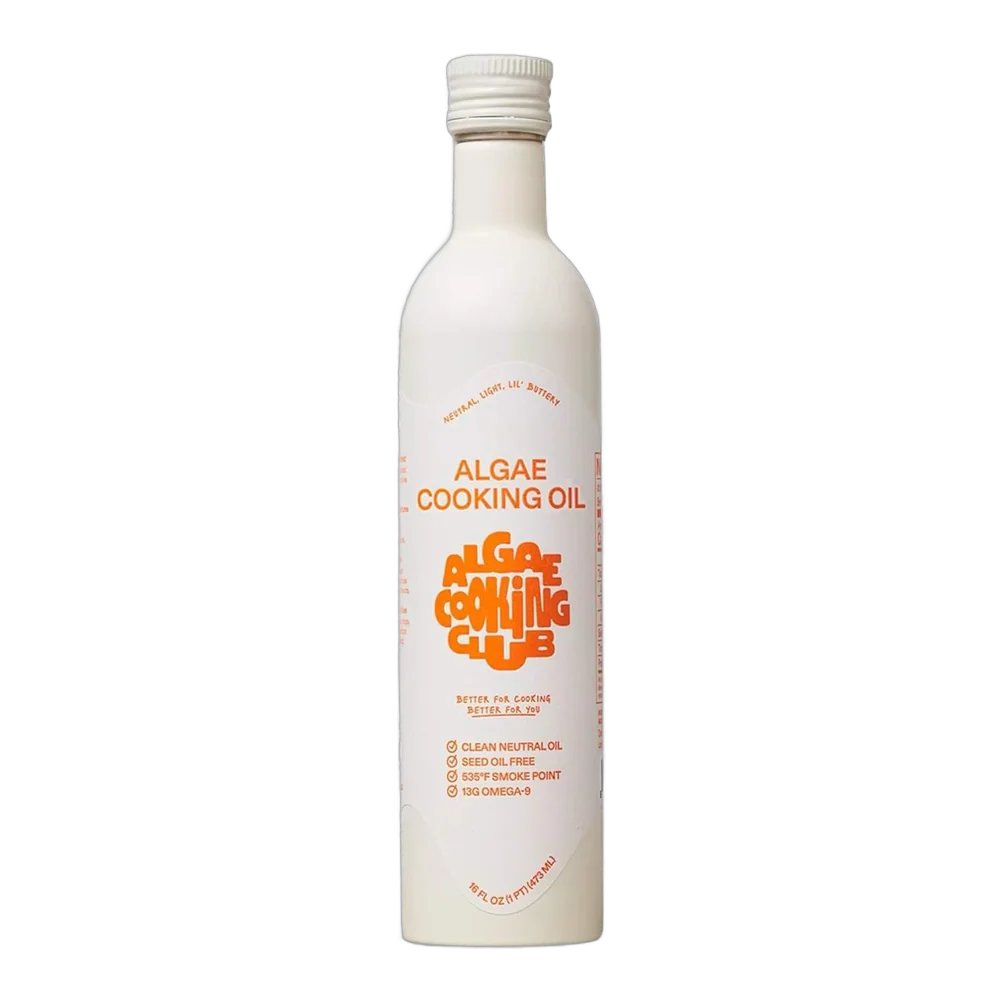
535°F smoke point. Two to four percent PUFA. Oxidative stability that laps avocado oil three to five times over. I’ve personally reused algae oil eight-plus times with zero flavor issues. If tallow is the old-school champion, algae oil is its lab-engineered successor.

One problem: your wallet will feel it. Algae oil costs a lot more per bottle than tallow or avocado, so filling a Dutch oven for deep frying doesn’t make much financial sense. Where it really shines is high heat pan cooking indoors. Searing steaks, stir fry, anything where you want screaming hot temps without filling your kitchen with smoke. That 535°F ceiling means you can push the heat further than any other oil without consequences. I keep a bottle specifically for stovetop work where I need max temperature and zero smoke.

The brand I use is Algae Cooking Club. They sell a 2-pack with squeeze tips that’s perfect for precise oil control. I keep one by the Blackstone outside and the other in the kitchen. They also have a larger bottle if you go through it faster.

4. Ghee (Clarified Butter)

Take butter. Remove all the water and milk solids. What’s left is pure butterfat, and it handles heat like a champ.

Gets up to 450°F before smoking. Only about 5% PUFA. You can fry with the same ghee seven or eight times without it falling apart. The one thing to know is that ghee tastes like butter. Rich, nutty, unmistakable. That’s fantastic for savory stuff like fried potatoes or chicken thighs. Less ideal for donuts or tempura where you want the oil to stay invisible.

Easy to find at any grocery store, costs about the same as decent olive oil, and honestly makes food taste great. If you’re into that buttery richness in your fried food, there’s really no reason not to use it.

The Olive Oil Myth That Won’t Die

At some point the internet collectively decided that heating olive oil is basically poison. Every cooking forum, every health influencer: “Never heat olive oil!” Millions of people threw out perfectly good oil because of this.

It’s nonsense.

Researchers ran an NMR study in 2025 pitting olive oil against sunflower oil at 190°C (about 375°F). Sunflower has the bigger smoke point number. Olive oil produced way fewer aldehydes. They also ran continuous frying at 180°C for over 24 hours and olive oil’s polar compounds barely moved. Sunflower’s went through the roof.

People see olive oil’s low smoke point and assume fragile. But low smoke point and poor oxidative stability aren’t the same thing. Olive oil resists oxidation well because most of its fat is monounsaturated, and it’s loaded with polyphenols that work as built-in antioxidants. The smoke point is low, sure. The actual chemical stability? Way higher than you’d expect.

Now, extra virgin is a different conversation. EVOO hasn’t been refined, so cranking the heat will damage some of the delicate compounds that make it special. Regular refined olive oil though? Pan-fry at 375-400°F all day long. No issues.

The practical downside is cost. Olive oil runs more expensive than tallow and degrades faster, so for repeated deep-frying sessions it’s not the smartest buy. For a quick pan-fry or a one-off high-heat cook? Totally fine. You’re not hurting yourself. The whole scare is based on a misunderstanding of what smoke point actually tells you.

How Many Times Can You Actually Reuse Oil?

Most people I talk to about frying think reusing oil is disgusting. They pour it down the drain after a single batch of fries and buy a fresh bottle next time. These same people complain that frying at home is too expensive. Wonder why.

How many rounds you get out of a batch depends on two things: the oil’s stability profile and what you’re cooking in it. Breaded foods shed crumbs that char and accelerate breakdown. Plain foods like potatoes or whole chicken pieces are much gentler on the oil. Here’s how it shakes out:

Oil Type Reuse Count (Non-Breaded) Reuse Count (Breaded/Battered) Storage Method
Tallow 8+ times 5-6 times Cool, strain, refrigerate
Lard 6+ times 4-5 times Cool, strain, refrigerate
Algae Oil 8+ times 5-6 times Cool, strain, cool place
Avocado Oil 5-7 times 3-4 times Cool, strain, cool place
Ghee 7+ times 5-6 times Cool, strain, refrigerate
Seed Oils (Soybean, Canola, Etc.) 1-2 times Never reuse Not recommended

Do the math on seed oils and it gets ugly fast. An $8 bottle of canola that you dump after two uses costs more per session than a $25 tub of tallow that lasts three months. People think they’re saving money buying cheap oil. They’re actually spending double or triple over time.

Storage is the other piece. Let the oil cool down completely, strain it through a fine mesh or cheesecloth to get the food bits out, and put it somewhere cool. Tallow and ghee go in the fridge. Avocado oil does better in a dark pantry. You’re basically trying to keep oxygen and light away from it between uses.

What I Actually Fry With

Affiliate Disclosure
The links below are affiliate links. If you buy through them, I earn a small commission at no extra cost to you. I only recommend products I actually use and trust.

Here’s what’s in my kitchen right now:

Fatworks Grass-Fed Beef Tallow jar

Fatworks Grass-Fed Beef Tallow

This is the one I reach for 90% of the time. Dutch oven full of this stuff, drop in whatever needs frying. Fries, fried chicken, tempura when I’m feeling ambitious, even donuts once. The grass-fed sourcing matters because the fat composition is cleaner than grain-fed versions, and you can sort of taste it in a subtle way.

Buy on Amazon

South Chicago Packing Co. Wagyu Tallow container

South Chicago Packing Co. Wagyu Tallow

The splurge option. I pull this out for special dinners or when I want fries that’ll make people ask what I did differently. The fatty acid profile is even cleaner than regular grass-fed tallow. Costs more, tastes noticeably better. Worth it for occasions.

Buy on Amazon

Chosen Foods 100% Pure Avocado Oil bottle

Chosen Foods Avocado Oil

My plant-based backup. Refined, not extra virgin. Stays out of the way flavor-wise, holds up through multiple uses, and handles high temperatures without drama. I reach for it less than tallow but always keep a bottle around.

Buy on Amazon

California Olive Ranch Extra Virgin Olive Oil bottle

California Olive Ranch Extra Virgin Olive Oil

I don’t fry with this. It lives on the counter for finishing dishes, sauteing vegetables at moderate temperatures, and drizzling over stuff where that grassy olive taste actually adds something. If you need high heat, swap to refined. But this particular EVOO from California? Solid product, real olive flavor, not the watered-down import stuff.

Buy on Amazon

Why I Don’t Use Seed Oils

Canola, soybean, sunflower, corn. I barely touch any of them anymore. Not because I think they’re the devil incarnate. But once you do the actual cost-per-session math, it stops making any sense to buy them. Cheap per bottle, expensive per use. You’re tossing them after one or two rounds while tallow sits in your fridge waiting for round ten.

There’s also the whole aldehyde situation. Heat seed oils and they start spitting out oxidation byproducts that, frankly, you don’t want accumulating in your food. The research backing this up has gotten pretty hard to argue with. And I notice it in my own body too. When I go overboard on restaurant fried food like wings and fries (all cooked in seed oils), I tend to get more inflamed. You can literally see it on my face the next morning. Could be the salt, could be the sheer volume of food, but it only happens with the seed oil stuff. So why bother? Tallow tastes better, costs less over time, and doesn’t fill your kitchen with acrid smoke. Seems like an easy call.

Store It Right: Oil Containers With Strainers

If you read the reuse section above, you already know that most good frying oils can go five to ten rounds before they degrade. That means every time you dump oil after a single use, you’re literally pouring money down the drain. A decent strainer container pays for itself after two or three frying sessions. Pour your oil in while it’s still warm, the built-in mesh catches all the crumbs and sediment, and the oil sits clean and ready for next time. Simple upgrade, big savings over a few months.

Cook N Home 3.5 Qt stainless steel oil container with strainer

Cook N Home Stainless Steel Oil Container with Strainer, 3.5 Qt

This is the one to get if you do any serious deep frying. The 3.5 quart capacity is large enough to hold a full batch of oil from a Dutch oven. 18/10 stainless steel, fine mesh strainer that actually catches small particles, and a pour spout that doesn’t dribble everywhere. It’s built like a real kitchen tool, not a flimsy gadget. Probably the most popular oil container on Amazon for a reason.

Check price on Amazon

Aulett Home 40oz bacon fat container with strainer

Aulett Home Bacon Fat Container with Strainer, 40 oz

Solid mid-size option if you’re mostly doing pan frying or smaller batches. 40 ounces is plenty for a skillet’s worth of tallow or avocado oil. The strainer mesh is finer than most competitors, which matters if you’re frying breaded stuff that leaves tiny crumbs behind. Compact enough to tuck into the fridge door without rearranging everything. Thousands of reviews, consistently high marks.

Check price on Amazon

Chihee 2L 68oz stainless steel grease container with strainer

Chihee Stainless Steel Grease Container, 2L (68 oz)

Good balance between the other two. 68 ounce capacity handles most frying jobs, the removable mesh strainer cleans up easily, and it comes with a dust-proof lid and anti-slip coaster tray that keeps it from sliding around in the fridge. 304 stainless steel, so it won’t corrode or hold onto old flavors. If you’re not sure what size to get, this one covers the middle ground well.

Check price on Amazon

Your Oil Questions, Answered

Is ghee okay for people with dairy intolerance?

Usually, yeah. The whole clarification process cooks off the water and strips away milk solids, which is where the lactose hangs out. You end up with basically just fat. My neighbor is lactose intolerant and she cooks with ghee all the time, no problems. But here’s the catch: if your issue is an actual milk protein allergy rather than lactose, there could be trace casein left behind. Not a ton, but enough to matter. Start with a tiny amount and see how your body reacts before committing to a full batch of fried potatoes.

Can I mix oils when frying?

I mean, nobody’s stopping you, but it rarely helps. Think of it like a chain: the whole thing is only as strong as the weakest link. Throw some soybean oil into your tallow and congratulations, you now have tallow that degrades at the rate of soybean oil. The only scenario where mixing makes sense is combining two equally stable fats for flavor reasons. Tallow and ghee together, for instance, gives you this insanely rich frying medium. But mixing good fat with bad fat? You’re just wasting money on the good stuff.

How do I know when to stop reusing oil?

Honestly, you’ll know. Open the container and take a whiff. Rancid oil has this sharp, musty, “something died” smell that’s impossible to miss. Visual cues work too: if the oil turned dark brown, feels thick like syrup, or you can’t strain out the crud no matter what you do, it’s done. Some people buy polar compound test strips for a more scientific answer, and those work great. But for everyday home cooking, the sniff test has never let me down.

Is it true that I shouldn’t heat olive oil at all?

Already busted this one in the section above. Short version: refined olive oil is fine on the stovetop up to about 375°F. The whole “never heat olive oil” thing is based on confusing smoke point with stability. Save the fancy EVOO for drizzling over salads. But regular refined olive oil? Cook with it all you want.

What about palm oil?

Purely looking at the chemistry, palm oil is actually decent. Mostly saturated, similar stability to coconut oil. The problem isn’t the fat. Palm plantations have wiped out huge stretches of rainforest in Southeast Asia. Orangutans, tigers, you name it, so I try to avoid it. Tallow and avocado oil match its stability profile without that baggage. If you’re wondering about coconut oil and MCT oil, those are a different story. Coconut palms are mostly grown by smallholder farmers in the Philippines, Sri Lanka, and India, not the same monoculture situation. Just make sure your MCT oil says “from coconut” on the label.

If tallow is so good, why did restaurants stop using it?

Blame the farm bill. The US government subsidizes soybean and corn production so heavily that the oil practically gives itself away at scale. A restaurant chain can get seed oil for pennies per gallon compared to rendering tallow. Then pile on the saturated-fat hysteria from the 70s and 80s, when Ancel Keys and the American Heart Association basically declared animal fats a public health enemy. Restaurants didn’t want the PR headache, so they switched to “heart-healthy” vegetable oils. We spent the next forty years eating worse food while thinking we were being responsible. The tide is turning though. Robert F. Kennedy Jr. has been pushing to bring back tallow for frying, and Steak ‘n Shake has already jumped aboard. A handful of other restaurants have quietly made the switch too. Their customers can tell immediately.

Can I use the same oil for frying fish and chicken?

You already know the answer to this. If you fry fish first then fry chicken tenders, your kids will ask why their tendies taste like fish sticks. Fish flavor clings to oil like nothing else. If you’re doing both in the same session, always fry the mild stuff (chicken, potatoes, veggies) first, then finish with fish. Or just keep a dedicated container of oil for seafood. Same goes for anything with a lot of cumin, chili, or other strong spices.

Ready to Stop Wasting Money on Bad Oil?

Get more practical guides to food and health in your inbox. No marketing noise, just actual research and kitchen experience.

The Verdict: Smoke point is a distraction. Oxidative stability is what actually keeps your food safe and your oil usable. Grab a tub of tallow or a bottle of refined avocado oil, reuse it until it tells you it’s done, and you’ll spend less money while eating better food. Pick up a container with a built-in strainer to make reusing oil dead simple. Ditch the seed oils. They cost more per session than the “expensive” stuff and they fill your pan with compounds that shouldn’t be in anyone’s diet. This isn’t complicated once you know what to look for.
Alex Anderson

About Alex Anderson

I got tired of reading ingredient labels and finding seed oils in everything. So I started this site to share what I actually buy, cook with, and eat. No sponsors, no brand deals. Just real products I use in my own kitchen.