I used to grab whatever sunscreen was on sale. Coppertone, Banana Boat, whatever was at the Target register on the way out. The marketing all promised the same thing, the prices were close enough, and I just picked whichever bottle looked cleanest in the moment. Looking back, that was probably the dumbest five minutes I spent in any aisle of my life.
Here’s what nobody really tells you about conventional drugstore sunscreen. Several of the chemical filters they all use are confirmed endocrine disruptors. Some absorb into your bloodstream at levels the FDA itself has flagged as too high to wave through without more data. And the c-word that keeps creeping into the research, the one I had to actually stop and read about, is cancer. Not the kind sunscreen protects you from. The kind the wrong sunscreen might quietly be contributing to.
That’s the point I started checking EWG before anything went in the cart. EWG (Environmental Working Group) runs the Skin Deep database. They rate every ingredient and every formulation on a 1 to 10 hazard scale, and they stamp the cleanest products with their “EWG Verified” badge. That’s the bar I shop to now. Sometimes it costs a few dollars more than the drugstore option. Most of the time, the EWG-rated picks are actually cheaper on Amazon than the chemical-filter stuff at CVS or Walgreens. I don’t think I’ve bought sunscreen at a chain pharmacy in three years.
Mineral sunscreen has also just gotten dramatically better in that window. The pasty white cast you remember from camp in 2003 is mostly gone. The newer formulations rub in clean on most skin tones. They sit on top of moisturizer without pilling. They feel like skincare, not chalk.
These are the five I actually keep on hand. Three are EWG Verified outright. Two are from EWG-trusted brand lines with the same active ingredients in the variants that hold the badge.
Why EWG is my baseline
Two things make EWG the database I trust over every other “clean beauty” rating out there.
First, they rate the entire formulation, not just the active ingredient. A sunscreen can have non-nano zinc oxide as the marketed active and still score badly because the inactive base is loaded with parabens, methylisothiazolinone, propylene glycol, or undisclosed fragrance. EWG’s score reflects the whole bottle.
Second, the “EWG Verified” badge is a separate, stricter tier on top of the basic hazard score. To qualify, a product has to pass a hazard score floor, fully disclose every ingredient (no “fragrance” black boxes), and follow good manufacturing practices. Roughly 1 to 2% of products in their database make the cut. When I see the badge, I stop worrying about the label.
The hazard score scale runs 1 to 10. 1 to 2 is “low hazard.” 3 to 6 is “moderate.” 7 to 10 is “high.” For sunscreen, I won’t buy anything above a 2.
Why mineral, not chemical
Sunscreen comes in two flavors. The chemical kind (oxybenzone, avobenzone, octinoxate, homosalate, octocrylene, the alphabet soup on the back of every drugstore tube) gets absorbed into your skin and turns UV light into heat. The mineral kind (just zinc oxide and titanium dioxide, basically powders) sits on top of your skin and bounces UV away.
I don’t love the chemical kind anymore. The data keeps getting worse. Several of those filters are confirmed endocrine disruptors at meaningful exposure levels. In 2020 the FDA ran their own study showing the filters absorb into the bloodstream at levels they consider too high to wave through without more research. They didn’t conclude harm. They asked manufacturers for evidence. Most of that evidence still hasn’t shown up.
Then there’s the reef toxicity research, and the slightly absurd fact that several of these filters degrade in sunlight (which is, you know, where you wear sunscreen). Sticking with chemical filters just keeps getting harder to defend.
The mineral side has different trade offs. Zinc and titanium dioxide stay on top of your skin instead of soaking in. They’ve been around for decades. The FDA puts them in the GRASE bucket, which is regulator speak for “we have enough evidence to consider this safe and effective.” What you give up is cosmetic. A bit of white cast. A bit more work to spread the cream evenly. A slightly heavier feel on the skin.
Modern formulations have largely solved that part. Not entirely. But enough that I don’t think about it day to day.
What to look for on the label
A few quick rules that will save you from 80% of the bad options on the shelf.
Non-nano zinc oxide
Nano sized particles are anything under 100 nanometers across. They blend in invisibly, which is the whole reason brands started using them. The concern is whether those tiny particles can get absorbed through skin or inhaled (in spray formulas) and what they end up doing at the cellular level. The research is mixed and most regulators consider topical nano zinc on intact skin safe. But if you’re slathering this on a kid every morning, non-nano is the easier call to make and live with.
Zinc oxide as a primary filter
Some “mineral” sunscreens are mostly titanium dioxide with a token amount of zinc thrown in. Zinc just protects against a wider slice of the UV spectrum than titanium dioxide does, especially the UVA wavelengths tied most directly to aging skin and skin cancer. Look for zinc oxide listed as the first or only active.
Avoid spray on mineral sunscreens
The lung absorption issue with inhaled zinc and titanium particles bothers me more than the skin question does. Sprays also go on patchy. Most people use too little. If you want fast application, grab a stick.
Check the inactive ingredients
A “clean” mineral sunscreen with a base of fragrance, methylisothiazolinone, and propylene glycol kind of defeats the point. The picks below all have short ingredient lists. I want to see EWG ratings of 1 or 2 across the whole formulation, not just the active ingredient.
SPF 30 to 50 is the right range
SPF 50 stops something like 98% of UVB. SPF 100 stops 99%. The marginal returns above 50 are not worth the heavier formulations you have to use to get there. SPF 30 is the floor for daily wear, and even that is more than you need on a cloudy commute day.
The white cast question
If you’ve got darker skin tones, the white cast is probably what kept you off mineral sunscreen in the first place. Fair enough. That used to be a real and unsolved problem. It is mostly solved now in the better formulations.
The fix came from two directions. First, micronized (not nano) zinc particles scatter visible light less than the old chunky stuff. Second, tinted mineral sunscreens deliberately mix in iron oxides in skin toned shades. The tinted versions, weirdly enough, are often the cleanest option for medium to deep skin because the tint cancels out the leftover white cast entirely.
If you have melanin rich skin and you’ve been burned by mineral sunscreens before (no pun intended), try a tinted formula first. Beautycounter, ILIA, and Saie all make decent ones. Most are not on Amazon.
Product recommendations
Five picks. Three are EWG Verified, the highest tier in the database. The other two are EWG-rated as low hazard and come from brands whose other variants hold the badge. Across the board, the inactive ingredient lists are short and the active is non-nano zinc oxide.
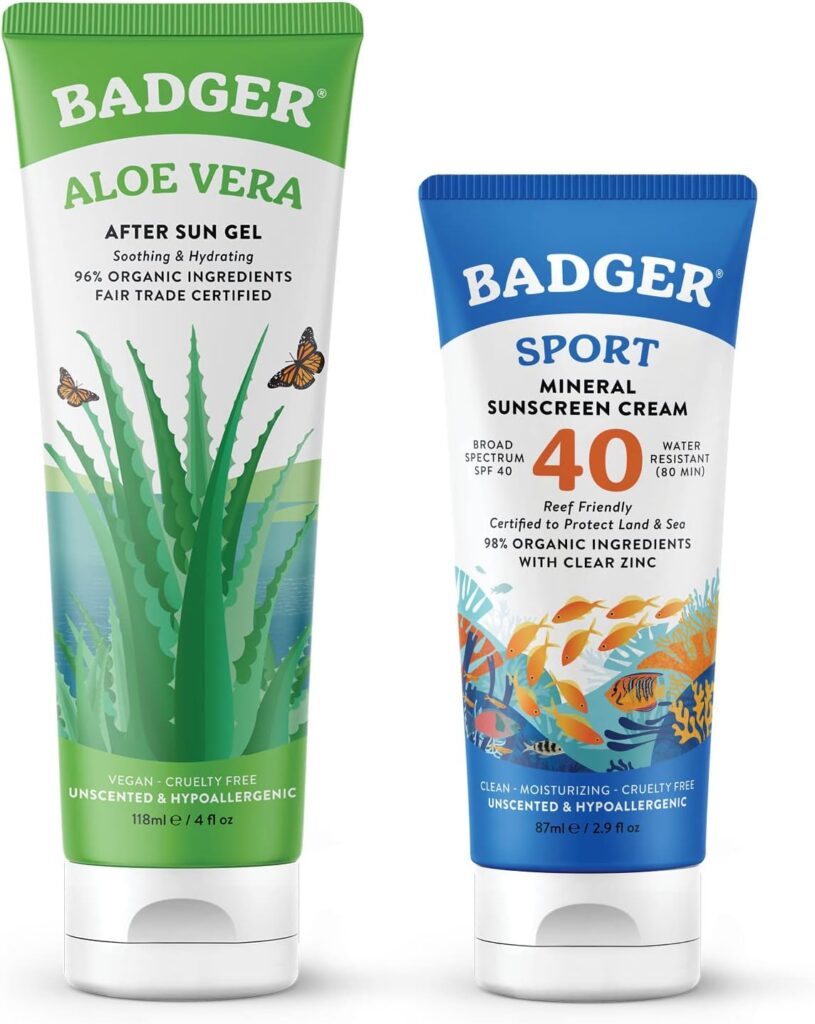
Badger SPF 40 Sport Mineral Sunscreen (clean-formula workhorse)
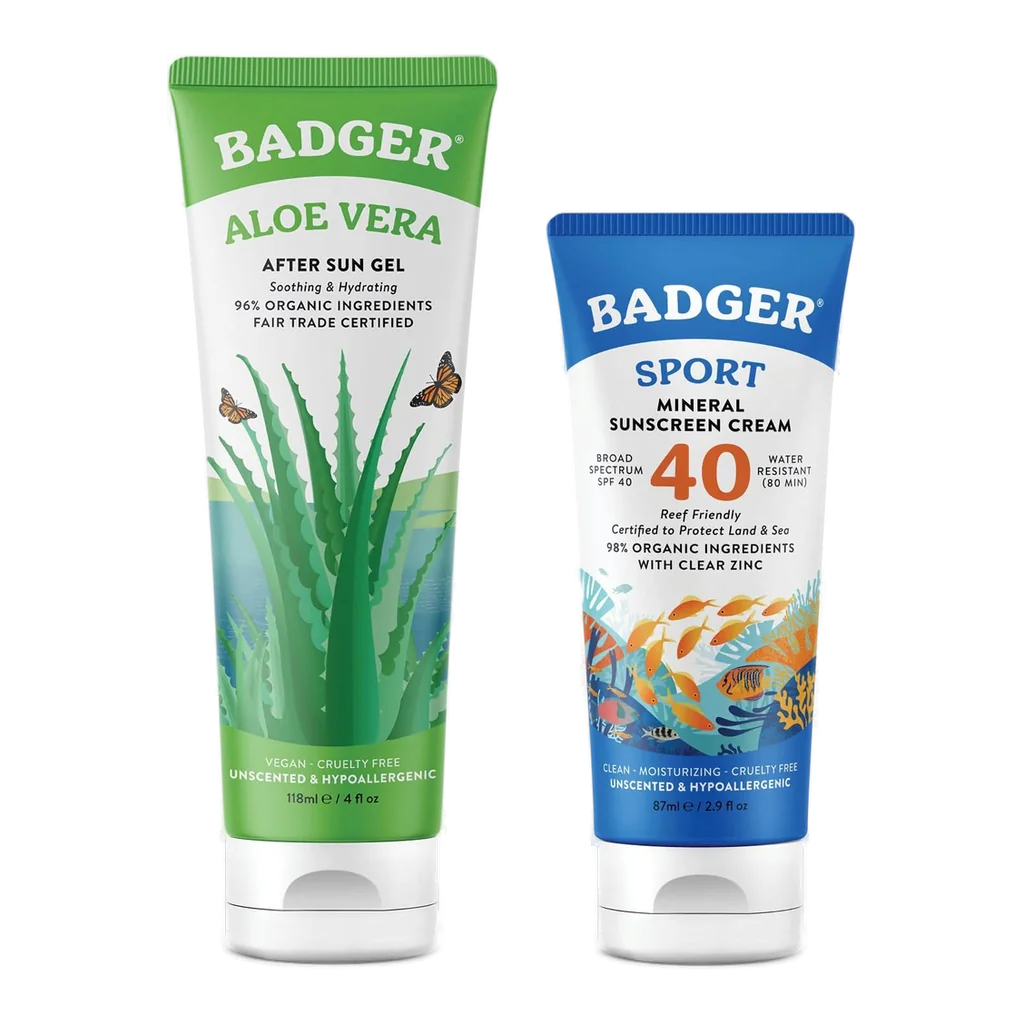
Badger has been doing clean sunscreen for two decades, and the SPF 40 Sport is what lives in my diaper bag. Zinc oxide is the only active ingredient. The rest of the bottle is sunflower oil, beeswax, vitamin E, and that’s pretty much it.
EWG rating: Low Hazard. The whole Badger Sport line rates a 1, the cleanest tier on the hazard score.
Active: Non-nano zinc oxide.
Water resistance: 80 minutes.
Price: Around $22.
My take: It’s thick. You have to warm it in your hands before applying or it just sits on the skin like icing. Once you get used to that move, it works fine.
Thinkbaby Safe Sunscreen SPF 50+ (the kid sunscreen pediatricians recommend)
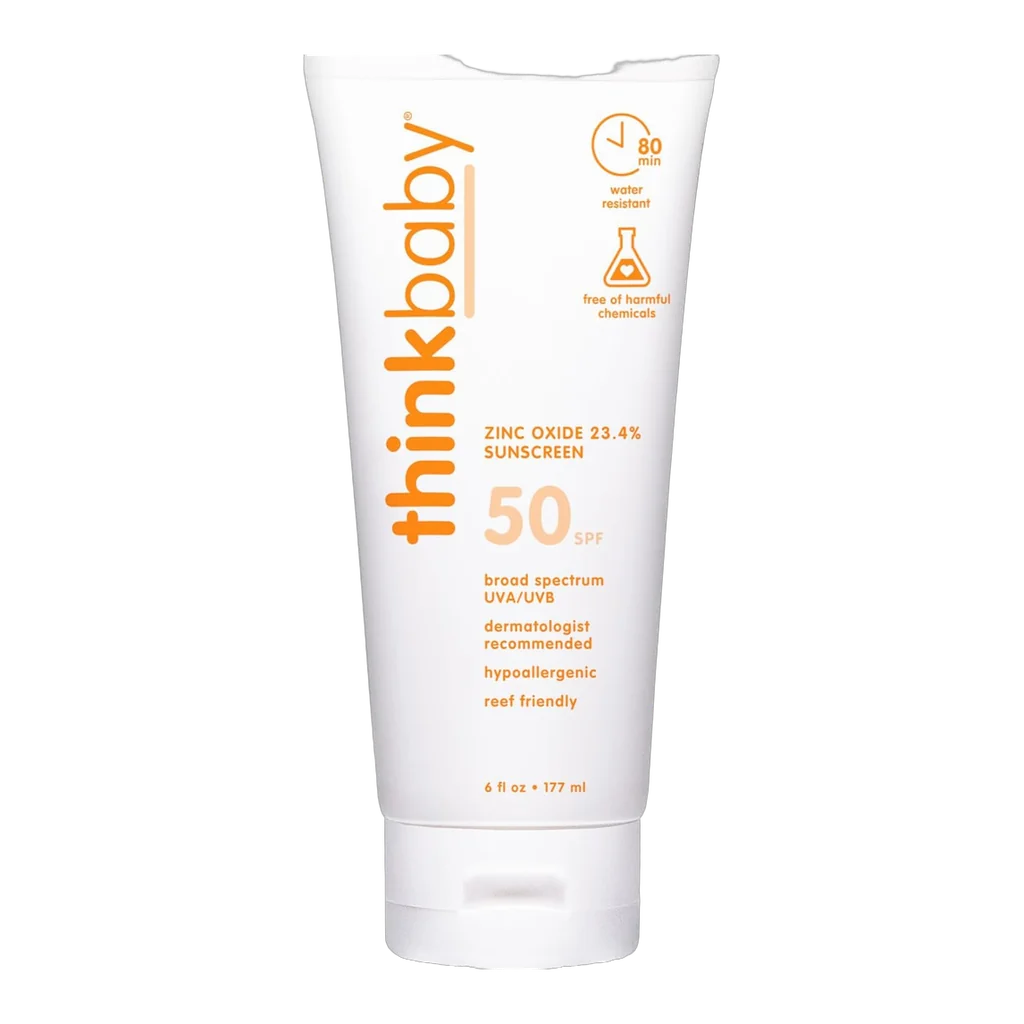
Thinkbaby has been the EWG recommended kid sunscreen for years and earns it. The only active is non-nano zinc oxide. No chemical filters. No fragrance. No parabens. It rubs in cleaner than Badger and the consistency feels more like a regular lotion than a paste.
EWG rating: Low Hazard. Thinkbaby’s Clear Zinc Sensitive Skin SPF 50 variant in the same line is EWG Verified outright.
Active: 20% non-nano zinc oxide.
Water resistance: 80 minutes.
Price: Around $17.
My take: SPF 50+ is enough I trust it for full sun beach days. My kids have used this for three years with zero skin reactions and no burns when we actually applied it on time.
Thinksport SPF 50+ Mineral Clear Zinc (least white cast in the lineup)
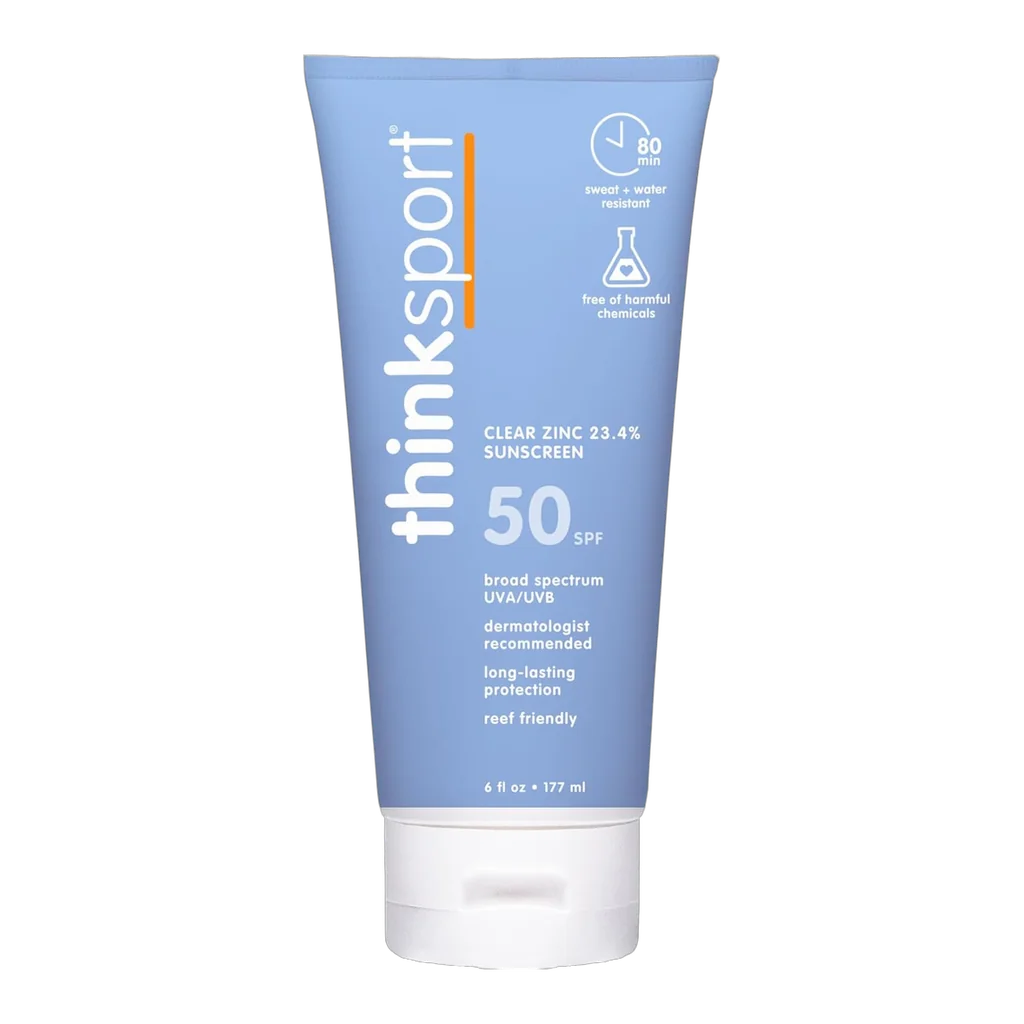
Thinksport is the adult-focused line from the same company that makes Thinkbaby, and the Clear Zinc lotions have been on the EWG Verified list for years. The “Clear” part actually delivers. It rubs in without the pasty cast you expect from a pure zinc product, because the formulators figured out how to micronize the zinc without going nano.
EWG rating: EWG Verified. The Thinksport Clear Zinc line has held the badge for multiple update cycles.
Active: Non-nano clear zinc oxide.
Water resistance: 80 minutes.
Price: Around $22.
My take: This is the one I reach for if I’m wearing it under a shirt that I don’t want to white-cast. The texture is genuinely sheer for a zinc-only product, which is the hardest cosmetic problem in this category.
ATTITUDE Mineral Sunscreen Face Stick SPF 30 (best reapplication tool)
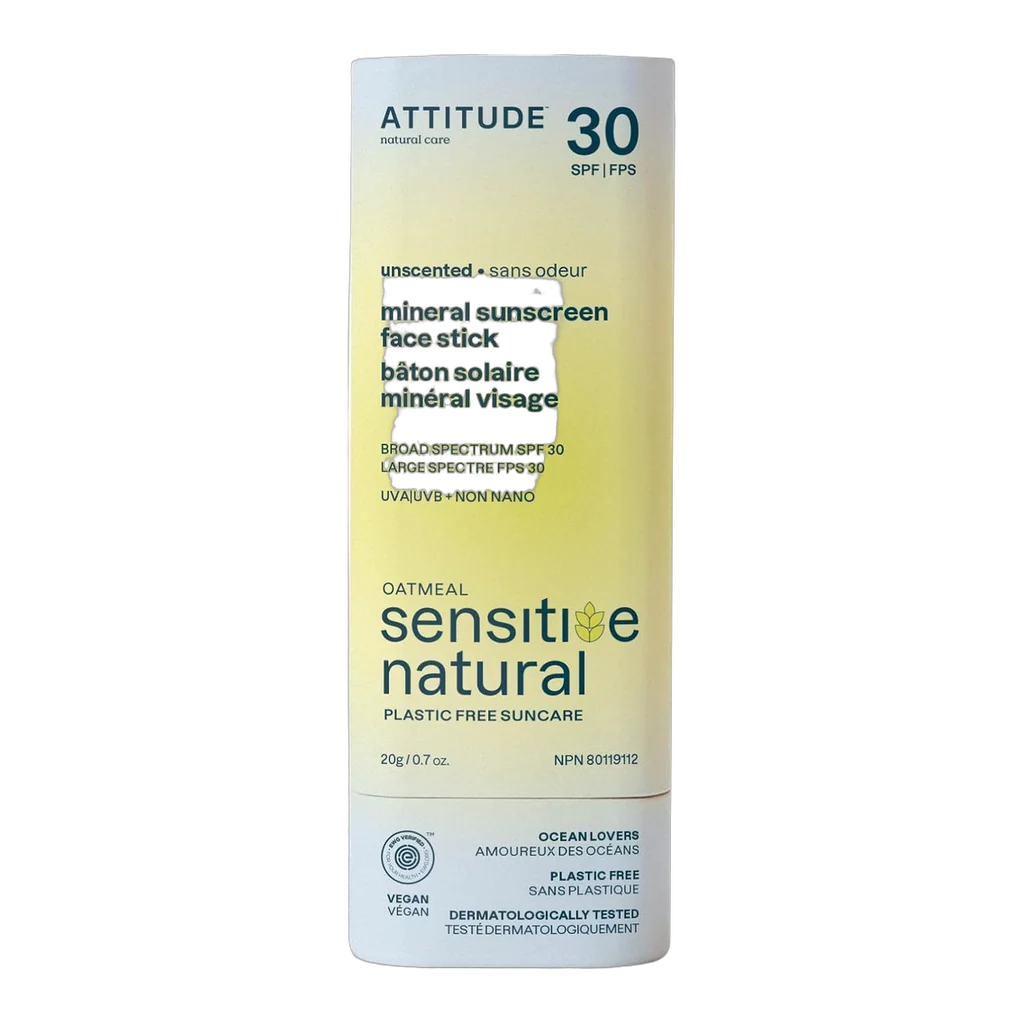
The stick format solves the dirty-hands problem when you’re already on the trail. Just swipe and go. The tube itself is biodegradable, no plastic.
EWG rating: EWG Verified. ATTITUDE’s mineral stick line consistently makes the EWG Verified annual sunscreen list.
Active: Non-nano zinc oxide.
Format: Solid stick, biodegradable tube.
Price: Around $16.
My take: I keep one in the car and one in the hiking pack. Reapplying on a kid’s face mid hike is so much faster with the stick than wrestling open a tube of cream with sandy hands.
Babo Botanicals Sheer Mineral Sunscreen SPF 50 (middle-ground texture for the whole family)
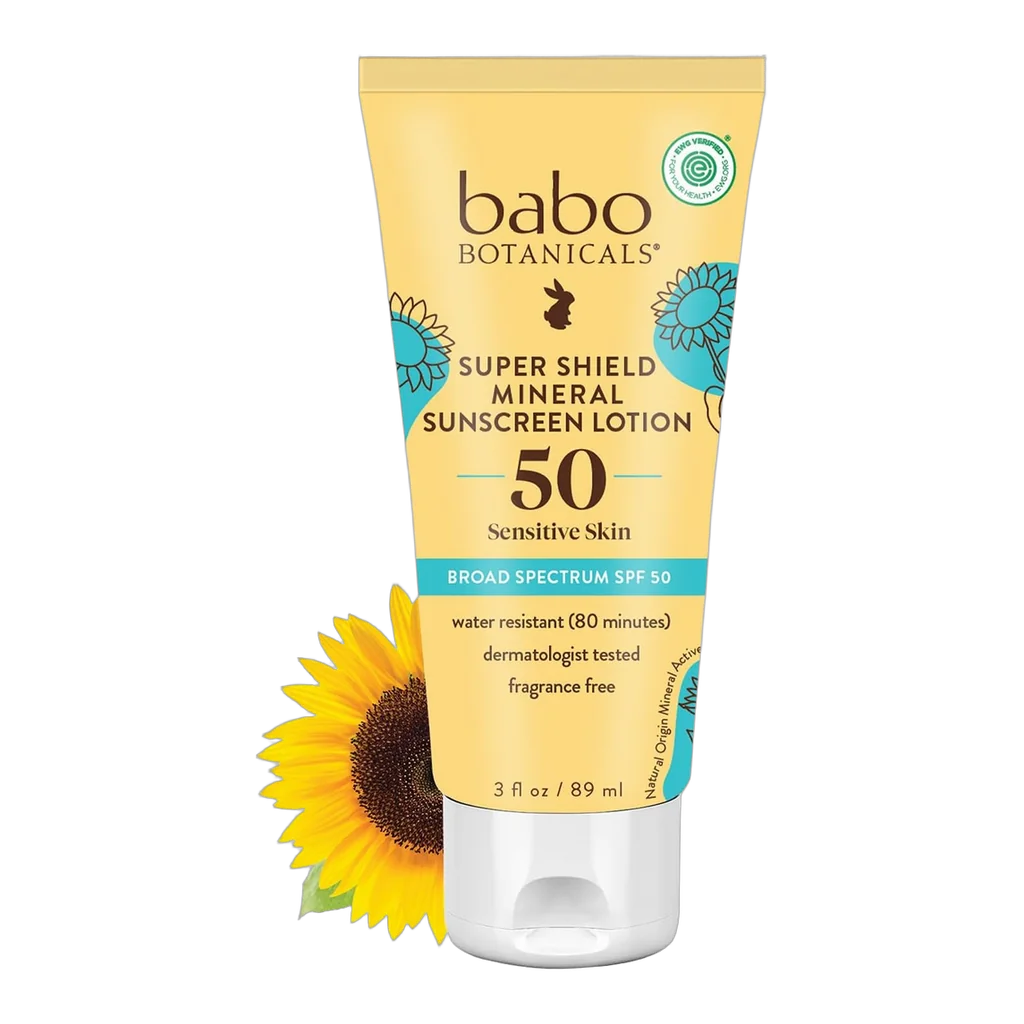
Babo Botanicals lands between Thinkbaby (heavier) and Thinksport (lighter) on texture. Active is non-nano zinc oxide. The rest of the formula is hypoallergenic, fragrance free, made in the US. Reef safe, vegan.
EWG rating: Low Hazard. Babo’s Super Shield Fragrance Free Lotion variant in the same product family is EWG Verified.
Active: Non-nano zinc oxide.
Water resistance: 80 minutes.
Price: Around $19.
My take: The “Sheer” version rubs in noticeably better than the regular Babo line, which is the only reason I’m specifying it. If you’ve tried other Babo products and found them too thick, this version is worth another shot.
What I use
The actual rotation in our house:
- Daily wear, work from home days: ATTITUDE face stick
- Pool days and full sun: Thinkbaby SPF 50+
- Trail running, anything where I’m sweating: Thinksport Clear Zinc SPF 50+
- Kid’s face on the go: ATTITUDE stick
- Travel: whatever fits the 3.4 oz rule
FAQ
What is EWG and why should I trust their ratings?
EWG is the Environmental Working Group, a nonprofit research and advocacy organization that’s been running the Skin Deep cosmetic database since 2004. They rate ingredients against the actual published research and give every product a hazard score from 1 to 10. The “EWG Verified” badge is a separate, stricter tier where products have to fully disclose every ingredient, pass a hazard score floor, and follow good manufacturing practices. They’re not perfect, no rating system is, but they’re the most transparent and research-grounded option I’ve found.
Is SPF 50 enough? What about SPF 100?
A bottle marked SPF 50 stops around 98% of the UVB rays that hit your skin. SPF 100 stops 99%. That one percent difference is not going to save you on the beach. What you usually give up at higher SPF numbers is formulation cleanliness, because the brands have to pile on more chemical filters or thicker zinc to get there. Stick to SPF 30 to 50 and you’re covered.
Do I need to reapply every two hours?
If you’re swimming, sweating, or actively in direct sun, yes. The two hour rule comes from how mineral sunscreen physically rubs off the skin during activity. For a normal day where you’re indoors most of the time and step outside occasionally, one solid morning application is usually fine.
What’s the difference between non-nano and regular zinc oxide?
Non-nano particles are larger than 100 nanometers, which means they cannot pass through intact skin into the bloodstream. The research on whether nano particles can do this is mixed, but if you’re applying sunscreen to a kid every day, non-nano is the simpler choice.
Why are mineral sunscreens always white?
Zinc oxide and titanium dioxide are inherently white powders, and they scatter visible light when applied to skin. Modern formulations use micronized particles, tinted bases, or oils that minimize this effect. Thinksport Clear Zinc is the best example in this list of a zinc-only formula that doesn’t leave a heavy cast. If you have darker skin tones, look for tinted mineral sunscreens specifically. Most are not on Amazon, but Beautycounter, ILIA, and Saie all make good ones.
Are mineral sunscreens reef-safe?
Generally yes, with one caveat. The term “reef-safe” is not legally defined, so any sunscreen can claim it. The actual research on reef toxicity points to oxybenzone and octinoxate as the primary culprits. Mineral sunscreens with non-nano zinc oxide and titanium dioxide do not show the same reef toxicity in current studies. Hawaii and parts of Mexico have banned chemical sunscreens for this reason.
Can I use sunscreen on a baby?
Most pediatricians recommend keeping infants under 6 months out of direct sun rather than applying sunscreen. After 6 months, mineral only formulations with non-nano zinc oxide are the safer choice. Thinkbaby is specifically formulated for this age range. Always patch test first.
Why are these often cheaper online than at CVS or Walgreens?
Two reasons. First, the drugstore sunscreen aisle is dominated by the big brands (Coppertone, Banana Boat, Neutrogena) that pay for shelf placement and price their mineral lines accordingly. The smaller EWG-rated brands don’t compete in those retail channels, so they price for online sales instead. Second, Amazon’s pricing on mineral sunscreens has gotten genuinely competitive over the last few years. I checked the same Thinkbaby SPF 50+ at three local pharmacies last summer and it was $4 to $7 more per bottle than the Amazon price.
The bottom line
The mineral sunscreen category has gotten so much better that the old “but they look terrible” objection is mostly outdated. If you haven’t tried one in three or four years, the formulations have moved on. More importantly, the database of EWG-rated and EWG Verified options is bigger than it used to be, and the prices online are actually competitive with the chemical-filter stuff at the drugstore.
For most people, Thinkbaby SPF 50+ is the no drama daily pick. Badger Sport is the upgrade for active days when you need water resistance. Thinksport Clear Zinc is the option if you’ve struggled with the white cast on darker skin. ATTITUDE sticks earn their spot on application speed alone, and they’re EWG Verified.
The chemical filter question isn’t going to resolve itself for years. The data keeps trending in the wrong direction. Mineral sunscreen is the safer default and the cosmetic gap has closed enough that there’s no real reason not to switch. Especially when the cleanest option in the database is usually also the cheapest tab in your Amazon cart.