My wife started doing the castor oil thing about a year ago. She’d seen it on TikTok and the version she watched made eyelash-growth claims that sounded fake. Two months later her lashes were noticeably longer. Not slightly. Visibly. I asked her what changed and she pulled a tiny glass bottle out of the medicine cabinet.
Now I use it too, mostly on a dry patch on my elbow that nothing else has touched. So the goal here is to talk about what castor oil actually does, separate that from the wellness-influencer claims that don’t hold up, and recommend the four bottles worth buying.
What castor oil actually does (and what it doesn’t)
Quick origin story. Castor oil comes from the seed of the castor bean plant. Old. Ayurveda old. My grandmother’s bathroom cabinet old. The active compound is ricinoleic acid, which is roughly 90 percent of what’s in the bottle, and that one molecule is doing most of what you’re noticing when you use it.
Here’s what it actually does. The molecule is huge by skin-care standards. Too big to soak into your skin meaningfully, which is actually the whole point. It just sits there. On top. Forming this thin invisible film that traps whatever moisture is already under your skin from getting out. On your hair shaft, same thing, it coats. Adds visual thickness. On your lashes and brows, ditto, plus there’s probably a small benefit to the follicle itself getting fed a bit of fatty acid in the process, though the lash-growth mechanism people debate is honestly not fully nailed down. On those weird dry patches that nothing else has fixed (cracked heels, eczema elbows, that random spot beside your nose) it works better than basically any lotion I’ve tried.
Now the part where I get to disagree with TikTok. Castor oil does not detox your liver. It does not shrink fibroids. It does not pull toxins out through your skin in a flannel pack, no matter how warm and cozy the routine feels. None of those claims have a plausible mechanism, and none of them have decent clinical evidence. The “castor oil pack” thing is a forty-year-old naturopathy ritual, and if you enjoy it, fine, but don’t expect it to fix anything your body wasn’t already going to handle on its own.
One more warning that surprises people. Castor oil taken orally is a serious laxative. Like, your grandmother’s grandmother used to make her kids drink a spoonful when they were constipated. Don’t drink it. Don’t put it in smoothies. Don’t be cute. It’s a topical product, not a culinary one.
Product recommendations
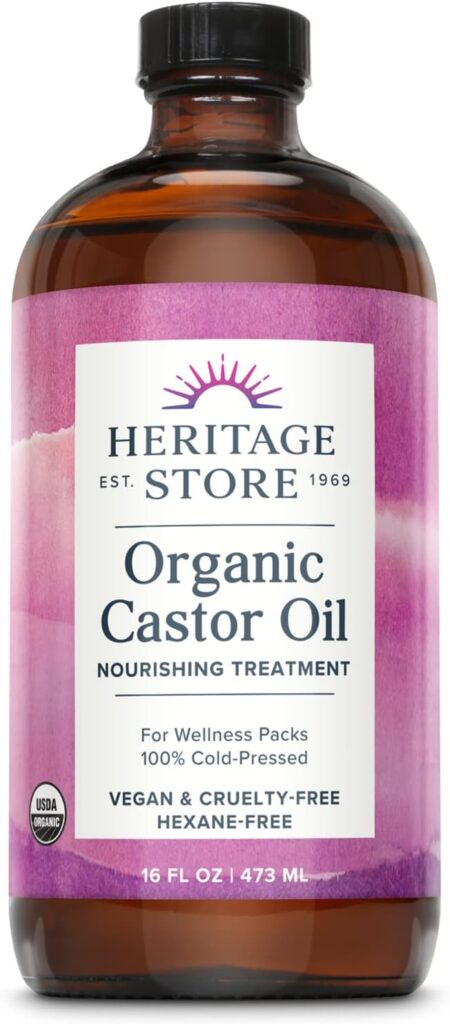
Heritage Store Organic Castor Oil 16oz (the everyday default)
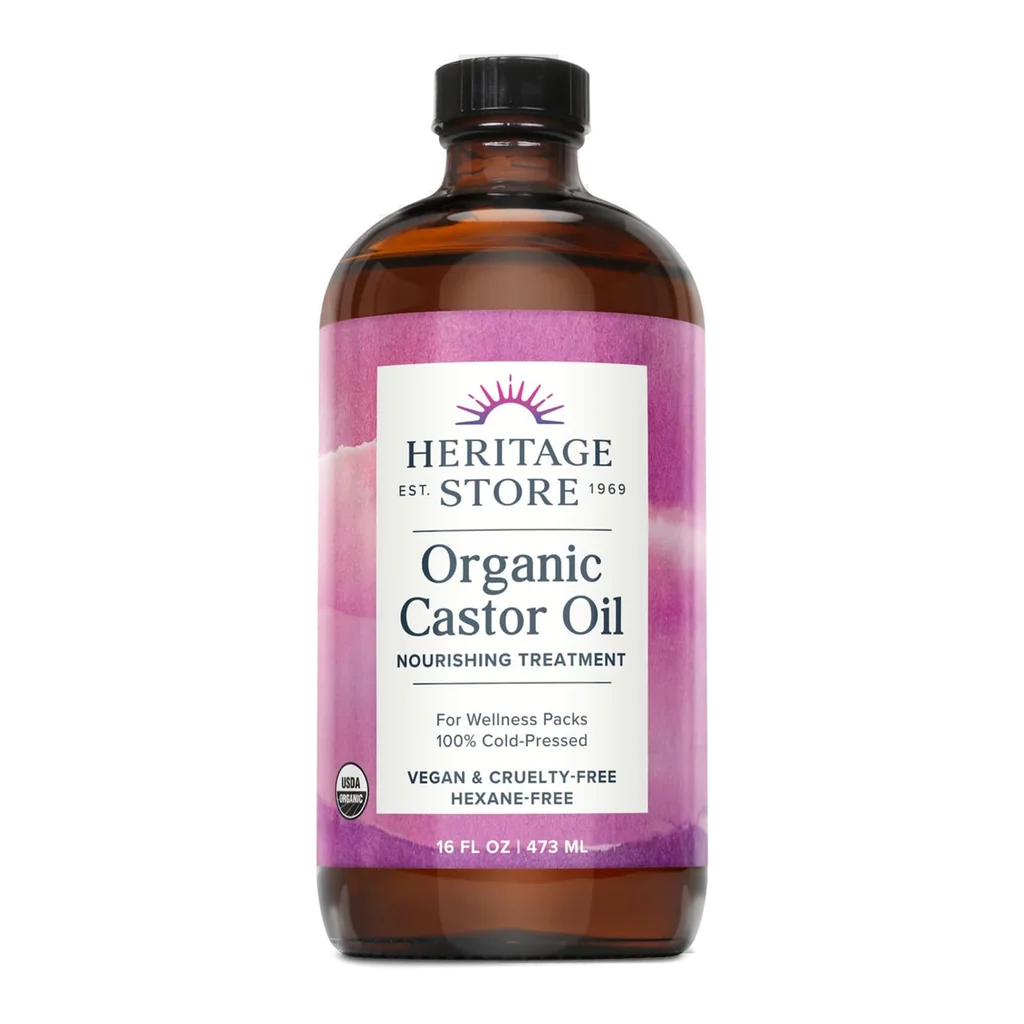
This is the bottle that lives in our bathroom. Heritage Store has been bottling castor oil since 1969 and the brand has the cleanest sourcing of any mainstream option. Glass bottle (matters because castor oil leaches plasticizers out of cheap PET over time), cold-pressed, hexane-free, USDA organic. The 16oz size lasts six to nine months at the rate most people use it, and the wide mouth fits a dropper if you’re treating brows or lashes.
Source: USDA Organic, cold-pressed, hexane-free.
Size: 16oz glass bottle.
Best for: Hair masks, dry skin patches, general daily use.
Price: Around $21.
My take: If you only ever own one castor oil, make it this one. The glass bottle and the certifications justify the small premium. Heritage Store has been doing this for fifty-plus years and it shows in the QC.
Kate Blanc Cosmetics Castor Oil 2oz (the lash-and-brow specialist)
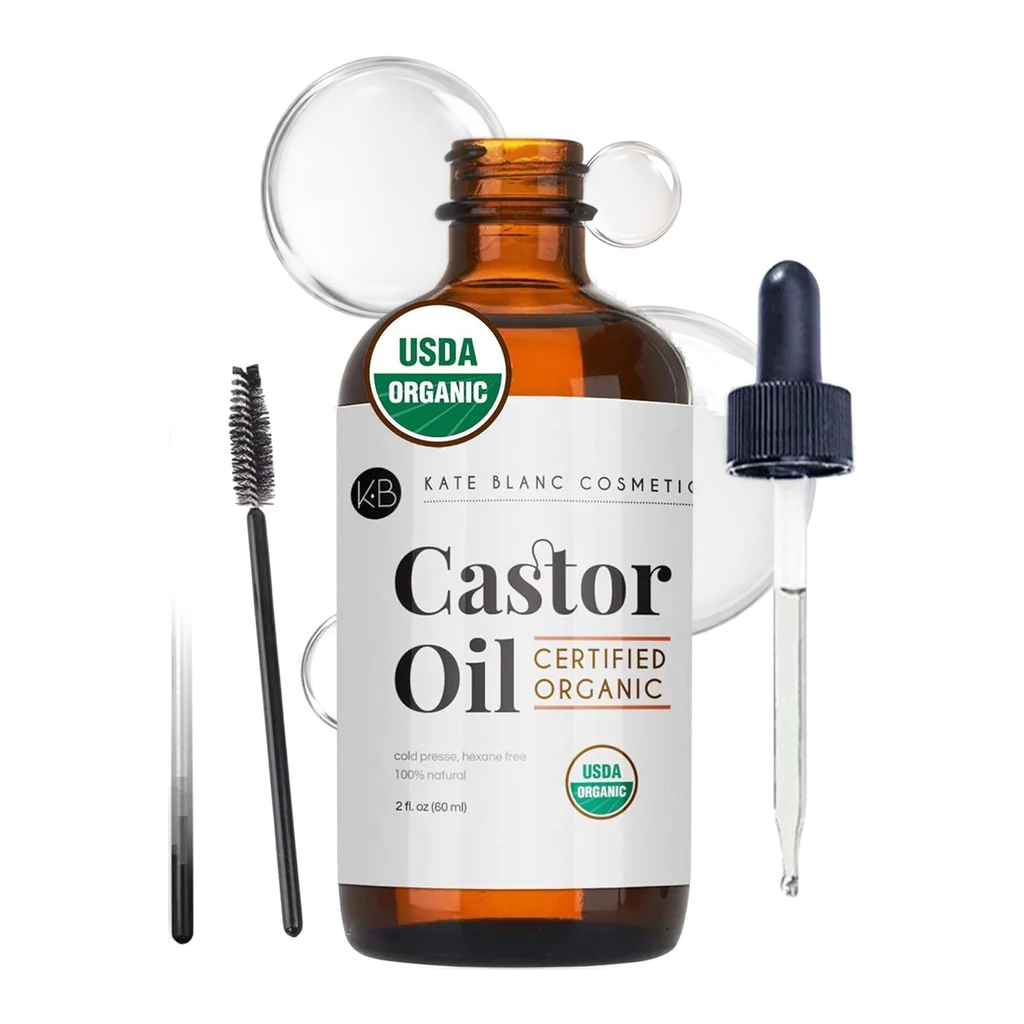
The 2oz bottle Kate Blanc sells comes with a few mascara-wand applicators in the cap, which is genuinely useful if your only goal is lashes and brows. The oil itself is the same cold-pressed hexane-free organic castor as Heritage, but the small bottle and applicators are the differentiator. My wife switched to this for lashes specifically because the precision of the wand beat dipping a cotton swab in a bigger bottle. At $7 it’s the cheapest entry point into the category.
Source: USDA Organic, cold-pressed, hexane-free.
Size: 2oz with applicators.
Best for: Eyelash and eyebrow growth specifically.
Price: Around $7.59.
My take: Buy this if your only goal is lashes. The mascara-wand applicators are the right tool for the job and the small bottle won’t go rancid before you finish it.
velona USDA Certified Organic Castor Oil 64oz (the bulk pick for hair masks)
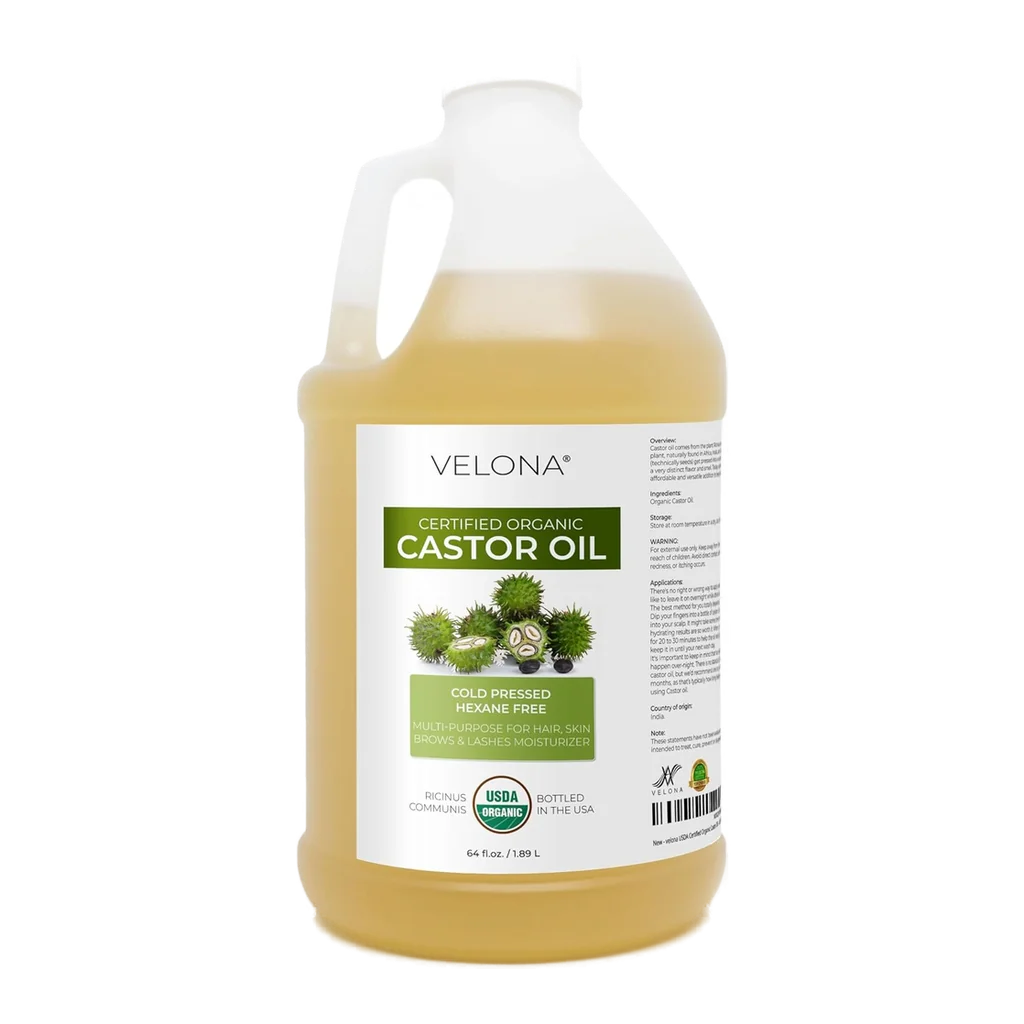
If you’re doing weekly hair oil masks (popular for thick or natural hair textures), a 16oz bottle disappears fast. velona sells a 64oz jug that works out to about a third the per-ounce cost. USDA Organic, USP grade (which is a pharmaceutical-purity standard, higher than most cosmetic-grade oils). The packaging is less pretty than Heritage Store but you’re not displaying this on the counter, you’re decanting from it into smaller bottles for daily use.
Source: USDA Organic, cold-pressed, USP grade.
Size: 64oz bulk jug.
Best for: Weekly hair oil treatments, families sharing, decanting into smaller bottles.
Price: Around $30.
My take: The math wins here. If you go through castor oil fast, the 64oz size pays for itself in two refills. USP grade is a real spec, not a marketing claim.
Sky Organics Castor Oil 16oz (the volumizing hair oil)
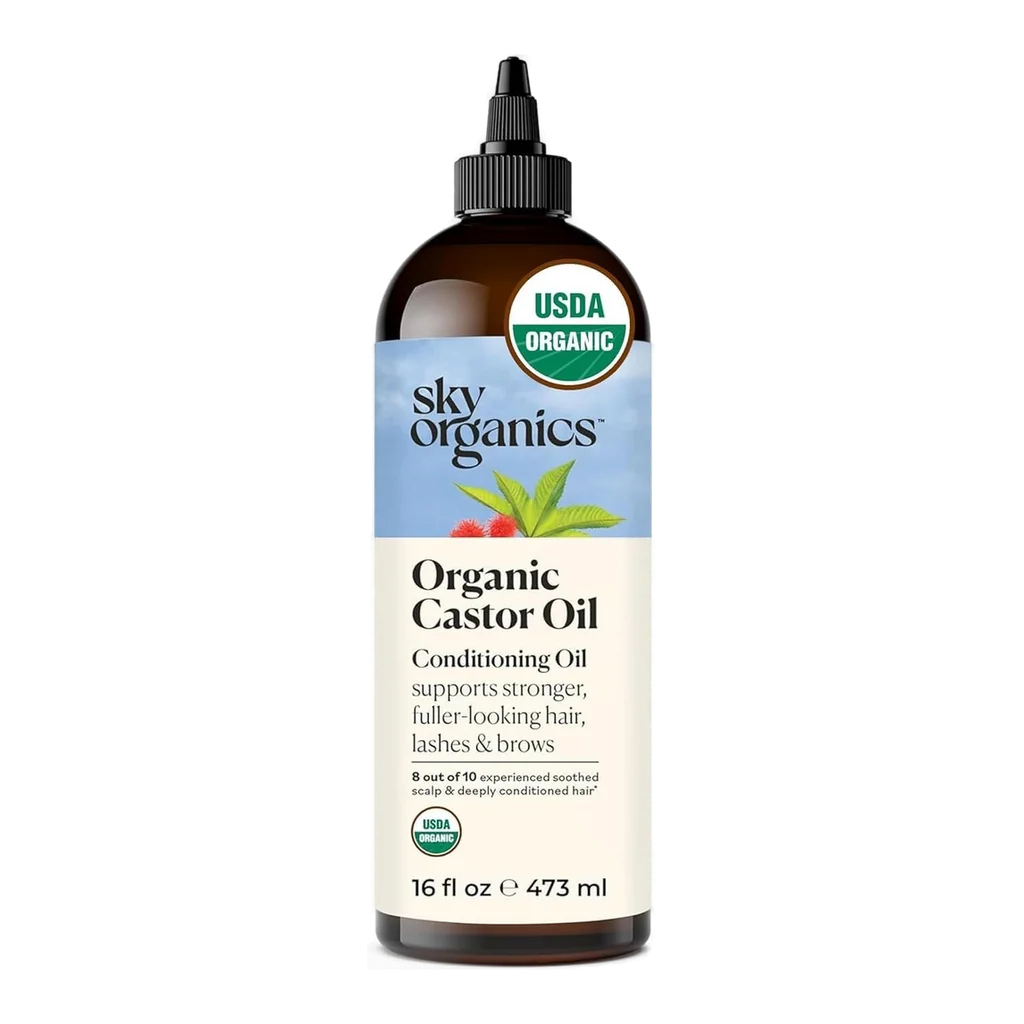
Sky Organics positions theirs as a hair-volumizing oil and the marketing emphasizes scalp use. The product is fundamentally the same cold-pressed organic castor oil as the others, with the same active compounds. What’s different is the brand’s testing transparency. Sky publishes batch results for purity and they’re one of the few castor oils that’s third-party tested for heavy metals (which can be a real concern with imported plant oils). Glass bottle, organic certification, no fillers.
Source: Organic, cold-pressed, hexane-free.
Size: 16oz glass.
Best for: Scalp treatments, heavy-metal-conscious buyers.
Price: Around $25.
My take: The right pick if testing transparency matters to you. The product itself is comparable to Heritage Store; what you’re paying a small premium for is the QC documentation.
How I actually use it
For lashes and brows: dip a clean mascara wand or cotton swab in the bottle, dab off the excess (a tiny amount goes a long way), and run it through your brows or along the lash line at night. Don’t get it in your eye, it stings.
For dry skin patches: rub a few drops between your palms to warm it, then press it into the spot. Cover with a sock if it’s heels, or just leave it. It feels greasy for about ten minutes then absorbs into the surface skin layer.
For hair: this is where you go bigger. Warm two tablespoons of castor oil mixed with a tablespoon of jojoba or argan (straight castor is too thick for most hair) in a small bowl. Massage into scalp and run through ends. Wrap your head in a warm towel for thirty minutes. Shampoo twice to get it all out. Once a week is plenty. And if hair growth is the goal rather than shine, the scalp massage is doing as much of the work as the oil, so don’t skip it.
FAQ
Does castor oil really grow hair?
The evidence is decent for slowing hair loss and improving the appearance of thickness on existing hair, but the data on actually growing new hair follicles is much weaker. What it definitely does is condition the hair shaft so existing hair breaks less, which over months looks like growth.
What about castor oil packs for the liver?
Don’t bother. The “castor oil pack” routine is naturopathy folklore with no published clinical evidence. Your liver detoxes itself, it doesn’t need oil on your belly to help. If you find the warm-oil-and-towel ritual relaxing, fine, but don’t expect any of the claimed effects.
Will it clog my pores?
Castor oil has a comedogenic rating of 1, which is low. Most people don’t break out from it. If you have very acne-prone skin, patch test on your jawline for a week before using it on your face.
How long until I see lash results?
Six to eight weeks of consistent nightly use. Less than that and you’re not giving it a fair shot. If you see nothing at twelve weeks, it’s not going to work for you.
Hexane-free, cold-pressed, organic, USP grade. Do I need all of them?
Hexane-free and cold-pressed are the two that matter. Cheap castor oils are extracted with hexane solvent and the residue can stay in the final product. Cold pressing avoids that entirely. Organic is nice but less critical for an oil that you’re not eating. USP grade is a pharmaceutical purity spec, useful for sensitive skin or kids.
What can I use instead of castor oil?
Depends which job you’re hiring it for. For sealing in moisture on dry skin, plain jojoba is lighter and less sticky, and a grass-fed tallow balm honestly beats castor oil on rough patches. For hair conditioning, argan oil (or cutting castor with argan, like the mask recipe above) is easier to wash out. For lashes there’s no great like-for-like swap; the products with actual clinical data behind them are peptide lash serums, which are a different tool at a very different price.
What about Jamaican black castor oil?
Same plant, different process. The beans get roasted before pressing, which turns the oil dark, gives it a smoky smell, and makes it slightly alkaline. It’s especially popular in textured-hair routines, where the extra grip is a feature. The evidence isn’t any stronger or weaker than for regular castor oil, so pick based on hair type and smell tolerance. For skin and lashes, stay with the clear cold-pressed stuff.
Is there a food-grade castor oil you can drink?
USP grade is the pharmaceutical spec, and a single dose is genuinely FDA-approved as a stimulant laxative. That is the entire approved oral use case. The influencer version (a morning shot for “detox” or weight loss) is just the laxative use case with better lighting. Skip it, your gut will thank you.
Can I use it on my baby?
For dry skin and cradle cap, yes, in tiny amounts, on intact skin. Don’t put it in their mouth (laxative) and don’t apply to broken or weeping skin. If you’re worried, ask your pediatrician.