Honest reviews and practical swaps for healthier everyday living
Sleep and Recovery

Best Mouth Tape for Sleep 2026: 4 Sleep Tapes That Stopped My Snoring

By Alex Anderson Updated July 2026 11 min read Every product bought with our own money
In this article

Quick answer: If you wake up with a dry mouth, snore, or feel unrested despite getting eight hours, you’re probably mouth-breathing in your sleep. Taping your lips shut at night forces nasal breathing, and most people who try it report deeper sleep and less snoring within a week. Buy a small box of 3M Micropore or a purpose-made mouth tape like VIO2. Skip the heavy adhesive stuff. Talk to a doctor first if you suspect sleep apnea.

I started mouth taping in late 2024 because my wife told me I’d been snoring loud enough to wake the dog. I didn’t believe it at first. Then she sent me a phone recording. Three nights of mouth tape later the snoring was basically gone, and I noticed I was waking up without that gross dry-mouth feeling I’d had for years. I’d assumed the dry mouth was just normal. Turns out it was a symptom of breathing through my mouth for eight hours a night, and the fix was a small piece of medical tape.

This article is what mouth taping actually does, why it works, the four sleep tapes worth trying (including the cheap 3M option), and how to start without panicking the first night.

Why mouth taping does what it does

Quick biology, because the why matters here. Your nose is doing a job that your mouth straight up cannot. It filters dust, warms the air, humidifies it, and (this is the interesting one) produces a gas called nitric oxide as the air passes through. Nitric oxide widens your blood vessels, including the ones in your lungs, which means more oxygen gets into your blood. Breathing through your mouth bypasses all of that. Dry air, unfiltered, no nitric oxide. And you tend to breathe faster and shallower when your mouth is open, which keeps you in a low-grade fight-or-flight loop all night.

The problem is most of us have been mouth-breathing for years and don’t realize it. Modern desk life encourages it. Allergies encourage it. A deviated septum encourages it. So when you sleep, your jaw drops open, and you spend eight hours running on the inferior breathing pathway.

Tape your lips closed and you yank that option away. Your body, given no other choice, switches to the nose. Within a few nights, the nasal pathway, which has probably been underused, opens up because you’re forcing yourself to use it again. It’s basically a use-it-or-lose-it muscle for your face.

Here’s what people notice. The snoring drops, usually within the first three nights. (This is why half these products get marketed as anti-snoring tape rather than mouth tape.) That’s because snoring is mostly the soft palate vibrating in the airflow, and that tissue isn’t really in the airflow path when you breathe through your nose. The dry mouth goes away. Some dentists report fewer cavities in long-term tapers because saliva (your mouth’s natural defense system) isn’t evaporating all night. HRV scores climb. Sleep feels deeper.

Now the part nobody on TikTok mentions. This is not for everyone. If you have undiagnosed obstructive sleep apnea, taping your mouth shut without dealing with the airway collapse can actually make things worse. And if your nose is straight-up blocked, you can’t tape, you’ll just panic at 2 AM. Get the nose checked out first, get the sleep study if you snore loud or wake up gasping, and then think about tape.

Product recommendations

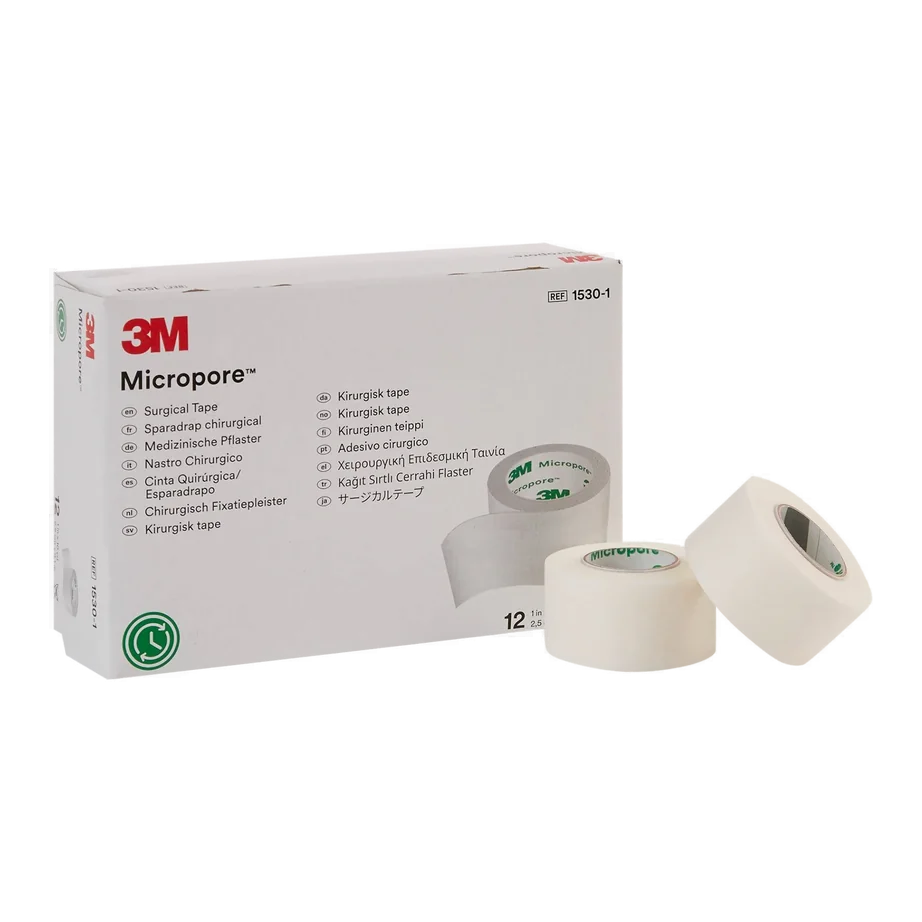
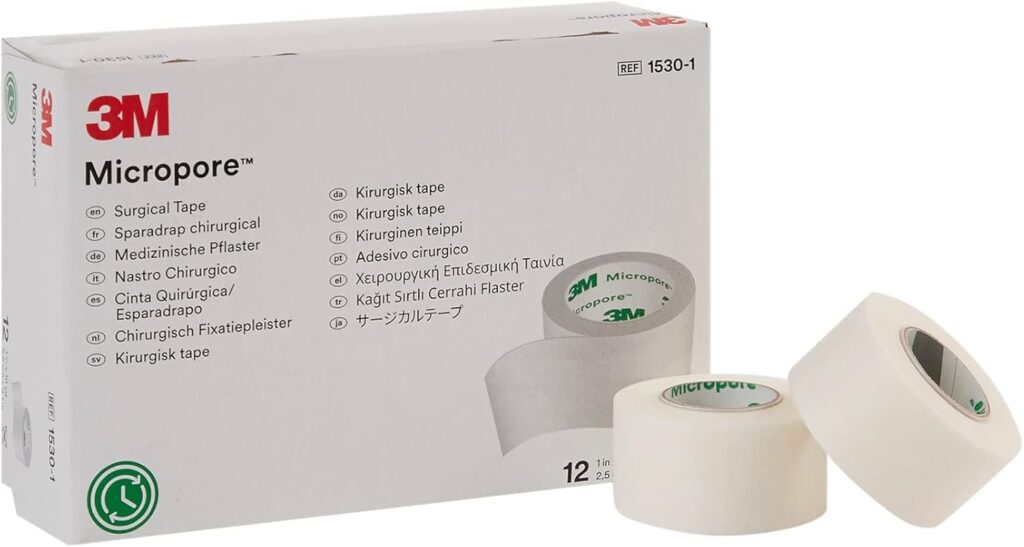
3M Micropore Paper Tape (the doctor-recommended starter)

3M Micropore surgical paper tape 1 inch white roll for sleep

The OG. 3M Micropore is the medical tape that physical therapists and dermatologists have used for decades, and it’s what most sleep specialists actually recommend as a starting point. One inch wide is the right size, you can buy a box of twelve rolls for the price of one branded mouth tape pack, and a single roll lasts months. The adhesive is gentle enough that you can pull it off without taking your skin with you, but strong enough that it stays put through eight hours. You tear off a strip about two inches long and put it vertically across your closed lips. Done.

Format: 1-inch x 10 yard rolls, sold in boxes of 12.

Adhesive: Medical-grade hypoallergenic.

Best for: First-timers, anyone who wants the cheapest option, sensitive skin.

Price: Around $25 for a 12-pack of rolls.

My take: The right place to start. If you’re going to commit to mouth taping for a year, you want medical tape from the brand that has spent decades not irritating people’s skin. The “branded” mouth tapes are mostly this same material with a logo on it and a 10x markup.

Check price on Amazon

VIO2 Mouth Tape PFAS-Free (the premium purpose-built pick)

VIO2 PFAS-free mouth tape 48 count made in USA

If you’ve started taping with Micropore and want something more comfortable, this is the upgrade. VIO2 is purpose-shaped for the mouth (it’s a small lip-sized strip rather than a square you tear off a roll), Made in the USA, and explicitly PFAS-free (relevant because some Asian-made tapes have shown PFAS contamination in the adhesive layer). Forty-eight strips per box, so about six weeks of nightly use. The shape conforms to your mouth better than rectangular tape, which matters more than you’d think when you’re trying to sleep.

Format: Pre-cut lip-shaped strips, 48 per box.

Adhesive: Hypoallergenic, latex-free.

Best for: People who’ve outgrown Micropore and want a better-shaped, cleaner option.

Price: Around $30 per 48-pack.

My take: The right upgrade once you’ve decided you’re a long-term taper. The PFAS-free spec is meaningful and the shape is more comfortable. Worth the premium over generic medical tape if you can stick with the habit.

Check price on Amazon

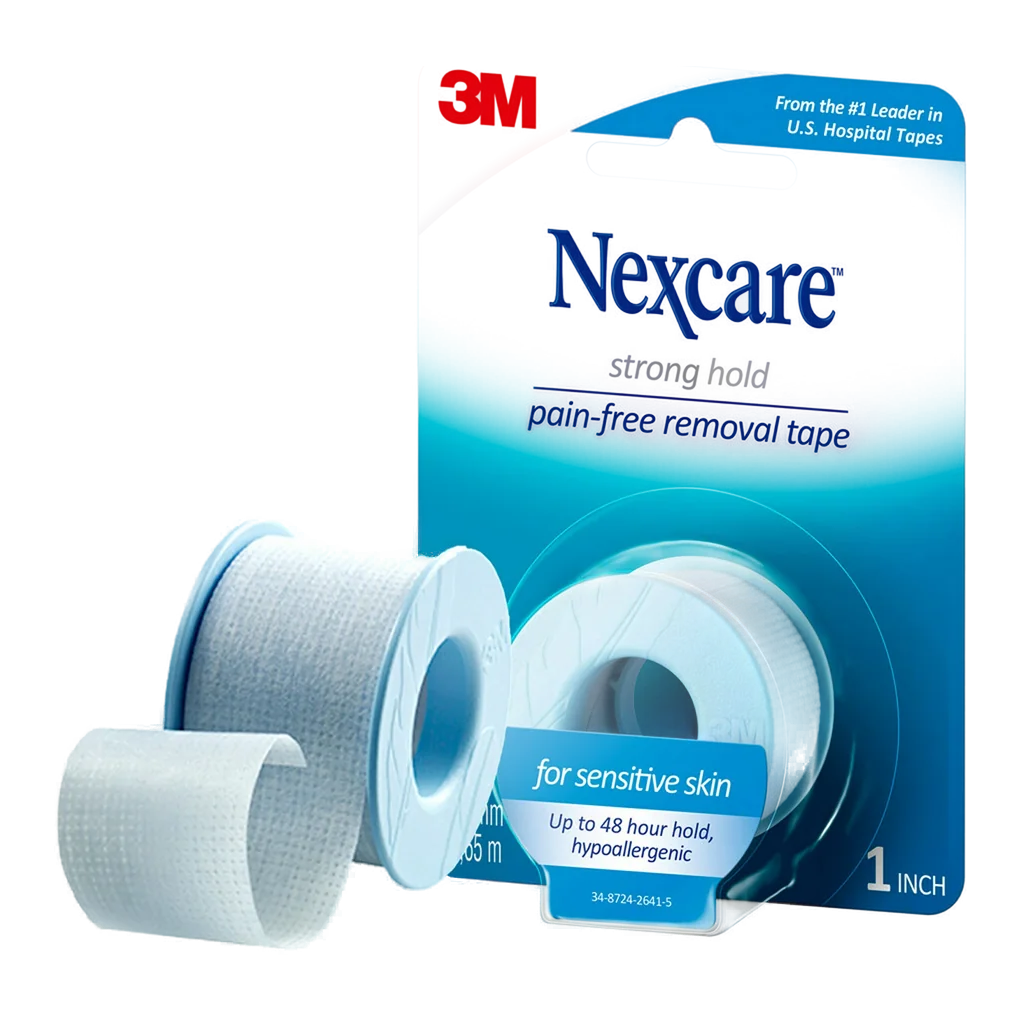
Nexcare Strong Yet Pain Free Tape (the in-between option)

Nexcare Strong Yet Pain Free medical tape sensitive skin

Nexcare is 3M’s consumer brand and the Strong Yet Pain Free line is what they sell in drugstores. It’s the same paper-tape construction as Micropore, with a slightly stickier adhesive that holds better for people who toss in their sleep. The trade-off is that it’s also slightly harder to peel off in the morning. The single-roll packaging is nice if you don’t want to commit to a 12-pack of Micropore, and it’s at every CVS and Walgreens in the country.

Format: Single roll, sold individually.

Adhesive: Stronger than Micropore but still hypoallergenic.

Best for: People who roll a lot at night, anyone who wants to grab one roll without ordering a 12-pack.

Price: Around $7 per roll.

My take: The right pick if you’re a restless sleeper and Micropore falls off. The slightly more aggressive adhesive solves the curl-up problem. Just be ready for it to grip a bit harder when you peel.

Check price on Amazon

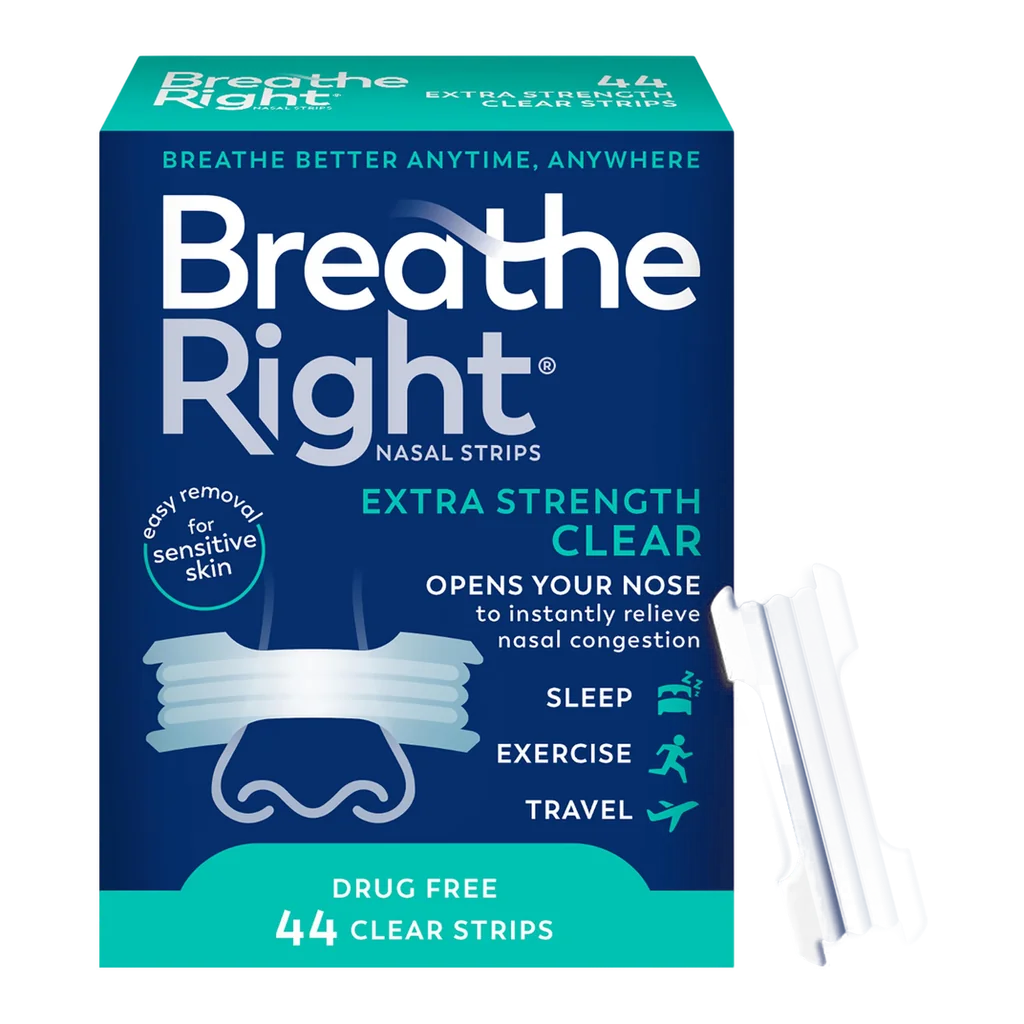
Breathe Right Nasal Strips Extra Strength (the alternative if you can’t tape)

Breathe Right nasal strips extra strength clear for snoring congestion

For people who tried mouth tape and panicked, or whose nasal passages are too narrow for taping to work. Breathe Right strips are a flexible plastic strip with adhesive that physically pulls your nostrils outward when you put one across the bridge of your nose, opening the nasal passage. They’ve been around since 1992 and they actually work. The catch is they don’t address the mouth-breathing habit, they just make nasal breathing easier. So they’re a complement to mouth taping for some people, and an alternative for those who can’t tape.

Format: Adhesive strips for the bridge of the nose, individually wrapped.

Mechanism: Physically opens nasal passages.

Best for: Chronic nasal congestion, the early days of mouth taping, anyone who shouldn’t tape.

Price: Around $16 for a 26-strip box.

My take: The right tool when nasal congestion is your bottleneck. I use these on cold-weather days when my nose is congested and mouth tape would be miserable. They’re a useful tool to keep in the drawer alongside the tape.

Check price on Amazon

Micropore vs Transpore: which 3M tape actually works for mouth taping

A lot of people end up on this page while standing in the first-aid aisle, staring at a wall of nearly identical 3M boxes. Fair. Here’s the breakdown.

Micropore is the one you want. Paper tape, gentle adhesive, breathable, and it peels off in the morning without taking lip skin along for the ride. It’s the roll in my nightstand drawer right now, and it’s the one in the product list above.

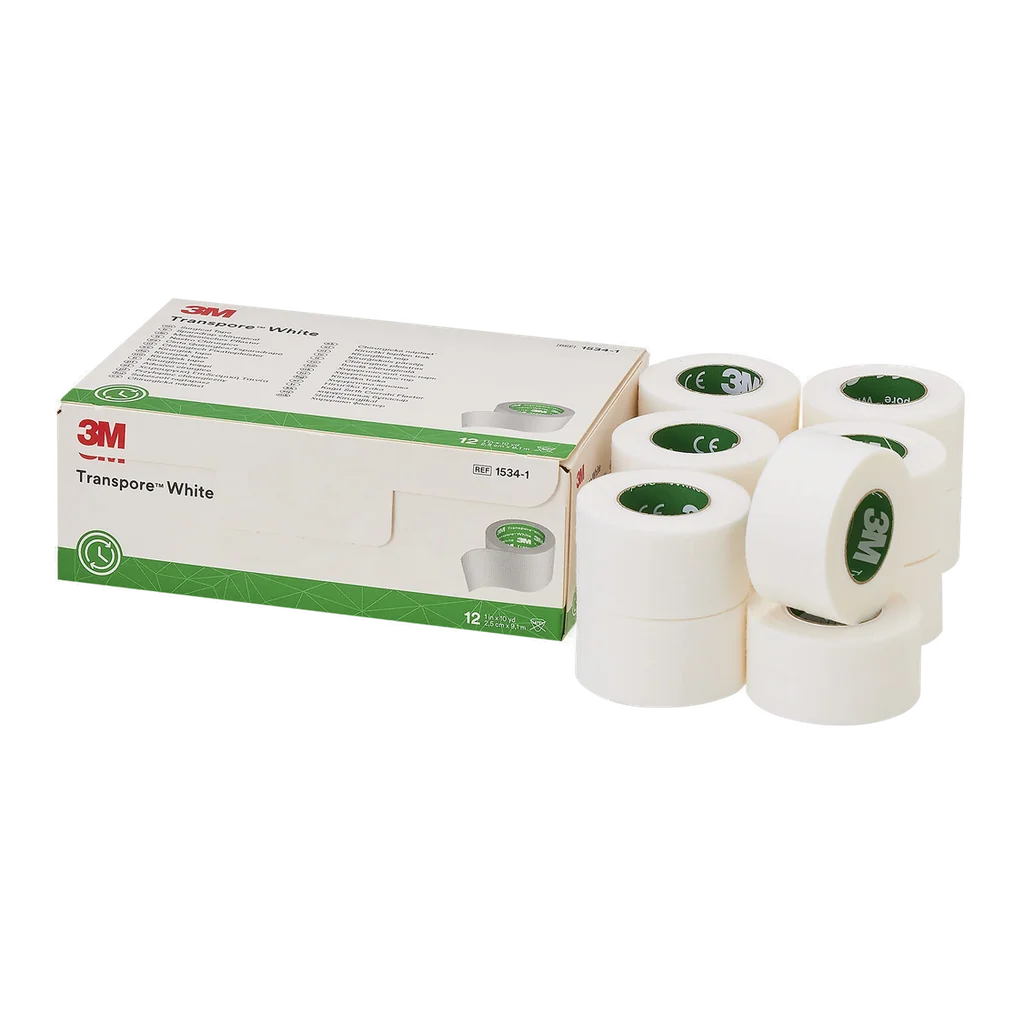
Transpore is the clear plastic one with the little perforations. It exists to hold IV lines and wound dressings in place, so the adhesive grips a lot harder than anything your lips need. Plenty of people do use Transpore for mouth taping, and to be honest it stays put better than anything else on this page. But the morning peel is rough, and after a few nights of it your lips will file a complaint. If a roll is already in your medicine cabinet, it’ll get you through a trial week. Buy Micropore when it runs out.

Durapore is the silky cloth one. Skip it. It’s a surgical retention tape with serious hold, made for parts of the body that are not your face.

And no, duct tape and packing tape are not budget alternatives. Adhesives that aren’t rated for skin contact can leave you with irritation that takes longer to heal than the snoring took to fix. Medical paper tape costs about two dollars a roll. Use medical tape.

How to start without freaking out

Don’t do the full-mouth-shut thing on night one. I promise. The first time you try to fall asleep with your lips sealed your brain will hit panic mode somewhere around minute fifteen, you’ll rip the tape off in the dark, and you’ll decide this whole concept is dumb. So skip that. Start small. A vertical strip, maybe an inch long, right in the middle of your lips. Corners stay free. Your mouth can crack open if you absolutely need it to, but the resistance is enough to nudge your body toward the nose.

Honestly, the smartest move is to wear the tape while you’re still awake. Watch a movie with it on. Sit there reading. The first time my wife saw me on the couch with a strip of medical tape across my mouth she laughed for a solid minute, and that was fine, because by the time I went to bed the sensation of the tape was already familiar. Half the panic is just novelty.

Practical stuff. Lips dry, no balm, no lipstick, no lotion residue. Tape goes vertical, top lip to bottom, not horizontal across the corners. Press it down for ten seconds so the adhesive actually grabs. That’s it.

If you wake up congested at 3 AM, just peel it off. Done. That’s why we use Micropore or Nexcare instead of the industrial-strength stuff, the peel is forgiving.

FAQ

Is this safe?

For most adults, yeah. Suffocation, the thing people instinctively worry about, isn’t really on the table if you tape right because your nose is wide open. The actual risk is hiding sleep apnea you didn’t know you had. That’s why I keep saying: if you snore like a chainsaw, gasp awake, or feel wrecked after eight hours, see a sleep doc before you tape.

I have allergies, can I still tape?

If your nose is genuinely stuffed, no, you’ll just suffer. Try a steroid spray (Flonase works) for a week. Or a saline rinse. Or slap on a Breathe Right strip alongside the tape. Once the nose is open for business, tape is fine.

What about kids?

Please don’t tape your kid’s mouth. Even if your child is a chronic mouth breather (which is often a sign of enlarged adenoids), the move is a pediatric ENT visit, not tape.

Will it cure my snoring?

Depends on why you snore. Soft palate vibration from mouth breathing? Yes, usually dramatically. Obstructive sleep apnea? No, and you need a real sleep study plus probably CPAP or an oral appliance.

How long until I notice anything?

Morning dry mouth usually disappears in three nights. Snoring goes away faster than that, your partner will absolutely tell you the morning after. The deeper energy and sleep-quality stuff shows up over two to four weeks.

Can I use mouth tape with a CPAP?

If you use a nasal mask or nasal pillows, yes, and it’s more common than you’d think. Mouth leak is one of the most annoying CPAP problems: the pressurized air sneaks out of your open mouth, your throat dries out, and the machine’s numbers get worse. Taping keeps the circuit closed. Two caveats. Run it by your sleep doctor first, and never tape under a full-face mask, because that mask exists precisely for people who can’t breathe through the nose reliably.

What are the alternatives to mouth taping?

Nasal strips like Breathe Right (covered above) open the nose but don’t close the mouth, so they solve a different half of the problem. Chin straps hold the jaw shut with fabric instead of adhesive; some people love them, I find them sweaty. Sleeping on your side helps, since your jaw doesn’t fall open as easily as it does on your back. And sometimes fixing the room fixes the mouth: treating allergies and running a bedroom air purifier can clear enough congestion that nasal breathing happens on its own.

Can I keep using it forever?

Sure. Some people tape for a few months until nasal breathing becomes automatic, then quit. Others tape every night for years. Hypoallergenic medical tape on your face is genuinely a non-issue long term.

This article contains affiliate links. If you purchase through them, I may earn a small commission at no additional cost to you. I tape my mouth nightly and have used all four products mentioned. Nothing here is medical advice. If you suspect sleep apnea, see a sleep specialist before taping.
Alex Anderson

About Alex Anderson

I got tired of reading ingredient labels and finding seed oils, BPA, and endocrine disruptors in everything I brought into my home. So I started this site to share what I actually buy, cook with, clean with, and use day to day. Most of those products link out to Amazon. Using those links costs you nothing (Amazon sometimes has a coupon clipped on the product page), and the small commission helps cover the hosting bill. No sponsors, no brand deals. Just real products I keep in my own kitchen, laundry room, bathroom, and pantry.

One good swap, every week

No spam, no sponsors, no 40-email funnels. Just the swaps we actually made and whether they stuck.

Double opt-in. Unsubscribe anytime, we never share your address.