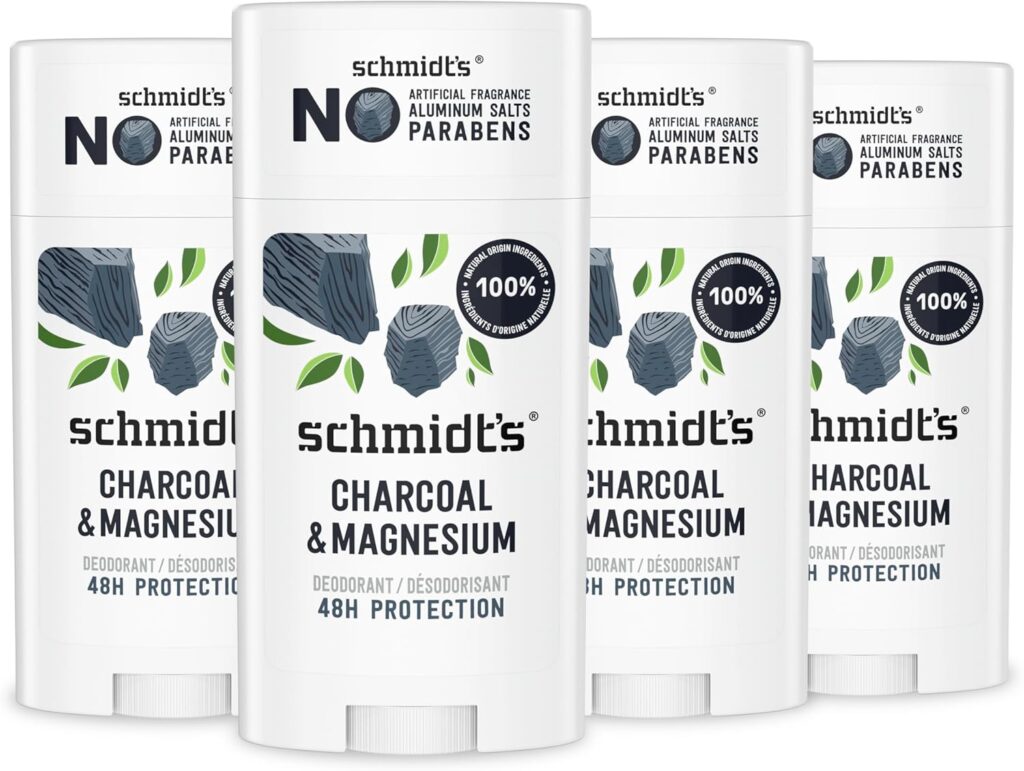
I’ll keep this one short. I have tried just about every brand of deodorant over the last 20 years, and the search ended with one stick. The short version of this article is: Schmidt’s Charcoal and Magnesium, buy the 4 pack, done. The longer version is worth reading because there’s a transition period that almost ruined natural deodorant for me before it worked, and I want you to skip the part where you give up after two weeks and go back to aluminum.
I cover three brands below. The first one is the only one I currently use. The other two are backups for sensitive skin or for people who want a lighter scent.
Why I switched away from regular deodorant
Aluminum salts are the active ingredient in antiperspirant. They plug the sweat ducts for a while, and that is how the sweat stops.
People have worried for decades that this is tied to breast cancer or Alzheimer’s. The National Cancer Institute says no scientific evidence links these products to breast cancer, so I am not going to tell you aluminum is dangerous. The one warning the FDA puts on the label is for people with kidney disease.
My own reason is plainer. After 20 years of trying brands, the stick that works for me happens to be an aluminum free one, and I like what is in it.
What’s actually in your old stick
Beyond the aluminum, the typical drugstore deodorant has a handful of other things worth knowing about. Parabens (hormone disruptors that mimic estrogen). Phthalates (often hidden under the catch-all “fragrance” on the label). Propylene glycol (the same stuff used in antifreeze, used here as a humectant). Triclosan in some older formulas (banned in soap but still allowed in deodorant in the US). None of these alone will hurt you in a single application. But your armpits get this stuff applied every single day for decades. Skin absorbs into the bloodstream. The math gets uglier the longer you do it.
None of the three products below contain any of that. They’re all aluminum-free, paraben-free, phthalate-free, with the active odor-fighter being either magnesium hydroxide, baking soda, activated charcoal, or some combination.
The transition phase nobody warns you about
Here’s the part that almost made me give up. When you stop using aluminum, your sweat ducts unclog. The bacteria that have been living under there go nuts for a few weeks before things calm down. You will smell worse for about three weeks. Then you will smell better than you did before, permanently.
Most people quit on day five and conclude natural deodorant doesn’t work. It works fine. You just have to push through the transition. A few things help:
- Use one of the stronger formulas during the transition (Schmidt’s Charcoal & Magnesium is what I used, and it’s strong enough to handle the chaos)
- Shower the morning of and reapply mid-day if you have to
- Wear cotton, not synthetic fabrics. Polyester traps bacteria smell in a way cotton doesn’t
- Drink more water than usual. Your sweat dilutes
After about three weeks the smell normalizes and you basically don’t think about it again. Pretend this paragraph never happened and you’ll get blindsided like I did. Take this seriously and you’ll glide through it.
Product recommendations
Three sticks I would hand to a friend. Schmidt’s is my daily and the only one I keep buying. The other two are for situations where Schmidt’s isn’t the right fit.
Schmidt’s Aluminum-Free Deodorant, Charcoal & Magnesium (4 pack, my daily driver)
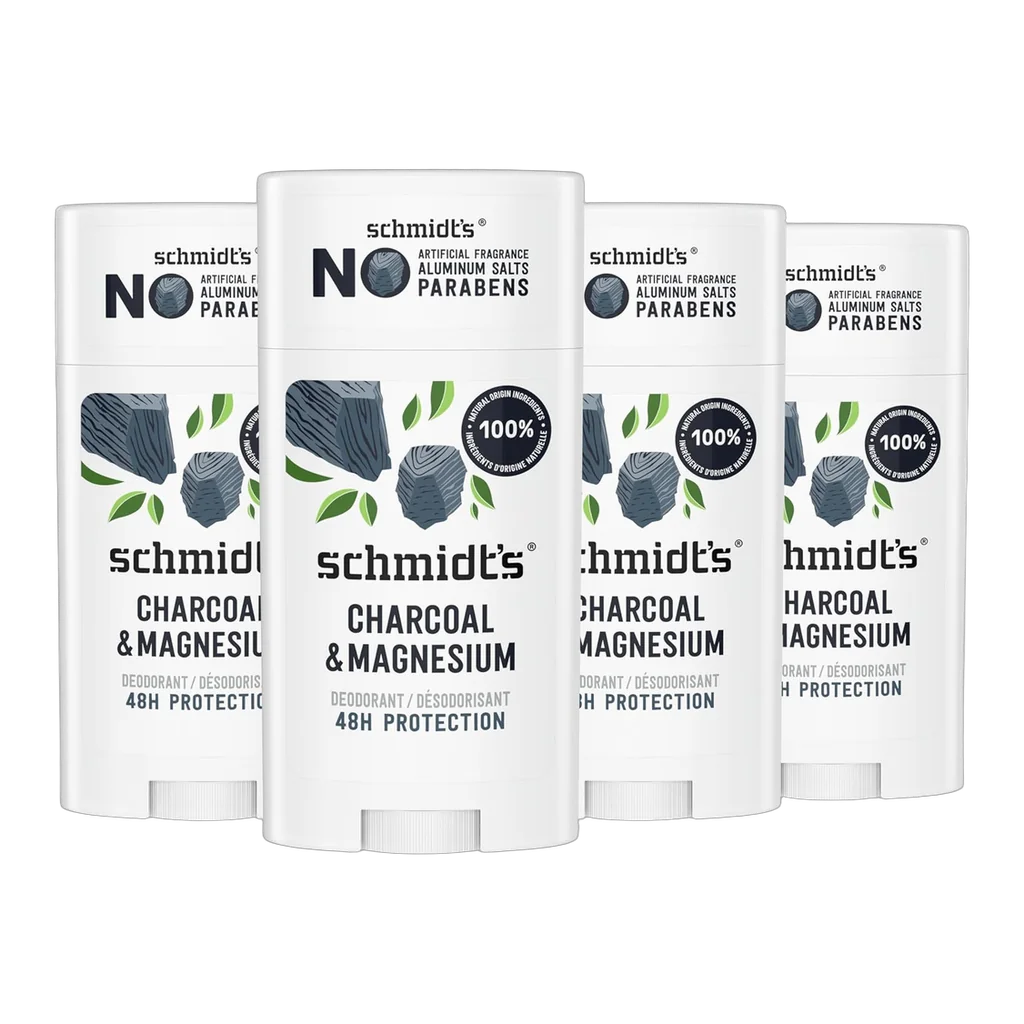
I have tried just about every brand over the last 20 years, and this is where I stopped. The blend of charcoal and magnesium is good on odor, and I like the ingredients. It works. I used to pick it up at Target for under $5, but Target stopped selling it, so now I order the 4 pack on Amazon for convenience.
Active ingredients: Magnesium hydroxide, activated charcoal.
Format: Solid stick, 2.65 oz each.
Pack: 4 sticks per Amazon listing.
Price: $26.75 for the 4 pack on October 12, 2026. It moves around, so check.
My take: After two decades of trying the others, this is the one I buy regularly.
Purchase signal: A repeat buy for years, by the 4 pack.
Native Deodorant, Coconut & Vanilla (the soft-scent everyday pick)
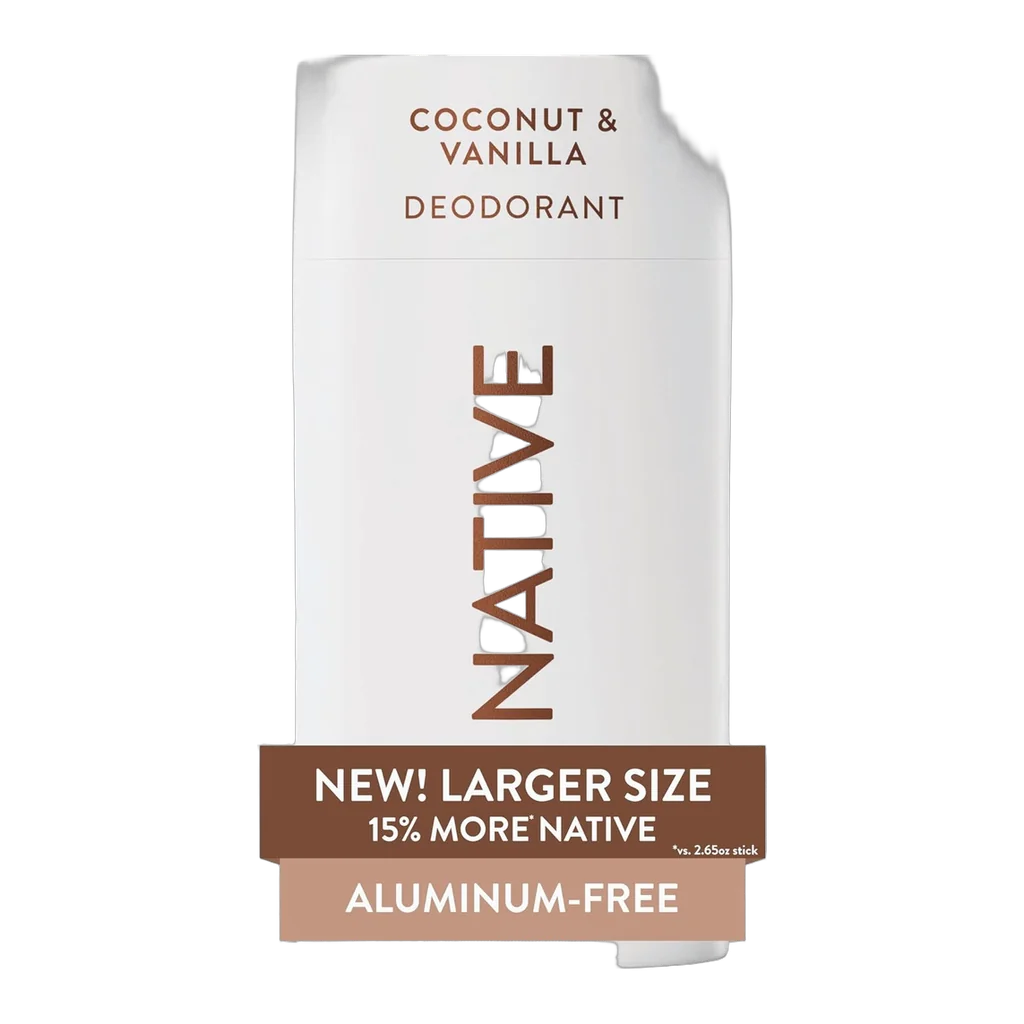
Native is the brand that converted a lot of people to natural deodorant in the first place. Coconut and Vanilla is their signature scent and it’s noticeably pleasant without smelling like a candle store. The formula uses baking soda as the active, which works extremely well for most people but can irritate sensitive armpits (more on that below). It glides on like a regular drugstore stick, which is part of why people make the switch.
Active ingredients: Baking soda, coconut oil, shea butter.
Format: Solid stick, 2.65 oz.
Price: Around $13 per stick.
My take: If you want something that smells slightly sweet and gentle, and your skin tolerates baking soda, Native is excellent. If you’re sensitive, scroll to the next pick.
Picked for: The baking soda stick a lot of people start with. Not in my own purchase record.
Each & Every Lavender & Lemon (the sensitive-skin pick)
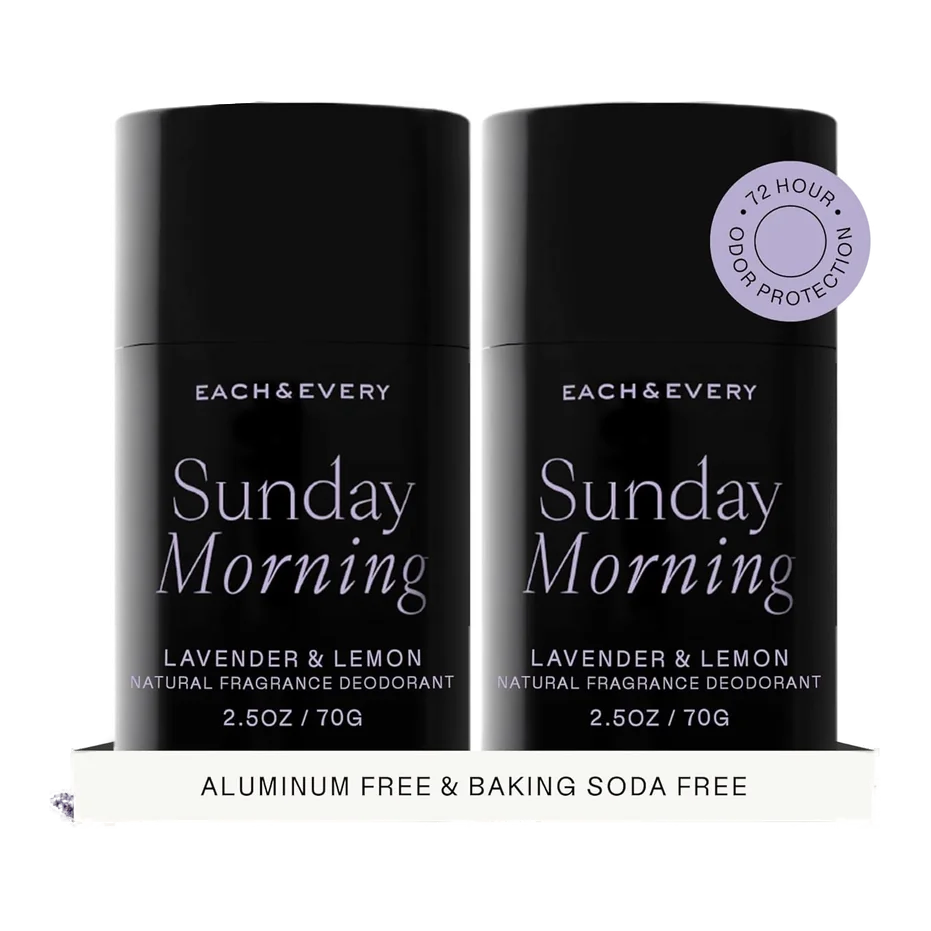
Baking soda gives some people a rash. If that’s you, Each & Every is built around magnesium hydroxide instead, so it does what baking soda does without the irritation. Their Lavender & Lemon scent is the gentlest in their lineup. The formula is on the softer side, which means easy application but slightly more frequent reapplication on heavier sweat days.
Active ingredients: Magnesium hydroxide, coconut oil, arrowroot powder.
Format: Solid stick, 2.5 oz.
Price: Around $14 per stick.
My take: If Native or any baking-soda formula has irritated you, this is the switch. Same family as Schmidt’s Charcoal & Magnesium but with a brighter, lighter scent profile.
Picked for: A magnesium based formula with no baking soda, for skin that reacts to it. Not in my own purchase record.
I have also bought a stick of Primally Pure, a tallow based deodorant, back when it was under $15. I am not linking it. The only Amazon listing I could find is sold under a slightly different name, and I cannot tell whether it is the same product.
What I actually use
One stick. Schmidt’s Charcoal & Magnesium. I buy the 4 pack on Amazon regularly. I used to get it at Target until they stopped carrying it. I’ve tried a half dozen other natural sticks (including the two above) and nothing has knocked Schmidt’s out of the rotation. It performs through gym workouts, summer heat, and travel days without reapplication. The texture is a little firmer than a typical drugstore stick, so give it three seconds against your skin to warm up before swiping.
I keep one in my main bathroom, one in my travel bag, one in my gym bag, and the fourth stays sealed in the closet as a backup. That’s the whole system.
FAQ
Does natural deodorant actually work?
Yes, after the three-week transition. Before that, no, you will smell. After, you will smell less than you did on aluminum. The aluminum stick wasn’t making you not sweat or not stink, it was masking both. Once your body’s signal system isn’t blocked anymore, things normalize fast.
What’s the difference between deodorant and antiperspirant?
Antiperspirant blocks sweat. That’s what the aluminum does. Deodorant doesn’t block sweat, it just neutralizes the bacteria that cause odor when sweat sits on your skin. Natural sticks are deodorants, not antiperspirants. You will still sweat. You won’t smell.
I tried natural deodorant and got a rash. What happened?
Baking soda. It’s alkaline and your armpit skin is mildly acidic, so for some people the pH mismatch causes irritation. The fix is to switch to a magnesium-based formula (Schmidt’s Charcoal & Magnesium, Each & Every) which gives you the same odor protection without the rash. If you already gave up on natural deodorant after a rash, give it one more try with a magnesium stick.
Will natural deodorant work for heavy sweaters?
For moderate to heavy sweaters, the stronger sticks (Schmidt’s Charcoal & Magnesium, Each & Every Lavender & Lemon) handle it. For genuine medical-grade excessive sweating (hyperhidrosis), no over-the-counter deodorant is going to be enough. Talk to a dermatologist about prescription options.
Can I use natural deodorant right after shaving?
Wait a few minutes if you can. Some sticks (especially baking soda formulas) sting on freshly shaved skin. The magnesium-based sticks are gentler post-shave. If you’re shaving daily, that’s another argument for Schmidt’s Charcoal & Magnesium or Each & Every.
Why does my natural deodorant feel grainy?
That’s the magnesium hydroxide or baking soda particles, which don’t fully dissolve at room temperature. Warm the stick against your skin for a few seconds before applying. The graininess goes away once it melts in. This is actually a sign you’re getting a real dose of the active ingredient rather than a smooth formula loaded with fillers.