It snuck up on me. Two weeks into magnesium glycinate I realized I was staying asleep through the night. No knockout pill effect, just an absence of the usual 3am wake up where my brain would start running through everything I had to do the next day. The leg cramps stopped too. Evenings felt calmer.
For two years before that I’d been taking magnesium oxide, hidden inside a multivitamin. As I’d find out later, it’s the cheapest, worst absorbed form. I might as well not have been taking it.
If you’re dealing with bad sleep, muscle cramps, low grade anxiety, constipation, or that wired but tired feeling that doesn’t have an obvious cause, magnesium is worth looking at before you start trying anything more exotic. Most Americans don’t get enough of it, and it’s one of the few things you can actually fix.
How common is magnesium deficiency
Way more common than people assume. The numbers floating around in the literature put 50 to 70% of Americans below the recommended daily intake.1 That’s most adults walking around at least somewhat low.
Why? Part of it is the soil, which has lost a lot of its magnesium over decades of industrial farming, so your spinach and almonds carry less than they did fifty years ago. Then processing takes more, since most of it leaves with the bran when wheat becomes white flour, and if much of what you eat comes out of a package, you’re behind before breakfast.
The stress angle surprised me when I started reading. Stress burns through magnesium, and being low makes you react harder to stress, so you can sit in that loop for years without knowing it. Alcohol pulls it out through your urine, even at moderate amounts, and PPIs like Prilosec, diuretics and some diabetes meds get in the way too. None of that is exotic. A pretty normal life chips away at your levels.
And here’s what bugs me: a standard blood test won’t flag any of this. Your body holds serum magnesium in such a tight range that the labs read fine while the magnesium inside your cells is running on fumes. The test that would catch it (RBC magnesium) rarely gets ordered. Most people get a clean printout and a thumbs up while feeling lousy for reasons nobody’s looking at.
What magnesium actually does in your body
The textbook number is “over 300 enzymatic reactions.” Everyone quotes it. Here’s the part that actually matters: when you’re running low, a bunch of seemingly unrelated things in your body start running half a step off. Which is why people get blindsided by how much improves at once when they finally fix it.
Muscles are the most obvious. Calcium tells muscles to contract; magnesium tells them to let go. Run short on it and you get night cramps, eyelid twitches, the tension headache that won’t quit. My leg cramps had been a background hum for years before I made the link. Took me embarrassingly long.
Sleep is the next big one. Magnesium docks onto GABA receptors (the same receptor family anti-anxiety meds latch onto) and nudges you into parasympathetic mode. Without enough of it, your brain won’t drop the gear shift at night. That tracks with what most people notice within the first two or three weeks of supplementing.
The rest of the body leans on it too. Insulin signaling depends on it, so it’s no surprise low magnesium tracks with insulin resistance in the data, and your blood vessels need it to relax. ATP, the molecule your cells burn for fuel, needs a magnesium atom attached before it can do anything, which is worth knowing if you’ve been tired for no clear reason. The stress axis runs through it as well, and that’s part of why anxiety and mood data line up with deficiency.
I’m not pitching magnesium as a cure for any of those things on its own. But if you’re low, fixing it touches several systems at the same time, and the result can feel disproportionate to “I took a mineral.”
The forms explained (where most people get it wrong)
You can’t swap one magnesium supplement for another and expect the same thing, because what the magnesium is attached to decides how much your body pulls in and what it does once it’s there. Read this section before you order anything.
Magnesium oxide, skip it
What you’ll find in most bargain bin supplements and almost every multivitamin. By weight, oxide is about 60% elemental magnesium, which makes the label number look beefy.
The catch: your body barely takes any of it in. The absorption studies put bioavailability around 4%.2 Almost everything you swallow keeps moving. What it does reliably do is loosen your bowels, which is great if you’re constipated and useless if you’re not.
If a label reads “magnesium 400mg” with no other detail, it’s oxide. Almost always. Flip the bottle.
Magnesium citrate, decent, with a catch
Citrate gets absorbed a lot better, roughly 16 to 25% depending on the study you read.2 It’s the “good” form most people have heard of. Natural Calm is the famous one.
Here’s the trade-off though. The citrate anion drags water into your intestines. At a normal dose this is fine. Once you push above 300mg or so, the laxative effect shows up fast. People with sluggish digestion love it. People without that complaint find it annoying or worse.
I think citrate is a fine starter form for someone on a budget who tolerates a bit of GI looseness. Just not my pick if your priority is sleep or anxiety, where I want the dose to land without drama.
Magnesium malate, good for fatigue
This one bonds magnesium to malic acid. Malic acid sits inside the Krebs cycle (the cellular energy assembly line), which is the reason malate gets sold as an energy and recovery supplement.
Absorption is fine. Easier on your stomach than citrate. If your main complaint is bone-deep tiredness or fibromyalgia-style symptoms, malate is reasonable. For sleep specifically I’d skip it, because some people find it mildly activating, which is the opposite of what you want at 10pm.
Magnesium glycinate, the default recommendation
This is the one I take. It’s also where I’d start most people.
Glycinate is magnesium bonded to glycine. Glycine isn’t filler. It’s a calming amino acid that hits inhibitory receptors in your brain, and there’s research showing glycine on its own improves sleep quality and trims daytime fatigue.
You end up with two things doing useful work at once. Absorption is high, often quoted around 80%, though the number varies between studies. The bigger deal in practice is how gentle it is. Almost no GI side effects. You can take it on an empty stomach without thinking twice.
For sleep, for anxiety, for plain old fixing a deficiency, glycinate is the boring correct answer. It costs more than oxide or citrate. It also actually works.
Magnesium threonate (L-threonate), the brain form
L-threonate is the most interesting form to come out in years. MIT researchers built it specifically to cross the blood brain barrier, something most magnesium forms struggle with.
A lot of the foundational work came out of Dr. Liu Guosong’s lab at MIT. The animal data shows L-threonate raises magnesium concentration at the synapse and improves learning and memory measures in mice.4 Human research is thinner but pointing in the same direction.
If your reason for taking magnesium is cognitive (focus, memory, holding off age related brain changes), L-threonate earns its price tag. The brand most products use is Magtein, the patented version.
There are two catches. It costs a lot more per bottle and gives you less elemental magnesium per dose than glycinate, and some people find it a little stimulating, which fits with how it works.
Glycinate vs L-threonate: if you had to pick one, I’d say glycinate for most people, since it’s better value, better for sleep and covers a body-wide deficiency, while L-threonate is more of a specialty tool. With the budget for both, you could take glycinate at night and L-threonate in the morning.
Dosing: what actually matters
The label math gets confusing because products list different things. If a capsule says “Magnesium (as bisglycinate) 200mg,” that’s 200mg of elemental magnesium, the number you actually care about.
Another bottle might say “Magnesium Bisglycinate 2000mg,” and that’s the weight of the whole compound, so the elemental magnesium inside is much less. Read the labels.
Practical targets:
- Maintenance / mild deficiency: 200 to 300mg elemental magnesium per day
- Active deficiency / sleep issues / muscle cramps: 300 to 400mg per day
- Upper tolerable limit: 350mg/day from supplements (the rest should ideally come from food), though many people tolerate more without issues
Timing: For sleep, take it 30 to 60 minutes before bed. Glycine is relaxing and the timing lines up with when you want the calming effect. For general supplementation without a sleep focus, with dinner works fine.
With food? You don’t need it for glycinate, because the glycine binding already makes it easy on the stomach, though oxide and citrate do go down better with a meal.
Give it time. Your cells refill slowly, so think in weeks. Most people who notice a sleep change get there after two or three weeks of taking it every day, which means quitting after a few nights tells you nothing.
Honest nuance: it’s not magic
Magnesium fixes a magnesium deficiency, and that’s really the whole claim.
If sleep apnea is what’s wrecking your sleep, magnesium won’t touch it, and if your anxiety comes from your job, your relationship or clinical depression, the most it can do is support you while you deal with the real cause.
Plenty of people have taken cheap citrate or oxide for years and feel fine, because bodies vary, so if what you’re on is working I wouldn’t switch just because some article told you to, and yes, that includes this one.
Glycinate seems to do the most for insomnia tied to racing thoughts, night leg cramps, PMS symptoms and the general stress reactivity that comes with running low. That’s a decent list, but it won’t be everybody’s list.
Some people do get drowsy from it during the day, so I’d take it in the evening, and if you tend to be sensitive to supplements, start around 100 to 150mg and see how that goes before you go higher.
Product recommendations
Four brands I’d actually spend money on, all of them third-party tested or NSF certified. I’ve used three, and the fourth is a different form for a different job.
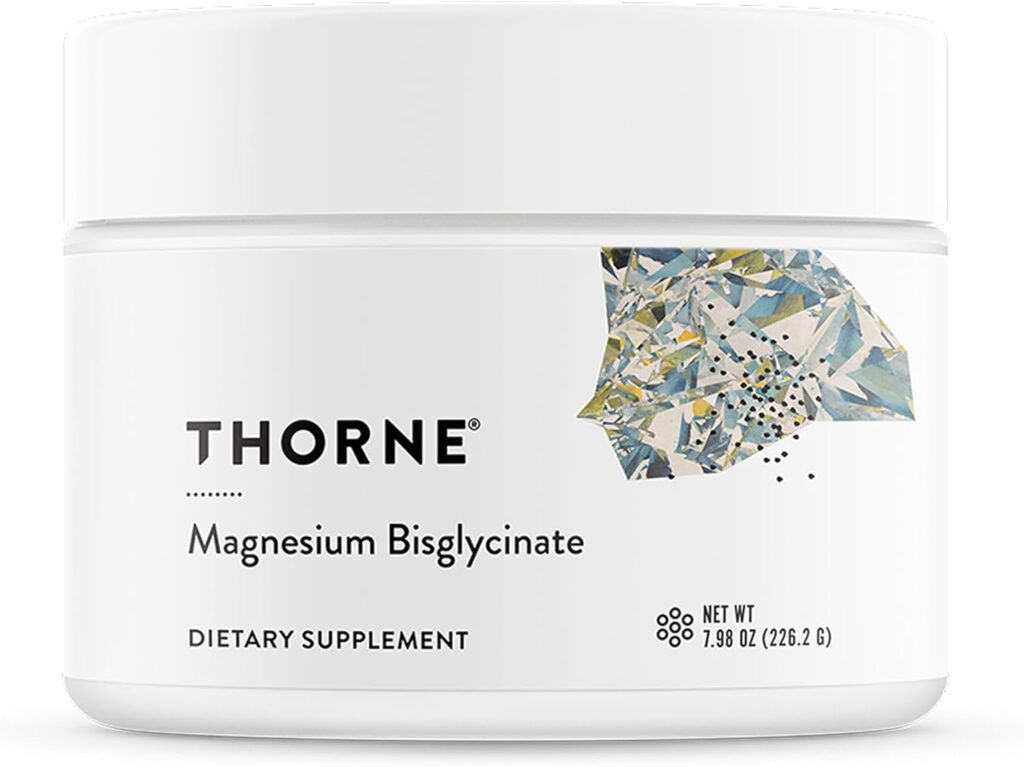
Thorne Magnesium Bisglycinate Powder (the no-drama premium pick)
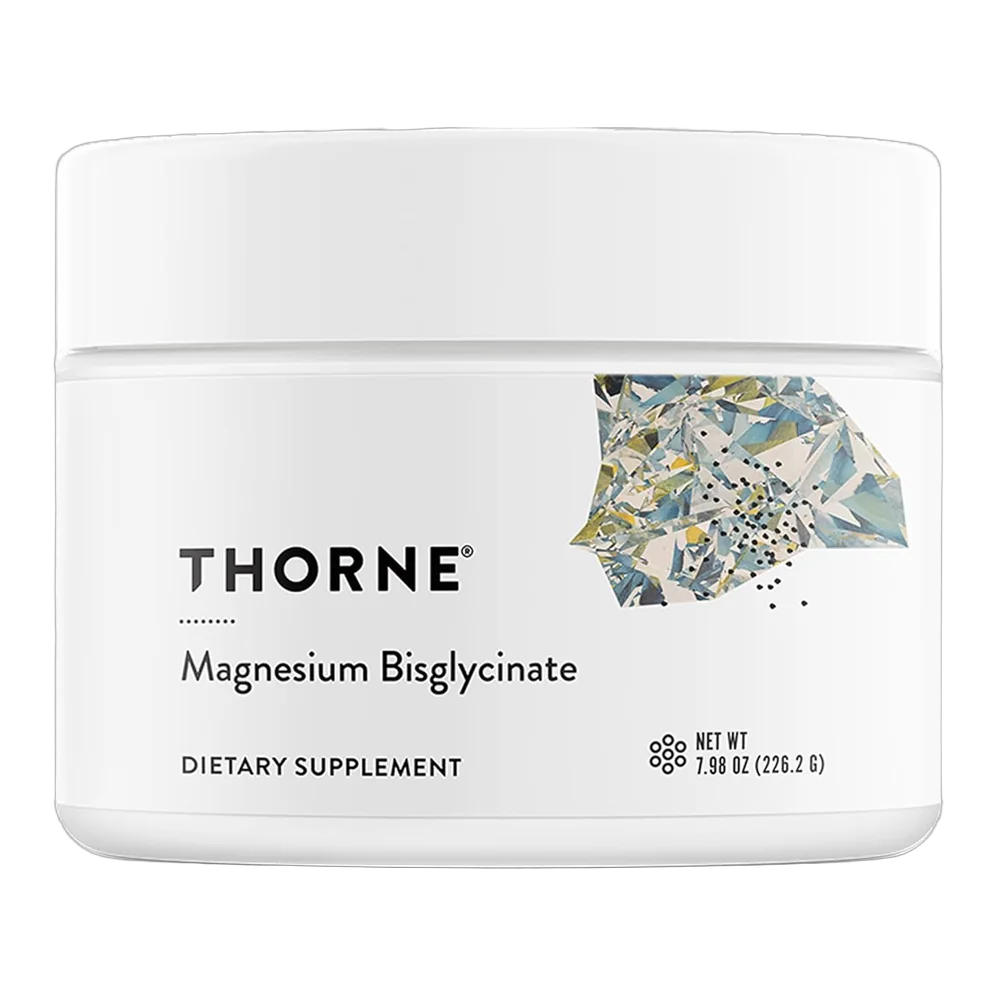
Thorne is about as well tested as supplement brands get, with NSF Certified for Sport on the label. It comes as a powder, so you get an exact dose of 200mg elemental magnesium per scoop that stirs into water, with 60 servings in the container.
Purchase signal: I have used this one.
Price: Around $52.
My take: I’ve used Thorne, and price is what keeps it from being an easy everyday pick. If your budget can absorb $52 a bottle, you won’t regret it.
Pure Encapsulations Magnesium Glycinate (the functional medicine default)
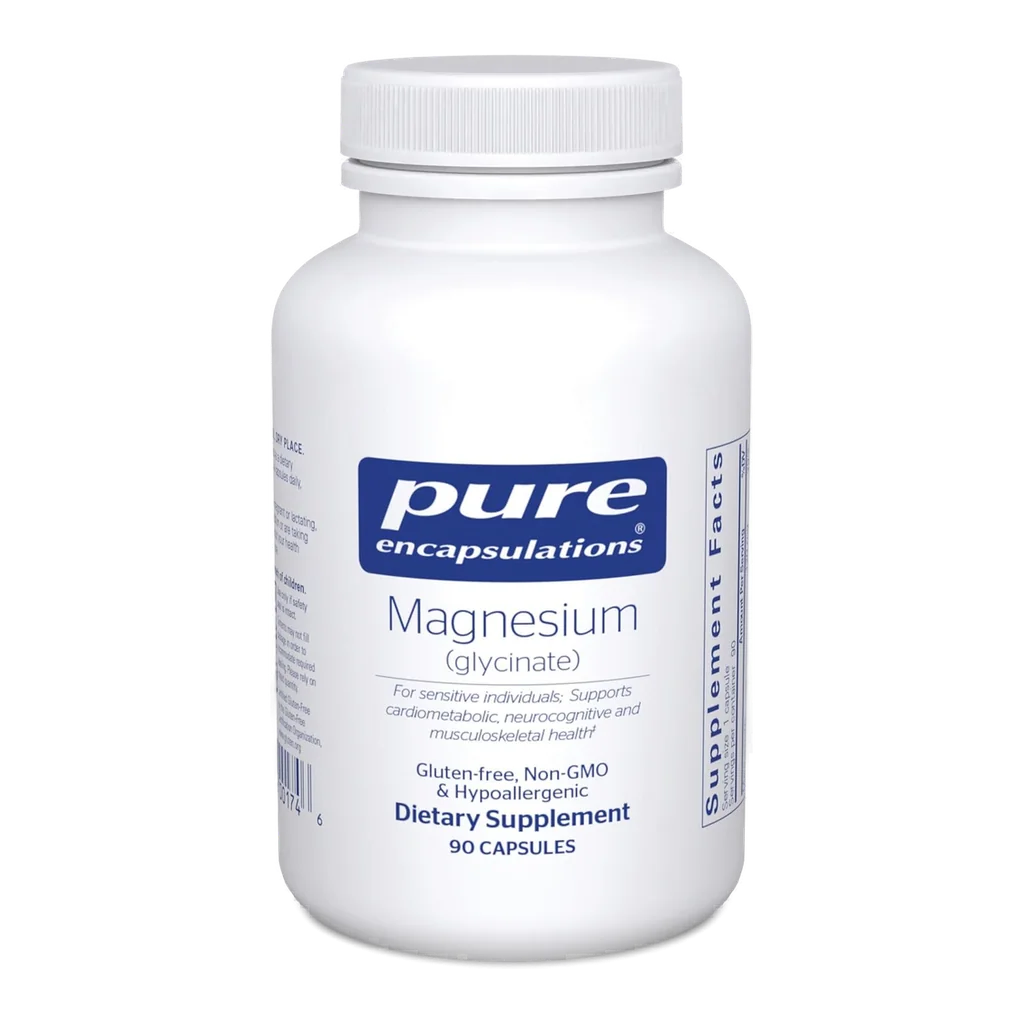
Plenty of functional medicine practitioners default to this brand, mostly because the capsule has so little in it besides the glycinate. There’s no magnesium stearate and none of the common allergens, and you get 120mg of elemental magnesium per capsule, 90 capsules to the bottle.
Purchase signal: I have used this one.
Price: Around $27.
My take: I’ve used this one too. It has the same kind of clean ingredient list as Thorne at about half the price per bottle, which makes it the easier one to keep buying.
Doctor’s Best High Absorption Magnesium Glycinate Lysinate (the value pick)
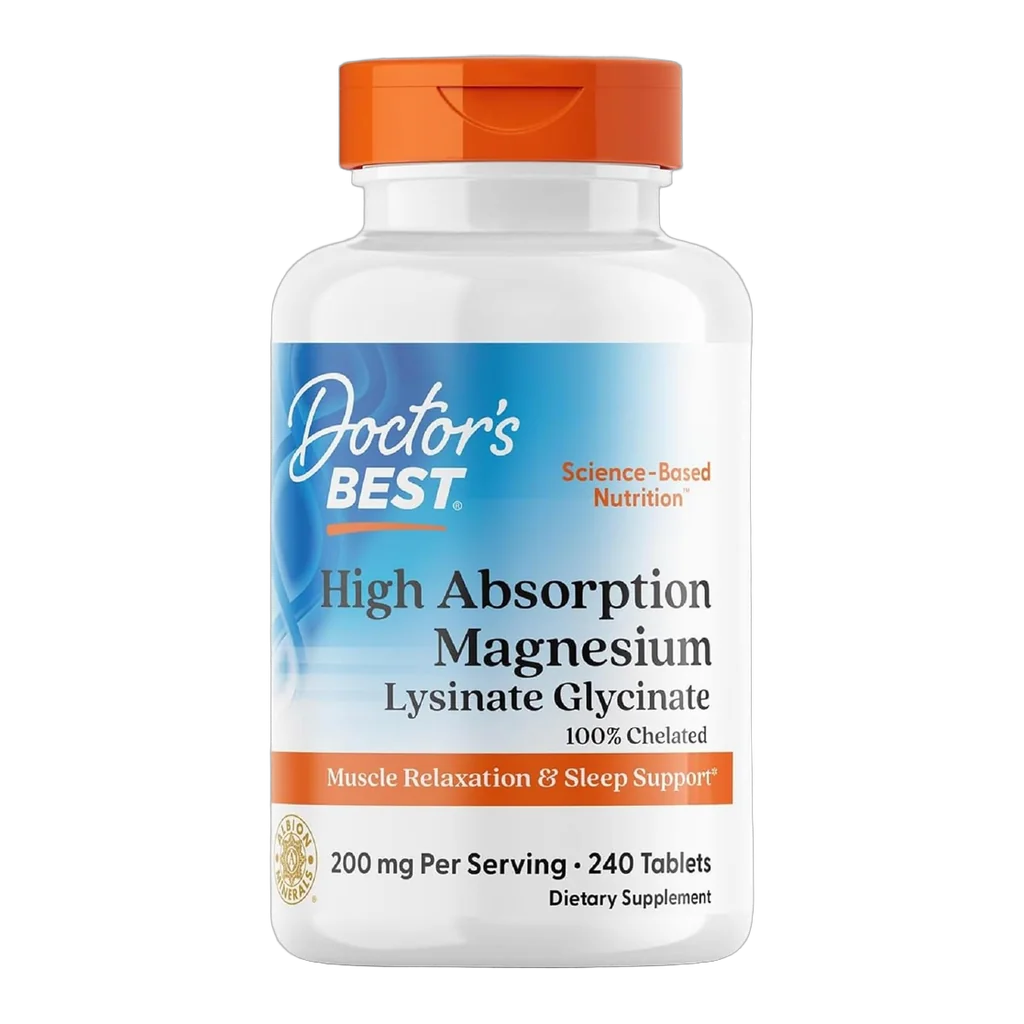
Doctor’s Best uses the TRAACS chelated form from Albion, the same compound you’ll find in the premium brands, without the premium label. Two tablets give you 100mg of elemental magnesium, and the bottle holds 240 tablets, so 120 servings.
Purchase signal: Bought as my dedicated glycinate bottle.
Price: Around $21.
My take: If budget is the primary concern, start here. The quality is real, the chemistry is identical to the more expensive options, and 240 tablets last forever.
Life Extension Neuro-Mag (L-Threonate / Magtein) (the brain form)
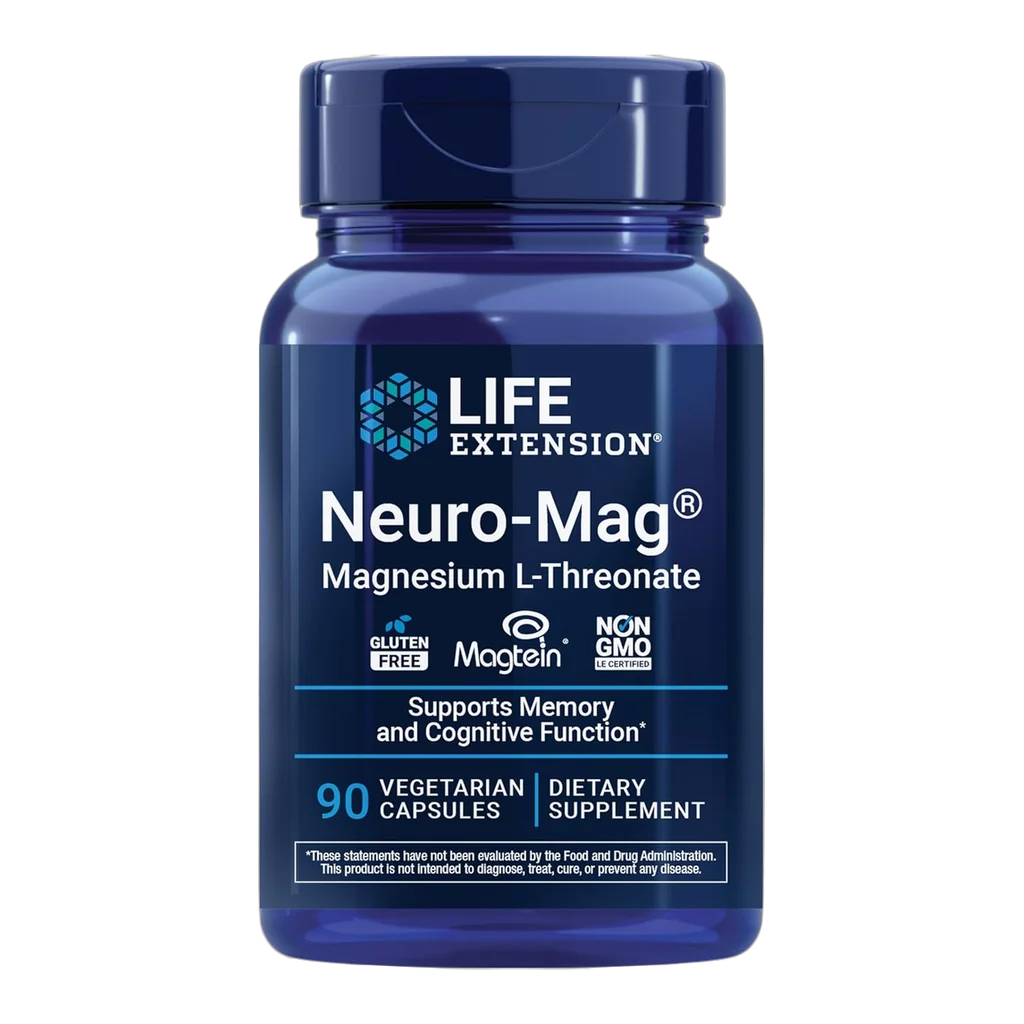
This one’s a different tool. Magtein is a patented L-threonate developed to cross the blood brain barrier, so it’s the one to look at if memory and focus are your goals. Three capsules give you 144mg of elemental magnesium, from 2000mg of Magtein, and a bottle of 90 lasts a month.
Picked for: the studied Magtein form of magnesium L-threonate. I have not tried it.
Price: Around $31.
My take: Life Extension uses the clinically studied form and prices it reasonably for what it is.
FAQ
Can you take too much magnesium?
It’s hard to get there on pills, because too much magnesium gives you diarrhea long before you’ve absorbed a toxic amount. The upper limit from supplements is 350mg a day for most adults, and plenty of people go past that without trouble, but if you have kidney disease you need to be careful, since your kidneys are what clear the excess.
Will magnesium make me drowsy?
It can relax you a little, which is why evenings suit it, but most people wouldn’t call that sedation. It feels more like tension leaving than like a sleep aid kicking in, and if a morning dose leaves you foggy, just move it to the evening.
What about topical magnesium (sprays, flakes)?
The evidence that magnesium gets through your skin is weak. A few small studies show a little absorption, nowhere near enough to fix a deficiency, so while a spray might help a sore muscle, I wouldn’t count on it for your magnesium and I’d put the money toward a glycinate you swallow.
Does magnesium actually help with sleep?
Reasonably well, particularly if you’re short on it. A 2012 randomized trial in older adults with insomnia found better sleep time, sleep efficiency and early morning waking on 500mg of magnesium than on placebo,3 and glycine has some research of its own. It’s no guarantee, but it’s worth a try before melatonin or a prescription.
How long until I notice a difference?
Two to three weeks for most people, since your stores refill slowly, so don’t judge it after three days.
Will a blood test confirm I’m deficient?
Usually not, at least with a standard serum test, because your body keeps blood levels in a tight range even when your cells are running low.1 The more useful one is RBC magnesium, which most doctors don’t run unless you ask. If your symptoms fit and you don’t eat many magnesium-rich foods, you’re probably low enough to benefit either way.
References
The deficiency, bioavailability, and sleep claims above are drawn from peer-reviewed research. The studies most directly relevant:
- DiNicolantonio JJ, O’Keefe JH, Wilson W. Subclinical magnesium deficiency: a principal driver of cardiovascular disease and a public health crisis. Open Heart. 2018 Jan 13;5(1):e000668. PubMed
- Walker AF, Marakis G, Christie S, Byng M. Mg citrate found more bioavailable than other Mg preparations in a randomised, double-blind study. Magnes Res. 2003 Sep;16(3):183-91. PubMed
- Abbasi B, Kimiagar M, Sadeghniiat K, Shirazi MM, Hedayati M, Rashidkhani B. The effect of magnesium supplementation on primary insomnia in elderly: A double-blind placebo-controlled clinical trial. J Res Med Sci. 2012 Dec;17(12):1161-9. PubMed
- Slutsky I, Abumaria N, Wu LJ, Huang C, Zhang L, Li B, Zhao X, Govindarajan A, Zhao MG, Zhuo M, Tonegawa S, Liu G. Enhancement of learning and memory by elevating brain magnesium. Neuron. 2010 Jan 28;65(2):165-77. PubMed