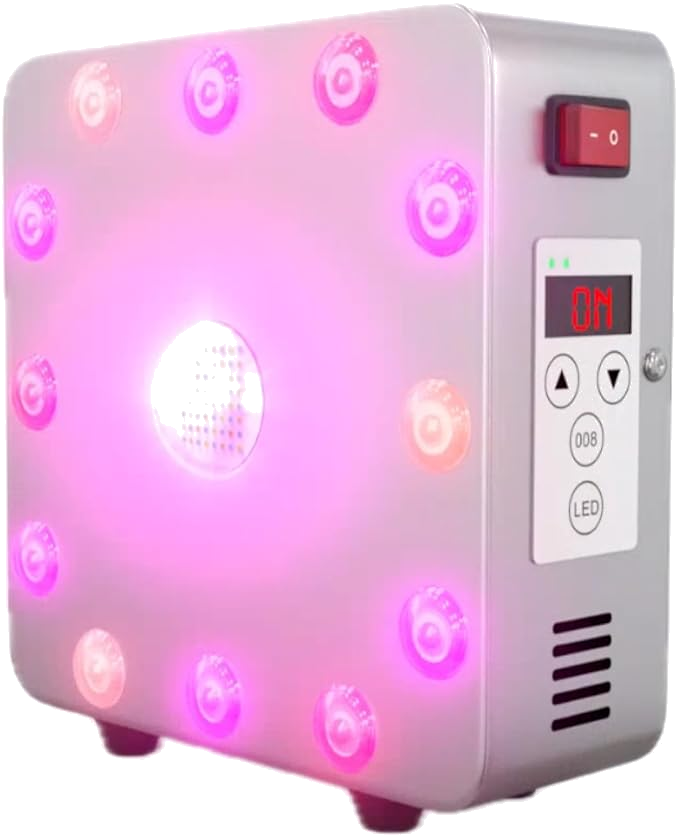
I ignored red light therapy for years. It sounded like a wellness fad, overpriced panels, Instagram influencers glowing pink in their bathrooms. Then a discount code landed in my lap, 30 percent off, and I figured worst case I’d have an expensive disco lamp. Six months later the thing sits by my desk and I use it almost every day. This is the skeptic’s version of why.
Red light therapy goes by a more respectable name in the research world: photobiomodulation, or PBM. That’s the term to search if you want the actual science instead of the influencer version. PubMed has thousands of studies under that keyword. Some of them are rock solid. Some are thin. Most of them use red light around 630 to 670 nm and near infrared around 810 to 850 nm, which is exactly what the consumer devices put out.
The short pitch: specific wavelengths of red and near infrared light interact with cytochrome c oxidase, an enzyme inside your mitochondria, which bumps up ATP production and modulates reactive oxygen species. That is not marketing talk, that is the mechanism nearly every review paper opens with. More cellular energy, less oxidative stress, better tissue repair. That is the whole story at a high level.
What I want to do in this article is sort out the claims. Some of this stuff is backed by decent clinical data. Some of it is plausible but unproven. And some of it is frankly a stretch. I’ll tell you which bucket each claim falls in based on what I read in actual peer reviewed studies, then I’ll tell you about the device I use and why I picked it over the $2,000 full size panels.
What’s in this article
Why I Finally Bought One
I had been dragging my feet on red light therapy for maybe two years. The thing that kept me out was the price tag. The big panels everyone talks about run $800 to $2,500, and I wasn’t ready to drop that kind of money on something I was still skeptical about. The smaller masks and handheld devices looked underpowered, basically LED flashlights with wellness branding.
The EMR Tek Firewave hit a middle spot. Compact, but with real output behind it, 236 watts, three wavelengths, no flicker. Then a discount code popped up that took 30 percent off and the price landed at something I could actually justify as a curiosity purchase. I bought it.
It showed up and the first thing I noticed is this thing is built like a brick. Solid metal chassis, heavier than it looks in pictures, real LED drivers inside (Meanwell industrial drivers, the same ones in commercial panels). It was not a plastic gadget pretending to be serious equipment. It was serious equipment in a smaller form factor.
I started using it for 10 minutes most mornings while I drink coffee, aimed at my face, chest, and thyroid area. The skin thing was my main interest going in because I have some lingering sun damage on my forehead and wanted to see if it would do anything. I’ll write a dedicated guide later on exactly how I use it, what distance, what duration, what times of day. For now let’s just talk about what the research supports.
What PBM Actually Does (Evidence Is Solid)
These are the uses where the clinical literature is strong enough that I’m comfortable saying it works. Not for everyone, not dramatically, but the data is there.
- Skin collagen and wrinkles. Multiple studies show increased type I collagen production, improved skin texture, and reduced wrinkle depth with red light applied over weeks. This is probably the best validated use case for consumer devices.3
- Wound healing. PBM speeds up tissue repair in diabetic ulcers, surgical wounds, and burns. This is established enough that some hospitals use it clinically.4
- Muscle recovery and DOMS. Meta analyses show moderate reductions in delayed onset muscle soreness and faster strength recovery when light is applied before or after exercise.6,7
- Knee osteoarthritis and joint pain. Pain reduction and functional improvement in knee OA, tendinopathies, and rotator cuff issues, especially when combined with standard rehab.
- Androgenetic alopecia (hair loss). FDA cleared multiple red light devices for pattern hair loss back in 2007. Randomized trials show measurable hair regrowth, similar efficacy to minoxidil, better when combined.2,10
- Acne. Red light has anti inflammatory effects that help calm active breakouts, and blue light kills the bacteria (most clinical acne protocols combine both).
None of this is miracle territory. These effects are modest to moderate and they require consistent use over weeks to months. But the mechanism is understood and the outcomes are reproducible in controlled trials.1,5,11
What PBM Might Do (Research Is Active)
This next set is where things get more interesting and more uncertain. There’s real research happening and early results look promising, but the data is thinner, the protocols vary wildly, and you should not buy a red light panel expecting these outcomes.
- Sleep and circadian rhythm. Morning red light exposure may help reset circadian signaling, especially in people who live indoors all day. Small studies suggest improved sleep quality, but this gets tangled up with general light hygiene and it’s hard to isolate.
- Mood and seasonal affective disorder. Overlaps with bright light therapy for depression, which is well established, but the red and near infrared specific research is earlier stage. Some promising data on treatment resistant depression using transcranial PBM.
- Cognitive function and TBI. Near infrared light penetrates the skull enough to affect brain tissue. Early clinical work on traumatic brain injury, stroke recovery, and mild cognitive decline shows improvements in attention and executive function. Not yet mainstream, but being studied seriously.
- Thyroid function. Small studies on Hashimoto’s patients suggest red light over the thyroid may reduce antibody levels and lower the need for medication in some cases. Sample sizes are tiny and it’s not standard of care, but it’s why a lot of people aim their panels at their necks.
- Testosterone. This one gets hyped a lot on biohacker forums. The research is one small study on red light to the testes and a handful of animal studies. Interesting, not proven in humans at scale.
- Oral health. Decent evidence for reducing gum inflammation and speeding healing after dental procedures. Actually used by some dentists.
- Eye health (age related macular degeneration, myopia progression). Ophthalmology research on PBM is growing. Mixed results for AMD, better signals for slowing myopia in kids.8,9,12 Wavelengths and safety parameters matter a lot here, so this is not something to experiment with using a body panel aimed at your face.
Can It Fix Eye Floaters? And Other Stretch Claims
Someone asked me specifically about eye floaters. Short answer: no good evidence. I searched for it and there is basically nothing in the peer reviewed literature connecting PBM to floater reduction. Floaters are vitreous debris, not a mitochondrial issue, so the mechanism does not really line up either. The broader eye research I mentioned above is about retinal cells, not the vitreous gel where floaters float.
Other claims I’d put in the “probably not” or “not proven” pile:
- Fat loss. Some devices market themselves as “red light fat reduction” and there are small studies, but the effect is minimal and probably not worth the cost of a specialized device.
- Tattoo fading. Not really.
- Curing specific chronic diseases. PBM is adjunctive for a lot of conditions. It is not a standalone treatment for anything systemic.
- Replacing sunlight. Sunlight does more than deliver red wavelengths, it’s a full spectrum hormonal signal. Red light therapy is useful but it’s not a sun substitute.
The Device I Picked: EMR Tek Firewave
The Firewave was the right call for me because I didn’t want a giant full body panel taking up a wall, and I didn’t want a weak handheld. It sits on a small stand next to my desk, covers my face and upper chest comfortably at about 6 inches away, and I can point it wherever I want.
EMR Tek Firewave, Compact Red & Near Infrared Panel
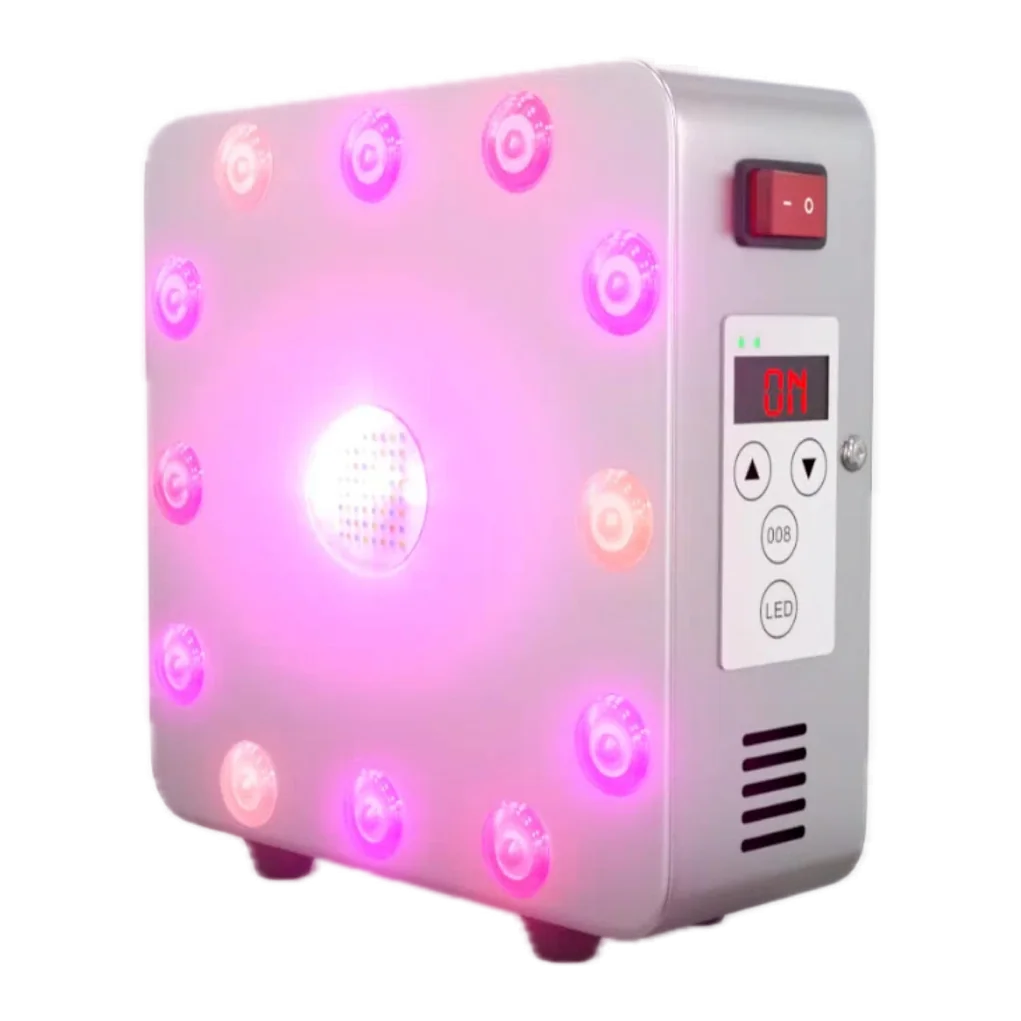
EMR Tek Firewave
Wavelengths: 630 nm, 670 nm (red), 830 nm (near infrared)
Power output: 236 watts
Drivers: Meanwell industrial grade, zero flicker, zero EMF
Build: Solid metal chassis, properly heavy, feels like lab equipment not a gadget
Best for: Face, chest, thyroid area, targeted joint or muscle work
I’ve had mine about six months and it runs cool, gives off no audible fan hum, and has not flickered once. For a compact panel it punches well above its size class.
Purchase signal: Mine, bought direct from EMR-Tek rather than on Amazon. I am also an EMR-Tek affiliate, so the direct link below pays me a commission.
Price: $262.49 on Amazon on September 26.
Get 35% Off Direct (my reflink)
Check Price on Amazon
With my direct reflink discount, this lands around the $150 range, which is a steal for a serious 3-wavelength panel. That’s how I originally got in at 30 percent off and I would have paid full price in hindsight.
Why 3 wavelengths matter. 630 nm targets surface skin and collagen. 670 nm is the “sweet spot” for mitochondrial absorption. 830 nm penetrates deeper, into muscle and joint tissue. Having all three in one device means you can use it for skin and recovery without buying separate panels.
How I Use It (High Level)
I’ll do a full dedicated post on my exact protocol, but the short version: 10 minutes most mornings, about 6 to 8 inches from my face and chest, eyes closed (though the 830 nm is not harmful at that distance, I just prefer not to stare into it). Occasionally I’ll aim it at my knees or lower back if I’ve been running or lifting.
Consistency matters more than session length. Ten minutes daily beats an hour once a week. Whatever you do, do it regularly or don’t bother.
Ready to try it?
Use my reflink for 35% off direct from EMR Tek. Lands around $150 for the Firewave.
FAQ
References and PubMed Sources
If you want to go deeper, here are the peer reviewed sources behind the claims in this article. Most are systematic reviews or meta analyses, which means they’re summarizing across multiple studies. Search PubMed using “photobiomodulation” or “PBM” as the keyword.
- Glass GE. Photobiomodulation: A review of the molecular evidence for low level light therapy. Journal of Plastic, Reconstructive & Aesthetic Surgery. PubMed
- Sorbellini E, et al. Photobiomodulation for the management of hair loss. Lasers in Medical Science, 2021. PubMed
- Glass GE. Unlocking the Power of Light on the Skin: A Comprehensive Review on Photobiomodulation. International Journal of Molecular Sciences, 2024. PubMed Central
- Pilar EFS, et al. Modulation of gene expression in skin wound healing by photobiomodulation therapy: A systematic review. Photodermatology, Photoimmunology & Photomedicine, 2024. PubMed
- Hamblin MR. Effects of photobiomodulation on multiple health outcomes: an umbrella review of randomized clinical trials. PubMed Central
- Tomazoni SS, et al. Photobiomodulation therapy and delayed onset muscle soreness: A systematic review and meta analysis. PubMed Central
- Cotler HB, et al. Photobiomodulation as Medicine: Low Level Laser Therapy (LLLT) for Acute Tissue Injury or Sport Performance Recovery. PubMed Central
- Hamilton C, et al. A Pilot Study Evaluating the Effects of 670 nm Photobiomodulation in Healthy Ageing and Age Related Macular Degeneration. Journal of Clinical Medicine, 2020. PubMed
- Eells JT, et al. Photobiomodulation for the treatment of retinal diseases: a review. PubMed Central
- Avci P, et al. Role of Low Level Light Therapy (LLLT) in Androgenetic Alopecia. PubMed Central
- Dompe C, et al. Photobiomodulation, mechanisms and clinical applications of light therapy. PubMed Central
- Photobiomodulation in ocular therapy: current status and future perspectives. PubMed Central