In This Article
- What Actually Makes an Oil “Heart Healthy”?
- The Smoke Point Myth
- The Big Comparison: Common Cooking Oils and Heart Health
- Extra Virgin Olive Oil: Still the Gold Standard
- Avocado Oil: Solid, But Read the Fine Print
- Algae Oil: The Sleeper Pick
- Animal Fats and Heart Health
- Seed Oils: It’s Not That Simple
- What the 2026 Dietary Guidelines Actually Say
- What I Actually Cook With
- FAQ
Everybody has an opinion. The studies tell a more interesting story.
I’ve gone deep on which oils I keep in my kitchen and done a full breakdown of tallow versus lard. This article is different. This one’s about what “heart healthy” actually means when it’s printed on a bottle of cooking oil, according to the research.
Fair warning: the answer is messier than either side of the internet wants it to be. The “all seed oils are toxic” crowd oversimplifies things. So does the “saturated fat will kill you” crowd. The research sits somewhere in the middle, and I think you can handle that.
What Actually Makes an Oil “Heart Healthy”?
When researchers evaluate a cooking oil for heart health, they look at three measurable things. Not vibes. Not TikTok takes.
Fatty Acid Profile
Every oil is a mix of saturated, monounsaturated, and polyunsaturated fat. The ratio matters.
Monounsaturated fat (MUFA), especially oleic acid, is the one that keeps showing up in the win column. A 2024 cohort study pegged higher oleic acid intake at 39% lower cardiovascular death risk. That got my attention. Oleic acid does a bunch of useful stuff: helps cell membranes stay flexible, tamps down inflammatory pathways, keeps insulin working properly. Olive oil gets all the credit here, but avocado oil and algae oil are packed with it too.
Polyunsaturated fat (PUFA) is where it gets messy. Swap PUFA for saturated fat in someone’s diet and yes, cardiovascular mortality goes down. One meta analysis put it at 28% less CVD death for every 5% energy swap. Hard to argue with that. Problem is, PUFAs fall apart when you heat them. More on that in a minute.
Saturated fat is the one everybody fights about. Old playbook: saturated fat jacks up cholesterol, cholesterol clogs arteries, game over. Actual picture is way messier. Stearic acid (the big one in beef tallow) looks cholesterol neutral every time researchers test it. Palmitic acid (palm oil territory) does bump LDL. A 2025 study threw another wrinkle in: at normal dietary levels, neither one showed harmful cardiovascular effects. Meanwhile, population data still says plant fats beat animal fats for longevity. So. Pick your favorite study and you can argue anything.
Oxidative Stability
Nobody talks about this enough. Crank the heat on an oil and the fatty acid chains start snapping apart. PUFAs go first because they’ve got all these double bonds acting like structural weak points. What comes out the other side? Aldehydes. Lipid peroxides. Stuff with names that belong on a hazmat sheet, not your dinner plate. Forget cholesterol for a second. The real question is what’s happening to the oil while it sits in a hot pan.
Oils high in saturated and monounsaturated fat hold up better. Fewer double bonds, fewer weak spots. Basic chemistry. That’s why tallow can be reused 3 to 5 times for deep frying while soybean oil starts degrading after one round.
Antioxidant Content
Here’s a wrinkle most people miss. Some oils show up to the fight with bodyguards. Extra virgin olive oil has these polyphenols, oleocanthal and oleuropein, that physically shield the fat molecules from breaking down when things get hot. That’s why EVOO punches above its weight class for cooking stability. Refine an oil and you strip all that armor off. Sure, you get a higher smoke point. But you traded away the stuff that was actually keeping the oil intact. Bad deal.
The Smoke Point Myth
I used to pick oils based on smoke point. Most people do. Turns out that’s mostly wrong.
Smoke point measures when free fatty acids burn off. It’s a visual thing. But it tells you almost nothing about whether the oil is breaking down into harmful compounds. What actually predicts cooking safety is oxidative stability: how resistant the fatty acids are to heat induced breakdown.
Smoke point isn’t totally irrelevant. It tells you when your kitchen gets smoky. But as a proxy for safety? Worthless. I stopped using it as my primary criterion and my cooking got better for it.
The Big Comparison: Common Cooking Oils and Heart Health
Everything in one place. This table rates oils through the lens of heart health specifically. Not taste, not price. Just cardiovascular evidence.
| Oil | Primary Fat | Oleic Acid | Oxidative Stability | Heart Evidence | Best Use |
|---|---|---|---|---|---|
| Extra Virgin Olive Oil | MUFA (73%) | ~72% | Very High | Strongest | Everything (yes, even frying) |
| Avocado Oil | MUFA (71%) | ~65% | High | Strong | High heat, neutral flavor |
| Algae Oil | MUFA (90%) | ~87% | Very High | Emerging | Very high heat, neutral |
| Ghee / Butter | SFA (62%) | ~28% | High | Mixed | Sautéing, baking, flavor |
| Coconut Oil | SFA (82%) | ~6% | High | Weak | Baking, specialty dishes |
| Beef Tallow | SFA/MUFA (50/42%) | ~42% | Very High | Mixed | Frying, roasting, searing |
| Lard | MUFA (46%) | ~44% | High | Mixed | Baking, frying, all purpose |
| Canola Oil | MUFA (63%) | ~61% | Moderate | Moderate* | Dressings, low heat only |
| Soybean Oil | PUFA (58%) | ~23% | Low | Moderate (cold) | Dressings, low heat only |
| Sunflower Oil (regular) | PUFA (69%) | ~20% | Low | Poor (heated) | Cold applications only |
| Corn Oil | PUFA (55%) | ~28% | Low | Moderate (cold) | Cold applications only |
*Canola’s lipid marker improvements are well documented in controlled trials. The FDA even allows a qualified health claim for it. But nearly all that evidence comes from unheated canola in dietary studies. With ~28% PUFA and only moderate oxidative stability, the picture changes once you start cooking with it. The heart evidence is real for oil in the bottle, not necessarily oil in the pan.
The pattern is clear: oils with the best combination of heart evidence AND oxidative stability are the high oleic ones (EVOO, avocado, algae). Seed oils have favorable cholesterol data but terrible heat stability. Animal fats have excellent stability but more complicated cardiovascular evidence. There’s no single “best” oil. There’s a best oil for each situation.
Extra Virgin Olive Oil: Still the Gold Standard
The research keeps confirming what the Mediterranean diet crowd has been saying for decades. And the 2024 to 2026 studies added genuinely new dimensions.
A 2026 study on reproductive aged women found measurable metabolic and anti inflammatory effects from EVOO. That matters because most heart health research has historically been done on men. A University of Florida finding from 2024 showed a “less is more” pattern: moderate EVOO consumption produced greater LDL reductions than higher amounts over 4 weeks. Researchers think it’s related to polyphenol processing. You don’t need to drown your food. A couple tablespoons a day is the sweet spot.
And here’s the part that challenges conventional wisdom: EVOO is genuinely good for cooking, not just drizzling. Those polyphenols act as heat shields. When researchers compared frying performance, EVOO consistently produced fewer toxic byproducts than refined oils with much higher smoke points. The “don’t heat olive oil” advice is outdated. The data says otherwise.
California Olive Ranch 100% California EVOO (the supermarket one)
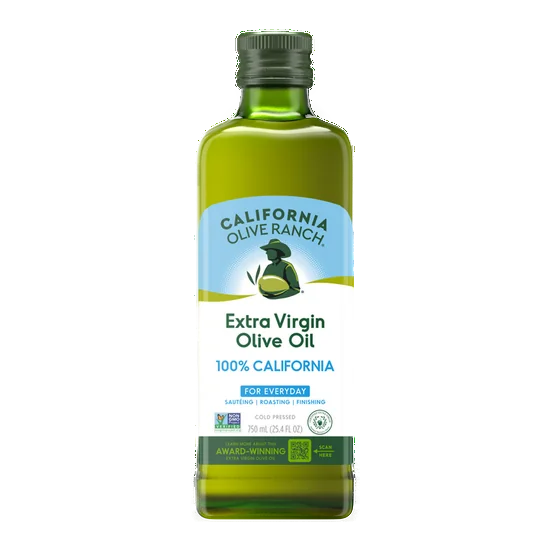
A liter bottle from olives grown and pressed in California. Check the harvest date on the back before you buy.
Picked for: One of the more credible mass market olive oils. Not in my purchase record.
Price: $36.99 a liter on September 26.
Avocado Oil: Solid, But Read the Fine Print
A 2025 meta analysis found significant reductions in total cholesterol and LDL with regular avocado oil use. Strongest at intake above 250g/day after 23+ weeks. The fatty acid profile is strong: ~71% monounsaturated, dominated by oleic acid. High smoke point (~520°F refined). Good stability.
The problem isn’t the oil. It’s what’s in the bottle. Studies going back to 2020 have repeatedly found avocado oil products that are adulterated, mislabeled, or rancid. Some “avocado oil” tested was mostly soybean oil. I covered this in my cooking oils guide. If you’re buying for heart benefits, brand matters enormously. Chosen Foods and Primal Kitchen have tested well. A lot of others haven’t.
Algae Oil: The Sleeper Pick
This is the one I reach for most. Algae oil is about 90% monounsaturated fat with ~87% oleic acid. Higher than olive oil. Higher than avocado oil. The highest of any cooking oil I’ve found.
Oxidative stability is excellent (almost no PUFA to break down), smoke point is absurd (~535°F), flavor is neutral. The cardiovascular research specifically on algae oil is limited compared to olive oil’s decades of data, but the fatty acid profile alone puts it in a strong position. When you’re 87% oleic acid, the chemistry works in your favor whether there’s a 20-year cohort study yet or not.
I cook with it almost daily. Searing, frying, roasting, whatever. Olive oil stays around for dressings and lower temp cooking where I want that peppery flavor. But for clean, stable, high heat fat? Algae oil. Every time.
Animal Fats and Heart Health
I cook with tallow and lard regularly. But I’ll be straight about where the evidence stands.
A 2024 study tracking dietary fat and mortality found higher animal fat consumption associated with increased cardiovascular mortality. When researchers modeled replacing just 5% of energy from animal fat with plant fat, they saw a 4 to 24% reduction in overall mortality and 5 to 30% in CVD mortality. Not small numbers.
There are legitimate critiques. People who eat more animal fat might also eat more processed food, exercise less, have other confounding factors. Observational studies show correlation, not causation. But I can’t just wave it away because it’s inconvenient. That’s the same thing I accuse the “all fat is bad” crowd of doing with seed oil research.
Where Animal Fats Win
Oxidative stability. Tallow is ~50% saturated and 42% monounsaturated. Almost no PUFAs. You can fry with it all afternoon and strain it for next time. No aldehyde production. No lipid peroxides. The oil hasn’t fallen apart.
Lard is about 46% monounsaturated (oleic acid, same stuff as olive oil), 37% saturated, only 17% PUFA. Pasture raised lard carries up to 1,100 IU of vitamin D per tablespoon, which is wild for a cooking fat.
The stearic acid question matters too. A big chunk of tallow’s saturated fat is stearic acid, which doesn’t raise LDL the way palmitic acid does. A 2025 study on processed fats found no harmful cardiovascular effects from either at normal dietary levels.
My Take
I won’t tell you animal fats are heart healthy. The population data doesn’t support that. But the oxidative stability advantage is real, and the saturated fat story is more complicated than either camp admits. I use tallow and lard for high heat cooking where stability matters most, and EVOO and algae oil for everything else.
Seed Oils: It’s Not That Simple
I’ve written about what seed oils are and which foods contain them. I avoid them in my kitchen. But the heart health story isn’t as one sided as the anti seed oil crowd wants.
The data: PUFAs do lower LDL compared to saturated fats. Replicated many times. When PUFA replaces saturated fat in controlled settings, cardiovascular outcomes improve. The numbers: 28% CVD mortality reduction per 5% energy swap.
So why do I still avoid them? Two reasons.
Oxidative stability. Seed oils are PUFA heavy, meaning they degrade under heat. Restaurant deep fryers reuse soybean oil until it’s a completely different chemical substance than what came out of the bottle. The heart benefits from controlled studies may not translate when the oil has been heated, reheated, and oxidized into an aldehyde cocktail.
Unprecedented dose. Americans now consume 7 to 10 times more omega-6 linoleic acid than a century ago, mostly from soybean oil. Whether that’s a problem is debated. But when you see the dietary shifts alongside the epidemiological trends, caution seems reasonable.
What the 2026 Dietary Guidelines Actually Say
The USDA dropped new guidelines in January 2026 and they were surprising. After three decades of “reduce saturated fat,” butter and tallow were listed alongside olive oil as acceptable cooking fats. They pushed hard on protein and went after ultra processed foods in a way the government had never done.
The medical community wasn’t unanimously thrilled. Harvard noted the guidelines didn’t go far enough promoting plant based oils. The American College of Cardiology questioned whether cardiovascular risk was adequately addressed. The AHA’s position hasn’t changed: they still recommend canola, olive, corn, and soybean oils with less than 4g saturated fat per tablespoon.
My read? The guidelines acknowledging animal fats aren’t poison is a step toward honesty. But the epidemiological data supporting plant fats for better cardiovascular outcomes is real. The smartest move: make olive oil your primary fat, use stable saturated fats for high heat performance, minimize PUFA heavy oils you’ll cook with aggressively.
What I Actually Cook With
My Heart Conscious Kitchen Setup
Daily driver: Algae oil. 87% oleic acid, insane heat stability, neutral flavor. Handles 60% of my cooking. Full review here.
Flavor and finishing: Good California EVOO for dressings, bread dipping, drizzling on finished dishes. Also great at moderate cooking temps. Those polyphenols are too valuable to skip.
Heavy frying days: Beef tallow. French fries, anything needing sustained 350°F+ heat. Oxidative stability is unmatched. I accept the saturated fat trade off for the stability benefit. My tallow vs lard breakdown.
Baking: Leaf lard or butter. Lard makes the flakiest pie crust on earth.
What’s NOT here: Soybean oil, corn oil, “vegetable oil,” or any generic seed oil. Not because a splash of canola will kill me, but because better options exist at every temperature and price point.
FAQ
Gun to my head, extra virgin olive oil. Nothing else has that kind of research depth behind it. Decades of data, confirmed again in 2026. That said, “single best” is kind of a trick question. You wouldn’t use EVOO in a 400 degree deep fryer the same way you’d drizzle it on a caprese salad. Different jobs, different oils.
The oil itself? Yes. A 2025 meta analysis showed real LDL and total cholesterol reductions. The problem is market fraud. Studies found products labeled “avocado oil” that were mostly soybean oil. Buy from brands with third party testing (Chosen Foods, Primal Kitchen).
Nope. Old myth that won’t die. The polyphenols in EVOO act like little heat shields. Even though the smoke point is moderate, EVOO actually produces fewer nasty byproducts during frying than those “high heat” seed oils with sky high smoke points. Cook with it. Seriously.
Lab studies say swapping in PUFA for saturated fat improves cardiovascular markers. That’s real. But nobody’s eating seed oils in a lab. In the real world, people are getting them heated to death in fast food fryers and packaged in processed junk. A little canola in your salad dressing at lunch? You’ll live. The soybean oil that’s been recycled 40 times at the Popeyes down the street? That’s the concern.
Not really. 82% saturated fat, mostly the kinds (lauric and myristic) that bump LDL. Yeah, it raises HDL too, but the overall cardiovascular picture isn’t great. The AHA says avoid it. I keep a small jar for Thai curries because nothing else tastes right in a green curry, but that’s about it. Not a heart health play.
Way less than people think. Oxidative stability is a far better predictor of whether an oil will produce harmful compounds. Pick oils based on fatty acid profile and stability, not smoke point.
Huge shift from decades of “avoid saturated fat at all costs.” Harvard, the AHA, and the ACC all had something to say about it, and none of them were thrilled. I think it’s the government quietly admitting the old advice was too black and white. Not a permission slip to cook everything in butter. Use tallow and butter where they make sense, keep olive and algae oil running the show day to day.
The 2024 University of Florida study found moderate intake (roughly 2 to 3 tablespoons daily) produced better LDL reductions than higher amounts. That lines up with Mediterranean diet research. A couple tablespoons used in cooking and on food is the sweet spot.
Related reading: Best Seed Oil Free Cooking Oils and Fats · Tallow vs Lard · What Are Seed Oils? · Foods With Seed Oils to Avoid · Best Seed Oil Free Condiments · Best Seed Oil Free Snacks · Non-Toxic Cookware · Best Water Filters · Is There a Healthy Vegetable Oil? · Why I Avoid Seed Oils · Eating Out Without Seed Oils