It snuck up on me. Two weeks into magnesium glycinate I realized I was staying asleep through the night. No knockout pill effect, just an absence of the usual 3am wake up where my brain would start running through everything I had to do the next day. The leg cramps stopped too. Evenings felt calmer.
For two years before that I’d been taking magnesium oxide, hidden inside a multivitamin. As I’d find out later, it’s the cheapest, worst absorbed form. I might as well not have been taking it.
If you’re dealing with bad sleep, muscle cramps, low grade anxiety, constipation, or that wired but tired feeling that doesn’t have an obvious cause, magnesium is worth looking at before you start trying anything more exotic. Most Americans don’t get enough of it, and it’s one of the few things you can actually fix.
How common is magnesium deficiency
Way more common than people assume. The numbers floating around in the literature put 50 to 70% of Americans below the recommended daily intake.1 That’s most adults walking around at least somewhat low.
Why? A few things. Soil has lost a lot of its magnesium over decades of industrial farming, so the spinach and almonds in your fridge carry less of it than the same foods did fifty years ago. Processing strips out more. Refine wheat into white flour and most of the magnesium goes with the bran. If a meaningful chunk of what you eat comes out of a package, you’re already behind before breakfast.
The stress angle surprised me when I started reading. Stress burns through magnesium, and low magnesium ramps up your reactivity to stress. You can sit in that loop for years without knowing the chemistry. Alcohol pulls it out through your urine, even at moderate intake. PPIs like Prilosec mess with absorption. Diuretics, certain diabetes meds. None of that is exotic. A pretty normal life chips away at your levels.
And here’s what bugs me: a standard blood test won’t flag any of this. Your body holds serum magnesium in such a tight range that the labs read fine while the magnesium inside your cells is running on fumes. The test that would catch it (RBC magnesium) rarely gets ordered. Most people get a clean printout and a thumbs up while feeling lousy for reasons nobody’s looking at.
What magnesium actually does in your body
The textbook number is “over 300 enzymatic reactions.” Everyone quotes it. Here’s the part that actually matters: when you’re running low, a bunch of seemingly unrelated things in your body start running half a step off. Which is why people get blindsided by how much improves at once when they finally fix it.
Muscles are the most obvious. Calcium tells muscles to contract; magnesium tells them to let go. Run short on it and you get night cramps, eyelid twitches, the tension headache that won’t quit. My leg cramps had been a background hum for years before I made the link. Took me embarrassingly long.
Sleep is the next big one. Magnesium docks onto GABA receptors (the same receptor family anti-anxiety meds latch onto) and nudges you into parasympathetic mode. Without enough of it, your brain won’t drop the gear shift at night. That tracks with what most people notice within the first two or three weeks of supplementing.
And then there’s the rest of the body. Insulin signaling depends on it, which is why low magnesium tracks with insulin resistance in the data. Blood vessels need it to relax, which loops back to cardiovascular risk. ATP, the actual molecule your cells burn for fuel, literally needs a magnesium atom attached or it can’t do anything. That part hits when you’ve been tired without a clear reason. The stress axis runs through it too, which is part of why anxiety and mood data line up with deficiency.
I’m not pitching magnesium as a cure for any of those things on its own. But if you’re low, fixing it touches several systems at the same time, and the result can feel disproportionate to “I took a mineral.”
The forms explained (where most people get it wrong)
Magnesium supplements are not interchangeable. The form (what the magnesium is chemically attached to) decides how much your body actually pulls in and what it does once it’s there. Read this section before you order anything.
Magnesium oxide, skip it
What you’ll find in most bargain bin supplements and almost every multivitamin. By weight, oxide is about 60% elemental magnesium, which makes the label number look beefy.
The catch: your body barely takes any of it in. The absorption studies put bioavailability around 4%.2 Almost everything you swallow keeps moving. What it does reliably do is loosen your bowels, which is great if you’re constipated and useless if you’re not.
If a label reads “magnesium 400mg” with no other detail, it’s oxide. Almost always. Flip the bottle.
Magnesium citrate, decent, with a catch
Citrate gets absorbed a lot better, roughly 16 to 25% depending on the study you read.2 It’s the “good” form most people have heard of. Natural Calm is the famous one.
Here’s the trade-off though. The citrate anion drags water into your intestines. At a normal dose this is fine. Once you push above 300mg or so, the laxative effect shows up fast. People with sluggish digestion love it. People without that complaint find it annoying or worse.
I think citrate is a fine starter form for someone on a budget who tolerates a bit of GI looseness. Just not my pick if your priority is sleep or anxiety, where I want the dose to land without drama.
Magnesium malate, good for fatigue
This one bonds magnesium to malic acid. Malic acid sits inside the Krebs cycle (the cellular energy assembly line), which is the reason malate gets sold as an energy and recovery supplement.
Absorption is fine. Easier on your stomach than citrate. If your main complaint is bone-deep tiredness or fibromyalgia-style symptoms, malate is reasonable. For sleep specifically I’d skip it, because some people find it mildly activating, which is the opposite of what you want at 10pm.
Magnesium glycinate, the default recommendation
This is the one I take. It’s also what I tell most people to start with.
Glycinate is magnesium bonded to glycine. Glycine isn’t filler. It’s a calming amino acid that hits inhibitory receptors in your brain, and there’s research showing glycine on its own improves sleep quality and trims daytime fatigue.
You end up with two things doing useful work at once. Absorption is high, often quoted around 80%, though the number varies between studies. The bigger deal in practice is how gentle it is. Almost no GI side effects. You can take it on an empty stomach without thinking twice.
For sleep, for anxiety, for plain old fixing a deficiency, glycinate is the boring correct answer. It costs more than oxide or citrate. It also actually works.
Magnesium threonate (L-threonate), the brain form
L-threonate is the most interesting form to come out in years. MIT researchers built it specifically to cross the blood brain barrier, something most magnesium forms struggle with.
A lot of the foundational work came out of Dr. Liu Guosong’s lab at MIT. The animal data shows L-threonate raises magnesium concentration at the synapse and improves learning and memory measures in mice.4 Human research is thinner but pointing in the same direction.
If your reason for taking magnesium is cognitive (focus, memory, holding off age related brain changes), L-threonate earns its price tag. The brand most products use is Magtein, the patented version.
Two caveats. It costs a lot more per bottle and delivers less elemental magnesium per dose than glycinate. And a subset of people find it slightly stimulating, which lines up with its mechanism.
Glycinate vs L-threonate: If you had to pick one, glycinate wins for most people. Better value, better for sleep, covers the body wide deficiency. L-threonate is a specialty tool. If you have the budget, you can stack both: glycinate at night, L-threonate in the morning.
Dosing: what actually matters
The label math is confusing because products list different things. A capsule might say “Magnesium (as bisglycinate) 200mg.” That’s 200mg of elemental magnesium, which is what you want to pay attention to.
A different product might say “Magnesium Bisglycinate 2000mg.” That’s the weight of the whole compound, and the elemental magnesium inside is much less. Read the labels.
Practical targets:
- Maintenance / mild deficiency: 200 to 300mg elemental magnesium per day
- Active deficiency / sleep issues / muscle cramps: 300 to 400mg per day
- Upper tolerable limit: 350mg/day from supplements (the rest should ideally come from food), though many people tolerate more without issues
Timing: For sleep, take it 30 to 60 minutes before bed. Glycine is relaxing and the timing lines up with when you want the calming effect. For general supplementation without a sleep focus, with dinner works fine.
With food? Glycinate specifically doesn’t require food. The glycine binding makes it easier on the stomach. Oxide and citrate are gentler with food.
Give it time. Replenishing cellular magnesium takes weeks, not days. Most people notice meaningful sleep improvement within 2 to 3 weeks of consistent use. If you stop after a few days because nothing happened, you’ve not given it a real chance.
Honest nuance: it’s not magic
Magnesium fixes magnesium deficiency. That’s the whole claim.
If your sleep is bad because of sleep apnea, magnesium isn’t going to do anything about that. If your anxiety has its roots in your job, your relationship, or clinical depression, magnesium is at best supportive and not a substitute for treating the actual cause.
I also know people who’ve taken cheap magnesium citrate or oxide for years and feel fine. Bodies vary. If something’s working for you, switching forms because some article on the internet recommends a different one isn’t always worth it.
Where I’ve seen glycinate specifically make a real difference: insomnia tied to racing thoughts, leg cramps at night, PMS symptoms, and the general stress reactivity that comes with running low. That’s a meaningful but not universal list.
One thing to be aware of: some people get drowsy from glycinate during the day. Take it in the evening, and if you’re sensitive, start at 100 to 150mg and see how you respond before pushing the dose up.
Product recommendations
Four brands I’d actually spend money on. No filler brands, no mystery manufacturers. All are third-party tested or have NSF certification.
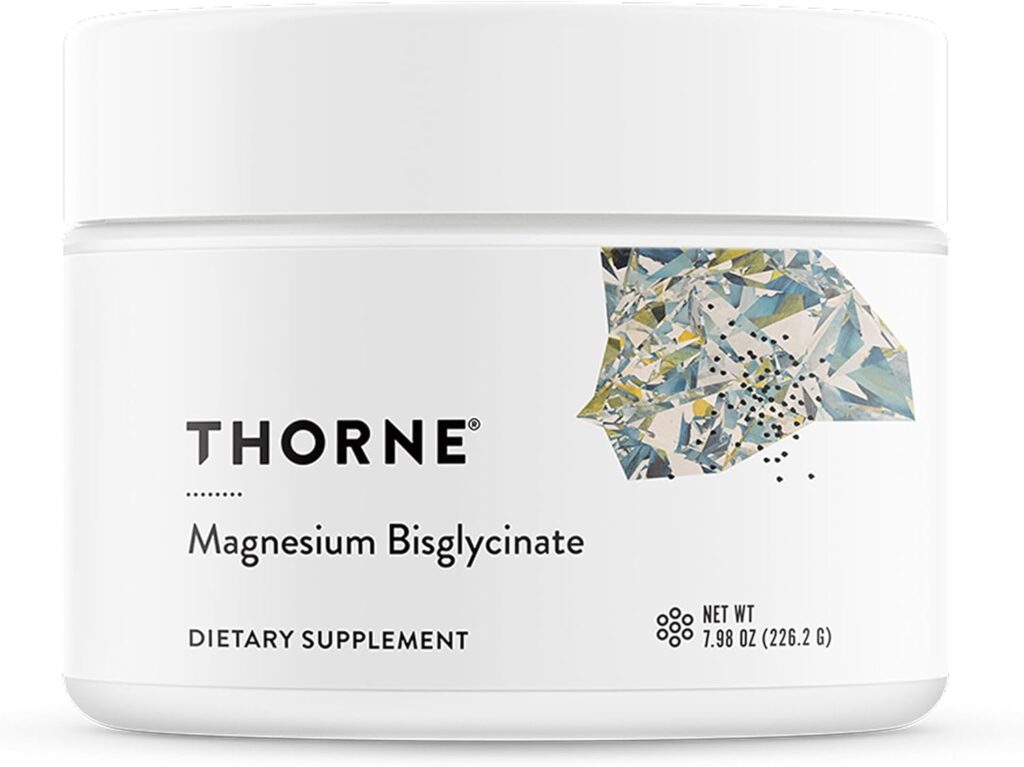
Thorne Magnesium Bisglycinate Powder (the no-drama premium pick)
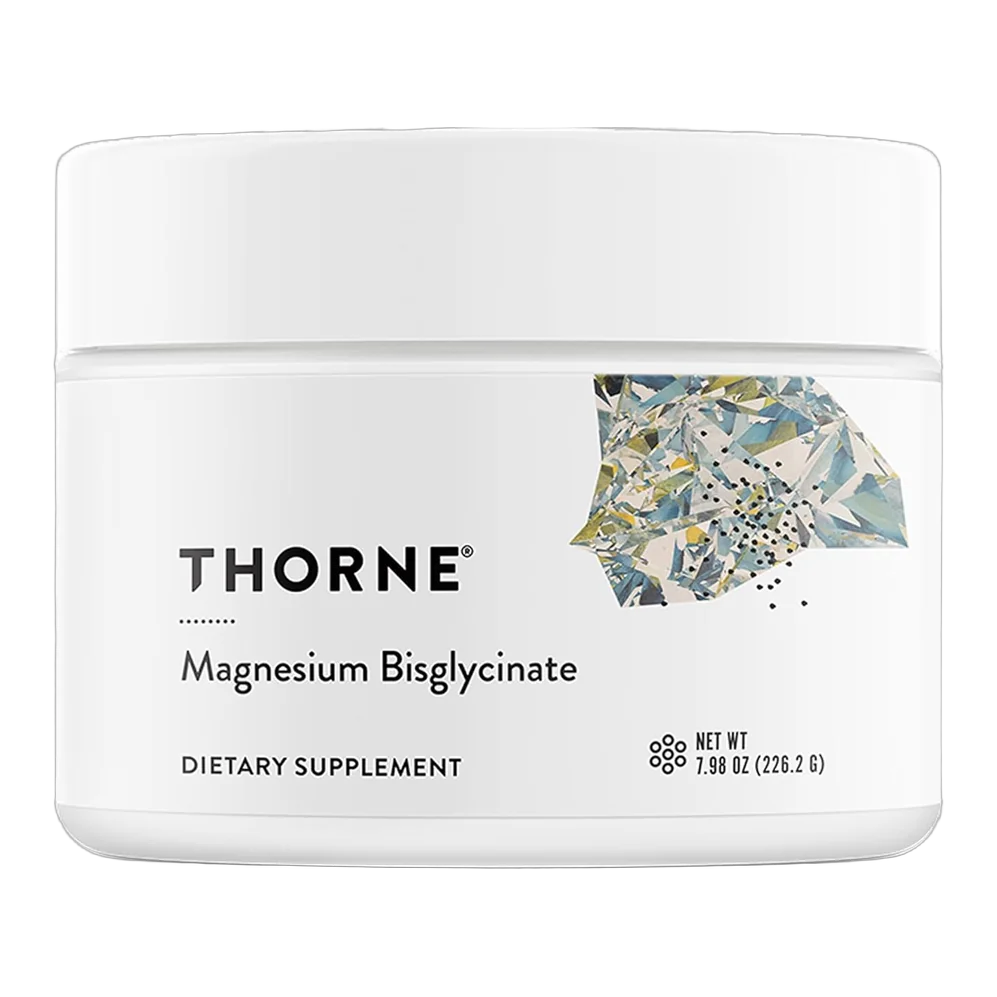
Thorne is one of the most rigorously tested supplement brands you can buy. NSF Certified for Sport, no unnecessary fillers, and they use the bisglycinate form done right. The powder format gives you precise dose control (one scoop = 200mg elemental magnesium) and dissolves cleanly in water. I’ve gone through several containers at this point.
Form: Bisglycinate powder, NSF Certified for Sport.
Dose: 200mg elemental magnesium per scoop.
Servings: 60 per container.
Price: Around $52.
My take: I tried Thorne and it works great. Dissolves clean, no aftertaste, sleep felt as solid as anything I’ve taken. The only reason it’s not what I use day to day is the price. If your budget can absorb $52 a bottle, this is the no-brainer choice.
Pure Encapsulations Magnesium Glycinate (the functional medicine default)
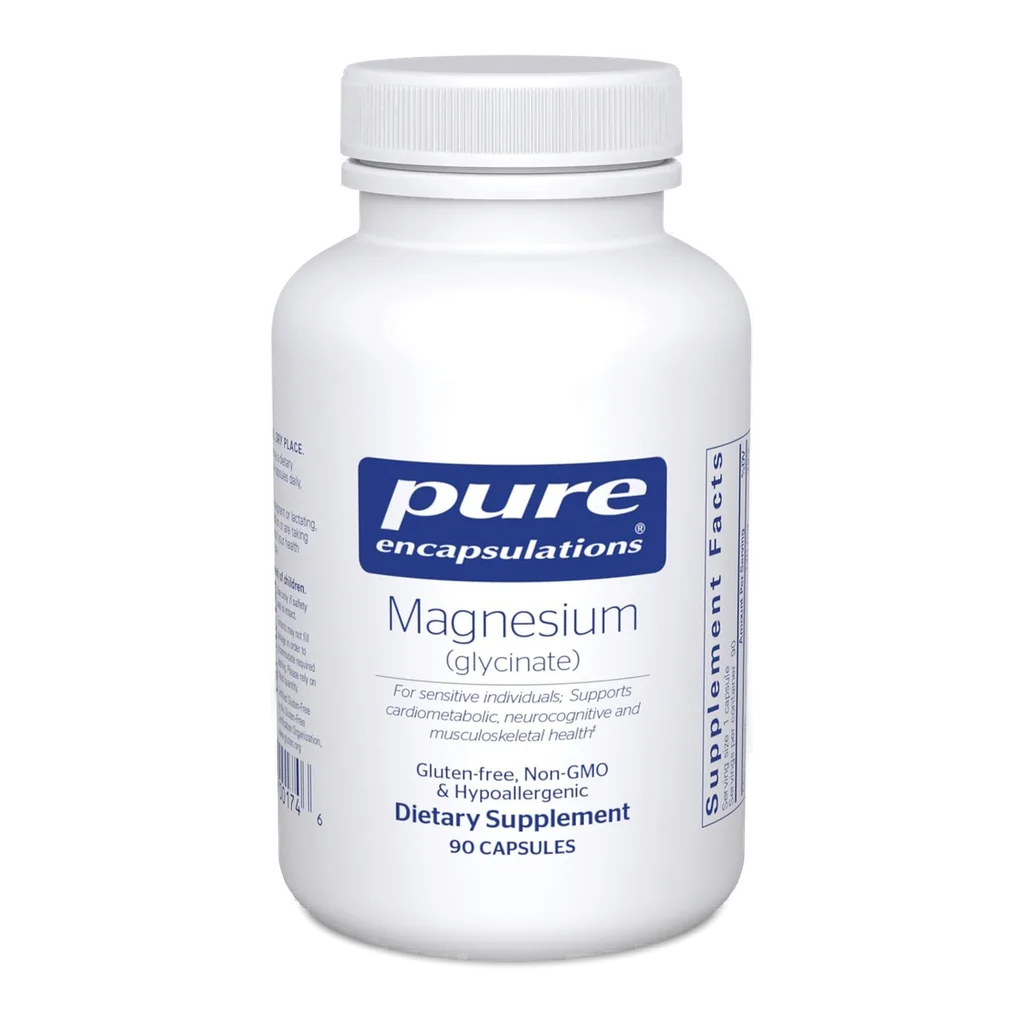
This is the brand a lot of functional medicine practitioners default to. Hypoallergenic, no artificial additives, no common allergens, no magnesium stearate. The glycinate form is highly bioavailable.
Form: Magnesium glycinate, hypoallergenic.
Dose: 120mg elemental magnesium per capsule.
Servings: 90 capsules per bottle.
Price: Around $27.
My take: This is what I actually take now. After running through a container of Thorne I wanted something with the same clean ingredient profile that didn’t sting the budget every month, and Pure Encapsulations hits that spot. Same result for me on sleep and the night cramps, noticeably easier on the wallet. If I had to pick one brand for the long haul, this is it.
Doctor’s Best High Absorption Magnesium Glycinate Lysinate (the value pick)
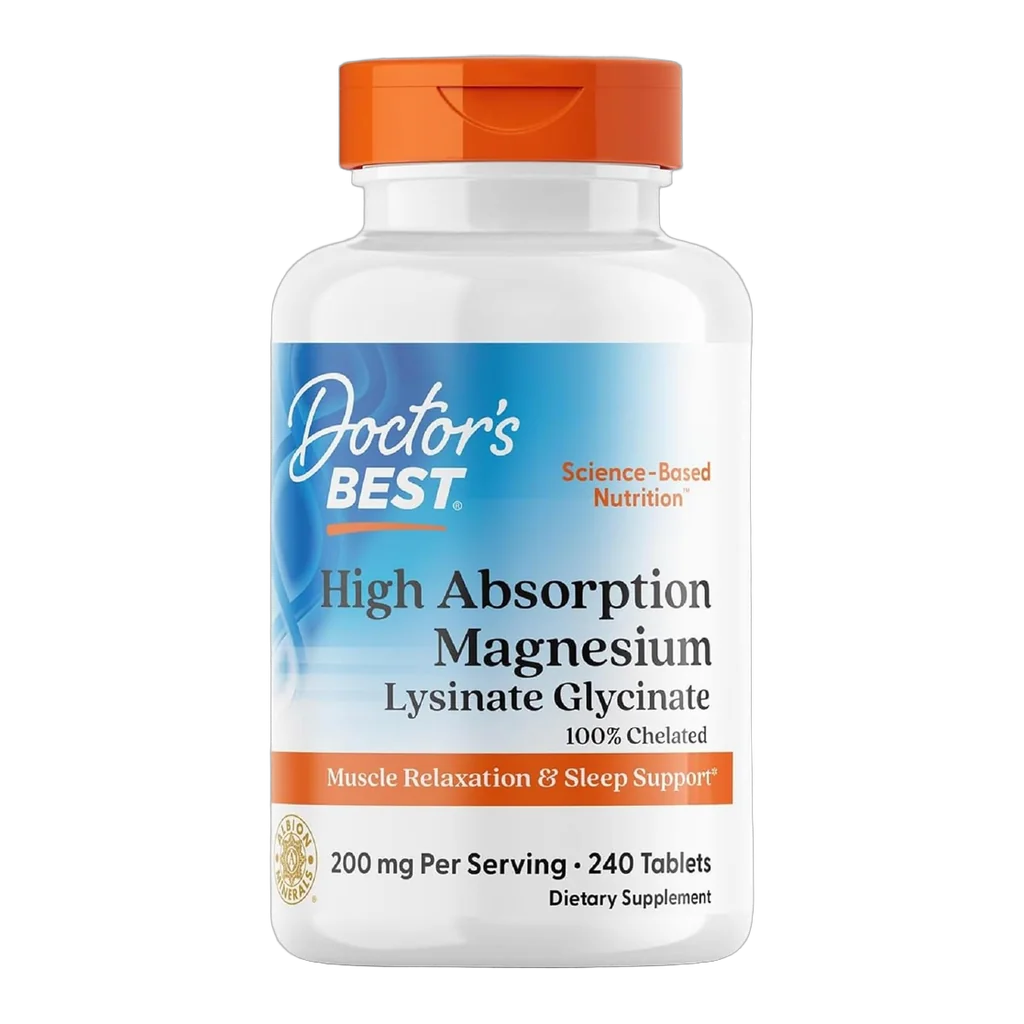
Here’s the thing about Doctor’s Best: they use the TRAACS chelated form (Albion’s patented bisglycinate chelate), which is the same compound used in the premium brands. You’re just not paying for the premium label.
Form: Bisglycinate / lysinate chelate (TRAACS by Albion).
Dose: 100mg elemental magnesium per 2 tablets.
Servings: 240 tablets per bottle (120 servings).
Price: Around $21.
My take: If budget is the primary concern, start here. The quality is real, the chemistry is identical to the more expensive options, and 240 tablets last forever.
Life Extension Neuro-Mag (L-Threonate / Magtein) (the brain form)
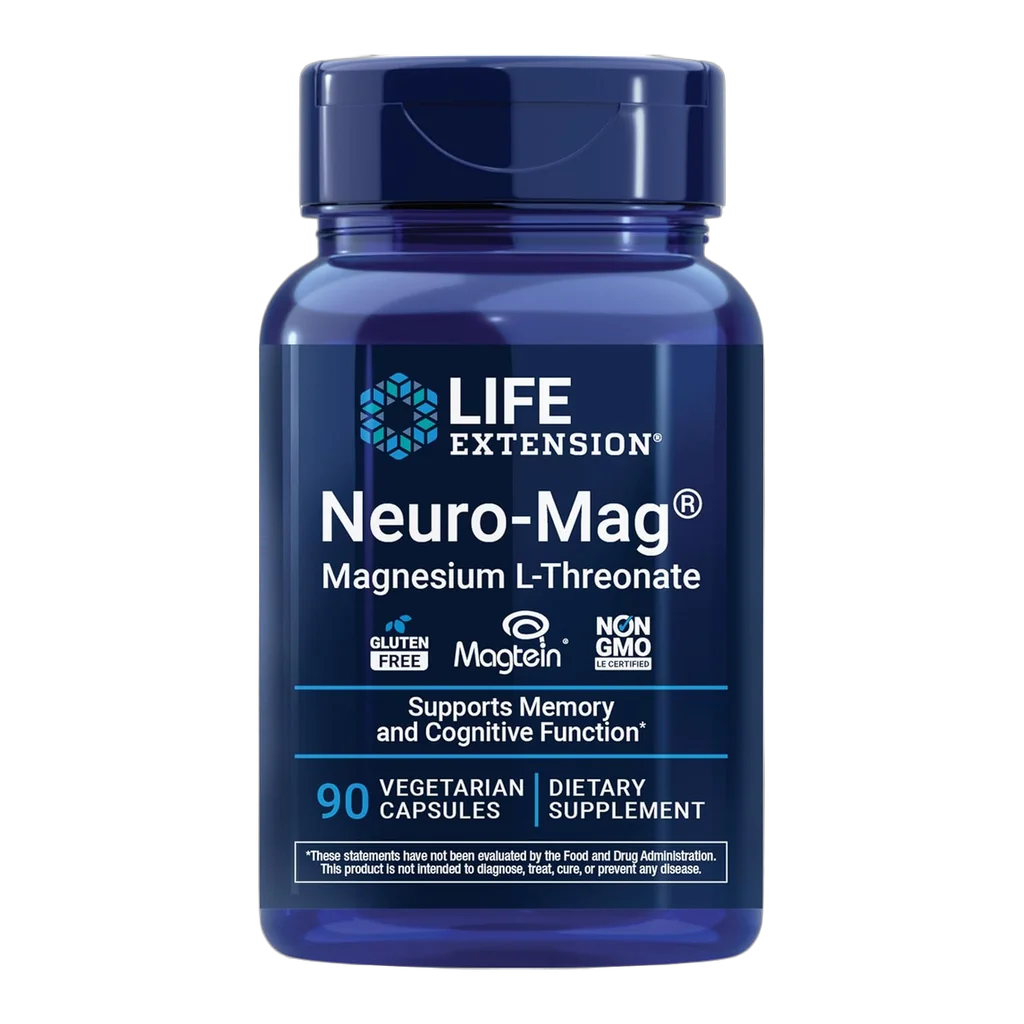
This is the brain form. Magtein, the patented L-threonate developed specifically to cross the blood brain barrier. If your goals include cognitive function, memory, or slowing age related brain changes, this is the one to add.
Form: Magnesium L-threonate (Magtein).
Dose: 144mg elemental magnesium from 2000mg Magtein per serving.
Servings: 90 capsules per bottle (30 servings at 3 caps).
Price: Around $31.
My take: Life Extension uses the clinically studied form and prices it reasonably for what it is. I take it in the morning, glycinate at night.
FAQ
Can you take too much magnesium?
Yes, but it’s difficult to reach dangerous levels from oral supplements because excess magnesium causes diarrhea before you absorb enough to cause toxicity. The tolerable upper limit from supplements is 350mg/day for most adults, though many people take more without issues. People with kidney disease should be more cautious. Kidneys regulate magnesium excretion, so impaired kidney function changes the equation significantly.
Will magnesium make me drowsy?
Glycinate specifically can have a mild relaxing effect, which is why it’s good for evening use. Most people don’t find it sedating in the way that a sleep aid would be. It’s more like the absence of tension than actual drowsiness. If you take it in the morning and find yourself foggy, switch to evening dosing.
What about topical magnesium (sprays, flakes)?
The evidence for transdermal magnesium absorption is weak. Some small studies show modest absorption through skin, but nowhere near enough to correct deficiency. Topical sprays might help with localized muscle soreness as a direct tissue effect, but I wouldn’t rely on them as a primary supplementation strategy. Save your money for an oral glycinate product.
Does magnesium actually help with sleep?
The evidence is reasonably good, particularly for people who are deficient. A 2012 randomized controlled trial in elderly subjects with insomnia showed significant improvements in sleep time, sleep efficiency, early morning awakening, and insomnia severity index scores with 500mg magnesium versus placebo.3 The glycine component in glycinate has separate supporting research. It’s not a guaranteed fix, but the mechanism is real and the evidence is solid enough that it’s worth trying before reaching for melatonin or pharmaceutical sleep aids.
How long until I notice a difference?
Two to three weeks for most people. Cellular magnesium stores take time to replenish. Don’t judge it after three days.
Will a blood test confirm I’m deficient?
A standard serum magnesium test usually won’t, because the body holds serum magnesium in a tight range even when intracellular magnesium is depleted.1 The more useful test is RBC (red blood cell) magnesium, which most doctors don’t run routinely. You can request it specifically. If you have symptoms that fit and your diet is low in magnesium-rich foods, you’re probably low enough to benefit regardless.
References
The deficiency, bioavailability, and sleep claims above are drawn from peer-reviewed research. The studies most directly relevant:
- DiNicolantonio JJ, O’Keefe JH, Wilson W. Subclinical magnesium deficiency: a principal driver of cardiovascular disease and a public health crisis. Open Heart. 2018 Jan 13;5(1):e000668. PubMed
- Walker AF, Marakis G, Christie S, Byng M. Mg citrate found more bioavailable than other Mg preparations in a randomised, double-blind study. Magnes Res. 2003 Sep;16(3):183-91. PubMed
- Abbasi B, Kimiagar M, Sadeghniiat K, Shirazi MM, Hedayati M, Rashidkhani B. The effect of magnesium supplementation on primary insomnia in elderly: A double-blind placebo-controlled clinical trial. J Res Med Sci. 2012 Dec;17(12):1161-9. PubMed
- Slutsky I, Abumaria N, Wu LJ, Huang C, Zhang L, Li B, Zhao X, Govindarajan A, Zhao MG, Zhuo M, Tonegawa S, Liu G. Enhancement of learning and memory by elevating brain magnesium. Neuron. 2010 Jan 28;65(2):165-77. PubMed