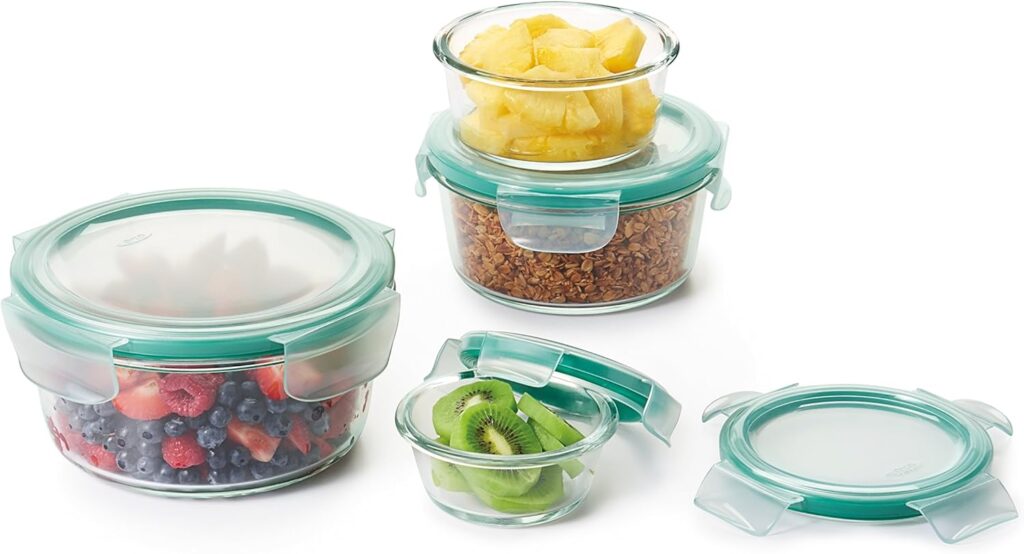
I threw out every piece of plastic food storage I owned about three years ago. It was a Saturday. I was reheating leftover chili in a deli container that had clearly been microwaved one too many times. The lid had gone warped, the corners had that cloudy-from-being-stained look, and I could smell the chili through the plastic. That last part is what got me. You shouldn’t be able to smell food through its container.
The case against plastic food storage isn’t really about microplastics, though that’s part of it. It’s that plastic was never engineered to hold hot acidic food and then survive 200 cycles in a dishwasher. The chemicals it sheds aren’t just BPA. There’s BPS (the replacement that turned out to be just as bad), phthalates, and a long list of other endocrine disruptors that nobody tests for individually because there are too many of them to even name.
Glass dodges all of it. Inert. Won’t stain. Won’t smell. Goes from freezer to oven without ceremony. And the cheap end of the market has come down enough that this isn’t a luxury swap anymore.
Five sets below, all ones I’ve personally bought, used, and would buy again.
Why glass beats plastic
Short list, all of it real.
It’s chemically inert. Whatever you put in a glass container doesn’t pull anything out of the container into the food. No BPA leaching, no BPS (the replacement that turned out to be just as bad), no phthalates, no surprise endocrine disruptor that gets banned in three years. You’re storing food in food.
Stains and odors stop existing. Tomato sauce, turmeric, pesto, all the things that wreck plastic over time wash off glass like they were never there. Garlic, fish, kimchi don’t transfer from yesterday’s leftover to today’s snack. The container coming out of the dishwasher looks identical to the one that went in.
Freezer to oven is just a thing you can do. Stash a casserole, defrost in the fridge, bake directly. No transferring to a second dish. The thermal shock tolerance varies by brand (more on that below) but the better lines handle this routine without complaint.
You can see your food. Trivial but real. I throw away way less now because the leftover from yesterday is visible in the fridge instead of buried in four opaque tubs I have to crack open one at a time.
The set lasts forever. Mine is from 2023 and still on rotation. Plastic gets retired every two or three years because of the warping, the staining, the cloudy haze that never quite goes away. If you do the math on total cost of ownership, plastic is the more expensive option.
The one real downside is weight. A full glass container in a backpack on a bike, you’ll notice it. For everything else (lunch tote, fridge, cabinet shelf), the weight is fine.
What to look for
A few rules that matter once you start shopping.
Borosilicate vs soda-lime glass
Most cheap glass is soda-lime, the same stuff drinking glasses are made of. It’s fine for refrigerator storage but cannot handle big temperature swings without cracking.
Borosilicate is what Pyrex (the European version) and most chemistry-grade lab glassware is made of. It tolerates oven heat, freezer cold, and the transition between the two. If you want freezer to oven capability, borosilicate is the spec to look for. Some brands list it explicitly. If they don’t list it, assume soda-lime.
Lid material
This is where the “all-glass” claim usually breaks down. Almost every glass storage container ships with a plastic lid. The lid touches food when you turn the container upside down. It touches food when condensation drips back down.
The good news is that the lids are almost always made of polypropylene (PP, recycling code 5), which is the safest plastic class and doesn’t leach the same way polycarbonate or PVC does. The better lines have completely BPA free lids. A few premium brands ship glass lids with silicone gaskets, which are the cleanest option but also more breakable.
If lid plastic is a deal-breaker for you, OXO and Caraway sell glass with glass-lid options. Otherwise, polypropylene lids are an acceptable compromise.
Seal type
Snap on lids with silicone gaskets are the gold standard for liquid tight storage. Most modern glass containers have these. Older Pyrex still uses friction fit lids that are not liquid tight, which is why old Pyrex from your grandmother’s kitchen leaks soup. Avoid those for liquids.
Sizing
Get a mix. The most useful sizes for me are:
- 2-cup square (single serving leftovers)
- 4-cup rectangular (lunch portions)
- 6-cup or 8-cup rectangular (family side dishes)
- 1-cup or 1.5-cup small (sauces, dips, small portions)
A 10 to 18 piece set usually covers all of these.
Product recommendations
Five sets across price points. All are BPA free on the lids and dishwasher safe.
Pyrex Simply Store 9-Piece (the no-drama starter)
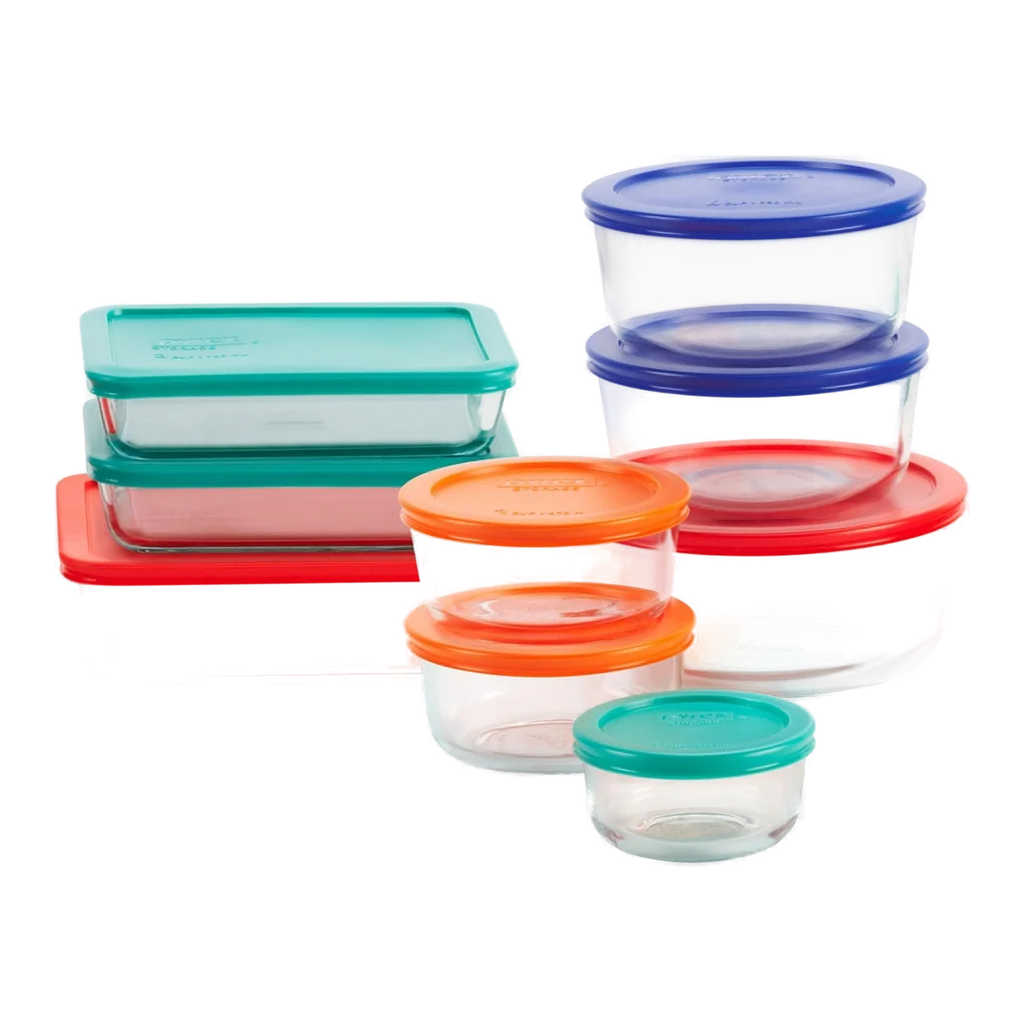
Pyrex Simply Store is what I bought first and is still my baseline recommendation. The 9-piece set covers a range of round and rectangular sizes with matching plastic lids. The glass is the American Pyrex soda-lime formulation, which means freezer safe and microwave safe, just not designed for oven temperatures above 350°F. The lids are polypropylene, BPA free.
Pieces: 9 (mixed round and rectangular).
Best for: Everyday leftovers and refrigerator storage.
Price: Around $38.
My take: The no-drama starter set. If you’ve never owned glass storage and don’t want to think about it, just buy this.
OXO Good Grips Smart Seal 8-Piece (the lunch-packing specialist)
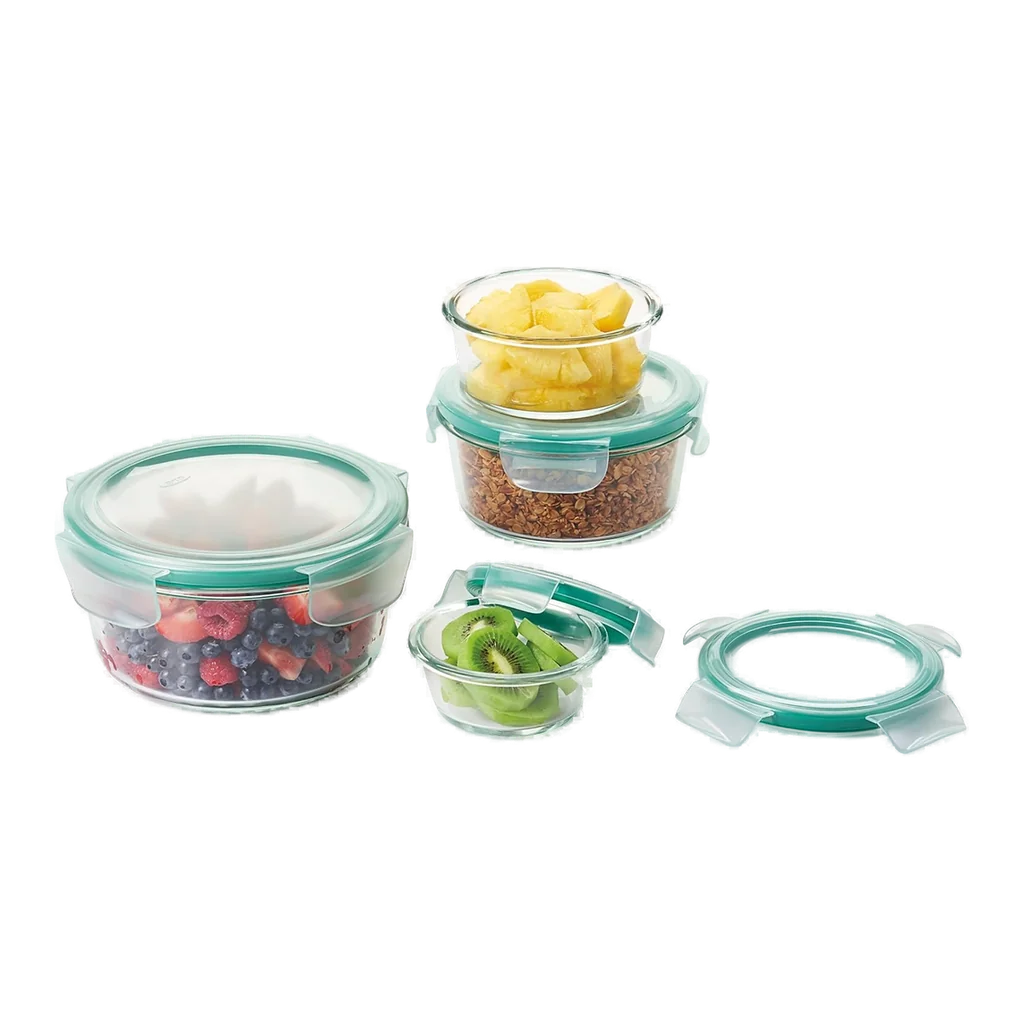
OXO’s Smart Seal lids are the cleanest sealing system in this category. Press the button on top and the lid suctions down into a liquid tight, leak proof seal. The 8-piece round container set is the right size for soup-and-stew lunch packing. Lids are BPA free polypropylene.
Pieces: 8 (round containers with snap-down lids).
Best for: Packing lunches with soup or stew that has to survive a backpack ride.
Price: Around $38.
My take: Smaller set than the Pyrex starter but the seal quality is noticeably better. If you commute with food, this is the one.
Anchor Hocking TrueSeal 10-Piece (the US-made value pick)
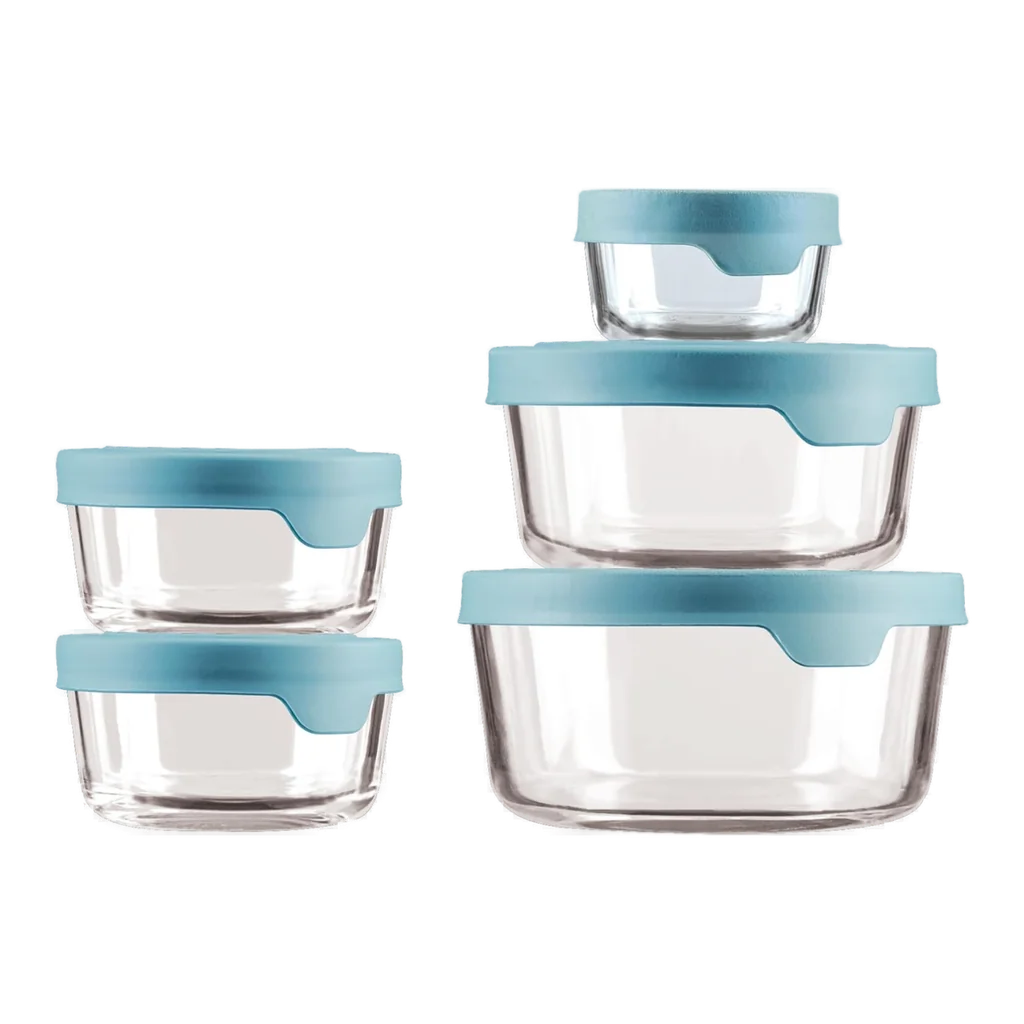
Anchor Hocking has been making glass kitchenware in the US since 1905, and the TrueSeal line is their answer to the OXO seal problem. The glass is soda-lime, so this is the freezer-and-microwave set, not the oven-safe set. Where Anchor Hocking earns its spot is on price per piece.
Pieces: 10 (5 containers + 5 matching lids).
Best for: US-made, value-priced everyday storage.
Price: Around $35.
My take: If you don’t need oven capability, this is the best value pick in the lineup.
Glasslock 16-Piece (the freezer-to-oven workhorse)
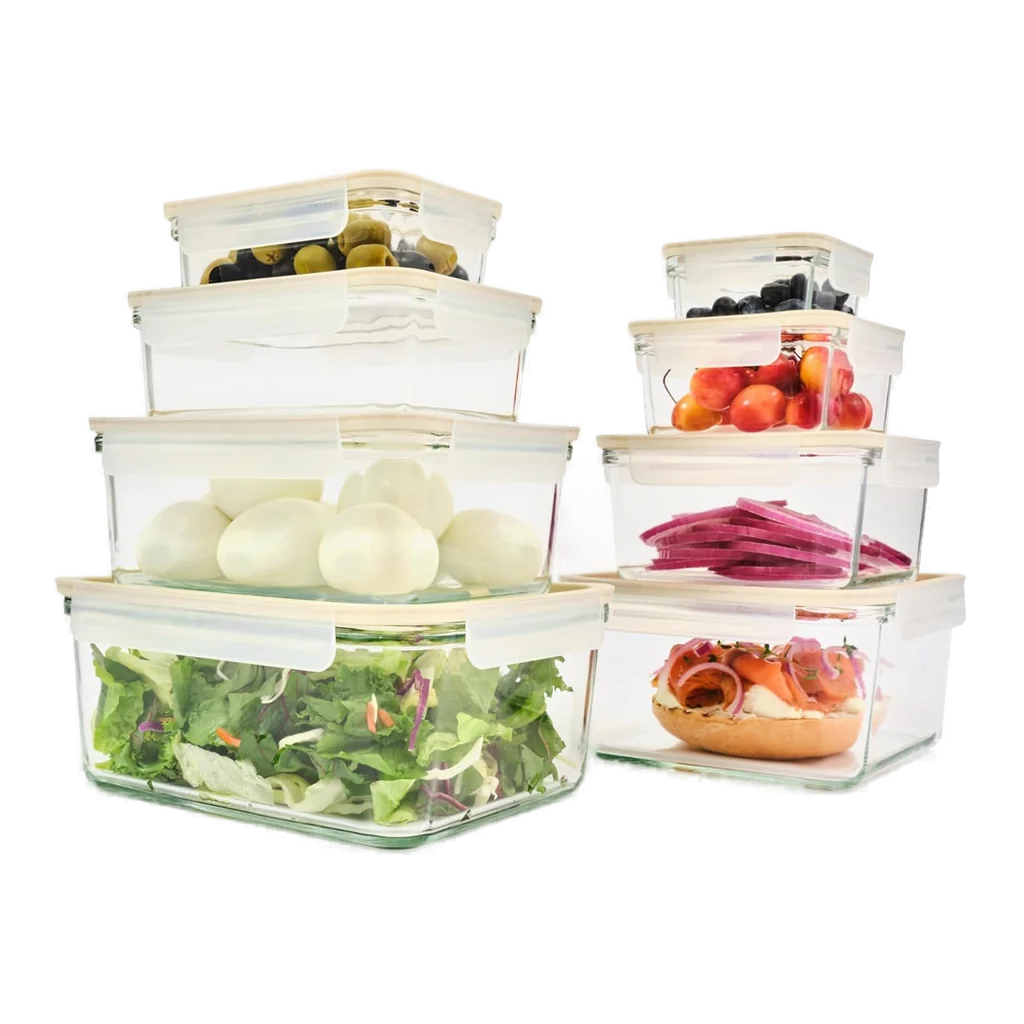
Glasslock is a Korean brand that’s been quietly dominating the freezer-to-oven category for years. The glass is tempered (a different process from borosilicate, but similarly oven safe). The locking lid system uses four snap on tabs that compress a silicone gasket for a fully airtight, watertight seal.
Pieces: 16 (8 containers + 8 locking lids).
Best for: Freezer-to-oven cooking, big-batch meal prep.
Price: Around $50.
My take: This is what I’d buy if I were starting over today. Lid system is more durable than OXO’s button mechanism, price is similar, and the set sizes go bigger.
Caraway Glass Storage 13-Piece (the premium splurge)
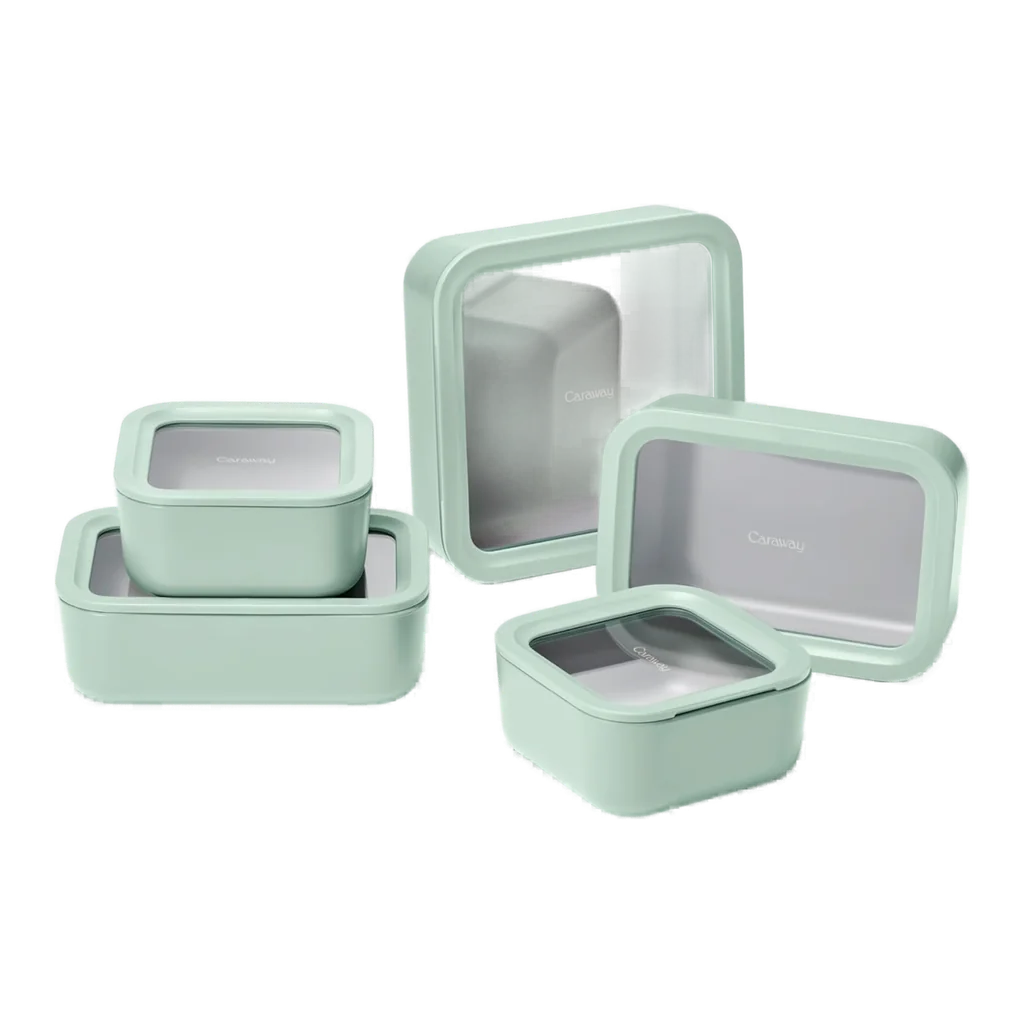
Caraway is the premium pick. The glass is borosilicate. The lids are bamboo-topped with silicone gaskets, which means most of the food contact surface is not plastic at all. The set comes in matching colorways with stackable design and a cabinet organizer.
Pieces: 13 (containers + bamboo lids + cabinet organizer).
Best for: Curated kitchens where the storage is part of the aesthetic.
Price: Around $225.
My take: You’re paying double or triple what the other sets cost. The bamboo lids and the cabinet organizer are real, but the food storage performance is the same as Glasslock at a third of the price. Worth it only if you’ll see this set every day.
What I use
My actual current rotation:
- Pyrex Simply Store for everyday leftovers and meal prep
- OXO Smart Seal 4-cup containers for packing lunches with liquid
- Glasslock rectangulars for freezer storage of soups and stews
- A few mason jars for dressings, dips, and dry pantry overflow
I have not personally bought Caraway. The aesthetic is real but the price is hard to justify when the function is the same as Glasslock at a third of the price.
FAQ
Are glass containers actually freezer safe?
Most are, but check the label. The risk with freezing is that water expands and can crack glass that doesn’t have enough headspace. The fix is leaving an inch of empty room at the top. Tempered and borosilicate glass handle freezing without issue when this rule is followed. Plain soda-lime glass containers can also freeze, but they’re more sensitive to thermal shock when going directly from freezer to a hot environment.
Can I put a glass container straight from the fridge into a hot oven?
Don’t. Even oven safe glass should be at room temperature before going into a preheated oven. The thermal shock from a 38°F container hitting a 400°F oven can crack even borosilicate glass. Pull the container out of the fridge while the oven preheats, give it 15 to 20 minutes on the counter, then bake.
What about microplastics from the lids?
Polypropylene lids do not shed microplastics in normal storage use. The microplastic concern with plastic containers is mostly about the body of the container being scratched by silverware, repeatedly heated and cooled, and then making contact with hot acidic food. The lids primarily contact air or condensation. The exposure is minimal.
Are these dishwasher safe?
Yes for all five sets. Top rack is recommended for the lids to extend their lifespan, but the glass survives top or bottom rack indefinitely.
What’s the best size to buy first?
If you’re swapping out plastic incrementally, start with the 4-cup and 6-cup rectangular containers. These are the workhorse sizes for leftovers and meal prep. Once those become your daily defaults, fill in the smaller and larger sizes as needed.
Will the glass shatter if I drop it?
Tempered and borosilicate glass is more resistant to shattering than ordinary drinking glass, but not unbreakable. A drop on tile is going to break most containers. The lids do offer some impact protection. The trade off is real but in five years of daily use I’ve broken three containers, which is roughly one a year and worth it for everything else you gain.
The bottom line
The “switch from plastic to glass” project is one of the cheapest, easiest, highest return non-toxic upgrades in the kitchen. Pyrex Simply Store is the no drama starter. Glasslock is the upgrade pick if you want oven capability and the better lid system. OXO is the lunch-packing specialist. Caraway is the splurge.
The best part is once you’re done, you’re done. The set lasts forever. The lids are the only thing that wear out, and most brands sell replacements separately.
I haven’t bought a piece of plastic food storage in three years. I’m not going back.