In This Article
Last year my CRP was 4.2, which suggested some inflammation and, if it was hs CRP, could also signal higher cardiovascular risk. My doctor called it borderline elevated. Since CRP is nonspecific, I started looking more closely at possible contributors, including my overall diet and the oils in the foods I ate regularly. Nobody at the doctor’s office asked what I was cooking my vegetables in, or what oils were hiding in the “healthy” snacks I was eating between meals. So I started asking myself.
How I Got Here
Let me get this out of the way first. No medical degree here. No nutrition certification hanging on my wall. I’m just somebody who got curious at the wrong time, picked up a bottle of Crisco that had been sitting in the back of my pantry for who knows how long, flipped it around, and actually looked at the label.
Soybean oil. Fully hydrogenated palm oil. TBHQ (a preservative). That was it. Three ingredients. The first one, soybean oil, is technically a seed oil. I’d been cooking with it my entire adult life because my mom cooked with it, and her mom cooked with it, and somewhere along the way “vegetable oil” became the default. Nobody questioned it. I certainly never did.
Then I went down the rabbit hole of how these oils actually get made. I assumed it was something like olive oil, right? You press the thing, oil comes out? Not even close. We’re talking hexane extraction. Hexane is a petroleum derived solvent. After that comes degumming, then bleaching, then deodorizing. By the time the oil hits the bottle it looks, smells, and tastes like absolutely nothing. Because everything that was originally in it has been chemically stripped out. What’s left is cheap to produce and wildly profitable. That’s the whole game.
The Crisco went in the trash that afternoon. I won’t pretend that was some noble health decision. It was more like finding out the restaurant you’ve been eating at for years has a D health rating. You just… stop going. You can’t unknow it.
Three Reasons I Stopped
Before I get into this I want to say something. I’m not one of those guys who thinks seed oils are literal poison and that a single french fry will give you cancer. There’s a whole corner of the internet that treats this like a cult and I’m not part of it. But there are real concerns backed by real research. I’m going to lay out the three that convinced me personally.
1. The Omega-6 Ratio Problem
So omega-6 and omega-3. Your body needs both. Fine. The question is how much of each. For most of human history that ratio sat around 1:1, maybe 4:1 at the high end. The modern American diet? Try 15:1 or 20:1. I’ve seen some researchers put it even higher than that.
Where’s all the extra omega-6 coming from? Three guesses. Soybean oil by itself makes up something like 7% of total calories in the average American diet. I want to repeat that because it sounds made up. Not 7% of fat. Seven percent of ALL calories. One single oil. USDA data. I looked it up twice because I didn’t believe it the first time.
Now. Having a lot of omega-6 floating around doesn’t automatically mean you’re in trouble. But when the ratio gets that lopsided your body starts cranking out more pro inflammatory compounds. This part isn’t really debated in the research community. The part that IS debated is whether that inflammation directly causes chronic disease or whether it’s just along for the ride. But the ratio itself being out of whack? That’s documented.
2. What Happens When You Heat Them
Here’s the part that really bugs me. Seed oils are loaded with polyunsaturated fatty acids, PUFAs. Those PUFAs have these double bonds in their molecular structure that basically fall apart when they get hot. You heat up soybean oil, canola oil, sunflower oil, whatever, and those bonds break. What forms instead? Aldehydes. Some of those aldehydes are toxic. Not “maybe toxic in large amounts over 30 years” toxic. Just straight up toxic.
Researchers have actually measured this. Multiple studies, peer reviewed, published in real journals. You heat oils high in polyunsaturated fats and they pump out significantly more aldehydes than oils high in saturated or monounsaturated fats. Every single time. The whole “high smoke point” marketing angle for canola oil? It completely ignores what’s happening at the molecular level well before the oil starts smoking. The absence of visible smoke doesn’t mean nothing bad is happening in the pan.
I wrote about this in detail in my breakdown of the healthiest oils for frying. The short version: saturated and monounsaturated fats hold up better under heat. Period.
3. You Never Actually Chose This
This is the one that really got me. I didn’t choose seed oils. Nobody sat me down and said “here are your options, here are the trade offs, now pick.” Seed oils became the default cooking fat in America because they were cheap to produce and the vegetable oil industry spent decades marketing them as heart healthy. The American Heart Association started recommending them in the 1960s, partially funded by companies that made them.
Does that make seed oils automatically bad? No. But it means the reason they ended up in your kitchen cabinet wasn’t because some independent scientist evaluated all the options and picked canola for you. It was money. Once you realize that, reaching for the same bottle just feels different.
What Actually Changed When I Stopped
I’ve read a lot of testimonials online about people ditching seed oils and suddenly their Hashimoto’s went away, their skin glowed, they dropped 30 pounds, their cat started being nice to them. I’m skeptical. When you cut seed oils you also cut most processed food by default. You end up cooking more. Eating simpler. Those changes alone could explain a lot of what people attribute specifically to the oil.
With that caveat, here’s my own experience over about four months of switching to better cooking fats and being more careful about packaged food:
My CRP went from 4.2 down to 1.8. That was a big deal to me. Can I prove the oil swap caused it? Nope. Too many variables changed at once. But I went back for bloodwork four months later and that was the number staring at me. My doctor actually raised his eyebrows.
My skin cleared up noticeably. I’d had persistent mild redness on my cheeks and forehead for years. It wasn’t acne exactly, just general irritation. About six weeks after switching oils, it calmed down. Could be coincidence. But it happened.
Food tasted different. This one surprised me. Cooking with tallow and butter and olive oil just… tastes better. There’s actual flavor there. Seed oils are designed to be tasteless and that’s exactly what they deliver. Once I switched, I realized I’d been cooking with an ingredient that contributed nothing except calories and convenience.
I lost about 8 pounds without trying. Again, I changed a lot at once. But when you stop eating chips, crackers, and frozen dinners (all loaded with seed oils), weight loss tends to follow. I don’t credit the oil swap alone. I credit the entire shift away from processed food that the oil swap forced.
The Counterarguments (Because They Matter)
I’m not interested in pretending the other side doesn’t exist. If you’re going to make a dietary change, you should understand the full picture.
“The dose makes the poison. Small amounts of seed oil aren’t going to hurt you.”
Probably true. If you eat out once a week and that meal involves some canola oil, you’ll be fine. The issue isn’t a single exposure. The issue is that seed oils are in everything. Your salad dressing. Your mayo. Your bread. Your protein bars. Your “healthy” frozen meals. When one ingredient shows up in 60% of the packaged food supply, the dose adds up fast.
“There’s no randomized controlled trial proving seed oils cause disease.”
Yep. And one probably never will exist, because no ethics board is going to approve a 20 year study where you force one group to eat seed oils every day and then see who gets sick. So we work with what we have. Observational data. Lab studies on how these fats break down. The known biochemistry of oxidation. Is that airtight proof? No. Is it enough for me to make a personal call that has literally zero downside? Yes. I switched to olive oil and tallow. The only thing I lost was a $4 jug of canola.
“The AHA and most major health organizations still recommend vegetable oils.”
They do. And those same organizations recommended margarine over butter for 30 years before admitting that trans fats were killing people. Institutional dietary advice has a track record that doesn’t inspire blind confidence. I’m not saying they’re wrong about everything. I’m saying I don’t outsource my dietary decisions to organizations that have been demonstrably wrong before.
“This is just another health fad.”
Maybe. But the underlying biochemistry of omega-6 ratios and PUFA oxidation isn’t new. These mechanisms have been studied for decades. The “fad” part is the social media attention. The science predates TikTok by about 40 years.
How to Start (Without Losing Your Mind)
OK so if you’re still reading and you’re thinking “yeah I want to try this,” here’s the thing. Don’t go scorched earth on day one. I tried that. Threw out half my pantry, went to the grocery store with a list of “approved” items, and came home two hours later with olive oil and a headache. Bad strategy. Way better to phase things out over a few weeks. Here’s roughly what I did.
Step 1: Swap Your Cooking Oil (Week 1)
Easiest win on the whole list. Go to your cabinet right now, look at what you cook with. Canola? Vegetable? “Blended”? Corn oil? Whatever it is, just stop buying it. Next grocery run, grab one of these instead.
High heat stuff (stir frying, searing, roasting): Tallow, ghee, refined avocado oil, coconut oil. Me personally? I cook with algae oil for anything high heat. Crazy high smoke point. Zero taste. No PUFA oxidation worries. It’s my favorite discovery from this whole process.
Everything else: Good olive oil. Butter. Done.
Seriously, that’s all you do the first week. Swap the bottle. The pan doesn’t care.
Step 2: Check Your Condiments (Week 2-3)
This one’s annoying but eye opening. Go to your fridge and flip over every bottle. Mayo, ranch, salad dressing, ketchup, hot sauce, whatever. Read the ingredients. Soybean oil. Canola oil. Soybean oil again. It’s everywhere. I had a $9 bottle of “artisan” vinaigrette that was 80% soybean oil. The audacity. Anyway, you don’t need to toss everything at once. When something runs out, replace it with a cleaner version. I made a whole list of seed oil free condiments that actually taste good, so start there.
Step 3: Audit Your Snacks (Week 3-4)
Chips, crackers, protein bars, granola, trail mix. Just look at the labels. You already know what you’re going to find. I was eating these “healthy” protein bars that had soybean oil as the third ingredient. Three bucks a bar. For soybean oil and whey powder. Once you start noticing it you can’t stop. Swap what you can for cleaner options, or honestly just eat real food. An apple and some almonds. Cheese and crackers (seed oil free crackers exist, surprisingly). Beef jerky. You don’t need a label decoder for a banana.
Step 4: Give Yourself a Break When Eating Out (Ongoing)
Every restaurant you walk into is cooking with seed oils. Basically every single one. I spent a few months being “that guy” who asked the server what oil they used and honestly? It made dinner miserable for everyone at the table, including me. So I stopped. Now my rule is simple. My kitchen, my rules. A restaurant? I just order something reasonable and enjoy the meal. If they’ll do butter or olive oil, great. If not, it’s one meal. You already cleaned up the other 20 meals you eat that week. Relax. I go deeper on this in my restaurant guide if you want actual tactics for specific cuisines.
What I Actually Cook With
I get asked about this constantly so I’ll just show you. These four things are literally on my counter or in my cabinet as I write this.
Marianne’s Organic Avocado Oil (my pick over Chosen Foods)
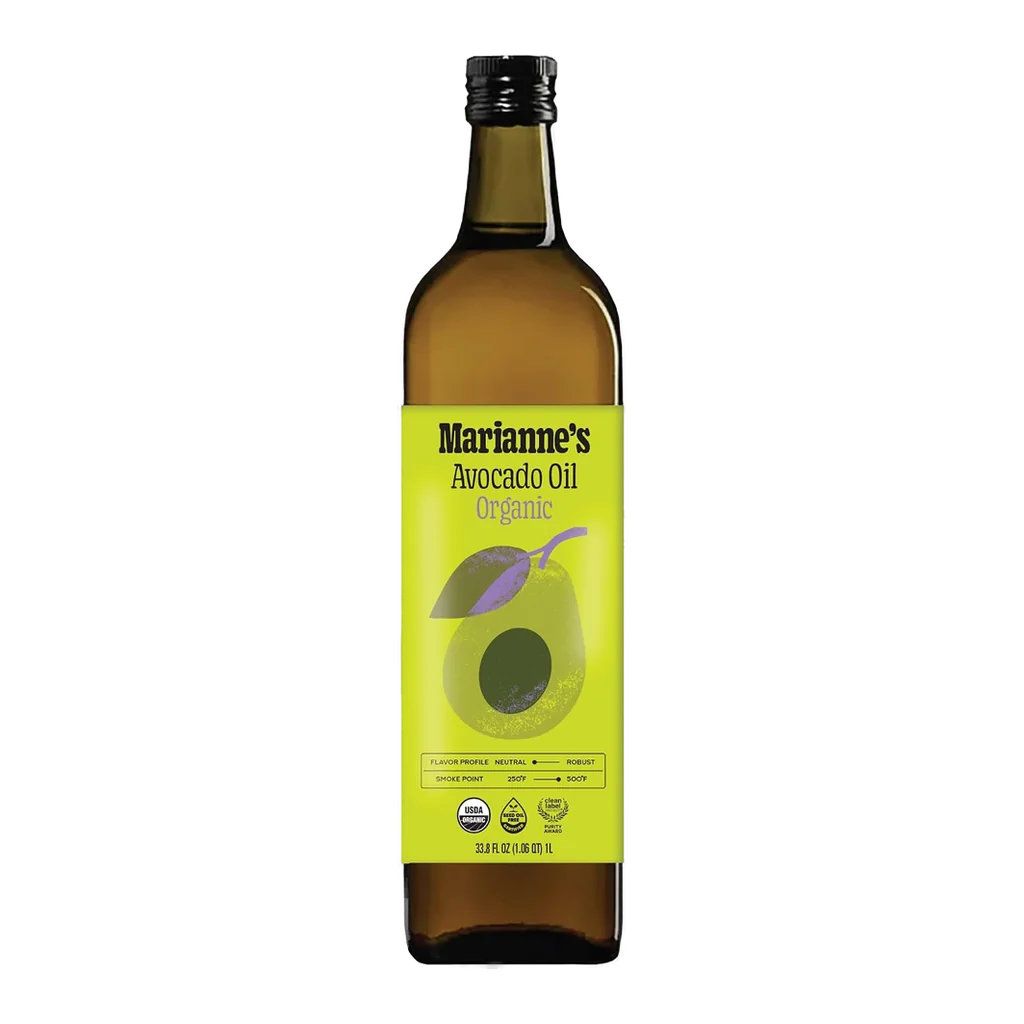
When UC Davis tested 22 bottled avocado oils in 2020, only two came back both pure and fresh. Marianne’s was one, Chosen Foods the other. Nobody has retested either bottle since, but between the two I think Marianne’s is much better.
Purchase signal: Bought and used.
Price: $37.65 for 1 liter when I checked on September 27, 2026.
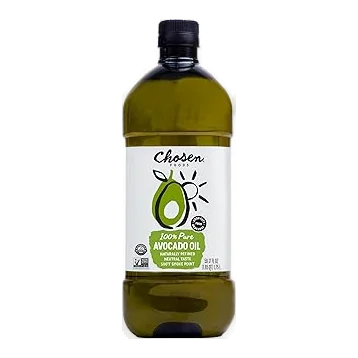
Chosen Foods 100% Pure Avocado Oil
I roast vegetables in this probably four nights a week. Neutral flavor, handles high heat, done. The reason I buy Chosen Foods specifically and not whatever’s cheapest is the purity thing. A UC Davis study tested a bunch of avocado oil brands and found most of them were cut with cheaper oils or already rancid on the shelf. Chosen Foods came back clean. When you’re paying avocado oil prices you want actual avocado oil in the bottle. Wild that this needs to be said.
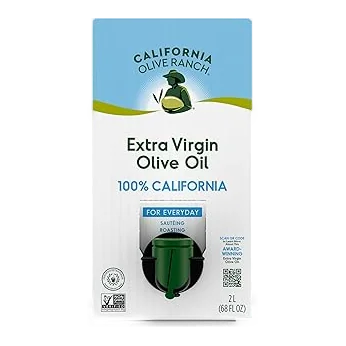
California Olive Ranch Extra Virgin Olive Oil
My salad dressing oil, my pasta finishing oil, my “drizzle it on everything” oil. I buy California Olive Ranch because they’re certified by the California Olive Oil Council. That certification actually means something because the olive oil industry is, and I’m not exaggerating here, rampant with fraud. A huge percentage of the “extra virgin” olive oil on grocery shelves is diluted or mislabeled. COR is legit. You can taste the difference immediately. Real olive oil has a peppery bite to it. If yours tastes like nothing, I have bad news.
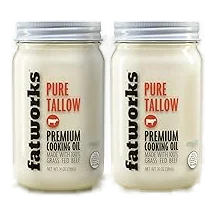
Fatworks Premium Pasture Raised Tallow
For searing steaks, making eggs, roasting vegetables, and basically anything where you want serious flavor. Tallow was the default cooking fat in America before Crisco showed up, and there’s a reason everything tasted better at your grandparents’ house. It’s stable at high heat, adds incredible depth to food, and has a fatty acid profile that holds up well under cooking conditions.
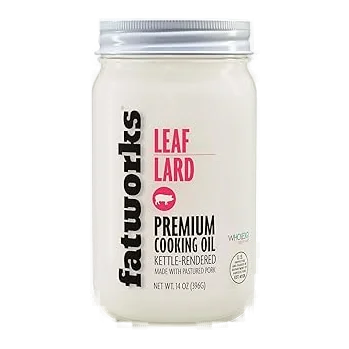
Fatworks Premium Pasture Raised Leaf Lard
This is my baking secret and the one that gets me the most confused looks. Lard. For pie crusts, for biscuits, for anything where you want flaky layers. My grandmother made the best pie crust I’ve ever tasted and her secret ingredient was Crisco, which is, yeah, seed oil. So I went looking for what made Crisco work so well (it’s the solid fat structure) and found that leaf lard does the same thing but better. Leaf lard comes from a specific fat deposit near the kidneys. Almost no porky taste. Just pure flaky magic. Nobody on Instagram is posting about leaf lard but they should be.
Quick note on avocado oil: I mentioned the UC Davis study above but it bears repeating. 82% of brands tested were either oxidized or adulterated. Eighty two percent. That means if you grab a random bottle off the shelf, the odds are stacked against you. Chosen Foods passed. A few others did too. But the point is you can’t just buy whatever’s on sale. I go into this more in my heart healthy cooking oil guide if you want the full brand breakdown.
The Bottom Line
Look, I’m not going to wrap this up with some dramatic “seed oils are destroying civilization” speech. They’re not. Sleep matters more. Exercise matters more. Not being chronically stressed out matters more. If you’re eating fast food every day and not sleeping, your cooking oil is the least of your problems.
But if you’ve got the basics covered and you’re wondering what else you can do? This is a pretty easy one. The evidence is plausible. The alternatives taste better. And I didn’t lose a single thing by switching except a $4 jug of Wesson.
Worst case, your food tastes better and you spent the same amount on groceries. I’ll take that bet every time.
Frequently Asked Questions
What exactly counts as a seed oil?
Soybean, canola (which is rapeseed, rebranded because “rapeseed oil” is a hard sell), corn, sunflower, safflower, cottonseed, grapeseed, rice bran. Those are the big ones. They all share two things: high PUFA content and industrial chemical processing to extract them. People sometimes ask me about olive oil or coconut oil. Those aren’t seed oils. They’re pressed out mechanically, not stripped out with hexane. Totally different process. I wrote a whole explainer on this: what are seed oils.
Is canola oil really that bad?
This is the one that starts arguments. On paper, canola’s omega-6 to omega-3 ratio isn’t terrible. Way better than soybean or corn oil. The problem is everything else about it. Hexane extraction. Bleaching. Deodorizing. And it still breaks down into aldehydes when you cook with it because of the PUFA content. Worst seed oil on the list? No, probably not. Would I cook with it when olive oil exists? Also no. But if canola is the only seed oil left in your life, honestly, you’ve already won most of the battle. Don’t lose sleep over it.
Aren’t seed oils fine in moderation?
Define “moderation” for me. Because most people who say this are eating seed oils at breakfast (cooking spray, cereal), lunch (restaurant food, salad dressing), dinner (whatever oil they cook with), and every snack in between (chips, crackers, protein bars). That’s not moderation. That’s the default. If you actually ate seed oils in moderation, meaning occasionally and on purpose, I probably wouldn’t even bother writing this article. The problem is nobody is doing that. It’s in everything by default and you have to actively work to avoid it.
What do I do about restaurants?
Eat the food and enjoy yourself. I’m serious. I went through a phase where I grilled every server about their cooking oil and it was miserable for everyone involved. Now I just order grilled over fried when I can, skip the deep fried appetizers, and call it a day. Some nicer places will cook in butter if you ask. Most won’t. It’s fine. Your home kitchen is where you win this. I have a whole breakdown of restaurant strategies in my restaurant guide if you want to get more tactical about it.
How long until I notice a difference?
For me, skin stuff showed up first. Maybe four to six weeks in, the redness on my face calmed down. Energy and digestion took a couple months. The bloodwork shift (the CRP drop I mentioned) didn’t show up until four months later. I know people online say they felt different in a week. Maybe they did. I’m skeptical though. A lot changes when you overhaul your pantry and start cooking from scratch. Give it at least a month before you decide if it’s doing anything.
Is this just a trend or is there real science?
Honestly? Both. The TikTok and Twitter explosion around seed oils is absolutely a trend. No question. But the actual research on PUFA oxidation and omega-6 ratios has been around since the 1970s. This stuff was being studied long before anyone had a social media account. Is there a smoking gun study that proves seed oils cause heart disease or cancer? No. But there are decades of research showing plausible mechanisms for harm, and that was enough for me to make a personal switch that cost me basically nothing. If better evidence comes out tomorrow saying I’m wrong, I’ll have lost nothing except some canola oil. Not exactly high stakes.
What’s the cheapest way to switch?
Olive oil from Costco or Aldi. A big jug of extra virgin olive oil for everyday cooking and a block of butter for everything else. That’s it. You don’t need to spend $15 on a jar of grass fed tallow on day one. Start with olive oil and butter, which are available everywhere and cost roughly the same as the canola they’re replacing. Upgrade to tallow and specialty oils later if you want to, but don’t let cost be the reason you don’t start. Check out my full cooking oil guide for more budget options.
This article contains affiliate links. As an Amazon Associate, I earn from qualifying purchases. This doesn’t cost you anything extra. I only recommend products I’ve personally used or thoroughly researched.