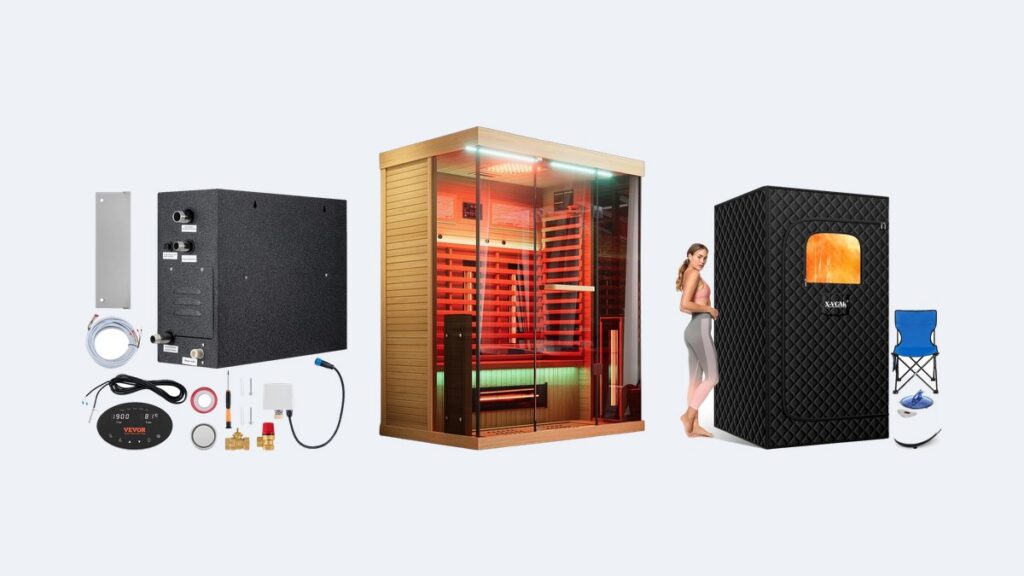
In This Article
- A home sauna: the one with the evidence
- A steam shower generator for the bathroom you already have
- Try the habit first for about $158
- Hyperbaric chambers: why nothing made the list
- Float tanks: one listing and no reviews
- Why whole house water is not on my list
- The safety list
- Quick questions
- The bottom line
- References
Nearly everything on this site is something I own. This post is the exception, so here it is before anything else: I have not bought this. It is on the list for the day money stops mattering, and I am judging it on the spec sheet, the reviews and the evidence, not on use. That goes for every steam generator, sauna, chamber and tank below.
What I can do is the homework. I read each listing the way I read one before I buy, looked up the studies the sellers lean on, and sorted the lot into three piles: what I would buy, what I would skip, and what I would try for under two hundred dollars first. One pile turned out to be empty for a good reason, and the water section is about the one piece of big hardware I have owned for years.
A home sauna: the one with the evidence
The reason saunas went from a Finnish habit to a product category is one paper. In 2015 a group in Kuopio published about twenty years of follow up on 2,315 men aged 42 to 60. Compared with men who took a sauna once a week, men who went four to seven times a week had a much lower rate of sudden cardiac death, with an adjusted hazard ratio of 0.37, and the pattern held for fatal heart disease and death from any cause.1
The listings leave a few things out. Those were traditional Finnish saunas, a stove heating the air to around 80 degrees Celsius. The subjects were all middle aged men. And it was an observational study, so it shows the regular sauna users did better, not that the sauna is why. I still find it persuasive, but I want you to know what kind of persuasive it is.
An infrared cabin is a different machine. It runs cooler and heats you with panels instead of hot air. Nobody has followed infrared users for twenty years. It may well do the same things, since much of the proposed mechanism is simply getting hot enough for your heart rate to climb, but “may well” is as far as I will go.
The cabin I would buy is a two to three person full spectrum model in Canadian hemlock, $1,899.99 on the day I checked, 4.5 stars over 55 reviews. Full spectrum means near, mid and far infrared emitters rather than far only, which the listing says makes it warm up faster. It claims a seven year warranty, and I would want that in writing before paying.
The practical catch is electrical. The listing says it runs on 240 volts at 15 amps. Most bedrooms and garages in the US only have 120 volt outlets, so if there is no 240 volt circuit where the cabin will go, add an electrician to the price. It also arrives as panels you snap together, which is a job for two people.
MEISSALIVVE 2 to 3 Person Full Spectrum Infrared Sauna (the cabin I would buy)
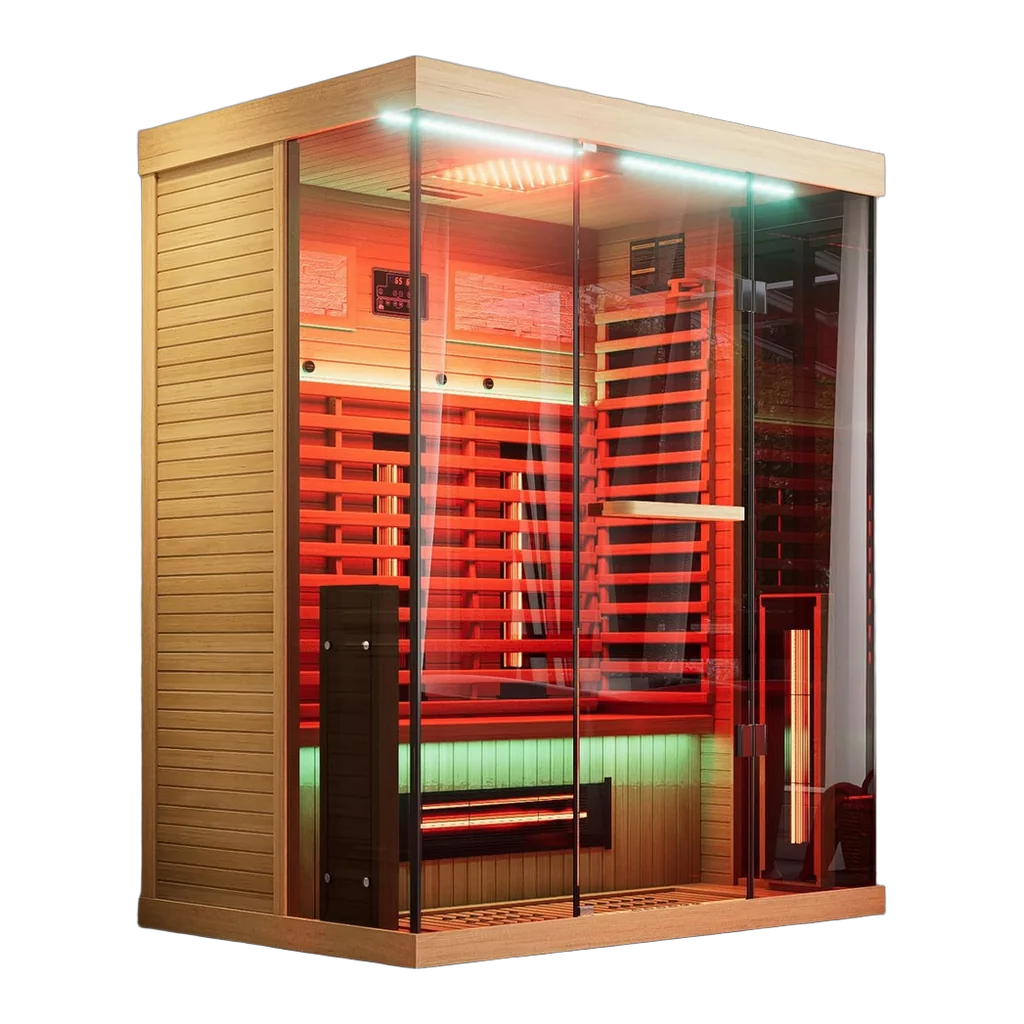
Canadian hemlock walls, a tempered glass door and near, mid and far infrared emitters. Snap together panels, so plan on two people for assembly.
Ownership: I have not bought this. Wishlist pick, judged on the listing and 55 reviews, and it needs a 240 volt, 15 amp circuit.
Price: $1,899.99 on September 27, 2026, shipping in 9 to 10 days per the listing.
One more thing, because the full spectrum marketing leans on it. I own a red and near infrared light panel, and a sauna’s near infrared emitters are a different setup from a panel held close to the skin. I would buy the cabin for the heat, not as a red light device.
A steam shower generator for the bathroom you already have
A steam generator turns a sealed shower into a steam room. The generator sits in a nearby closet or vanity, pipes steam into the enclosure, and you press a button on the wall. What it has over a sauna is space: you are converting a room you already own instead of finding room for a cabin.
The evidence is thinner here. The claims you will see are opened airways, loosened congestion and better sleep. The closest real research is a Cochrane review of heated, humidified air for the common cold: six trials with 387 people, low quality evidence, and it could not say whether steam relieves symptoms.2 Steam feels good. That is a fine reason to want it, and the only one I can back up.
The famous names are on Amazon, but their listings are thin. KOHLER’s 13 kW Invigoration generator is $3,200 with 10 reviews, rated for showers up to 447 cubic feet, and the listing notes that the control kit is sold separately. MrSteam’s MS-225-E is $2,970 with one review. I would not send anyone to a three thousand dollar purchase on one review, and I would not make it myself.
The one I would look at hardest is VEVOR’s 12 kW unit, $359.90, 4.2 stars over 17 reviews. That is not a big sample either, but it is a tenth of the price. It has adjustable heat, a 24 hour timer, auto drain, and cut offs for overheating and low water. Keep the arithmetic in mind: 12 kilowatts at 240 volts works out to 50 amps, so this goes on its own heavy circuit, installed by an electrician, and the shower has to be sealed to the ceiling. The generator is often the cheap part of the job.
VEVOR 12 kW Steam Shower Generator (the budget generator)
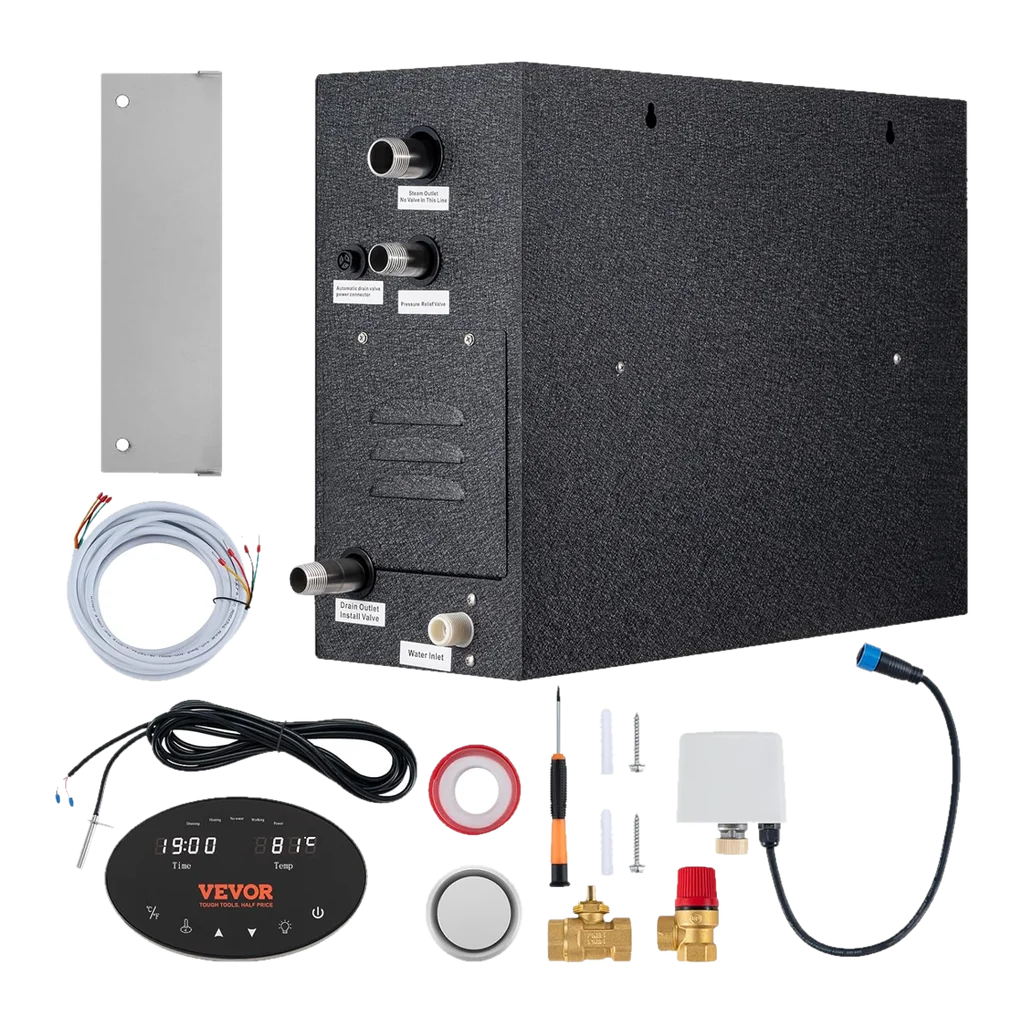
Heat adjustable from 77 to 131 degrees Fahrenheit, a 24 hour timer, auto drain, and cut offs for overheating and low water.
Ownership: I have not bought this. On the list on paper only; 17 reviews is a small sample, so I would read every one first.
Price: $359.90 when I looked on September 27, 2026. The electrician is extra.
Try the habit first for about $158
Before spending two thousand dollars on a cabin or paying an electrician for a steam generator, I would spend about $158 finding out whether I would use either one. The portable tents on Amazon are a zippered enclosure you sit in with your head out, a steamer that fills it in a few minutes, and a folding chair.
Be clear about what it is, because some of these listings blur it. This is a steam tent, not an infrared sauna. It gets you hot and sweating, and within a month it tells you whether you are someone who sits in heat four times a week or someone who did it twice. If the answer is twice, you have saved the price of a cabin, a delivery and an electrician.
X-Vcak Portable Steam Sauna Tent (try this first)
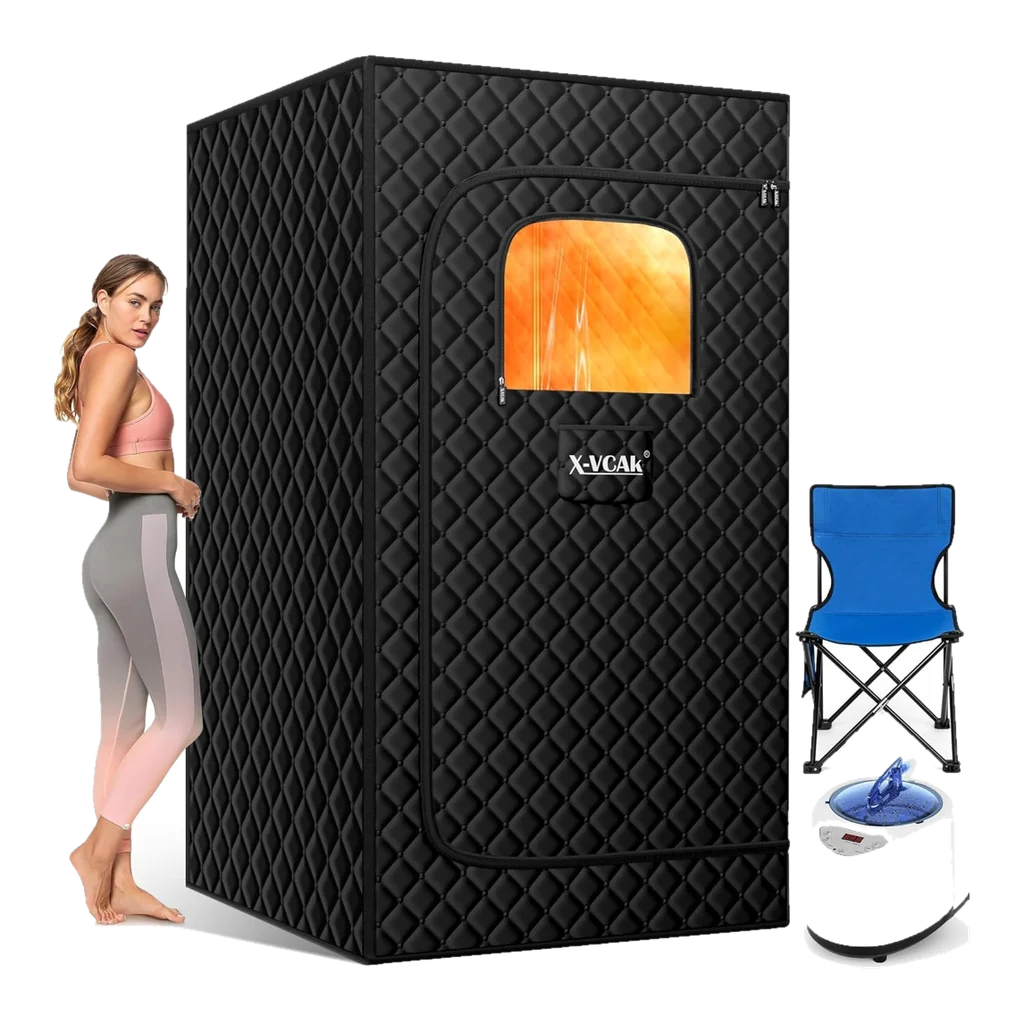
A zip up tent, a steamer with nine heat levels and a remote, and a folding chair. It is steam, not infrared, and it folds into a closet.
Ownership: I have not bought this. I have not tested it either; I am judging it as the cheaper equivalent for finding out if the heat habit sticks, on 1,718 reviews.
Price: About $158 ($157.99) as of September 27, 2026.
Hyperbaric chambers: why nothing made the list
This is the section where I expected to find a pick and ended up with none.
Clinical hyperbaric oxygen means breathing close to 100 percent oxygen in a hard chamber at twice normal pressure or more, under medical supervision. The soft, zip up chambers sold for home use are something else. They run at about 1.3 atmospheres and are pumped with ordinary air. The Undersea and Hyperbaric Medical Society says their FDA clearance covers acute mountain sickness and nothing more, that the FDA prohibits using them with supplemental oxygen, that they deliver no more oxygen than a mask at normal pressure, and that the society does not endorse home treatment at all.3
Then there is fire. In August 2025 the FDA wrote to health care providers about reports of fires with hyperbaric devices causing serious injuries and deaths, and about the higher fire risk that comes with concentrated oxygen.4 That letter was about devices in clinics with trained staff. Adding an oxygen concentrator to a soft chamber at home is exactly the setup those rules exist to prevent.
Neither of the chambers I had on my original list is sold on Amazon, and I would not buy one at home anyway. If a doctor thinks you need hyperbaric oxygen, it happens in an accredited facility, and that is where I would go.
Float tanks: one listing and no reviews
A float tank holds a shallow pool of water with so much Epsom salt dissolved in it that you float without effort, in the dark and quiet. The research is small but interesting. In one 2018 study, 50 people with anxiety disorders did a single hour long float and reported a large drop in anxiety afterwards. It was open label, with no control group for the anxious patients, and the authors said it needs replicating in larger controlled trials.5
The home version is another matter. The only float tank I could find on Amazon is an $8,580 unit with zero reviews and no spec sheet. The better known home pods are sold direct by their makers, and they come with hundreds of pounds of salt, daily filtration and a room that has to handle humidity. For something most people would use a couple of times a month, a session at a float center is the sensible test, and it is what I would book before even pricing a tank.
Why whole house water is not on my list
My first outline for this post had a whole house filtration system in it. I left it off. I do not have a whole house filter or a softener, and the reason is the useful part.
I have run an APEC reverse osmosis system under the kitchen sink since about 2009. It has moved house with me, I have bought it again for friends and family, and I drink it and cook with it. That covers the water I swallow. For the shower, I use an AquaBliss filter on the shower arm. I bought three of them in 2023 and a three pack of cartridges in 2024, and I bought it for the chlorine smell and for skin and hair. Between the two, an RO for drinking water and a shower filter for chlorine, a whole house unit has nothing left to do for me.
Whole house systems solve different problems. A softener is the fix for hard water, with scale on the kettle and appliances dying early. Well water makes you your own utility, so sediment, iron and bacteria get handled where the line comes in. If neither of those is you, the two cheaper pieces below cover most of it. The real cost of running an RO filter and the shower filter question each have their own post.
APEC ROES-50 Reverse Osmosis System (the one under my sink)
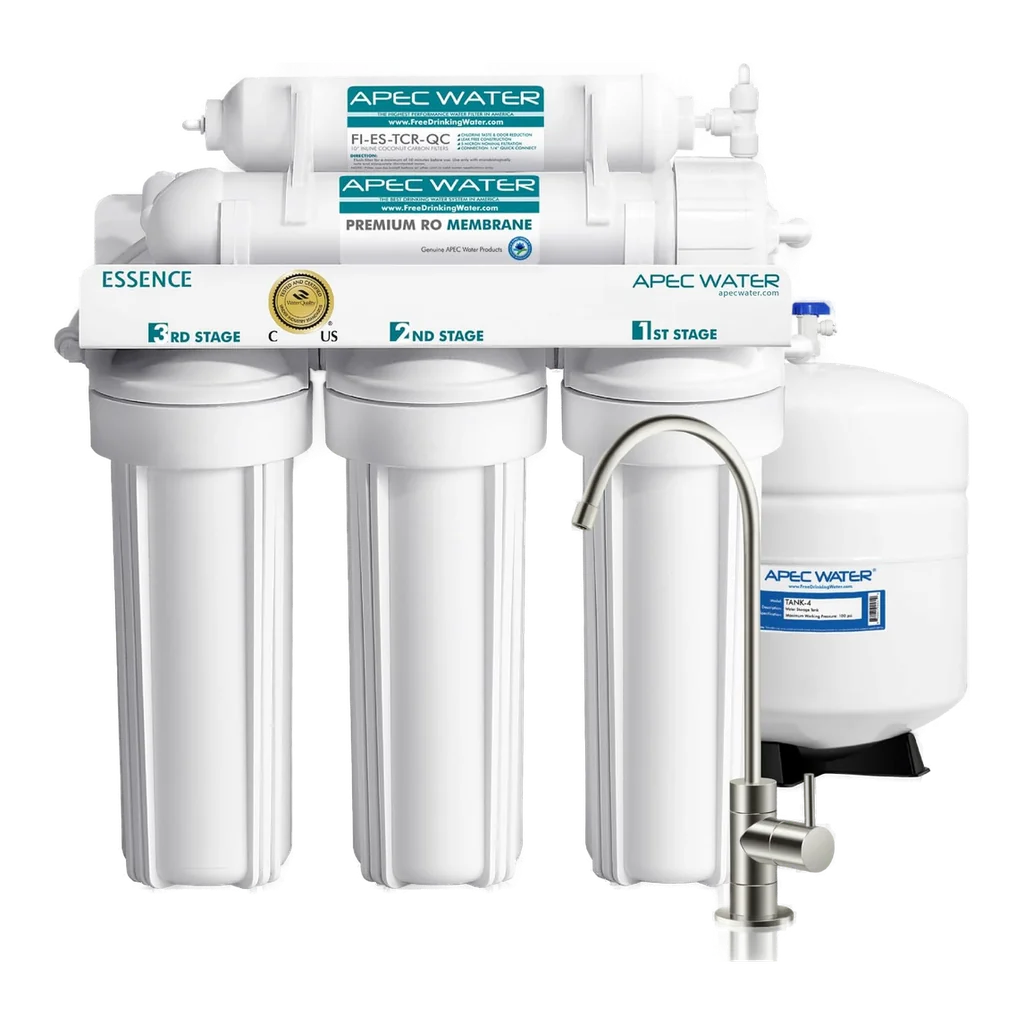
Five stages under the sink with its own faucet. The drinking water half of why I never went whole house.
Purchase signal: In use since about 2009, filters rebought ever since, and bought again for others.
Price: $182.73 when I checked on September 27, 2026.
AquaBliss SF100 Shower Filter (the chlorine half)
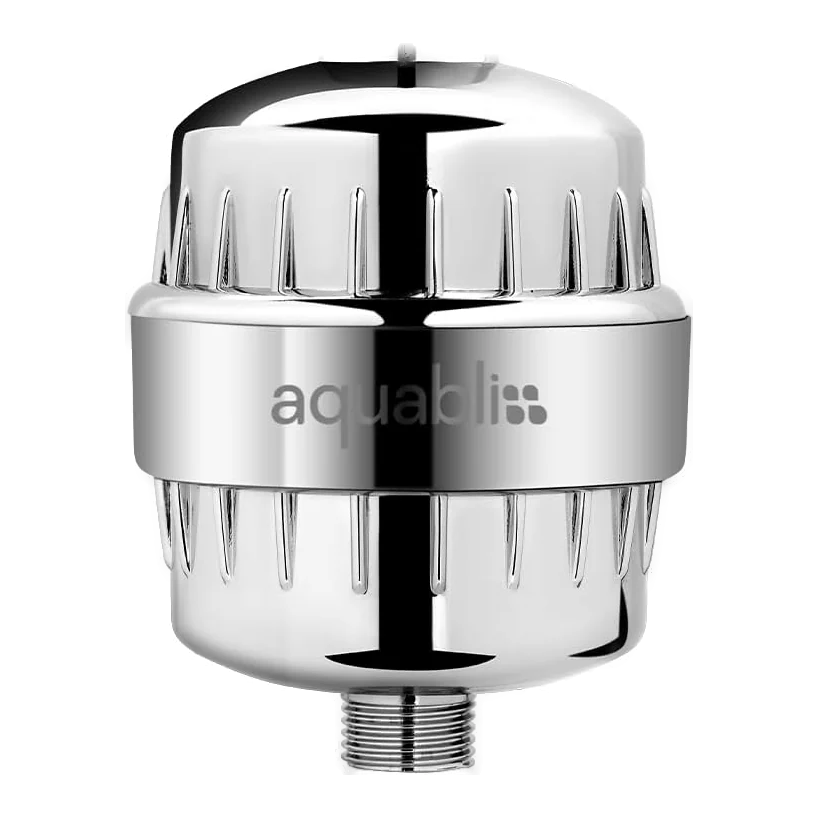
Screws onto the shower arm between the pipe and the head. No plumber involved.
Purchase signal: Three units in 2023, then a three pack of replacement cartridges in 2024.
Price: $36.99 on September 27, 2026.
The safety list
Heat is stress on purpose. If you have a heart condition, low blood pressure, or you are pregnant, talk to your doctor before buying a sauna, a steam generator or a tent. Drink water before and after, start with short sessions, and do not mix heat with alcohol. Any listing that promises the sauna will detox you is selling a story: sweat is mostly water and salt, and your kidneys and liver do the rest. Hyperbaric chambers are medical devices with a real fire risk, and they belong with a physician.
Quick questions
**Is a home sauna worth it?**
If you would really go four or more times a week, the Finnish data points your way, though it comes from traditional saunas and cannot prove cause. If you are not sure you will, a $158 tent will tell you before a $1,900 cabin does.
**Infrared or traditional?**
The long term data is for traditional saunas. Infrared is cooler and easier to install. I would pick infrared for the practicality, not because it has been shown to be better.
**Is a steam shower generator hard to install?**
The generator is the easy part. It needs its own 240 volt circuit, a water line and a shower sealed to the ceiling, so budget for an electrician and a plumber.
**Can I use a hyperbaric chamber at home?**
The soft chambers sold for home use are cleared only for acute mountain sickness, run on air, and the specialist medical society does not endorse home treatment. For a real medical reason, go to an accredited facility.
**Do I need a whole house water filter?**
For hard water or a well, probably. For drinking water, an under sink RO does more, and for chlorine in the shower, a shower filter is the cheap fix.
The bottom line
If money stopped mattering, the sauna is what I would buy first, because it has the best evidence on this list, with the caveat that the evidence comes from traditional Finnish saunas. Before that I would spend $158 on a steam tent to find out whether I would use it. The steam generator is a nice upgrade with little evidence behind it, the hyperbaric chamber does not belong in a house, and the float tank is best tried at a float center. Water was the one area where I already had the big hardware, and an RO plus a shower filter turned out to be enough. For the recovery gear I do own, see the at-home recovery kit.
References
The claims about saunas, steam, hyperbaric chambers and floating are drawn from peer reviewed research and official statements. The sources most directly relevant:
- Laukkanen T, Khan H, Zaccardi F, Laukkanen JA. Association between sauna bathing and fatal cardiovascular and all-cause mortality events. JAMA Intern Med. 2015 Apr;175(4):542-8. PubMed
- Singh M, Singh M, Jaiswal N, Chauhan A. Heated, humidified air for the common cold. Cochrane Database Syst Rev. 2017 Aug 29;8(8):CD001728. PubMed
- Undersea and Hyperbaric Medical Society. UHMS position statement: low-pressure fabric hyperbaric chambers. Revised July 10, 2018. UHMS
- U.S. Food and Drug Administration. Follow instructions for safe use of hyperbaric oxygen therapy devices: letter to health care providers. August 25, 2025. FDA
- Feinstein JS, Khalsa SS, Yeh HW, et al. Examining the short-term anxiolytic and antidepressant effect of Floatation-REST. PLoS One. 2018 Feb 2;13(2):e0190292. PubMed
This post describes products I have not used, apart from the two water filters in the water section. Heat and pressure both carry real risks; if you have a heart condition, low blood pressure, or you are pregnant, ask your doctor first.
I earn a small commission if you purchase through these links, at no
additional cost to you. I only recommend products I’ve personally used or
researched thoroughly. This helps support the work behind Better Living
Every Day.