THE EVERYDAY KITCHEN CHECK
Cooking Oil Finder The right fat for how you cook
Tell it how you're cooking and you'll get one fat to reach for, plus a backup. All of them are seed-oil-free. Under the pick you'll see the smoke point, how stable that fat is, and what's most likely to go wrong at the stove.
Free to use. No account. Every fat here is one I have bought myself.
YOUR BEST FIT
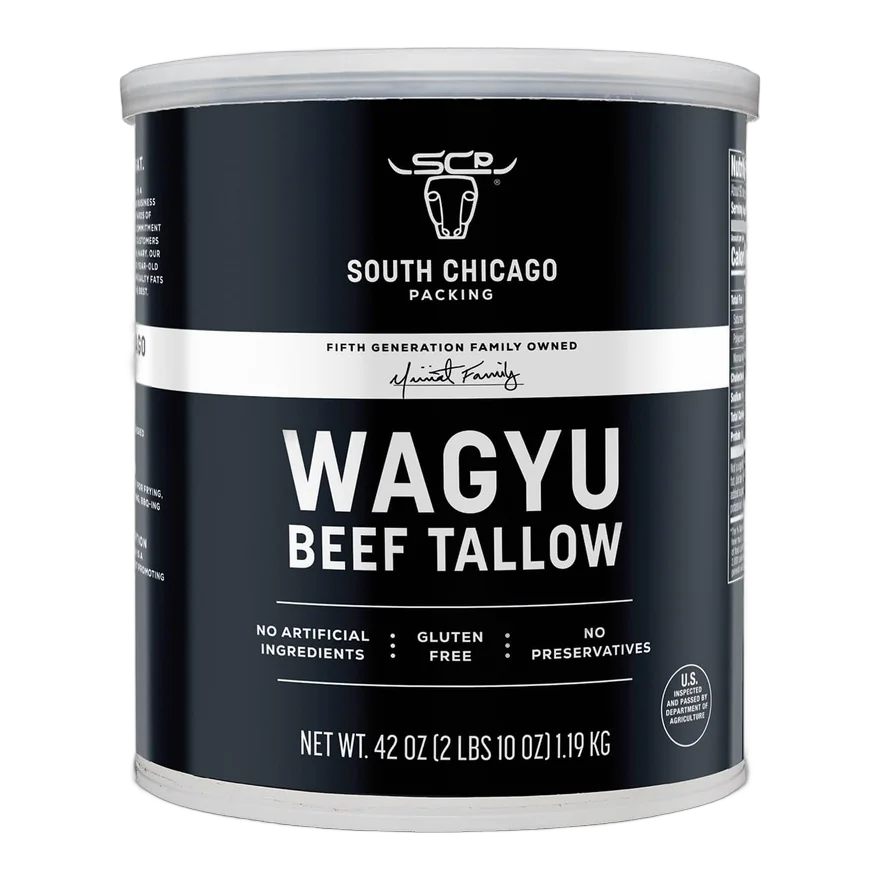
Beef tallow
This is about the hottest thing you'll do in a pan, but it's over quickly.
Least polyunsaturated fat of the everyday frying fats here, so it's the one I'd trust for long, hot cooking. Yes, it tastes like beef.
- Smoke point
- About 400°F; some charts list higher
- Polyunsaturated fat
- 4 g per 100 g (USDA)
- What it is
- Rendered beef fat
Watch for: Pat the food dry and use a thin film of fat. If the kitchen fills with smoke, the pan's too hot.
Backup: Avocado oil
My record: I've rebought this tub, in 2023 and again in 2025.
See South Chicago Packing Wagyu Beef Tallow on Amazon
That button's an affiliate link, so I may earn a small commission if you buy, and you won't pay a cent more. The commission doesn't pick the oil. The rules below do. Got allergies? Read the label, because I can't vouch for a factory.
THE QUICK REFERENCE
The best fat for each cooking method
| Cooking method | Best fit | Backup | Plant-based pick |
|---|---|---|---|
| Salad or finishing | Extra-virgin olive oil | Avocado oil | Extra-virgin olive oil |
| Gentle saute | Extra-virgin olive oil | Avocado oil | Extra-virgin olive oil |
| Roasting | Duck fat | Avocado oil | Avocado oil |
| Stir-fry | Avocado oil | Algae oil | Avocado oil |
| Searing | Beef tallow | Avocado oil | Avocado oil |
| Shallow frying | Beef tallow | Leaf lard | Avocado oil |
| Deep frying | Beef tallow | Leaf lard | Avocado oil |
The fats, side by side
| Fat | Smoke point | Polyunsaturated fat |
|---|---|---|
| Beef tallow | About 400°F; some charts list higher | 4 g per 100 g (USDA) |
| Leaf lard | About 375°F | 11 g per 100 g (USDA, lard) |
| Duck fat | No reliable figure found; charts disagree | Not listed here; no USDA figure checked |
| Avocado oil | Up to 500°F (brand’s figure) | 13.5 g per 100 g (USDA, avocado oil) |
| Algae oil | 535°F (brand’s figure, no independent test found) | 3% (brand’s figure) |
| Virgin coconut oil | About 350°F (virgin) | 1.7 g per 100 g (USDA, coconut oil) |
| Extra-virgin olive oil | About 350 to 410°F, depending on the oil | 10.5 g per 100 g (USDA, olive oil) |
How the picks work
Every cooking method has its own fixed list. Stability counts most, then taste, then how the fat acts in that pan. Your choices cross names off, and you see the top two left over. You won't find a seed oil on it, and if I haven't bought it, it's not there. Curious why? Read the healthiest oils for frying. Want more options? Try the best seed-oil-free cooking oils.
A few things worth knowing
What is an oil’s smoke point?
It's the point where a fat starts throwing off steady smoke. Think of it as a warning light, and don't expect it to be an exact cutoff.
Is a higher smoke point always better?
Nope. A big number won't tell you how a fat holds up over a long fry, so I list polyunsaturated fat too. Less of it usually means a steadier fat, and that's what I rank frying fats on.
How do refined and unrefined oils differ for cooking?
Refining strips out flavor along with the bits that smoke early, so refined oils tend to go hotter before smoking. Unrefined oils taste like something, and they start smoking sooner.
Can I use olive oil for roasting or sauteing?
Sure. Extra-virgin is fine for a saute or a moderate roast. Heat does cost you some flavor, though, so if the bottle was expensive, I'd keep it for finishing.
What matters most for stir-frying or searing?
Heat tolerance first, then whether it tastes right with the food. A thin film will do for a sear. Honestly, a hot pan matters more than how much you pour.
Why do two sources give different smoke points for the same oil?
Refining, free fatty acids, age, even the test itself can move the number. Treat the figures here as ballpark. When one came from the brand, I say so.
Sources
- USDA FoodData Central, SR Legacy: beef tallow 171400, lard 171401, avocado oil 173573, olive oil 171413, coconut oil 171412.
- University of Nebraska-Lincoln Extension, G2369: tallow smoke point.
- Wikipedia, Smoke point: lard and virgin coconut oil figures, and why values vary.
- OliveOil.com, a seller’s site: extra-virgin olive oil range.
- Algae Cooking Club: brand figures for algae oil.
- Marianne’s avocado oil listing at H-E-B: brand figure and processing.
Reviewed November 1, 2026. Figures are approximate. This is a cooking guide, not medical advice.