In This Article
My drinking water comes out of a reverse osmosis system that has been running the better part of two decades. I drink it, I cook with it, and I add ConcenTrace drops to it. RO takes the minerals out along with everything else, and that is what the drops are for.
What I carry that water around in is not written down anywhere, and I am not going to invent a bottle just to sell you one. So this post is built the other way round. It starts with what the studies measured, which is narrower than the headlines. Then the materials and where each one is weak. The five bottles at the end were chosen on the spec sheet and the maker’s own pages, not on use.
What the bottled water studies measured
The number that went round in 2024 came from Columbia. Qian and colleagues built a new microscope method, stimulated Raman scattering, that can pick out and identify single plastic particles smaller than a micron. They pointed it at bottled water and estimated about 240,000 plastic particles per litre, with a wide error bar of plus or minus 130,000. About 90 percent of those were nanoplastics, under one micron.1
Before you act on that number, notice what it is. It measured single use bottled water, not tap water and not a reusable bottle. It came from a new method on a small set of samples, which is why the error bar is so wide. And it counted particles. It did not measure what, if anything, those particles do inside a person.
The earlier big study, from 2018, was Sherri Mason’s group at SUNY Fredonia. They bought 259 bottles across 11 brands in nine countries. Ninety three percent showed some plastic. Counting only particles bigger than 100 microns, which could be confirmed as plastic, the average was about 10 particles per litre. Counting the smaller ones too, which were tagged with a dye and not confirmed by spectroscopy, it was 325 per litre. The most common polymer was polypropylene, the stuff bottle caps are made of.2
That last detail is the one I would carry away. A good share of the plastic in bottled water looks like it comes from the cap and the bottling line, not from the water source.
Reusable plastic bottles are a different question
The bottled water studies are about particles. The question for a reusable plastic bottle is chemicals, meaning what leaches out of the plastic into the water sitting in it.
A Copenhagen group tested that in 2022. They stored tap water for 24 hours in reusable plastic sports bottles, some new, some used, some fresh out of the dishwasher, then screened the water for anything that had not been there before. They found more than 400 plastic related compounds, among them plasticizers, antioxidants and photoinitiators, plus more than 3,500 compounds that came from the dishwasher itself. Dishwashing made the plastic leach more, and even after an extra rinse the average signal was only cut in half.4
The study has limits, and the authors say so. Screening of this kind tells you something is present and roughly how strong the signal is. It does not give you a dose, and it cannot tell you whether the dose matters. It was also a handful of bottles.
The same group went wider in 2024 and ranked materials. Silicone, polyethylene and polypropylene bottles released the most. Silicone released the most unknowns, along with phthalates and plasticizers. Polypropylene released clarifying agents and BPA relatives. PET, PETG, PCTG and polystyrene released very little.5 PCTG is the family that the clear Tritan style bottles are made from, so a hard clear bottle is not the same thing as a soft squeezy one. “Plastic” is too broad a word to decide anything with.
On “BPA free”. The replacements are usually bisphenol S or bisphenol F. A 2015 systematic review of 32 studies found both to be hormonally active in the same range as BPA.6 Most of those studies were in cells, not people, so treat it as a reason the label is weak rather than as a harm finding. A BPA free sticker tells you one molecule was swapped for a cousin.
The three materials
| Material | What it has going for it | Where it is weak |
|---|---|---|
| Plastic | Light, cheap, does not break | Leaching, and it gets worse with heat, dishwashers and age. Material matters: PET, PETG, PCTG low, PP and silicone high |
| Stainless steel | Tough, no leaching worth the name at room temperature, single wall has no seal to worry about | Insulated bottles have a sealed base, and some makers close it with lead. Lid is usually plastic and silicone anyway |
| Glass | Nothing migrates, nothing tastes, you can see when it is clean | Breaks. Needs a sleeve. Heavy. Lid is usually plastic |
People forget the lid. Even on a steel or glass bottle, the piece your mouth touches is nearly always polypropylene with a silicone gasket. If the plastic is what bothers you, the lid is where to look, and only a few bottles give you a steel one.
The lead in insulated steel bottles
This is the one that made news in early 2024, and the facts are plainer than the panic.
A vacuum insulated bottle is two steel walls with the air pumped out between them. The hole where the air was pumped out has to be sealed, and the cheap industry standard way to seal it is a pellet that contains lead. Stanley’s own FAQ says exactly that: the sealing material at the base includes lead, it is then covered with a stainless steel layer, and no lead is on any surface that touches you or your drink. If the base cap comes off and exposes the seal, Stanley says the bottle is covered by its lifetime warranty.7
So in a Stanley that is intact, the lead is sealed behind steel. The problem is the word intact. The Consumer Product Safety Commission recalled Green Sprouts toddler bottles and cups in November 2022, about 10,500 of them, because “the bottom base can break off, exposing a solder dot that contains lead”. The company had seven reports of exactly that happening.8 A year later it recalled about 84,000 Tiblue children’s cups because the bottom carried an accessible solder bead with lead above the federal limit.9 Those were children’s products, which have a strict lead limit. The engineering is the same in adult bottles.
Some makers say in writing that they do not do it this way, and these are the two I could confirm. Hydro Flask’s help page says it moved away from the lead seal in 2012 and has sealed its bottles without lead since.10 Klean Kanteen’s FAQ says it uses silica or glass plugs instead, at six to seven times the cost, and that all of its products are lead free.11 I am quoting their pages, not a test I ran.
The simplest way around the whole thing is a single wall bottle. One layer of steel, nothing pumped out, nothing to seal.
Klean Kanteen Classic 27 oz, single wall with loop cap (the simple one)
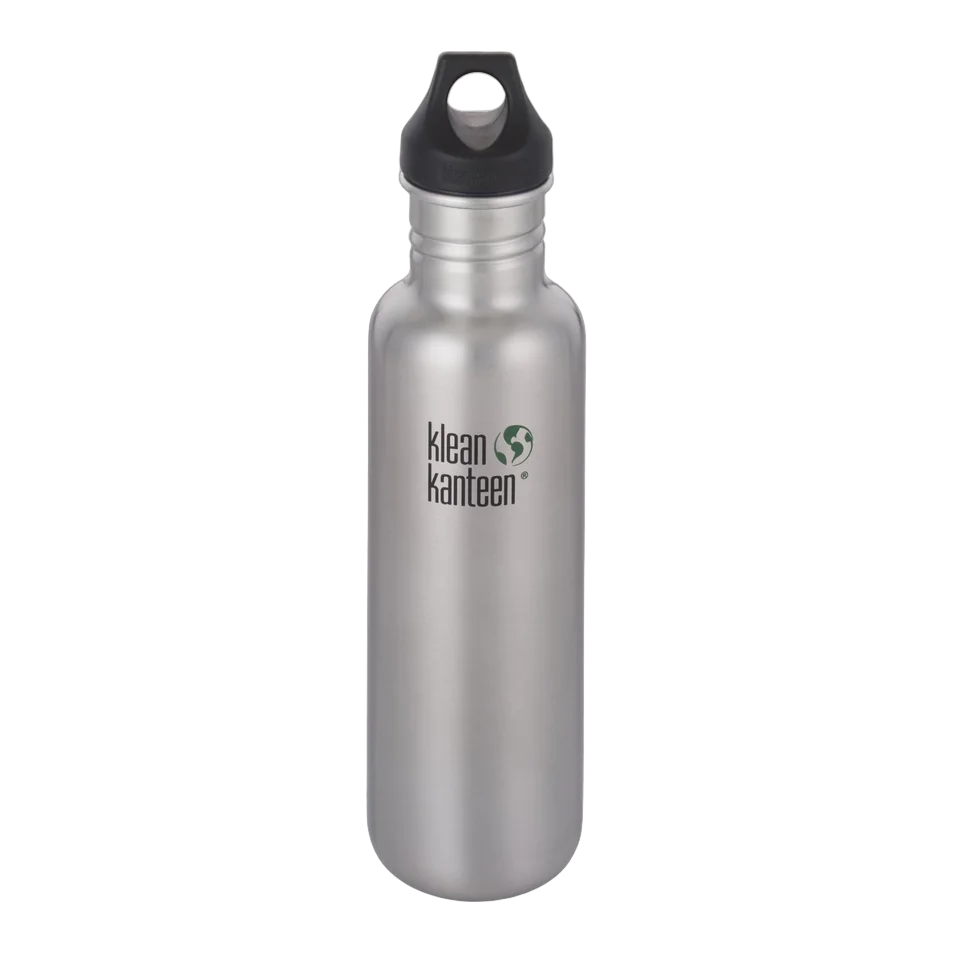
Klean Kanteen’s original bottle. The listing says 18/8 food grade steel with no liner, an electropolished inside, and a loop cap of polypropylene number 5. The cap is the only plastic, and the Classic thread takes their steel or bamboo caps if you want none.
Picked for: no vacuum, no seal, no lead question, and the cheapest bottle on this page.
Price: $12.95 on October 1, 2026, shipping extra on the listing I saw.
Klean Kanteen Reflect 27 oz with bamboo cap (no plastic touching the water)
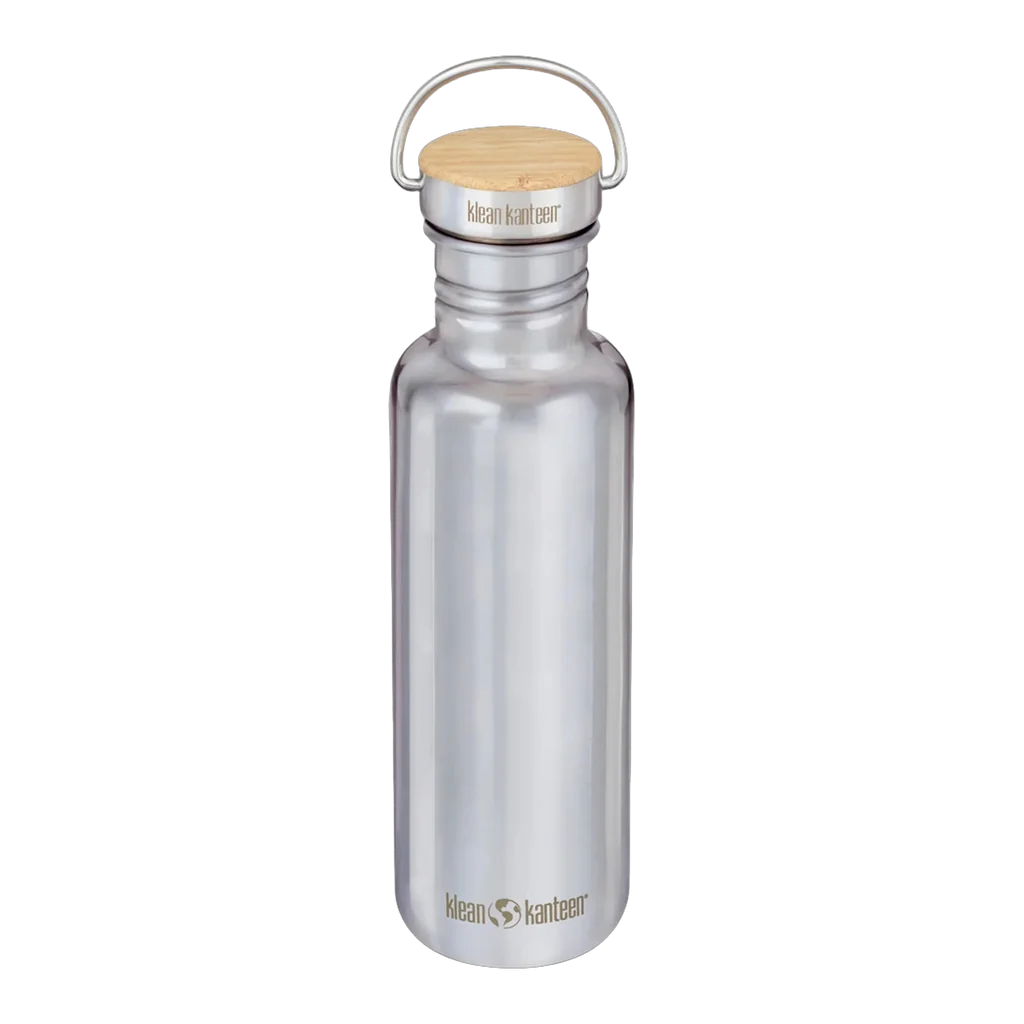
Same single wall body, but Klean Kanteen’s page says it is made from three materials only: stainless steel, bamboo and food grade silicone, with no paint and no plastic. The steel and bamboo cap gives the bottle a full stainless interior.
Picked for: the one bottle here where the lid is steel too. The silicone gasket is the only soft part.
Price: $32.95 when checked on October 1, 2026, the same as the maker’s own price.
If you want cold water all day, you want the vacuum, and then the question is whether the maker tells you how the base is sealed.
Hydro Flask 32 oz Wide Mouth with Flex Cap (insulated, lead policy in writing)
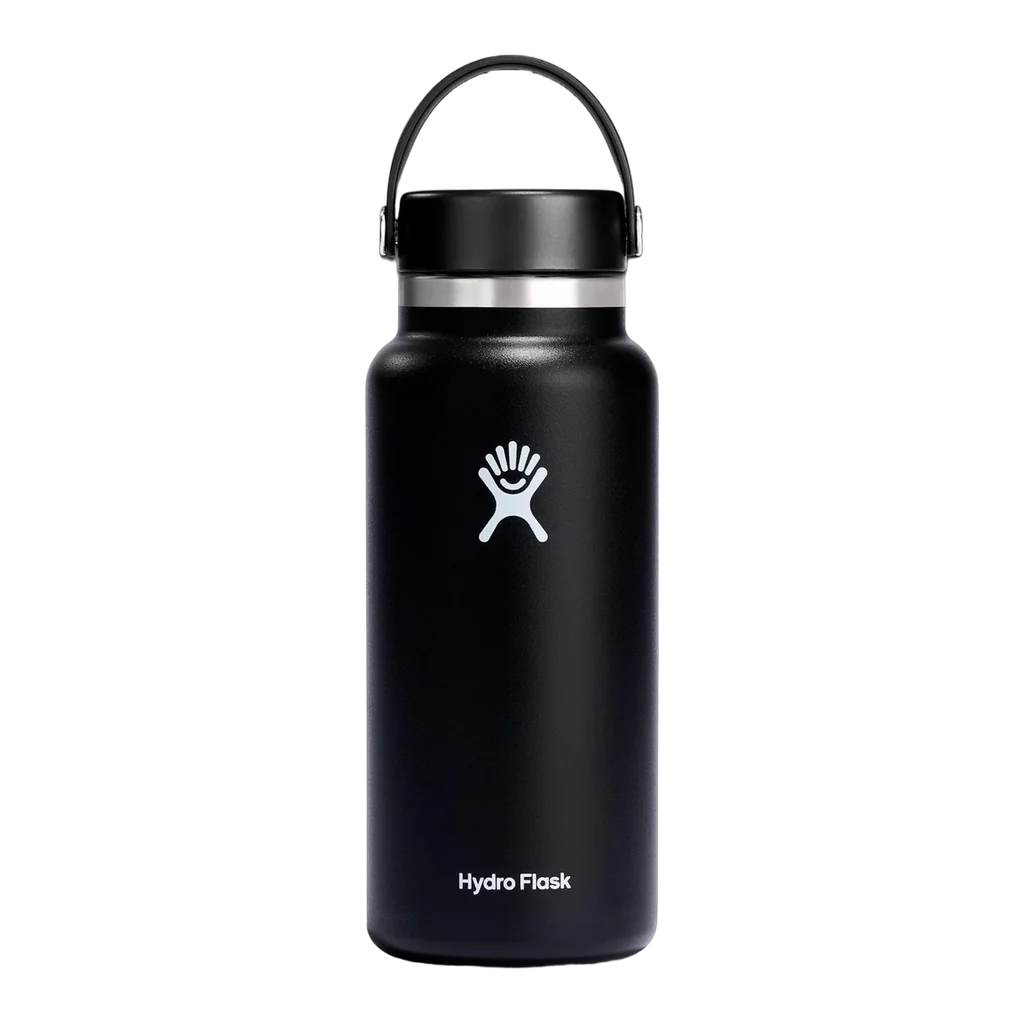
Double wall 18/8 steel, 24 hours cold on the listing, and a BPA free plastic Flex Cap. What puts it here is the help page quoted above: sealed without lead since 2012.
Picked for: an insulated bottle from a maker that answers the lead question on its own site.
Price: $31.81 on October 1, 2026, marked down from $43.93.
Does stainless steel leach anything?
Nickel and chromium, in theory, because 18/8 means 18 percent chromium and 8 percent nickel. The studies on it are cookware studies. Oregon State cooked tomato sauce in stainless pans for hours and found nickel and chromium rising, most from new steel, and falling off after several uses.12 An Italian group boiled tomato sauce and lemon marmalade in 18/10 pots for an hour and found the amounts released stayed below the thresholds known to trigger a nickel allergy.13
That is hot acid for hours. Room temperature water for an afternoon is a much gentler case, and I have no bottle study to point you to. If you have a diagnosed nickel allergy, glass removes the question entirely. For everyone else the cookware data is reassuring, and it is cookware data.
Glass, and why the sleeve is not optional
Glass is the material with nothing to argue about. Nothing migrates, it does not hold flavours, and you can see whether it is clean. It also breaks, which is why every glass bottle worth buying comes in a silicone sleeve. The sleeve is on the outside and never touches the water, so the Copenhagen silicone finding does not apply to it.
You will see two kinds of glass. Borosilicate is the lab and oven glass, better with temperature swings. Soda lime is ordinary glass. Both are fine for water. Not every maker says which one it uses, and I have left it out where they do not.
Lifefactory 22 oz with Classic Cap (glass made in France)
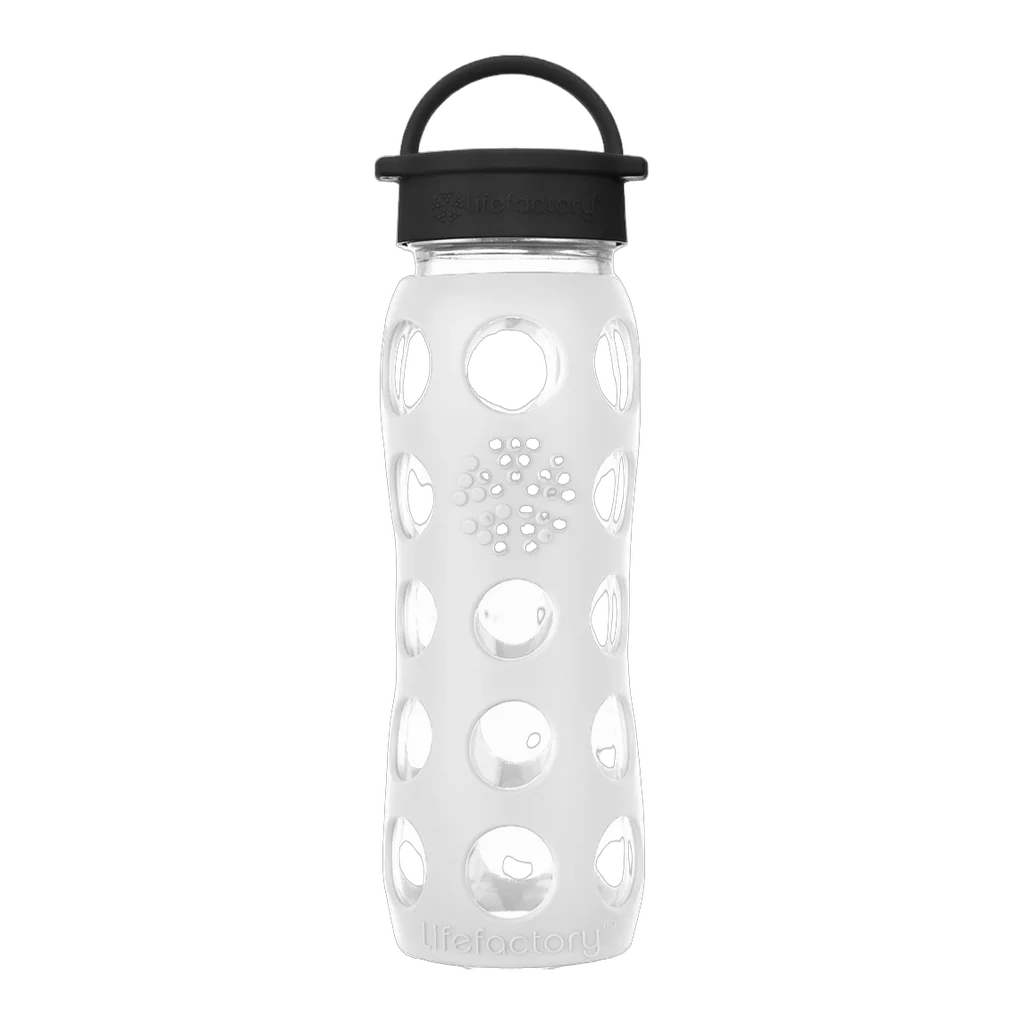
Lifefactory’s catalog says the glass is made in France, the bottle is assembled in the USA and Europe, and it is free of BPA and phthalates. Dishwasher safe with the sleeve on. The screw cap is plastic, and the maker does not say which glass it uses.
Picked for: the glass bottle with the longest track record and a replacement glass sold on its own for $5.
Price: $22.99 for the white sleeve on October 1, 2026, other colours a few dollars either way.
Purifyou 22 oz borosilicate glass with sleeve (the cheaper glass)
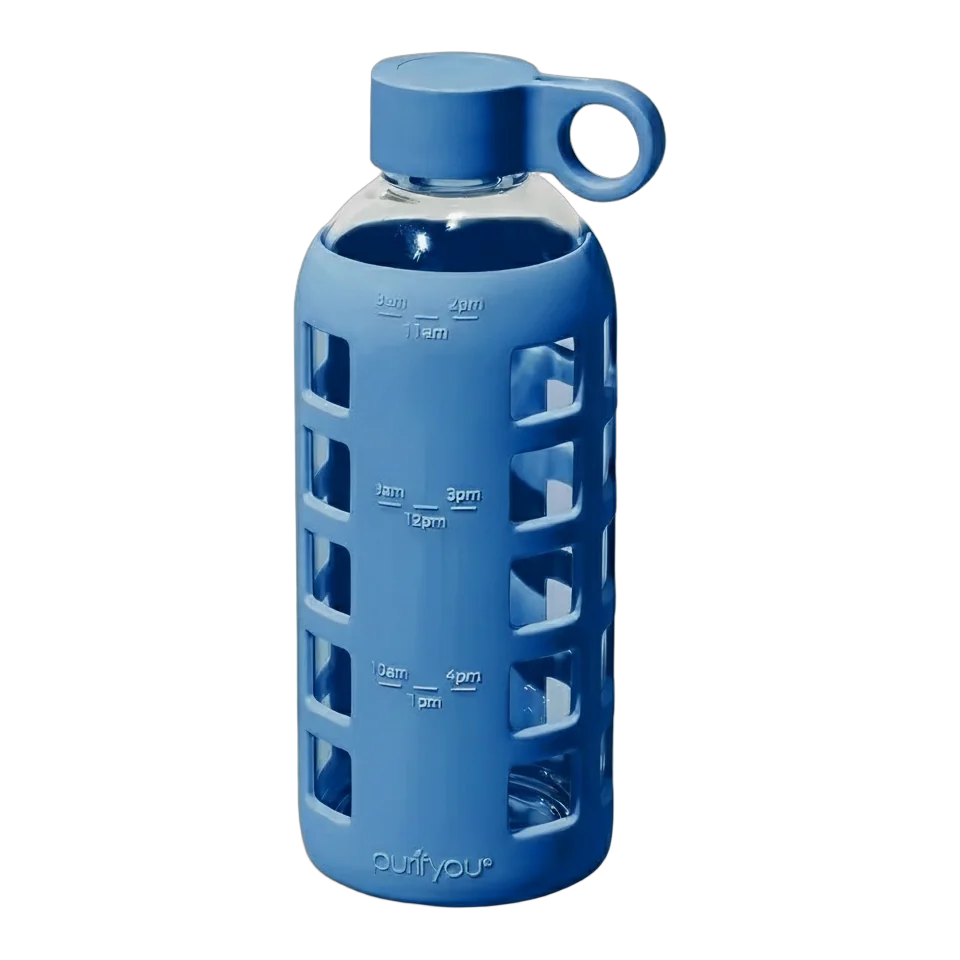
Purifyou’s page says high tempered borosilicate glass, a food grade silicone sleeve with time and volume marks, and a cap with a stainless steel lid interior so the water meets steel rather than the plastic shell of the cap. Not for fizzy drinks, by the maker’s own warning.
Picked for: borosilicate at a lower price than most glass bottles, and a cap that keeps plastic off the water.
Price: $25 for the 22 oz in the blue sleeve, checked October 1, 2026.
What I would do
Take the bottled water studies as a reason to filter at home and refill, which is a cheaper habit anyway. Reverse osmosis is what I run, and if you go that way the water will want minerals put back. For the bottle, pick the problem you care about. If it is plastic, buy glass or a steel bottle with a steel cap. If it is lead, buy single wall or a maker that answers the question in writing. If it is a dented bottle in a gym bag, buy the plain steel one and stop reading.
Quick questions
Are stainless steel water bottles safe?
Single wall 18/8 steel has no seal and leaches very little at room temperature, going by cookware studies. Insulated bottles have a sealed base and some makers use lead in that seal, covered by steel. Buy from a maker that states its sealing method.
Does Stanley use lead?
Stanley’s own FAQ says the pellet that seals the vacuum at the base includes lead, that it is covered by a steel layer, and that no lead is on a surface that touches you or your drink. If the base cap comes off, stop using it and claim the warranty.
Is glass or stainless steel better for a water bottle?
Glass for purity and taste, steel for not breaking. Both usually come with a plastic lid, which is the part that touches your mouth, so check the lid if plastic is your worry.
Do BPA free plastic bottles leach chemicals?
Yes, something. The Copenhagen studies found hundreds of compounds migrating from reusable plastic bottles, more after dishwashing. Hard PET, PETG and PCTG bottles released far less than polypropylene or silicone ones.
Are microplastics in water harmful?
Not shown either way in people. WHO’s 2019 position, that they do not appear to pose a risk at current levels while the data is very limited, still stands.
The bottom line
The microplastics headlines were about single use bottled water, and the fix for that is a filter and a refillable bottle, not a particular brand. Once you are refilling, plastic is the material with real leaching data against it, insulated steel has a lead seal you want the maker to disclose, and glass has nothing against it but gravity. The Klean Kanteen Classic answers most of it for thirteen dollars.
References
- Qian N, Gao X, Lang X, et al. Rapid single-particle chemical imaging of nanoplastics by SRS microscopy. Proc Natl Acad Sci U S A. 2024 Jan 16;121(3):e2300582121. PubMed
- Mason SA, Welch VG, Neratko J. Synthetic polymer contamination in bottled water. Front Chem. 2018 Sep 11;6:407. PubMed
- World Health Organization. WHO calls for more research into microplastics and a crackdown on plastic pollution. News release, 22 August 2019. WHO
- Tisler S, Christensen JH. Non-target screening for the identification of migrating compounds from reusable plastic bottles into drinking water. J Hazard Mater. 2022 May 5;429:128331. PubMed
- Tisler S, Kristiansen N, Christensen JH. Chemical migration from reusable plastic bottles: silicone, polyethylene, and polypropylene show highest hazard potential in LC-HRMS analysis. J Hazard Mater. 2024 Dec 5;480:136391. PubMed
- Rochester JR, Bolden AL. Bisphenol S and F: a systematic review and comparison of the hormonal activity of bisphenol A substitutes. Environ Health Perspect. 2015 Jul;123(7):643-50. PubMed
- Stanley 1913. FAQs: do Stanley products contain lead? Accessed 2026-10-01. Stanley
- U.S. Consumer Product Safety Commission. Green Sprouts recalls toddler’s stainless steel bottles and cups due to lead poisoning hazard. Recall alert, 23 November 2022. CPSC
- U.S. Consumer Product Safety Commission. Tiblue stainless steel children’s cups recalled due to violation of federal lead content ban. Recall alert, 30 November 2023. CPSC
- Hydro Flask. Does Hydro Flask use lead for sealing its bottles and tumblers? Help center, updated 28 July 2025. Hydro Flask
- Klean Kanteen. Frequently asked questions. Accessed 2026-10-01. Klean Kanteen
- Kamerud KL, Hobbie KA, Anderson KA. Stainless steel leaches nickel and chromium into foods during cooking. J Agric Food Chem. 2013 Oct 2;61(39):9495-501. PubMed
- Guarneri F, Costa C, Cannavò SP, et al. Release of nickel and chromium in common foods during cooking in 18/10 (grade 316) stainless steel pots. Contact Dermatitis. 2017 Jan;76(1):40-48. PubMed
I earn a small commission if you purchase through these links, at no
additional cost to you. I only recommend products I’ve personally used or
researched thoroughly. This helps support the work behind Better Living
Every Day.