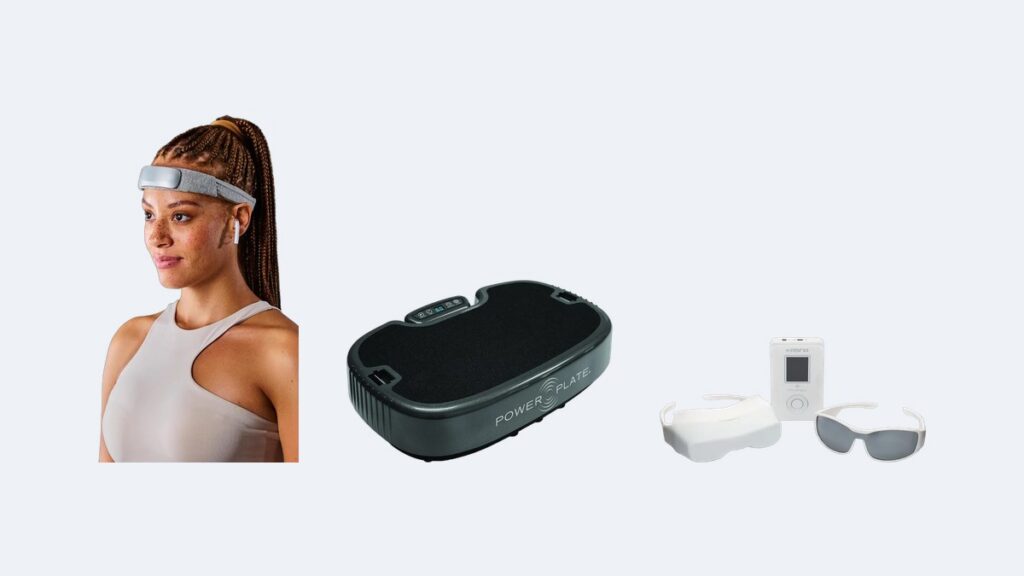
In This Article
I have not bought this. It is on the list for the day money stops mattering, and I am judging it on the spec sheet, the reviews and the evidence, not on use. That covers everything carded in this post. The one gadget from this corner of the market I do own is a red light panel, and it has its own post.
This is the odd shelf of the wishlist. A plate that shakes you. A headband that listens to your brainwaves, and glasses that flicker at you in time with music. The evidence behind them runs from decent to thin, and the marketing claims more than the studies do in every case. So for each one I read what the research and the regulators say, and found the cheaper version you should try first.
Vibration plates: the one with real evidence
A whole body vibration plate is a platform that moves very fast in very small steps, and you stand, squat or hold a plank on it. The pitch is bone density, circulation, “lymphatic drainage” and, on most cheap listings, weight loss. Only one of those has a proper body of trials behind it, and that one is bone.
A 2010 meta-analysis pooled eight randomized trials. In postmenopausal women, vibration gave a small but significant gain in hip bone density compared with no vibration, but not in the spine. Young adults got nothing measurable. Children and teenagers showed gains in the spine and shin.1 The authors called it promising and said the studies were short and too varied to base a recommendation on.
A bigger update in 2023 looked at 23 studies, again in postmenopausal women. Lots of settings showed some effect on the spine or hip, but only one pattern reached high quality evidence: high frequency, around 30 Hz, at low magnitude, around 0.3 g, for a large total dose of about 7,000 minutes.2 That works out to roughly 20 minutes a day for a year. So this is a slow habit for a specific group of people, not a ten minute shortcut.
That spec is why the Power Plate is the one I would buy. The listing says it runs up to 35 times a second with a low and a high amplitude setting, which puts it in the range the better trials used. It also has a 264 lb user limit and fits under a bed, and the reviews sit at 4.1 stars over 51 ratings, which is thin for a $2,000 purchase but not nothing.
Power Plate Personal Vibration Plate (the one I would buy)
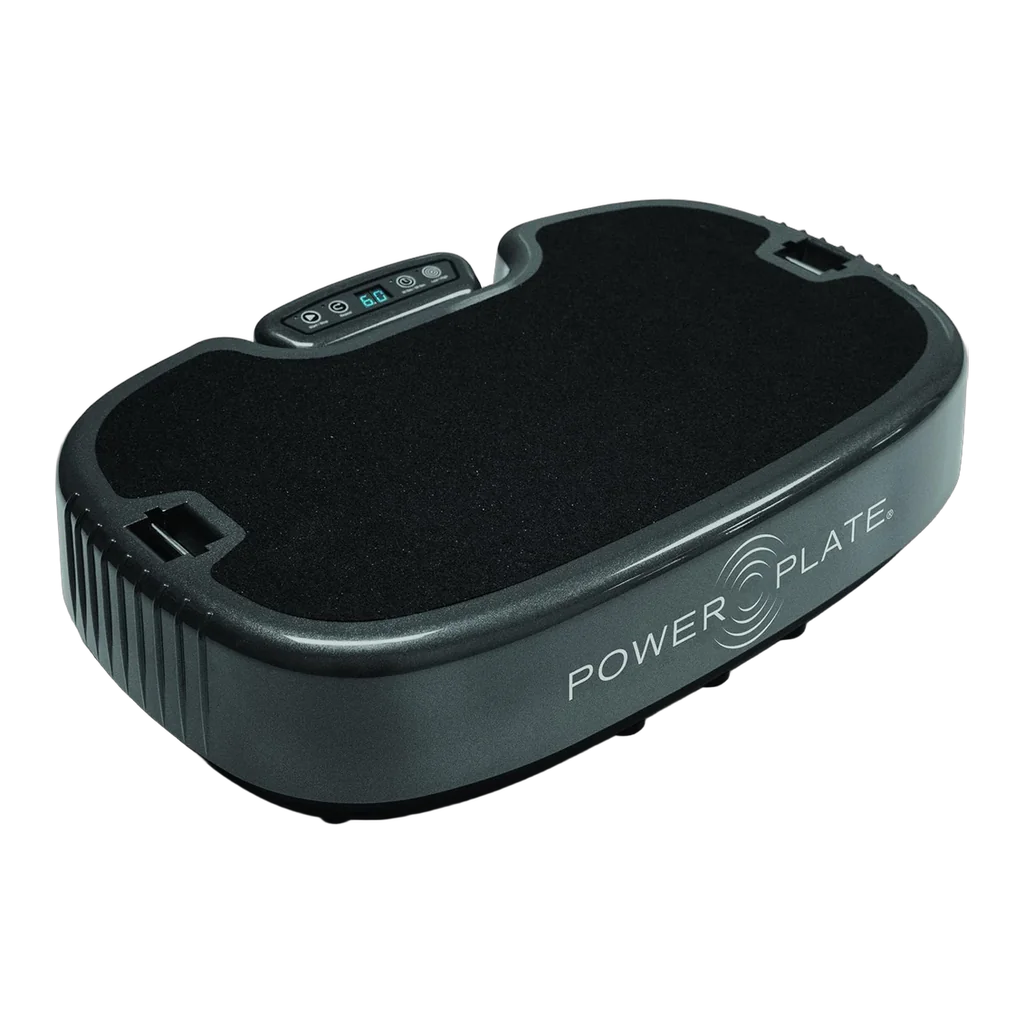
PrecisionWave vibration up to 35 Hz with low and high amplitude, a remote, resistance handles and a floor mat. Low enough to slide under a bed.
Ownership: I have not bought this. Wishlist pick, judged on the spec sheet and 51 reviews, not on use.
Price: $1,995.00 on September 27, 2026.
What I would try first is a Lifepro Waver at about $200. It has more than 30,000 reviews at 4.6 stars and a user limit of 330 lb. The catch is that the listing gives 99 “speeds” and never says what they are in hertz, so you cannot check it against the studies the way you can with the Power Plate. Judged on equivalence, not on testing, it is the cheap way to find out whether you will stand on a plate every day before paying ten times more for one.
Lifepro Waver Vibration Plate (try this first)
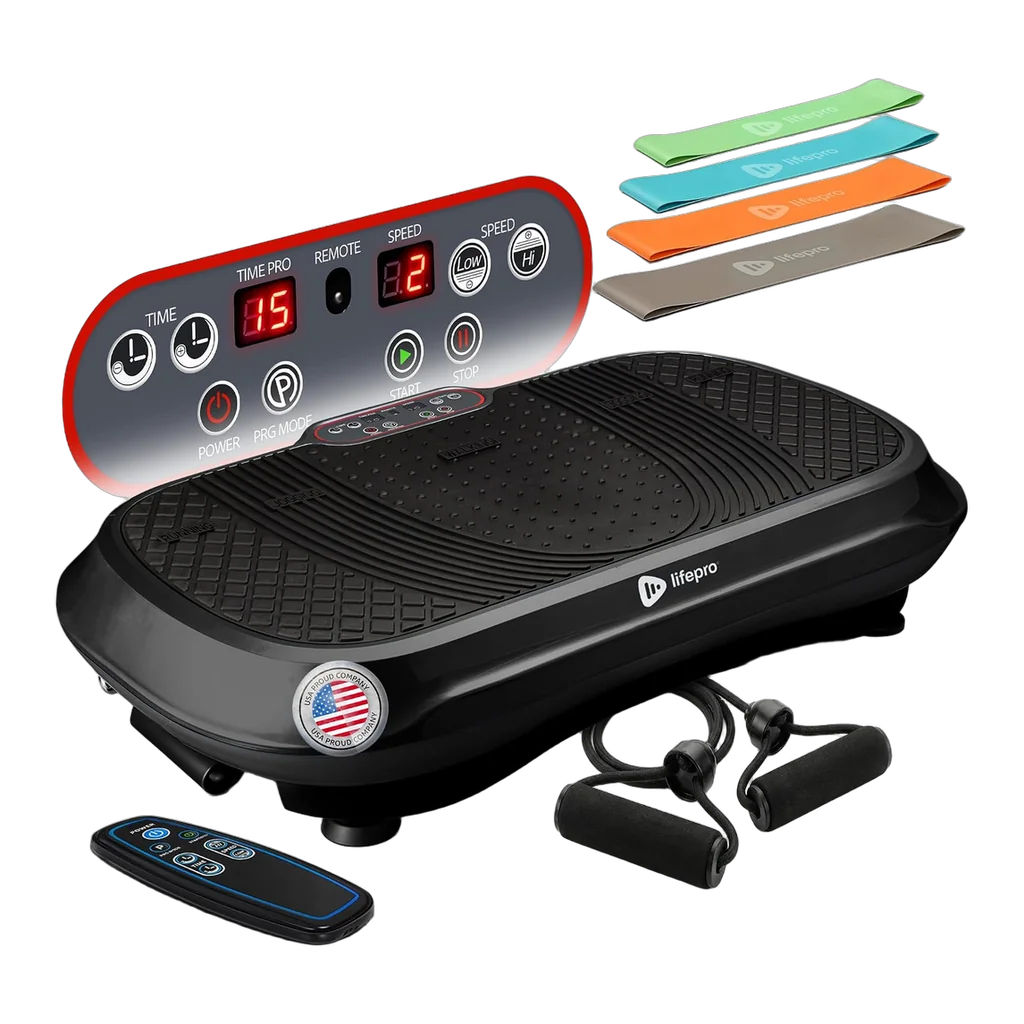
Oscillating plate with 99 speed settings and 10 presets, rated for up to 330 lb, with bands and a remote in the box. The listing does not state its frequency in hertz.
Ownership: I have not bought this or tested it. Cheaper equivalent, judged on 30,719 reviews and the listing.
Price: $199.99 when I checked on September 27, 2026.
Neurofeedback headbands, and what “FDA” means here
Neurofeedback means watching a live readout of your own brain activity, usually through a sound cue, and learning to steer it. The plan I started from said it is “FDA cleared for certain conditions”. Of everything in that plan, it was the line that most needed checking.
Here is what the rules say. The FDA does have a device category for biofeedback, any instrument that plays back a body signal, brain alpha waves included, so you can learn to control it. It is Class II, and the exemption from premarket review is only for prescription, battery powered devices meant for relaxation training and muscle reeducation.4 The EEG device people usually mean when they say “FDA cleared for ADHD” is NEBA, cleared in 2013. It is a prescription test that reads the theta to beta ratio in children aged 6 to 17 to help a clinician confirm a diagnosis, and the FDA letter says it must not be used on its own.5 It diagnoses. It does not train anything.
And the headbands you can buy? Muse, the best known of them, says it plainly in its legal terms: “the Sensor Device is not a medical device”.6 It is a meditation tool with a sensor on it.
The clinical evidence is also weaker than the marketing suggests. A 2016 meta-analysis of 13 trials of neurofeedback for ADHD in children, done in clinics with proper equipment, found improvement when parents rated symptoms, since they knew which treatment their child got. When the raters were probably blinded, or when the comparison was a sham, the effect was no longer significant.7 That is clinical neurofeedback. A consumer headband is further still from that evidence.
So why is one on my list at all? Because as a meditation aid the pitch is modest and honest: it gives you sound feedback that shifts as your attention wanders and settles, and it scores each session so you can see a trend. The one I would buy is the Muse S Athena, which adds an fNIRS sensor (it reads blood oxygen in the forehead) to the EEG and is built to be worn to bed. The reviews are lukewarm, 3.8 stars over 76 ratings. The sleep tracker I bought was a Fitbit, so sleep tracking is not the reason I would buy it. The meditation feedback is.
Muse S Athena Headband (the one I would buy)
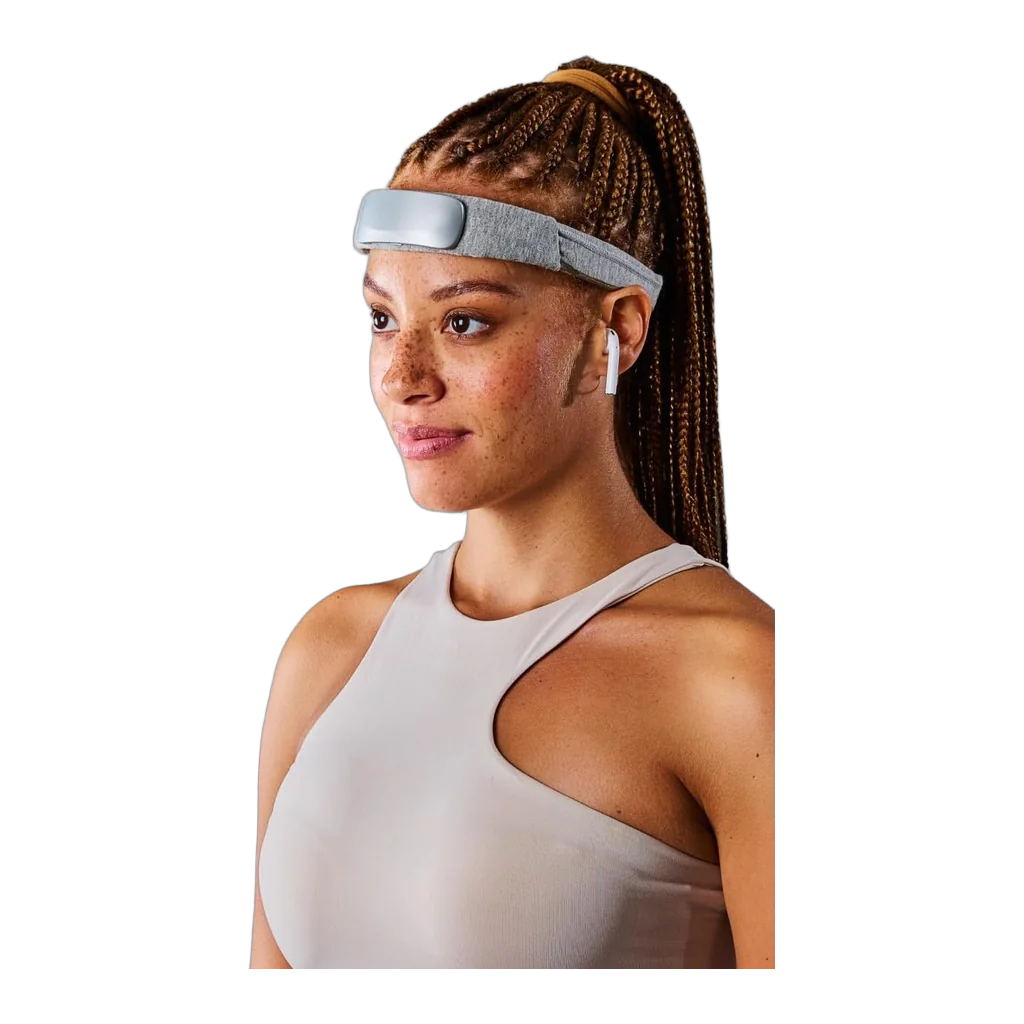
EEG plus an fNIRS sensor in a headband designed to be worn overnight, paired with the Muse app for meditation feedback and sleep tracking.
Ownership: I have not bought this. Wishlist pick, judged on 76 reviews and the spec sheet, not on use.
Price: $474.99 when I checked on September 27, 2026.
The cheaper way in is the Muse 2 at $249.99, the older band without the fNIRS sensor. Same core idea of EEG feedback during meditation, 3.9 stars over 89 ratings. I have not tested it, and I am judging it on equivalence. If you find out in a month that you do not meditate with it, you are out half as much.
Muse 2 Headband (the cheaper way in)
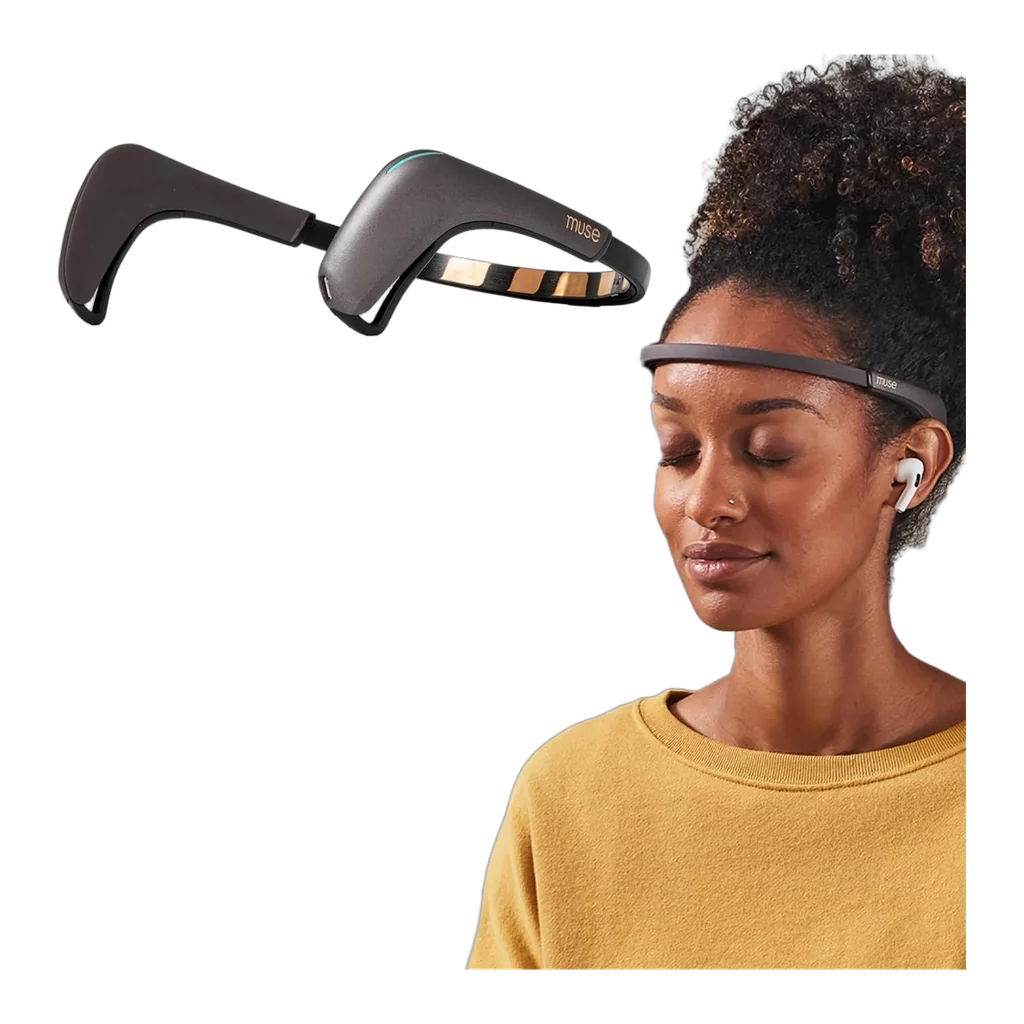
EEG sensors and responsive sound feedback during meditation, with a calm score after each session. USB-C version.
Ownership: I have not bought this or tested it. Cheaper equivalent, judged on 89 reviews and the listing.
Price: $249.99 on September 27, 2026.
Light and sound machines
These are not neurofeedback. Nothing reads your brain. A light and sound machine plays pulses of light through closed eyelids, via glasses, in time with tones in headphones, on the idea that the brain tends to fall into step with a steady rhythm. The Kasina from Mindplace is the one people point to.
The research is older and thinner than for vibration. A 2008 review gathered 20 studies on this kind of rhythmic stimulation and reported benefits for stress, pain, headaches, mood and attention, then said more controlled trials were needed.8 The first author also worked for a company that sells entrainment software, which is worth knowing when a review comes out that positive. On paper I would treat it the way the review’s own conclusion does: interesting and not settled.
The one I would buy is the Kasina DeepVision bundle at $449. It is the base Kasina console with a second pair of frames made for use with your eyes open. The reviews sit at 4.0 stars over 244 ratings, the most of anything in this section.
Mindplace Kasina DeepVision Bundle (the one I would buy)
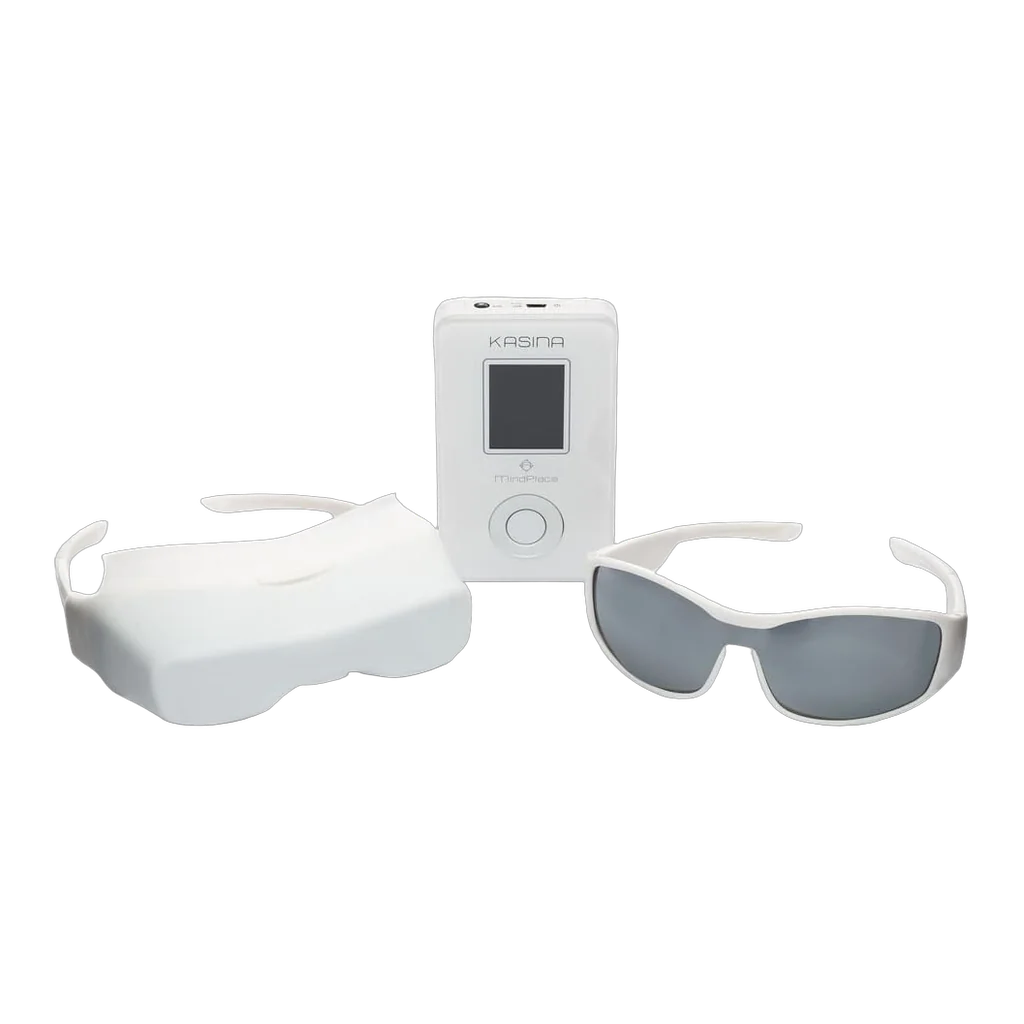
The Kasina console with both the standard Ganzframes and the DeepVision frames for eyes open sessions, plus the session card.
Ownership: I have not bought this. Wishlist pick, judged on 244 reviews and the spec sheet, not on use.
Price: $449.00 on September 27, 2026.
The cheaper option is the plain Kasina at $399, the same console and session library with the standard Ganzframes only, 4.1 stars over 155 ratings. It is only $50 less, and I have not tested it, but if you do not know yet whether you want the eyes open mode, it is the one to start with.
Mindplace Kasina (the $50 cheaper start)
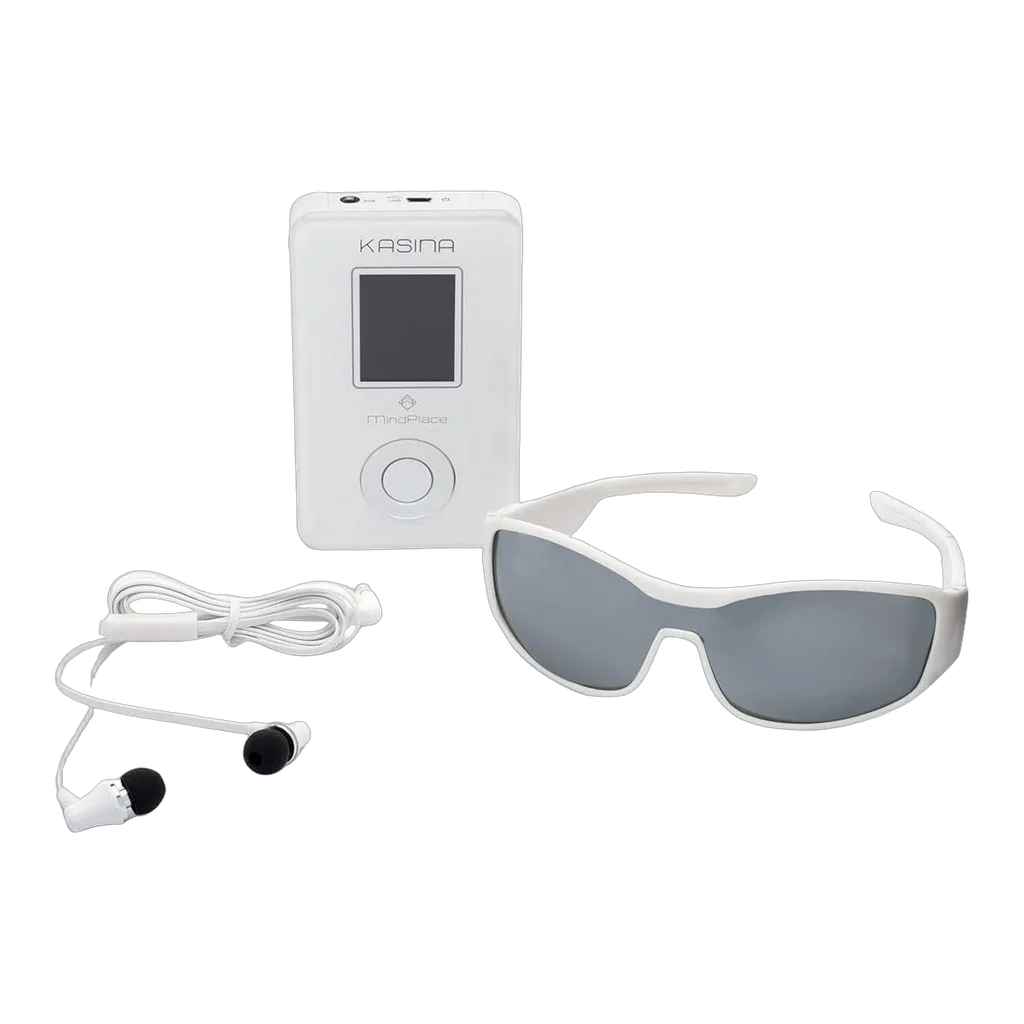
The same console with backlit Ganzframes, a MicroSD session card, charging cable and a soft case.
Ownership: I have not bought this or tested it. Cheaper equivalent, judged on 155 reviews and the listing.
Price: $399.00 on September 27, 2026.
Quick questions
Is the Muse headband FDA approved?
No. Interaxon states in its own terms that the Muse is not a medical device. It is sold as a meditation aid.
Is neurofeedback FDA cleared for ADHD?
The EEG device cleared in 2013, NEBA, is a prescription test that helps diagnose ADHD in children. It is not a treatment, and home headbands are not in that category at all.
Do vibration plates build bone?
In postmenopausal women, the trials show a small gain, best supported at about 30 Hz and low intensity, over roughly a year of regular use. In young adults the evidence found nothing.
Do vibration plates help you lose weight?
That is a listing claim, not something the bone studies above tested. I would not buy one for that.
Which one would I buy first?
The vibration plate, because it has the strongest evidence of the three, and I would start with the $200 one to see if the habit sticks.
The bottom line
Vibration plates have a real if narrow evidence base, mostly bone density in postmenopausal women, and the settings that matter are printed on the better plates. Consumer neurofeedback is a meditation aid, not a medical treatment, whatever the box implies. Light and sound machines are the most speculative of the three and come with a real seizure warning. In each case the cheaper version lets you find out whether you will use the thing before you pay for the good one, which is the question I went through in when paying more is worth it. If sleep is what you are really after, the boring changes in my sleep setup come first.
If you have used any of these, the comments are open.
References
The claims about vibration, neurofeedback and light and sound devices are drawn from peer-reviewed research and regulatory documents. The sources most directly relevant:
- Slatkovska L, Alibhai SM, Beyene J, Cheung AM. Effect of whole-body vibration on BMD: a systematic review and meta-analysis. Osteoporos Int. 2010 Dec;21(12):1969-80. PubMed
- de Oliveira RDJ, de Oliveira RG, de Oliveira LC, et al. Effectiveness of whole-body vibration on bone mineral density in postmenopausal women: a systematic review and meta-analysis of randomized controlled trials. Osteoporos Int. 2023 Jan;34(1):29-52. PubMed
- Power Plate. Who shouldn’t use vibration plates? Can they be dangerous for certain groups? March 26, 2024. Power Plate
- Code of Federal Regulations. 21 CFR 882.5050, Biofeedback device. Legal Information Institute, Cornell Law School. LII
- U.S. Food and Drug Administration. De novo classification letter, K112711: Neuropsychiatric EEG-Based Assessment Aid for ADHD (NEBA) System. July 15, 2013. FDA
- Interaxon. Muse legal terms. Accessed 2026-09-27. Muse
- Cortese S, Ferrin M, Brandeis D, et al. Neurofeedback for attention-deficit/hyperactivity disorder: meta-analysis of clinical and neuropsychological outcomes from randomized controlled trials. J Am Acad Child Adolesc Psychiatry. 2016 Jun;55(6):444-55. PubMed
- Huang TL, Charyton C. A comprehensive review of the psychological effects of brainwave entrainment. Altern Ther Health Med. 2008 Sep-Oct;14(5):38-50. PubMed
- Epilepsy Society. Photosensitive epilepsy. Accessed 2026-09-27. Epilepsy Society
Vibration plates and light and sound devices are not safe for everyone. If you are pregnant, have an implanted device, a heart or clotting condition, recent surgery, or epilepsy, talk to a doctor first. This post describes products I have not used.
I earn a small commission if you purchase through these links, at no
additional cost to you. I only recommend products I’ve personally used or
researched thoroughly. This helps support the work behind Better Living
Every Day.