In This Article
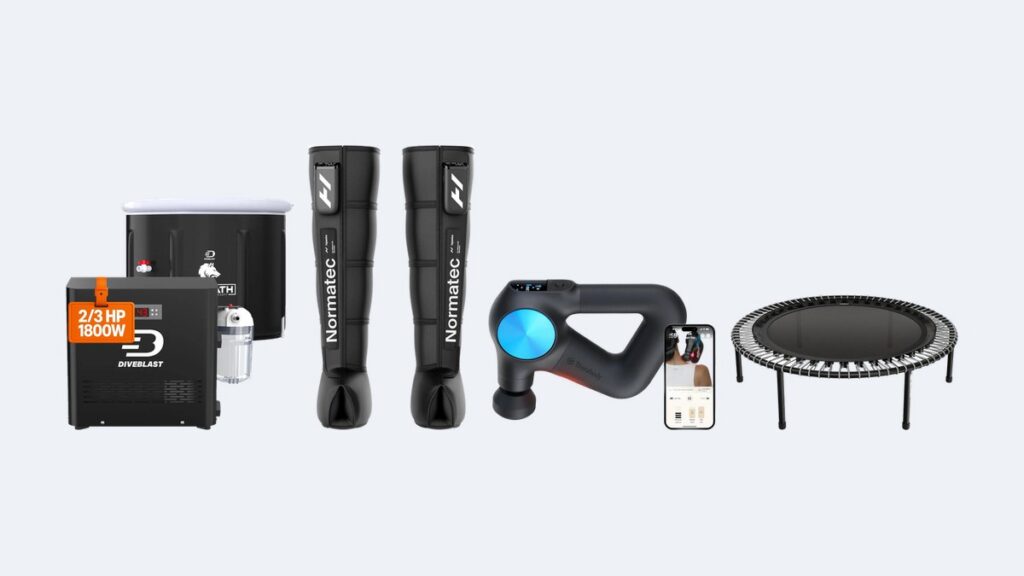
I have not bought this. It is on the list for the day money stops mattering, and I am judging it on the spec sheet, the reviews and the evidence, not on use. That goes for every big item in this post. The one piece of recovery gear here I do own is a Theragun G3, which I have had for years and would buy again, so it gets the top spot and the rest of the list gets measured against it.
The recovery aisle has turned into a luxury aisle. Thousand dollar boots, two thousand dollar tubs, massage guns with six modes. So for each thing I would buy, I looked up what the research found, which is usually smaller than the ads suggest, and what the cheaper version is that you should try first.
A cold plunge, and the one study that changes how to use it
Cold water is the most heavily sold thing in wellness right now, and the most useful study about it for a home buyer is not about mood. In 2015 an Australian group had 21 active men strength train twice a week for twelve weeks. After every session, half sat in cold water for ten minutes and half did easy cycling. Strength and muscle mass both went up more in the cycling group, and only the cycling group grew their fast twitch muscle fibres in a way the researchers could measure. Follow up biopsies suggested the cold was damping the signals that tell muscle to rebuild.1
So the photo on every listing, somebody climbing out of the tub after a workout, shows the one timing the evidence argues against if you lift to build muscle. On a rest day, in the morning, or hours after training is where I would put it.
The other study you will see quoted is Dutch. In 2016, 3,018 adults ended their showers cold for 30 days in a row, and they reported 29 percent fewer days off sick. They did not have fewer days of being ill. They were sick just as often and went to work anyway.2 That is a real effect, it came from showers that cost nothing, and it is a long way from “boosts your immune system”.
And the dopamine number, the one about cold raising dopamine by 250 percent. It comes from a Czech study in 2000 where young men sat in 14 degree Celsius water, about 57 Fahrenheit, up to the neck for a full hour.3 Dopamine went up 250 percent and noradrenaline 530 percent. Nobody at home is sitting in a tub for an hour, and that study tells you nothing about a three minute plunge.
What I would buy is the middle of the market, not the top. Tubs with a built in chiller and an app run about $2,000 on Amazon, and the one in that range I looked at most closely has only 17 reviews. The one I would buy is an insulated tub with a two thirds horsepower chiller, pump and filter in the box, which the listing says takes water to 39 degrees and then runs 20 to 30 minutes an hour to hold it there. The chiller is what you are paying for. A tub that is already cold at seven in the morning, without forty pounds of gas station ice, is the whole product.
DIVEBLAST Cold Plunge Tub with 2/3 HP Chiller (the one I would buy)
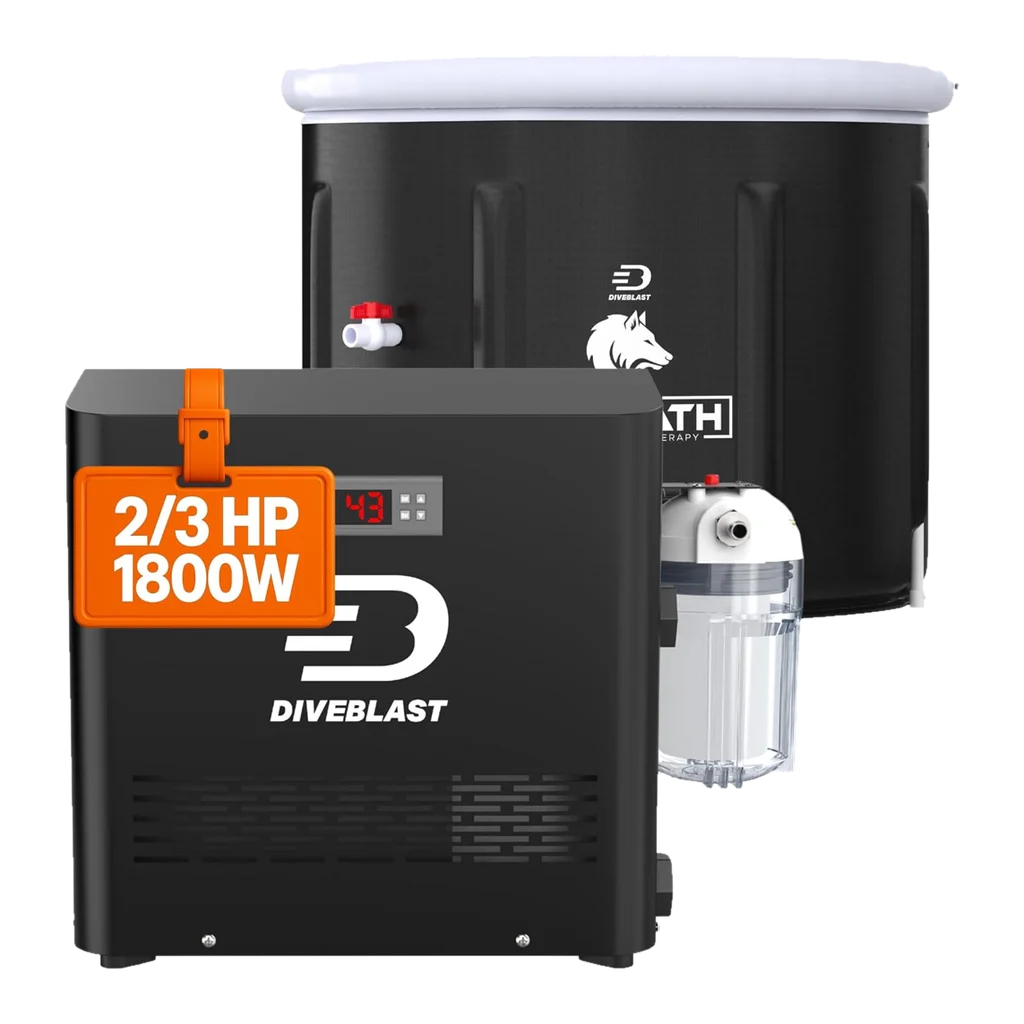
Everything comes in the box: tub, chiller, a 1,500 gallon an hour pump, filter and hoses, with a two year warranty covering all of it. Fits people up to 6 foot 7.
Ownership: I have not bought this. Wishlist pick, judged on 46 reviews and the spec sheet.
Price: $999.97 on September 27, 2026, up from $849.97 a month earlier.
What I would try first is a $79 insulated inflatable tub and a few bags of ice. It is the cheapest honest way to find out if you will plunge more than twice, and it takes a chiller later if the habit sticks, so you add to it rather than replace it.
The Pod Company Ice Pod Pro, 110 Gallon (try this first)
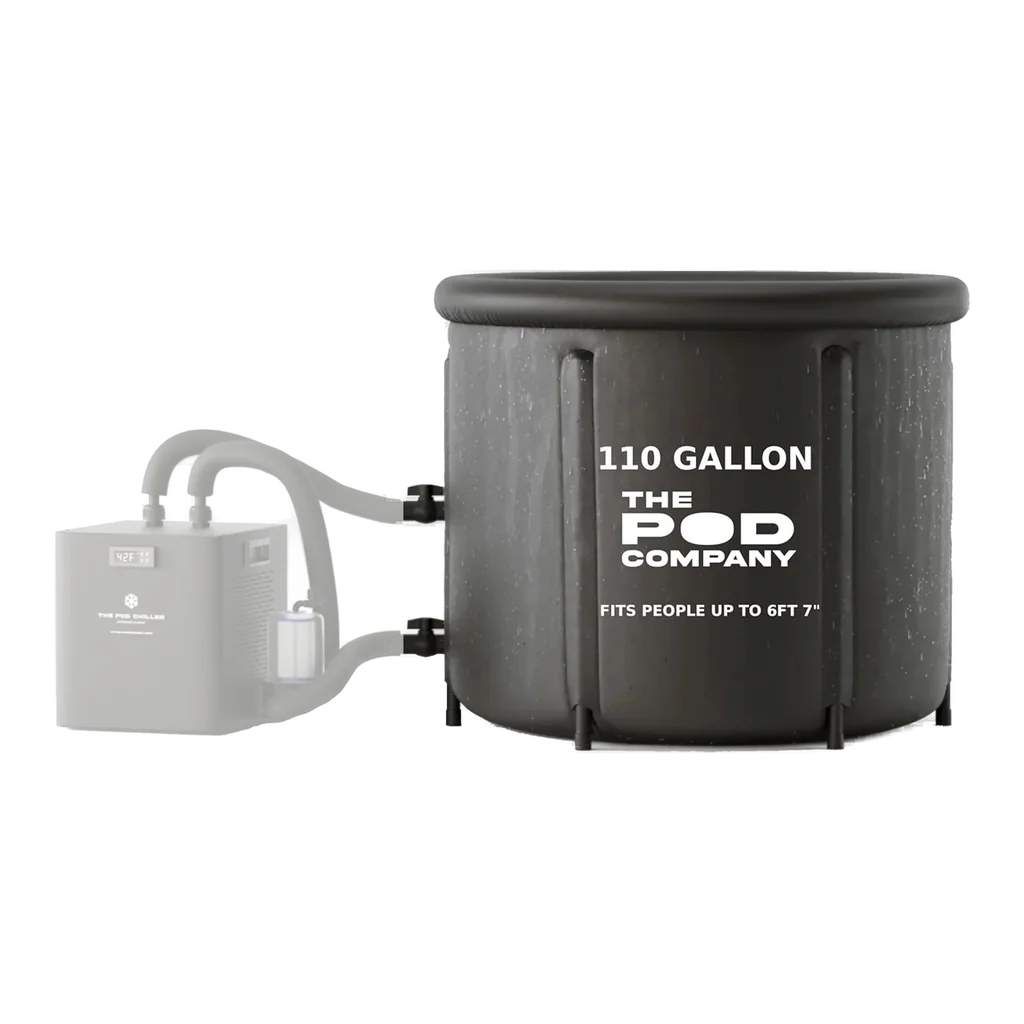
Double layer insulation and a lid, drain hoses, and room for someone 6 foot 7. Add ice now, a chiller later.
Ownership: I have not bought this or tested it. Cheaper equivalent, judged on 161 reviews and the listing.
Price: $78.99 when I looked on September 27, 2026.
Compression boots and the soreness they dent
The best evidence here is a 2024 review that pooled 17 studies and 319 people. Soreness moved the most, and even that effect was trivial to moderate. The ability to produce force again improved a trivial to small amount. Blood markers of muscle damage were all over the place. The authors’ own summary is that the boots work “mainly reducing perceived soreness”.4
A small 2025 trial adds a timing detail. Twenty untrained men were made sore with jumping drills, and half got 15 minutes of compression straight after and again at 24, 48 and 72 hours. The difference showed at 48 and 72 hours, not on day one.5 One session and a verdict the next morning is the wrong test.
Two things the marketing says are not what the research measured. Lactic acid clears on its own within about an hour of stopping; it is not what makes you sore two days later. And “lymphatic drainage” is a clinical use for people with lymphedema, under supervision. It is not a reason a healthy runner needs their legs drained.
The useful part of that review is the protocol. The studies cluster around 20 to 30 minutes at about 80 mmHg. That is a spec, not a brand. The pair I would want is the Hyperice Normatec Elite, which has no hoses, since the pump lives in the boots, and a battery the listing puts at up to four hours, with seven pressure levels. Therabody’s JetBoots are the other big name, and the Pro Plus version adds lights for about $1,150. I would not pay for the lights, because nothing in the compression research tests them.
Hyperice Normatec Elite Wireless Boots (the dream pair)
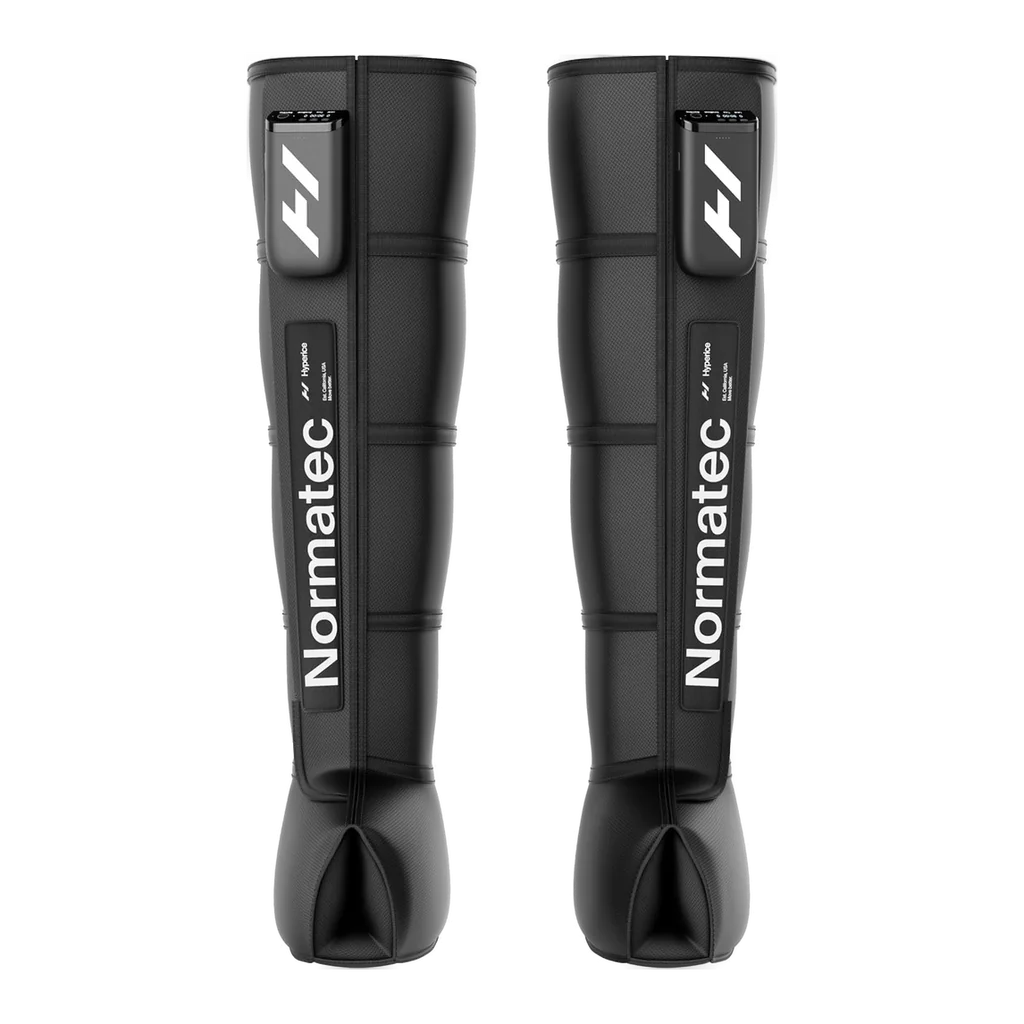
Seven compression levels and a battery rated up to four hours, with no control box on a hose. Standard size fits a 31 to 35 inch inseam.
Ownership: I have not bought this. Judged on 115 reviews and the spec sheet, not on use.
Price: $1,099.00 on September 27, 2026.
What the extra money buys is the cordless design and nicer build, not more of the effect. The corded pair I would try first lists nine levels across 60 to 140 mmHg, which brackets the pressure used in the studies, and it is FSA and HSA eligible.
QUINEAR Leg Recovery System (the $200 way in)
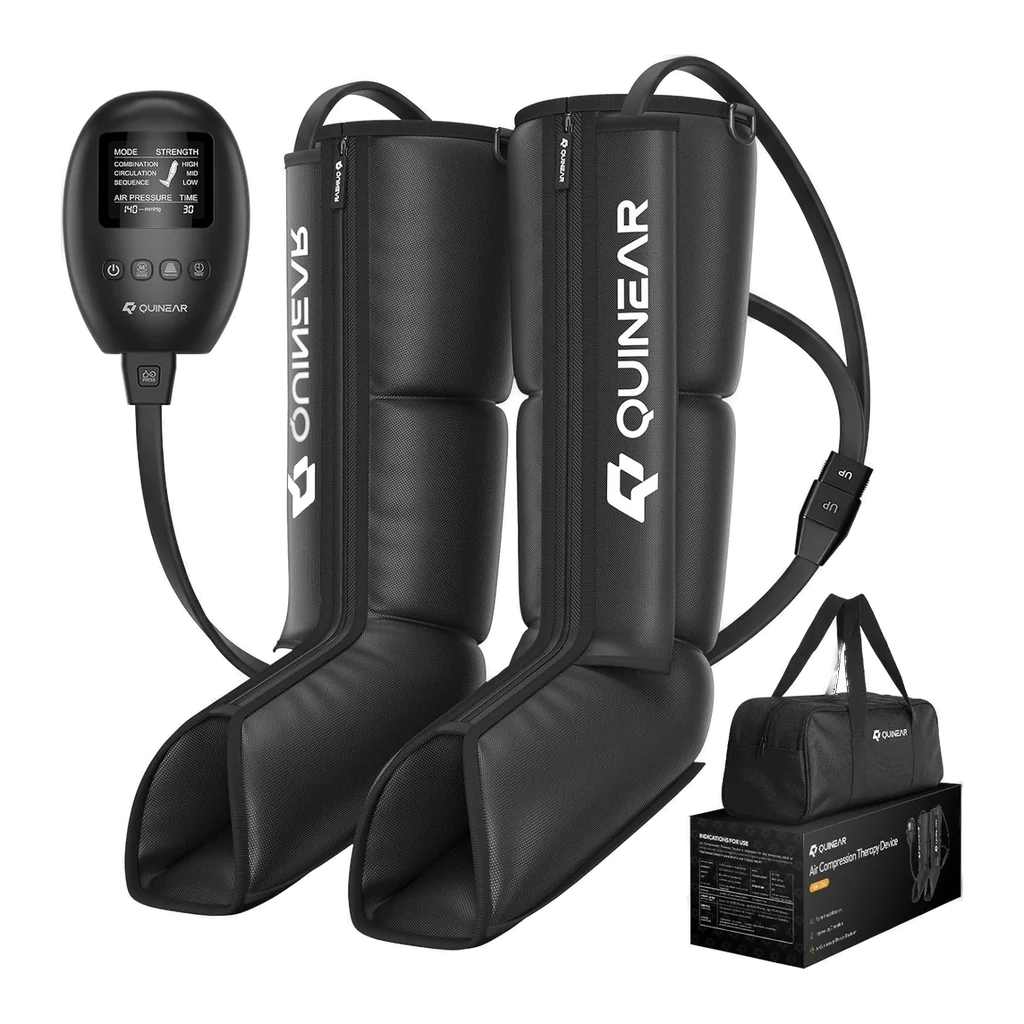
Corded, so it lives in one spot, but the listed 60 to 140 mmHg range covers the 80 mmHg the studies used.
Ownership: I have not bought this. Cheaper equivalent, not tested by me; judged on 342 reviews and the stated pressure.
Price: $199.99 as of September 27, 2026 (it was $152.99 in early September).
A bigger Theragun, and the case for the one I have
This is the section where I own something. My Theragun G3 is years old and still going. A family member once gave me a much cheaper gun, not knowing I already had one, and the difference is simple: the cheap one stalls under pressure, and the Theragun does not. That is the only piece of recovery gear I would tell you to pay more for.
The research on massage guns is thin and fairly modest. A 2023 review found 11 studies, most with a moderate risk of bias. The guns improved short term flexibility and range of motion, and helped some recovery measures after a fatigue protocol. For strength, balance and explosive work they did nothing, or made things slightly worse, so the authors suggest not using one right before that kind of effort.6
The upgrade on my list is the Theragun PRO Plus. On paper it is a percussion gun with vibration and heat built in, a cold attachment sold separately, and a breathwork mode. The reviews sit at 4.0 stars, a little lower than the Prime, and the reason I would want it is heat on a stiff back, not the six modes on the box.
Therabody Theragun PRO Plus (the upgrade I would want)
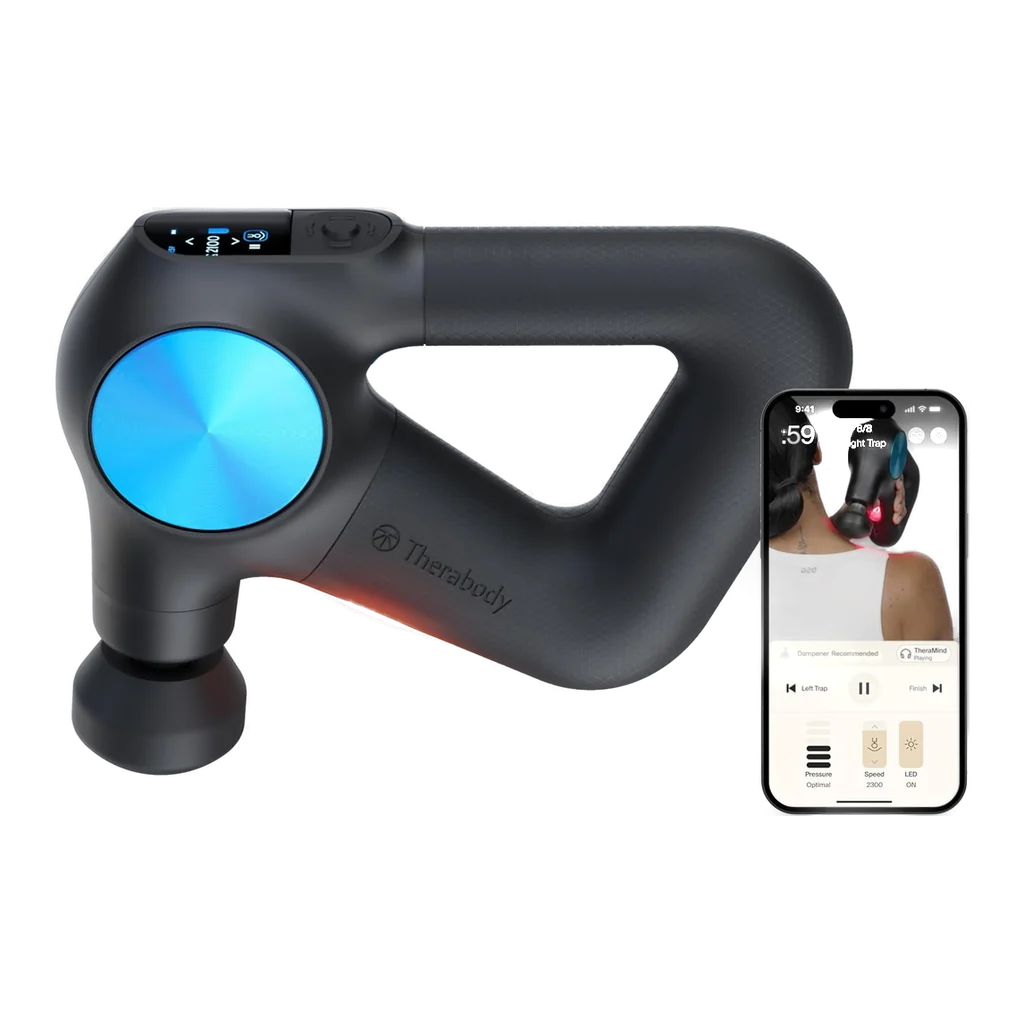
Percussion plus vibration and heat in one handle, with a cold attachment sold separately. No power block in the box, only a USB-C cable.
Ownership: I have not bought this. I own an older Theragun; this model is on the wishlist, judged on 414 reviews.
Price: $649.99 on September 27, 2026.
Would I tell you to buy it over the Prime? No. The Prime does the part that matters, the motor that does not stall, for less than half the price. The PRO Plus is a want.
Theragun Prime 6th Gen (what I would tell you to buy)
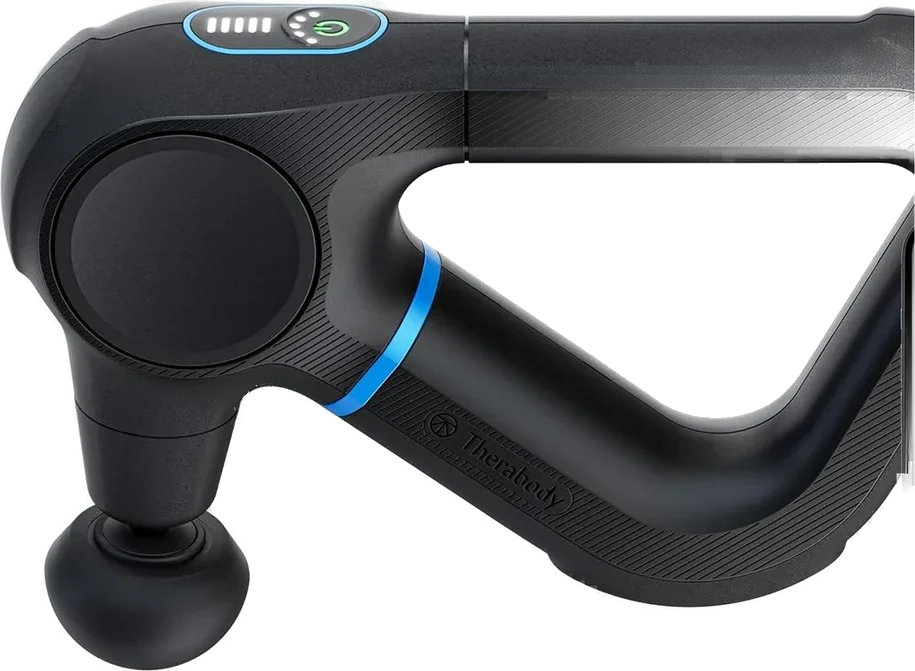
Five speeds, a pressure readout and up to two hours of battery. The current model at the level of the G3 I have.
Purchase signal: My own is a Theragun G3, owned for years; I would buy the brand again. This card links the current model, not my exact one.
Price: $309.99 (list $329.99), checked September 27, 2026.
And a note on foam rollers, since they are the cheapest recovery tool there is. I have used a lot of them, and they mostly work the same. Buy a cheap one.
A bellicon rebounder
A rebounder is a mini trampoline, and bellicon’s version swaps steel springs for bungee cords, so the bounce is softer and quieter. You can pick the bungee strength for your weight.
bellicon Mini Trampoline, Bungee Suspension (the luxury one)
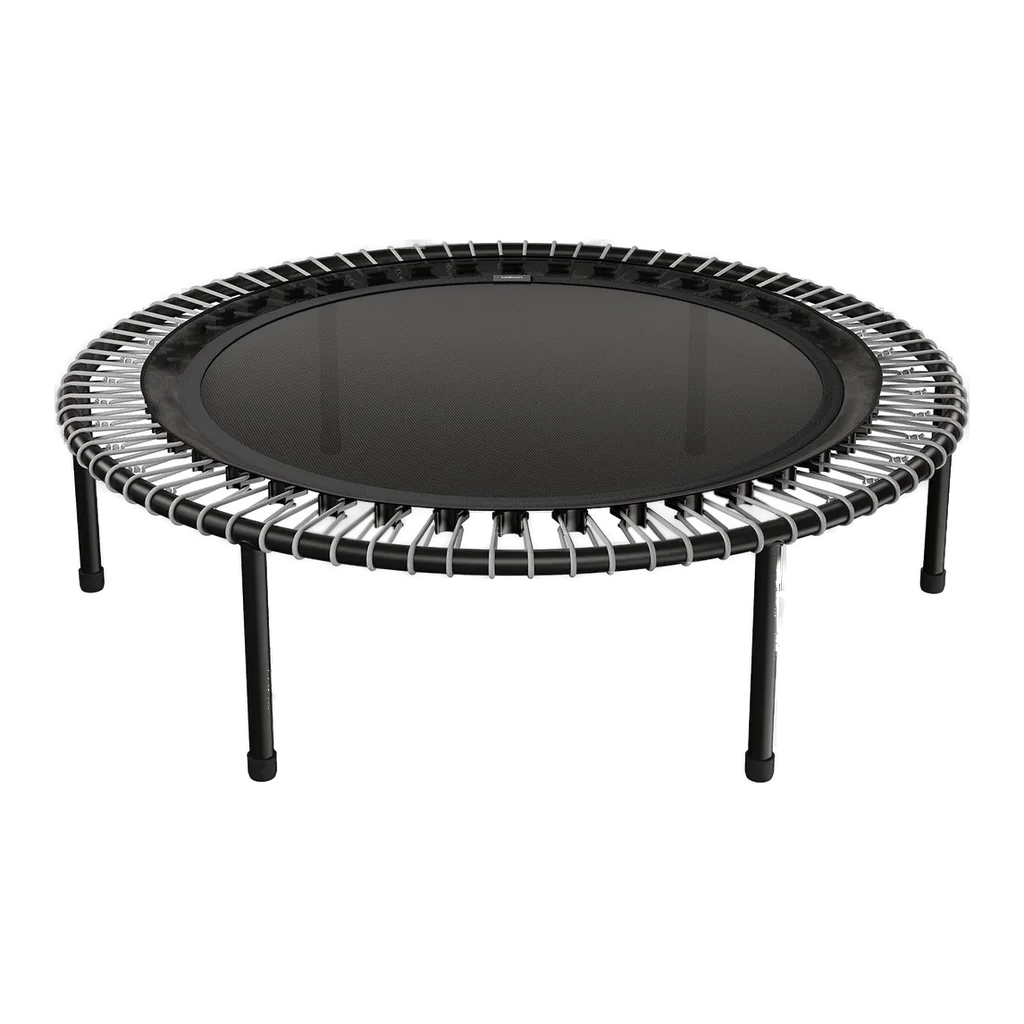
Bungee ring suspension instead of steel springs, rated to 330 pounds, sold on Amazon by bellicon itself.
Ownership: I have not bought this. Only 15 Amazon reviews, so I am leaning on the spec sheet more than usual.
Price: $699.00 when I checked on September 27, 2026.
The marketing leans hard on the lymphatic system, and I have not found a trial measuring lymph flow in healthy people bouncing on one, so I am leaving that claim out. What there is: a 2026 review of 9 small studies in 234 adults carrying extra weight found rebounding improved balance.7 That is thin but real, and it fits what a rebounder plainly is, low impact cardio you can do in a living room.
The bellicon costs $699 and has only 15 reviews on Amazon, which is not much to go on. I would still want it for the build and the quiet. The cheaper bungee rebounder I would start with has more than four thousand reviews and a handlebar, which matters more than the brand if your balance is the reason you are bouncing.
BCAN BT2 Bungee Rebounder with Handlebar (start here)
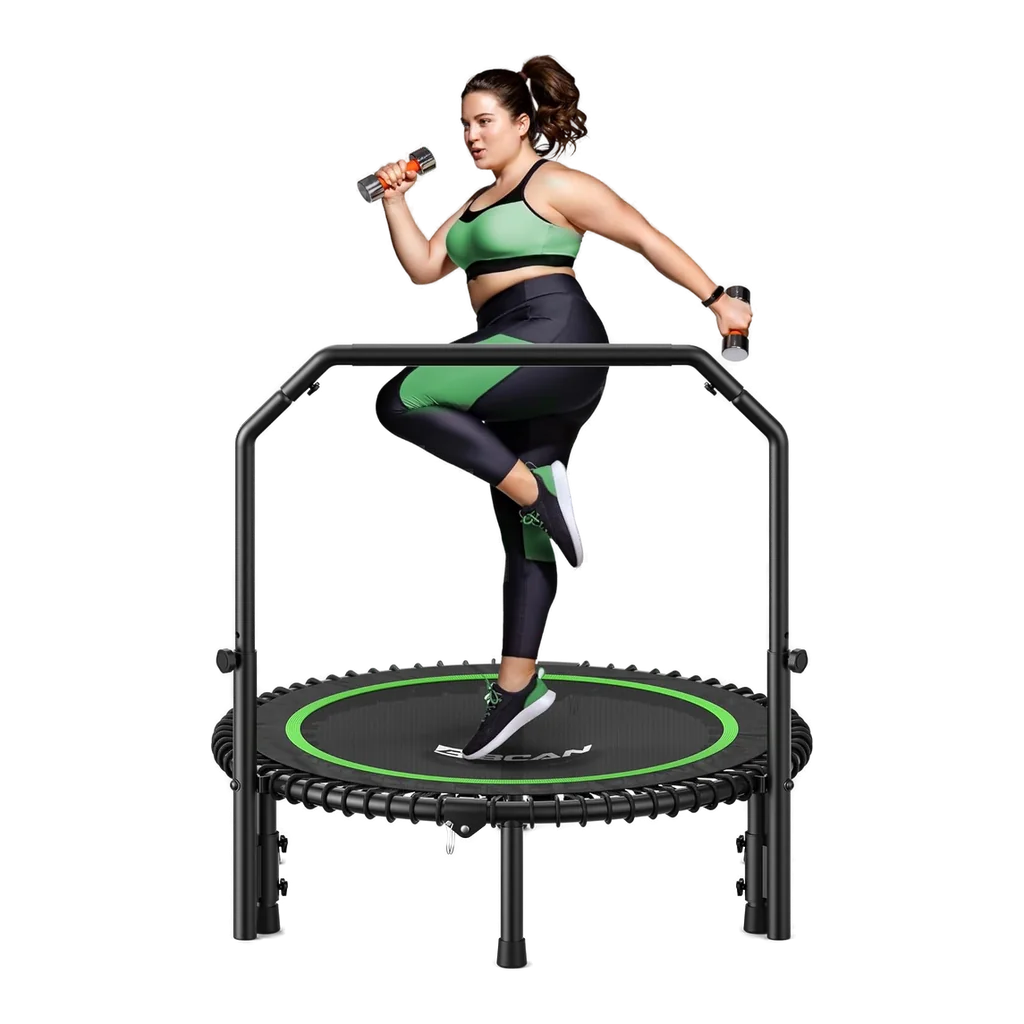
Bungees rather than springs, an adjustable handlebar, and a weight rating up to 450 or 550 pounds depending on size.
Ownership: I have not bought this. Cheaper equivalent, not tested by me; judged on more than 4,400 reviews.
Price: $129.99 on September 27, 2026, against a list price of $149.99.
Quick questions
What would I buy first?
The Theragun, and I already did. After that the cold plunge, but I would want a month with the $79 tub first, to prove I would actually get in.
When should I cold plunge if I lift weights?
Not straight after. A twelve week study found cold water right after lifting blunted muscle growth. Mornings or rest days.
Do compression boots actually work?
For how sore you feel, yes, modestly. For strength and muscle damage the effect is small or inconsistent.
Is the $1,099 pair better than the $200 pair?
Better built and cordless. Both reach the pressure the studies used, and there is no evidence the expensive one does more.
Is a massage gun better than a foam roller?
Different jobs. The gun gets into one spot hard, the roller covers a big area cheaply. I would own both, and the roller can be cheap.
The bottom line
Most of this list is about wanting nicer versions of simple things. The evidence behind cold water, compression and percussion is real and small, and in each case the cheaper version delivers the part the studies measured. The one item where I would pay up is the massage gun, because I already did, and the cheap one I was given proved why.
References
The claims about cold water, compression, massage guns and rebounding are drawn from peer-reviewed research. The studies most directly relevant:
- Roberts LA, Raastad T, Markworth JF, et al. Post-exercise cold water immersion attenuates acute anabolic signalling and long-term adaptations in muscle to strength training. J Physiol. 2015 Sep 15;593(18):4285-301. PubMed
- Buijze GA, Sierevelt IN, van der Heijden BC, et al. The effect of cold showering on health and work: a randomized controlled trial. PLoS One. 2016;11(9):e0161749. PubMed
- Srámek P, Simecková M, Janský L, et al. Human physiological responses to immersion into water of different temperatures. Eur J Appl Physiol. 2000 Mar;81(5):436-42. PubMed
- Maia F, Nakamura FY, Sarmento H, et al. Effects of lower-limb intermittent pneumatic compression on sports recovery: a systematic review and meta-analysis. Biol Sport. 2024 Oct;41(4):263-275. PubMed
- Gu Z, Dai J, Xu K, et al. Effects of intermittent pneumatic compression on delayed onset muscle soreness and recovery of muscular fatigue. PM R. 2025 Sep;17(9):1080-1090. PubMed
- Ferreira RM, Silva R, Vigário P, et al. The effects of massage guns on performance and recovery: a systematic review. J Funct Morphol Kinesiol. 2023 Sep 18;8(3):138. PubMed
- Wang L, Sui S. The effects of rebound exercise on body mass index and balance in overweight and obese adults: a meta-analysis. Endocr Connect. 2026 Apr 1;15(4):e250825. PubMed
Cold water stresses the heart and breathing, pneumatic compression has real contraindications, and rebounding needs steady balance. If any of that applies to you, ask a doctor first. Apart from the Theragun, this post describes products I have not used.
I earn a small commission if you purchase through these links, at no
additional cost to you. I only recommend products I’ve personally used or
researched thoroughly. This helps support the work behind Better Living
Every Day.