In This Article
Fried rice and pork fried rice are two things I have made often, in a wok on an induction burner, with coconut aminos where the soy sauce would go. Soy sauce chicken is another one I have made. All three lean on soy sauce, and one of them has it in the name. So these are the three dinners where a bottle of coconut aminos has the most work to do.
I went looking for the best reviewed version of each, then adapted it. The soy sauce comes out and coconut aminos goes in. The unnamed “oil” and anything carrying MSG come out too. The oyster sauce stays, in a bottle with no MSG on the label, and so does a teaspoon of sesame oil. Each recipe below says whose it started as and what I changed. They look a lot like what I already make.
How the swap works
Coconut aminos is not soy sauce with the soy taken out. It has 270 mg of sodium in a tablespoon where regular soy sauce has 960, and 3 grams of sugar where soy sauce has next to none. I went through both labels in the coconut aminos and soy sauce comparison.
That changes a recipe in two ways. You need more of it, and you need to put some salt back. A tablespoon of soy sauce becomes about two tablespoons of coconut aminos plus a pinch of salt. And any sugar or honey in the original can usually go, because the sap already brought its own.
Oyster sauce stays, because fried rice is flat without it. The trouble is the label. Many bottles list MSG, and I found a bottle sold as having no MSG that lists yeast extract on the back, which is glutamate by another route. The bottle in my own kitchen is Lee Kum Kee, from an Asian market. It is cheap and it does the job, and I use it rarely, for dishes like these. The two regular Lee Kum Kee bottles I looked up, Premium and Panda, both list monosodium glutamate. The same maker’s green label Panda bottle says no MSG added, and it is the one to look for if you are in the store. I do not know which of their bottles mine is. I try to avoid MSG, so I went looking for bottles without it, and the two you can order are in the fried rice section below.
Sesame oil stays in. It is pressed from a seed, so strictly it is a seed oil, and it is the one I let through: a teaspoon, for flavor, stirred in at the end. Leave it out if your rule is stricter than mine.
For the fat, I cook with tallow and lard all the time, and with avocado oil. I use all of the good fats for fried rice, and any of the three will do here. Lard is the obvious one for pork fried rice. A wok is what I use, though any wide pan works.
Egg fried rice
This started as the fried rice at RecipeTin Eats, which had 4.99 stars from 300 votes when I checked on October 10, 2026.1 The original uses a tablespoon each of light soy sauce and oyster sauce, an optional teaspoon of sesame oil, and oil of no stated kind. The oyster sauce stays here, in a different bottle.
Serves 2 to 3. About 15 minutes if the rice is already cooked.
- 2 tablespoons avocado oil or beef tallow, plus a little more for the eggs
- 1/2 onion, finely chopped
- 2 garlic cloves, minced
- 1 to 1 1/2 cups diced vegetables (peas and carrots are the usual)
- 2 packed cups cooked white rice, a day old and cold
- 3 eggs, beaten
- 3/4 cup sliced scallions
- 2 tablespoons coconut aminos
- 1 tablespoon oyster sauce, one with no MSG or yeast extract
- 1 tablespoon Shaoxing wine or dry sherry (optional)
- 1 teaspoon toasted sesame oil
- 1/4 teaspoon white pepper
- Salt to taste at the end
- Stir the coconut aminos, oyster sauce, wine and pepper together in a cup.
- Get a wok or your widest skillet very hot. Add the fat, then the onion and garlic, and cook for a minute.
- Add the vegetables and keep them moving until any water has cooked off.
- Add the cold rice and break up the clumps. Pour the sauce over and toss until the pan looks dry again.
- Push the rice to one side. Add a little fat to the bare patch, pour in the eggs and scramble them until they are fully set.
- Fold the egg through the rice with the scallions and the sesame oil. Taste, add salt if it needs it, and serve.
The rice has to be cold. Freshly cooked rice is wet and turns to paste in the pan, and both of the rice recipes I started from say so. Cook it the day before and keep it in the fridge.
A rice cooker makes that step something you do not have to think about. Ours is a small Zojirushi, and it is the best purchase we have made in a long time. We add rice, water and a little olive oil, and about 20 minutes later the rice is done.
Zojirushi NHS-06 3 Cup Rice Cooker (the one we have)
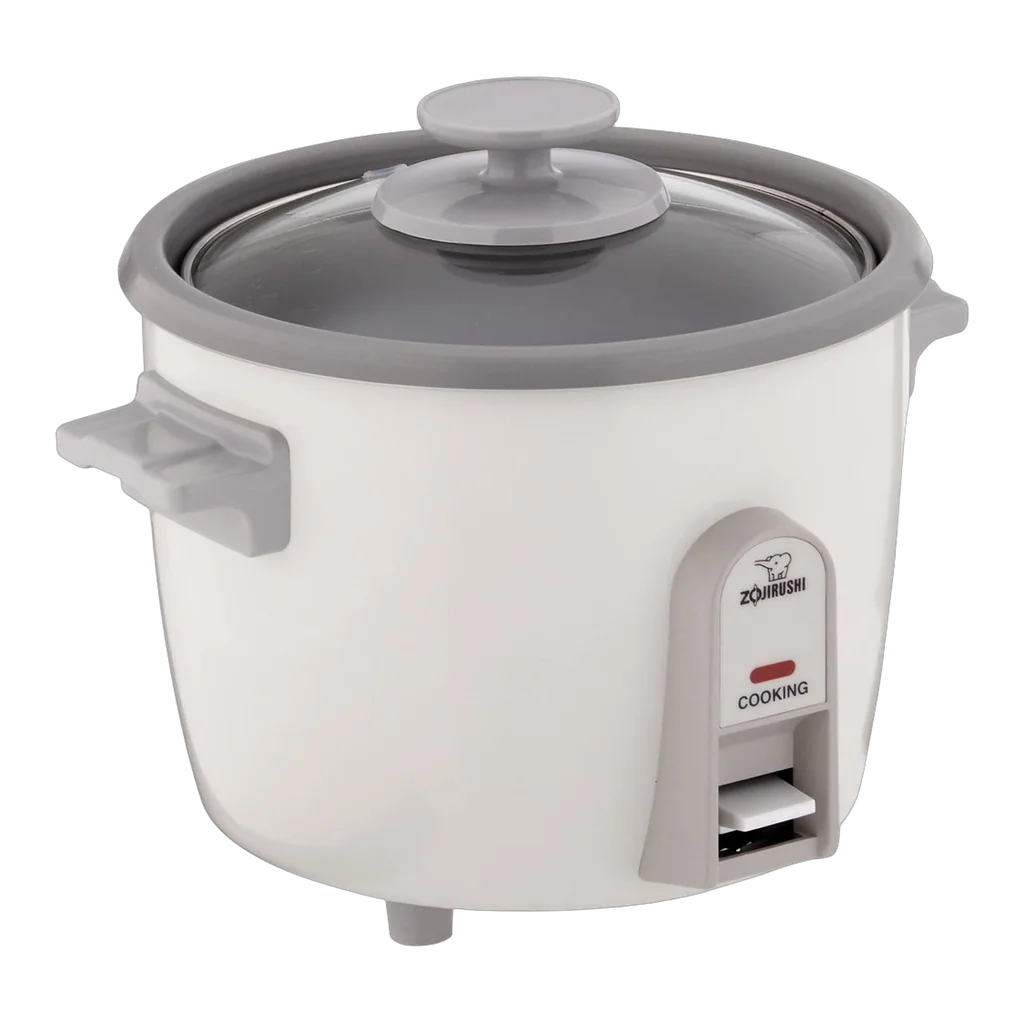
One switch and a glass lid. A full pot, three of the small cups in the box, cooks about enough rice for the pork fried rice. The inner pan has a nonstick coating, and the listing does not say which kind. It comes with a plastic spatula so you do not scratch it.
Purchase signal: Ours, bought many years ago, at Walmart I think, for somewhere between $20 and $30. No regrets.
Price: $59.99 on Amazon on October 10, 2026, and the same at Walmart. It has about doubled since we bought ours.
By my arithmetic the sauce in the original carries roughly 900 mg of sodium from the soy sauce alone, before the oyster sauce. This version has 540 mg from the coconut aminos for the whole pan. The oyster sauce adds its own, and the listing I read does not give a sodium figure, so salt it at the end by taste.
Sauce Grandmaster Gluten Free Oyster Sauce, 13.5 oz (three ingredients)
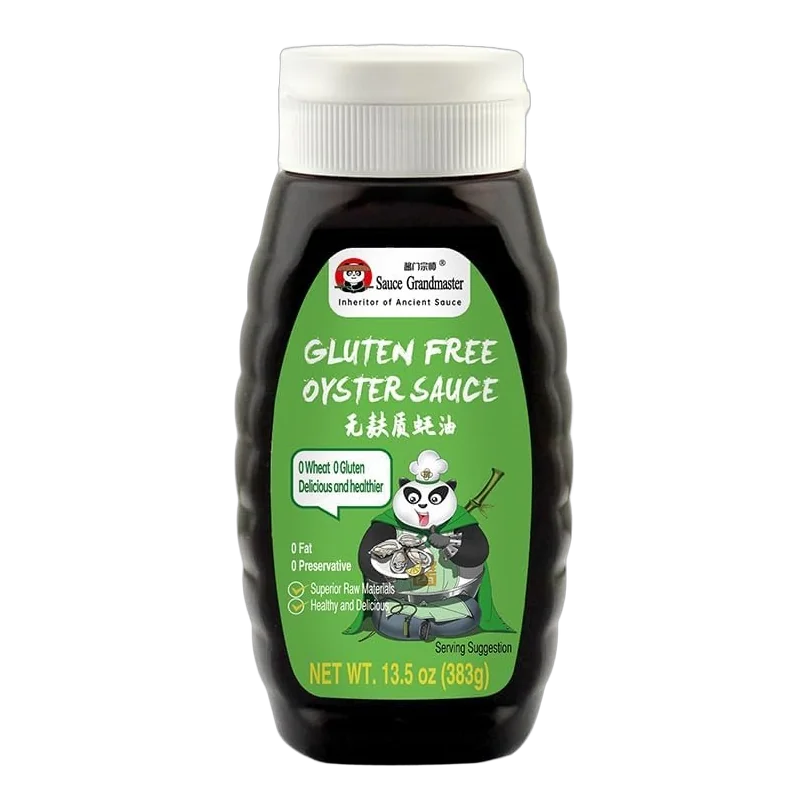
The listing gives the ingredients as oyster juice (70 percent or more), white sugar and corn starch. Oysters carry some glutamate of their own, as one big maker’s footnote admits, so no oyster sauce is free of it.2
Picked for: the shortest label of the oyster sauces checked on October 10, 2026, with no MSG, no yeast extract and no hydrolyzed protein listed.
Price: $14.99 for the 13.5 oz squeeze bottle on the day of that check.
Wok Mei Oyster Flavored Sauce, 8 oz (the cheaper one)
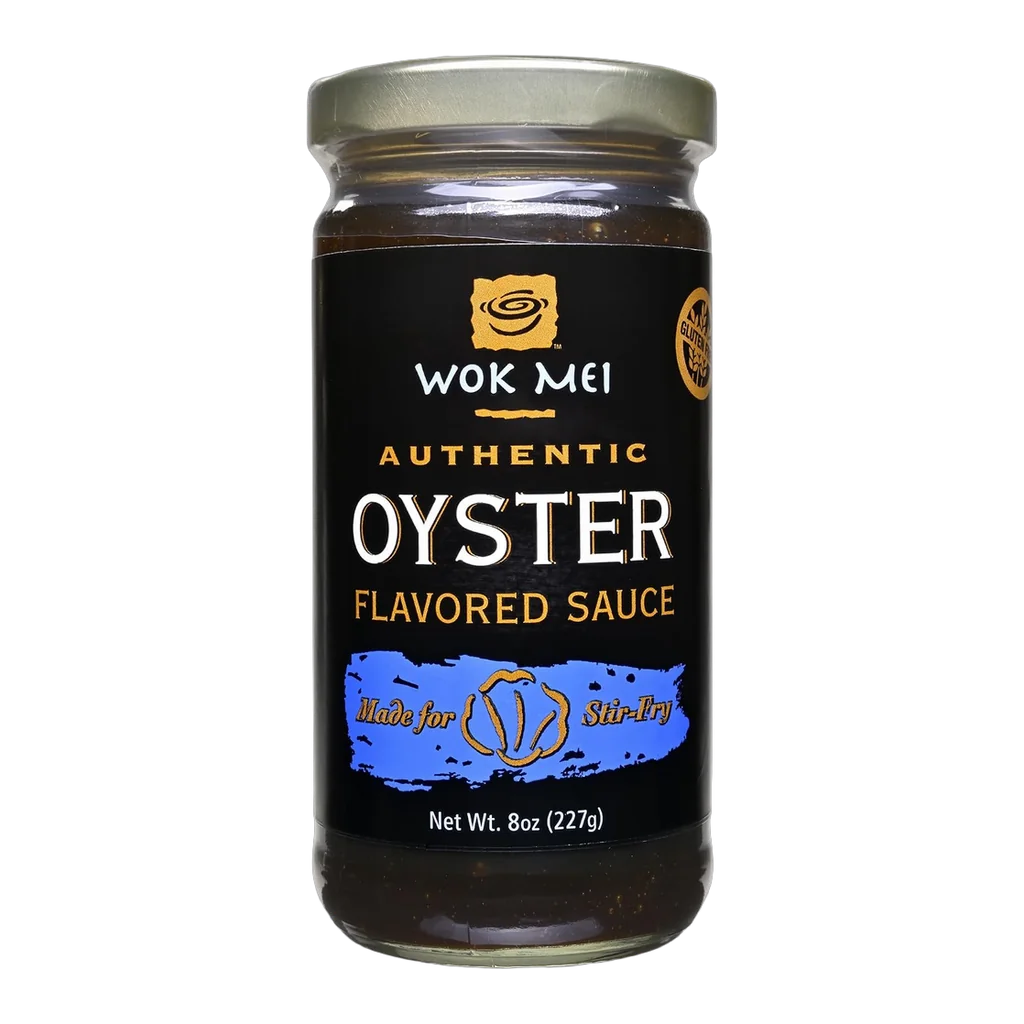
Made in the USA and gluten free. The label runs water, dried cane syrup, caramel color, salt, corn starch, vinegar, maltodextrin and oyster extract, so there is far less oyster in it than in the bottle above.
Picked for: a second label with no MSG or yeast extract listed, at less than half the price.
Price: $6.19 for the 8 oz jar on October 10, 2026. Amazon sells it through Whole Foods, so it may not deliver everywhere.
Pork fried rice
The base here is the classic pork fried rice from The Woks of Life, at 4.92 stars from 189 votes on the same day.3 Their version is built on a pound of Chinese barbecue pork, with a tablespoon of soy sauce, a teaspoon of dark soy sauce, a teaspoon of honey and a teaspoon of sesame oil in the sauce.
Store bought barbecue pork comes with whatever was in its marinade, and you rarely get to read that label. So this version browns plain pork in lard and lets the coconut aminos do the sweet part.
Serves 4 to 6. About 25 minutes.
- 2 tablespoons lard
- 1 pound pork chop, tenderloin or leftover roast pork, cut into half inch pieces
- 1 medium onion, diced
- 5 cups cooked jasmine rice, a day old and cold
- 2 eggs, beaten
- 1/2 cup bean sprouts
- 2 scallions, chopped
- 3 tablespoons coconut aminos
- 1 teaspoon Shaoxing wine or dry sherry (optional)
- 1 teaspoon toasted sesame oil
- 1/4 teaspoon white pepper
- 1 teaspoon salt, divided
- Toss the pork with 1 tablespoon of the coconut aminos and half the salt. Stir the rest of the coconut aminos with the wine, sesame oil and pepper in a cup.
- Heat half the lard in a wok or wide skillet over medium high heat. Scramble the eggs until just set and take them out.
- Add the rest of the lard and the pork. Leave it alone long enough to brown, then turn it. Raw pork needs 4 to 5 minutes. Leftover roast pork only needs warming.
- Add the onion and cook until it softens.
- Add the cold rice and break it up. Give it about 5 minutes to heat through.
- Pour the sauce over, add the remaining salt, and toss until every grain is coated.
- Add the bean sprouts, the eggs and the scallions. Toss for another minute, taste, and serve.
A tablespoon of the same oyster sauce can go into this one too, though the original does without it. The honey in the original is gone on purpose. Three tablespoons of coconut aminos bring about 9 grams of sugar by the label, which is more than the teaspoon of honey it replaces.
Soy sauce chicken
The classic Cantonese version poaches a whole bird in a deep pot of seasoned soy sauce. The Woks of Life recipe, at 4.86 stars from 74 votes, calls for 2 cups of light soy sauce, half a cup of dark soy sauce and 1 3/4 cups of sugar in 12 cups of water.4
That does not swap one for one. Two and a half cups is 20 fluid ounces, and a bottle of Coconut Secret holds 16.9. So this is a smaller braise of thighs. It takes three quarters of a cup, and the sauce is reduced at the end so none of it goes down the sink. There is no added sugar in it at all.
Serves 4. About 1 hour.
- 4 to 6 chicken thighs, bone in and skin on
- 1 teaspoon avocado oil
- 5 slices fresh ginger
- 2 scallions, cut in thirds and flattened with the side of a knife
- 2 whole star anise
- 3/4 cup coconut aminos
- 1/4 cup Shaoxing wine or dry sherry (optional, or use water)
- 1 1/2 cups water
- 1/2 teaspoon salt
- Pat the chicken dry.
- Warm the oil in a pot just wide enough to hold the thighs in one layer. Cook the ginger and scallions for a minute, until you can smell them.
- Add the star anise, coconut aminos, wine, water and salt. Bring it to a simmer.
- Put the thighs in skin side down. Cover and simmer gently for 20 minutes.
- Turn the thighs, cover again, and simmer another 15 to 20 minutes. They are done at 165 degrees in the thickest part.
- Lift the chicken out. Boil the liquid with the lid off for about 10 minutes, until it has reduced by half and looks glossy.
- Strain the sauce and spoon it over the chicken. Serve with rice.
The 165 degrees is the USDA’s safe minimum for poultry, and a thermometer is the only way to know you are there.5
Three quarters of a cup of coconut aminos is twelve tablespoons. At 39 cents a tablespoon that is about $4.70 of the bottle, by my arithmetic from the price below.
The two bottles
Coconut Secret Coconut Aminos, 16.9 oz (the sauce in all three)
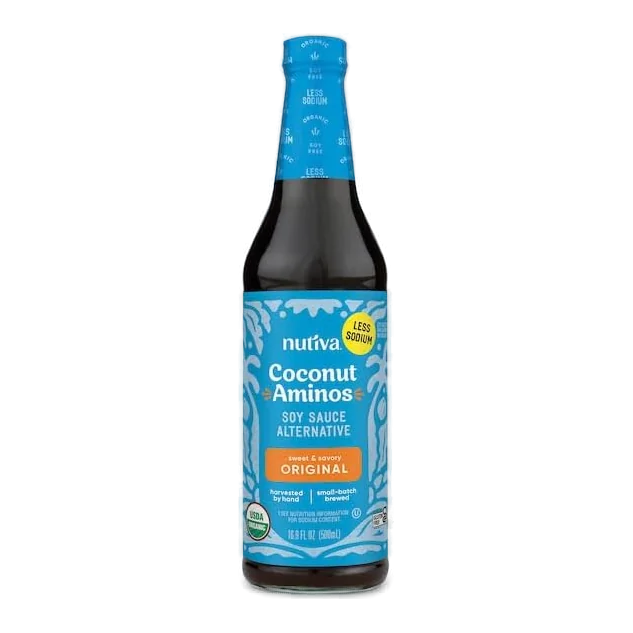
The three recipes use 17 tablespoons between them, and the label counts 33 in the bottle. Newer bottles carry the Nutiva name.
Purchase signal: A repeat buy, 2023 through 2025.
Price: $12.99 for 16.9 oz on October 10, 2026.
Marianne’s Organic Avocado Oil, 1 L (the neutral fat)
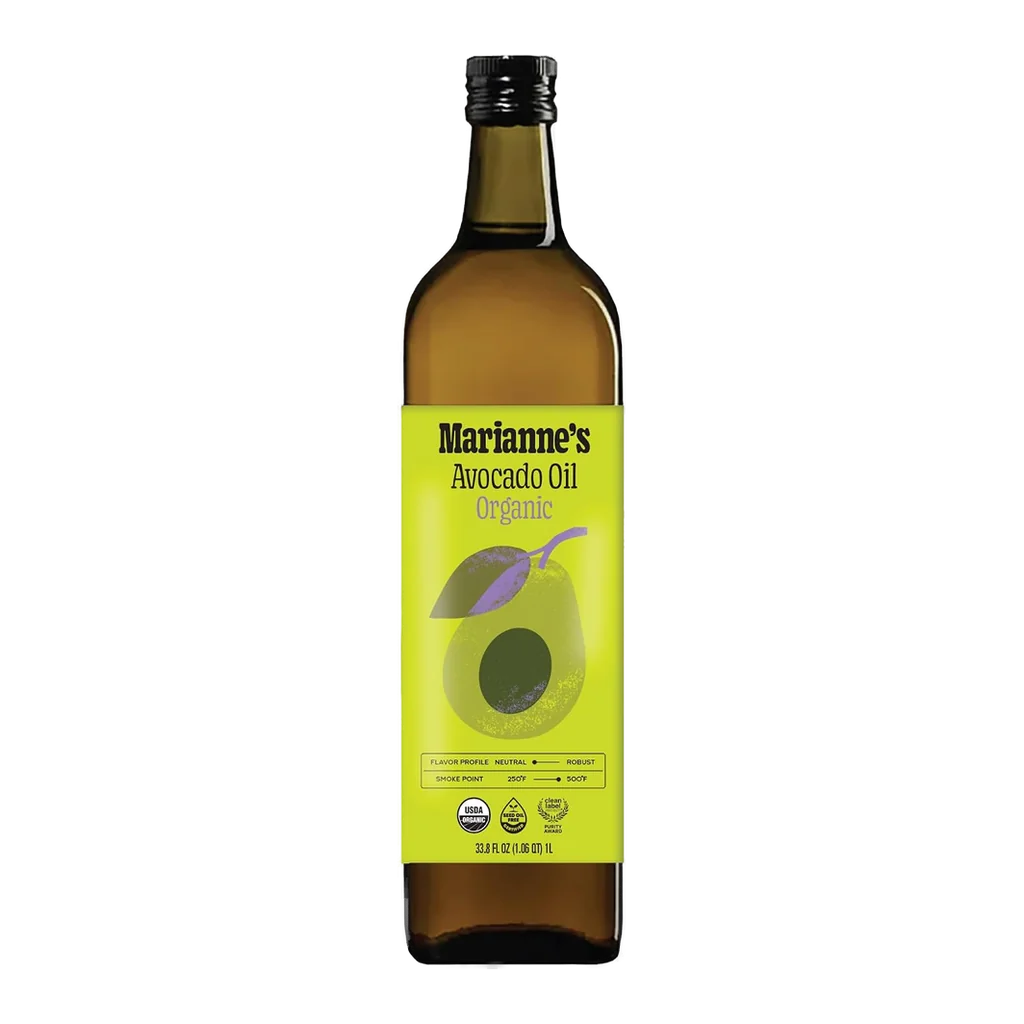
For the egg fried rice and the chicken, where you do not want the fat to taste of anything. Why this brand is in the frying oils post.
Purchase signal: Bought and used. It came after my Amazon history was pulled, so no date.
Price: $29.69 a liter when checked on October 10, 2026.
Leftover rice, safely
Fried rice wants day old rice, so the rice is going to sit. Get it into the fridge within two hours of cooking, spread shallow so it cools fast, and use it within three or four days. That is the USDA’s general rule for leftovers.6
Quick questions
Can I use coconut aminos instead of soy sauce in fried rice?
Yes. Use about twice as much and add a pinch of salt, because coconut aminos has roughly a quarter of the sodium. Leave out any sugar the recipe asks for.
Do these recipes have MSG?
None is added. The usual places it hides in fried rice are oyster sauce, bouillon powder and store bought barbecue pork. The oyster sauce here is one with no MSG or yeast extract on the label, and the other two are left out.
Is sesame oil a seed oil?
Yes. A teaspoon for flavor is the one exception I make. Leave it out if you avoid seed oils completely.
Can I use cauliflower rice?
You can. It holds more water than cold rice, so cook it until the pan is dry before the sauce goes in.
Can I make the chicken with a whole bird?
You would need about 20 fluid ounces of coconut aminos for the classic poaching liquid, which is more than one bottle. Thighs get you the same sauce with three quarters of a cup.
The bottom line
Coconut aminos handles all three of these with one adjustment each way: more sauce and a little salt in, the sugar out. Start with the egg fried rice, since it is fifteen minutes and tells you whether you like the swap. The label side of the story is in the comparison post.
Recipes adapted from the sources credited below. Go by a thermometer for the chicken, and by your doctor if you are on a sodium restriction.
References
- Maehashi N. Fried rice. RecipeTin Eats. Rating read 2026-10-10. RecipeTin Eats
- Lee Kum Kee USA. Panda Brand Green Label oyster flavored sauce, product page: “No MSG Added, except for glutamate, which naturally occurs in oyster extractives.” Accessed 2026-10-10. Lee Kum Kee
- The Woks of Life. Classic pork fried rice. Rating read 2026-10-10. The Woks of Life
- The Woks of Life. Soy sauce chicken. Rating read 2026-10-10. The Woks of Life
- USDA Food Safety and Inspection Service. Safe minimum internal temperature chart. USDA FSIS
- USDA Food Safety and Inspection Service. Leftovers and food safety. USDA FSIS
I earn a small commission if you purchase through these links, at no
additional cost to you. I only recommend products I’ve personally used or
researched thoroughly. This helps support the work behind Better Living
Every Day.