In This Article
Tallow balm is beef fat, rendered and cleaned, sometimes whipped and sometimes mixed with honey, oils or scent. It is sold as a face cream, a body balm and a lip balm, often at prices that make it look like a luxury product.
This page is about choosing one. There is no good study that ranks tallow balms, so nothing here pretends to. What you can do is read the jar properly, know whether your skin is the kind that should skip it, and test it before you commit your face to it.
Where I come in
I have bought tallow skincare from Meraki Medicinal many times. I am not using it as the example on this page, for one reason. The tallow balms Meraki sells list methylene blue as well as tallow, and Meraki’s own FAQ says methylene blue is not FDA approved for this use. That makes it a different product from a plain tallow balm, and I am not going to judge one by the other.
What to look for on the label
Tallow listed first. It should be the main ingredient, not a small part of a mix of cheaper oils. “100% grass-fed” or “grass-fed and grass-finished” tells you about the cattle. It does not tell you anything about how the balm behaves on your skin.
A short ingredient list. A single ingredient balm is just tallow. That is the easiest to judge, because if your skin reacts you know what it reacted to.
Fragrance and essential oils. Plenty of balms add lavender, frankincense or a “scent blend”. Cleveland Clinic’s dermatologists point out that added fragrances can irritate skin. If your skin is touchy, buy unscented.
Honey, beeswax and other extras. These are common, and they are not bad in themselves. They are one more thing to react to, and one more reason a jar costs more.
No preservatives means a shorter life. Pure tallow has nothing in it to stop it going off. Cleveland Clinic notes it may spoil or go rancid faster than a formulated cream. Buy a small jar first, keep it cool and use clean fingers.
Price per ounce. Jars run from about one ounce to four. The price per ounce varies more than the quality, as far as anyone can tell from the label.
Who should skip it
Two dermatology sources wrote about tallow this year, and they agree on the cautions.
- Acne-prone or oily skin. “Tallow can clog pores in some people,” says Dr. E. Victor Ross at Scripps, which makes it “a poor choice for those with acne-prone or oily skin.”1
- Sensitive skin. Heavy balms can lock in heat and worsen sensitive skin, and added fragrance makes that more likely.2
- Broken or freshly treated skin. Scripps advises against it on active breakouts, infections or skin that has just had a procedure. “Improperly rendered or stored beef fat can spoil or grow bacteria. Even clean-smelling tallow may not be sterile.”1
If you have eczema, psoriasis or rosacea, many listings say tallow helps. Nobody has tested that in a trial. A Michigan State group reviewing these social media claims found they “largely lacked cited evidence”, and that most promotional posts showed financial bias.3 Ask your dermatologist first.
How to patch test
The Scripps advice is simple. Put a small amount on one spot for a day or two, and watch for redness, itching, burning or bumps.1 If nothing happens, try a small area of your face before you use it all over.
Three plain tallow balms on Amazon
These are all single ingredient and unscented, which makes them the easiest to judge. I have not bought any of them.
Untamed Organics Pure Tallow (the small test jar)
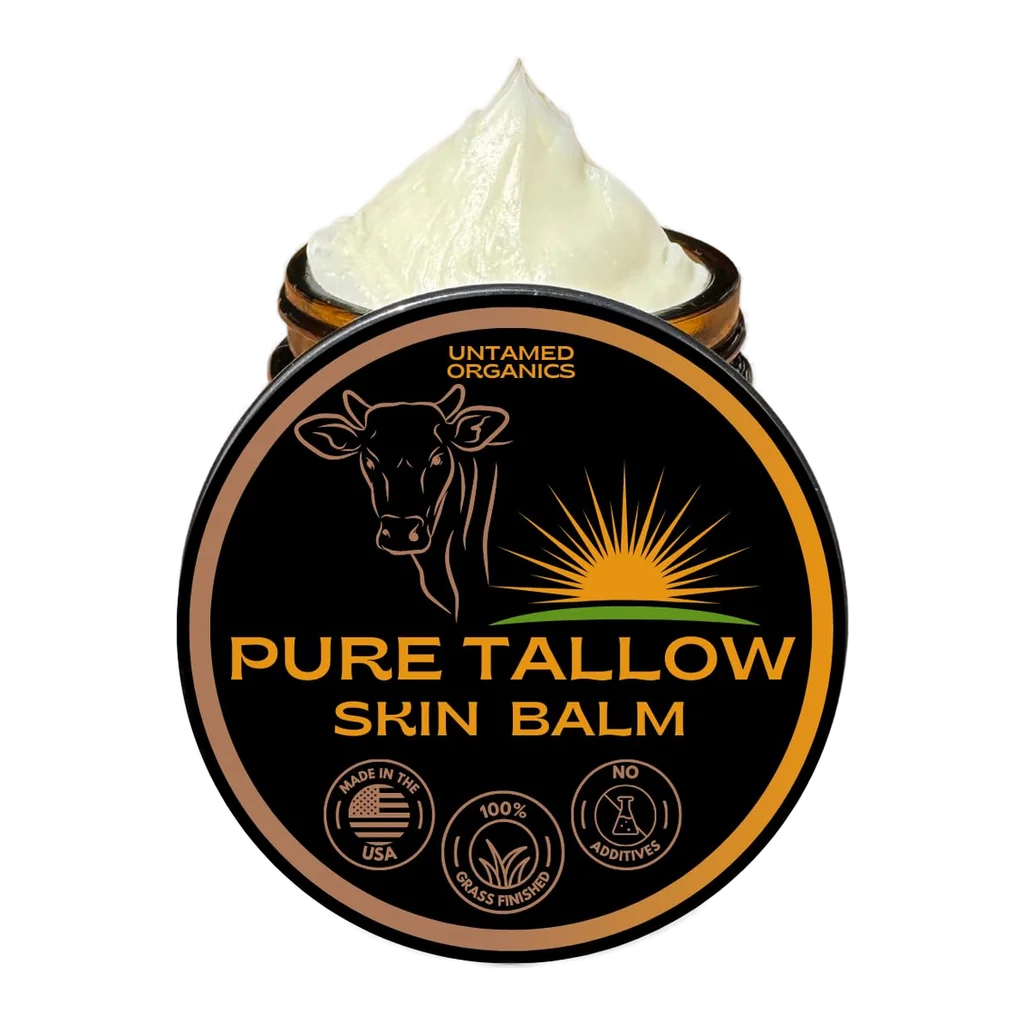
Two ounces is enough to patch test for a few weeks without committing to a big tub.
Picked for: The cheapest way to find out whether tallow suits your skin.
Price: $14.99 for 2 oz on September 26, rated 4.4 by 574 reviewers.
IKARIAN Grass-Fed Tallow (better value per ounce)
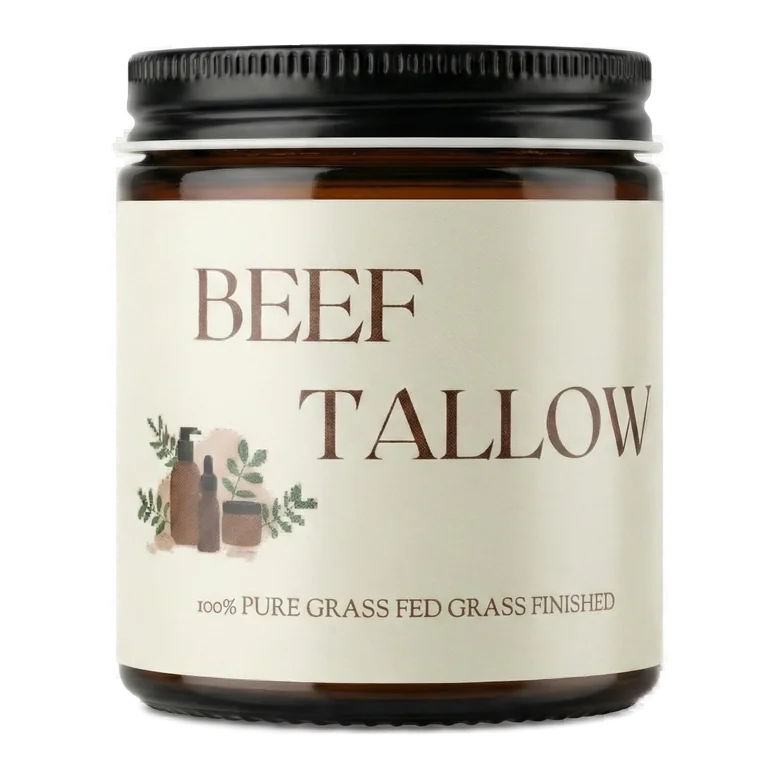
Whipped, so it spreads more easily than a solid balm. Far fewer reviews than the other two.
Picked for: A little cheaper per ounce than the Untamed jar.
Price: $26.09 for 4 fl oz.
Naked Tallow Balm (the well reviewed whipped one)
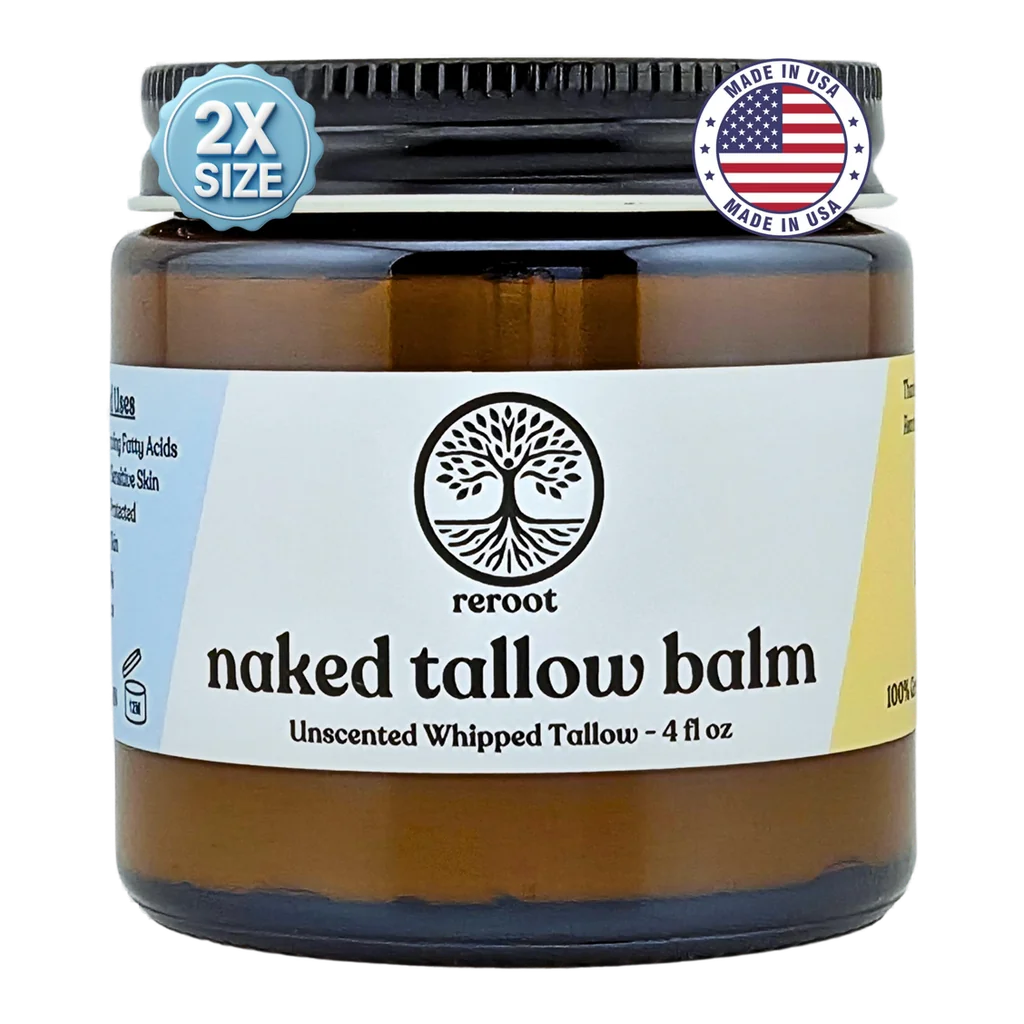
Also whipped and fragrance free. The most expensive jar of the three.
Picked for: Hundreds of reviews for a one ingredient, unscented balm.
Price: $35.09, rated 4.5 by 503 reviewers when I looked.
If tallow is not for you
The science behind “your skin needs fats like these” is real, but it is more specific than the marketing. A 1995 study found that barrier repair needed cholesterol, free fatty acids and ceramides together. Applying only one or two of them slowed recovery, and plain petrolatum repaired the barrier faster than the lipid mix, by a different route.4
So if tallow breaks you out, the boring options are not worse. Plain petrolatum is cheap and has a long track record. Ceramide moisturisers are built around that three lipid idea. In a small uncontrolled case series of children with eczema, a ceramide-dominant cream was followed by improvement in 22 of 24.5 That is not a trial, but it is more than tallow has.
Quick questions
Is tallow good for your face?
Nobody has run a human trial of plain tallow on skin. A 2024 scoping review found only comparison, lab and animal studies and called for research on tallow as a cosmetic product in people.6 Some people like it. Some break out.
Can I use cooking tallow on my skin?
It is the same fat, but a kitchen tub is not made or stored with your face in mind, and neither kind has preservatives. A balm sold for skin is the safer starting point.
How long does a jar last?
Until it smells off. With no preservatives, keep it out of heat and do not dip wet fingers into it.
What is the best alternative to tallow?
For dry skin, plain petrolatum or a ceramide moisturiser. Both have more human evidence than tallow does.
The bottom line
Buy a small, unscented, single-ingredient balm, patch test it and see. Skip it if your skin is acne-prone, oily, sensitive or broken, and ask a dermatologist before using it on eczema or psoriasis. The evidence for tallow on skin is mostly enthusiasm. That does not make it bad. It makes it an experiment.
References
- Scripps Health. Beef tallow for skin care: what dermatologists want you to know (E. Victor Ross, MD). 2026 Jan 22. Scripps
- Cleveland Clinic. Beef tallow for skin (Angela Wei, MD). 2026 Feb 10. Cleveland Clinic
- Almatroud L, Choi S, Libson K, Ashack K. Beef tallow-based skincare claims in social media: a cross-sectional analysis. J Cosmet Dermatol. 2025;24(12):e70544. PubMed
- Mao-Qiang M, Brown BE, Wu-Pong S, Feingold KR, et al. Exogenous nonphysiologic vs physiologic lipids: divergent mechanisms for correction of permeability barrier dysfunction. Arch Dermatol. 1995;131(7):809-16. PubMed
- Chamlin SL, Kao J, Frieden IJ, et al. Ceramide-dominant barrier repair lipids alleviate childhood atopic dermatitis: changes in barrier function provide a sensitive indicator of disease activity. J Am Acad Dermatol. 2002;47(2):198-208. PubMed
- Russell MF, Sandhu M, Vail M, Haran C. Tallow, rendered animal fat, and its biocompatibility with skin: a scoping review. Cureus. 2024;16(5):e60981. PubMed
I earn a small commission if you purchase through these links, at no
additional cost to you. I only recommend products I’ve personally used or
researched thoroughly. This helps support the work behind Better Living
Every Day.