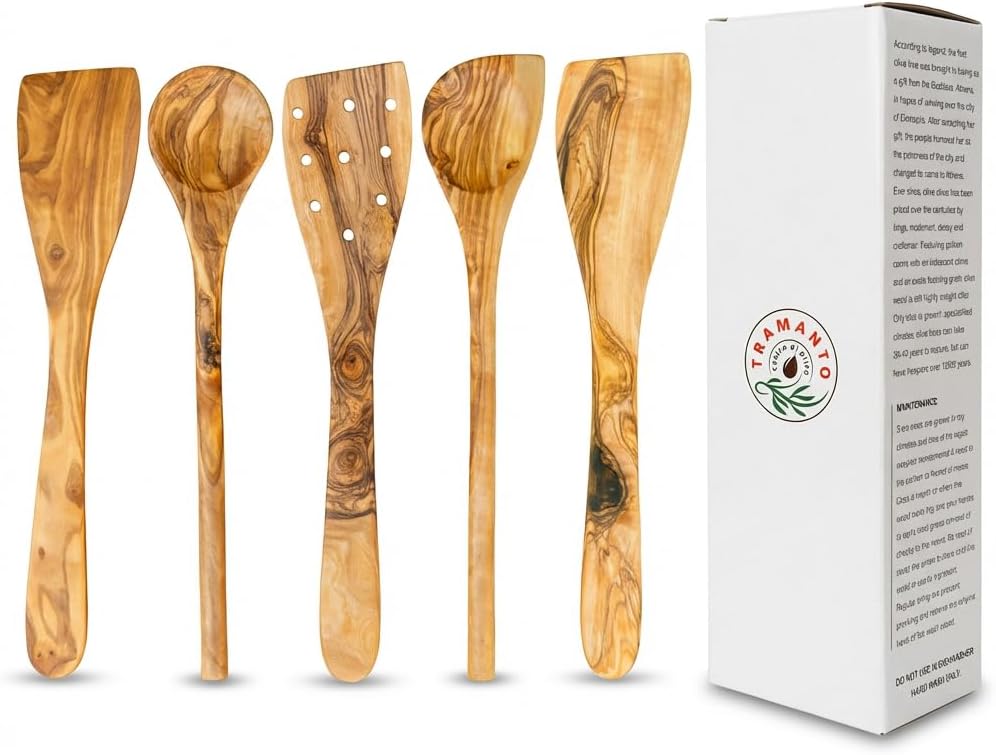
I threw out my plastic cutting board about a year ago. The reason wasn’t a sudden lifestyle pivot. It was a paper I stumbled into one evening showing that a typical plastic chopping board can shed somewhere between 14 and 71 million microplastic particles into your food per year of use.1 Per year. Per board. That’s not a typo and it’s not from a tinfoil-hat blog. It’s from peer-reviewed research published in Environmental Science & Technology.
You probably saw the headlines a while back about microplastics turning up in human testicles. Researchers at the University of New Mexico cut into 23 testicle samples and found measurable plastic in every single one.3 Lungs, blood, placenta, brain tissue, breast milk — same story across the board. We are walking around full of the stuff. That doesn’t mean the cutting board you swap out today is going to clean any of that up, but it’s a steady drip of new exposure that you can mostly turn off without much effort. That’s the part I focused on.
I went into my drawers the next day. The plastic spatulas got pulled. The plastic measuring cups went into a donation pile. The cheap nylon utensils my college roommate gave me a decade ago, the ones I still used to stir hot pasta sauce, those went too.
This article is the five swaps I made and what I’d recommend if you’re walking into your kitchen for the first time and just want a list that isn’t a marketing wall. Cutting board, utensils, mixing bowls, measuring cups, a chef’s knife with a way to keep it sharp. None of them shed plastic into your food. All of them last for years if you don’t abuse them. I’ll get into the specific brands below and why I picked each one.
Why plastic kitchen tools are a problem
Plastic in the kitchen looks fine on day one and gets quietly worse from there. A few things are happening at once.
Microplastic shedding from cutting boards is the headline. Every time the knife edge hits the surface, a tiny amount of plastic comes off with the food. A 2023 study in Environmental Science & Technology measured this and put the number at 14 to 71 million microplastic particles per year from a single board, depending on the polymer and how heavily it’s used.1 Polyethylene boards (the cheap white ones) were among the worst.
Heat is the other problem. Stir hot oil with a nylon spatula and you accelerate leaching. Black plastic utensils are particularly bad. A 2024 study found that a meaningful fraction of black plastic kitchen tools tested positive for flame retardants that had no business being in food contact materials.2 The plastic is recycled from electronics housings and the chemicals come along for the ride.
Dishwasher abrasion compounds both of those. Repeated hot wash cycles physically grind the surface of plastic tools, which is why old plastic things look chalky after a few years. Some of that chalk is going into your food before you ever notice the wear.
Glass, stainless steel, hardwood, and food-grade silicone don’t do any of this. They have their own quirks (glass breaks, wood needs oiling) but none of them shed materials into what you eat. The swap is straightforward and you only do it once.
The five swaps that matter most
If you only do five things, do these. In rough order of bang-for-buck:
- Replace your plastic cutting board with a hardwood cutting board. Single biggest reduction in daily microplastic exposure.
- Toss the plastic spatulas, slotted spoons, and especially anything black. Switch to wood, stainless, and food-grade silicone utensils. Wood for stirring, stainless for tongs and slotted spoons, silicone for spatulas that need flex.
- Switch to glass mixing bowls. They don’t stain, they don’t hold smells, and you can microwave them.
- Get a Pyrex glass measuring cup set. The plastic measuring cup wearing off its markings has been a kitchen meme for decades. Just buy the glass set.
- Buy a real chef’s knife and a way to sharpen it. A sharp knife means less force on the board, less hand fatigue, fewer accidents, and you’ll actually use the cutting board you just bought.
The product picks below cover each of those five swaps with brands I’d hand to a friend without disclaimers.
Product recommendations
John Boos Chop-N-Slice Maple Cutting Board (the daily driver)
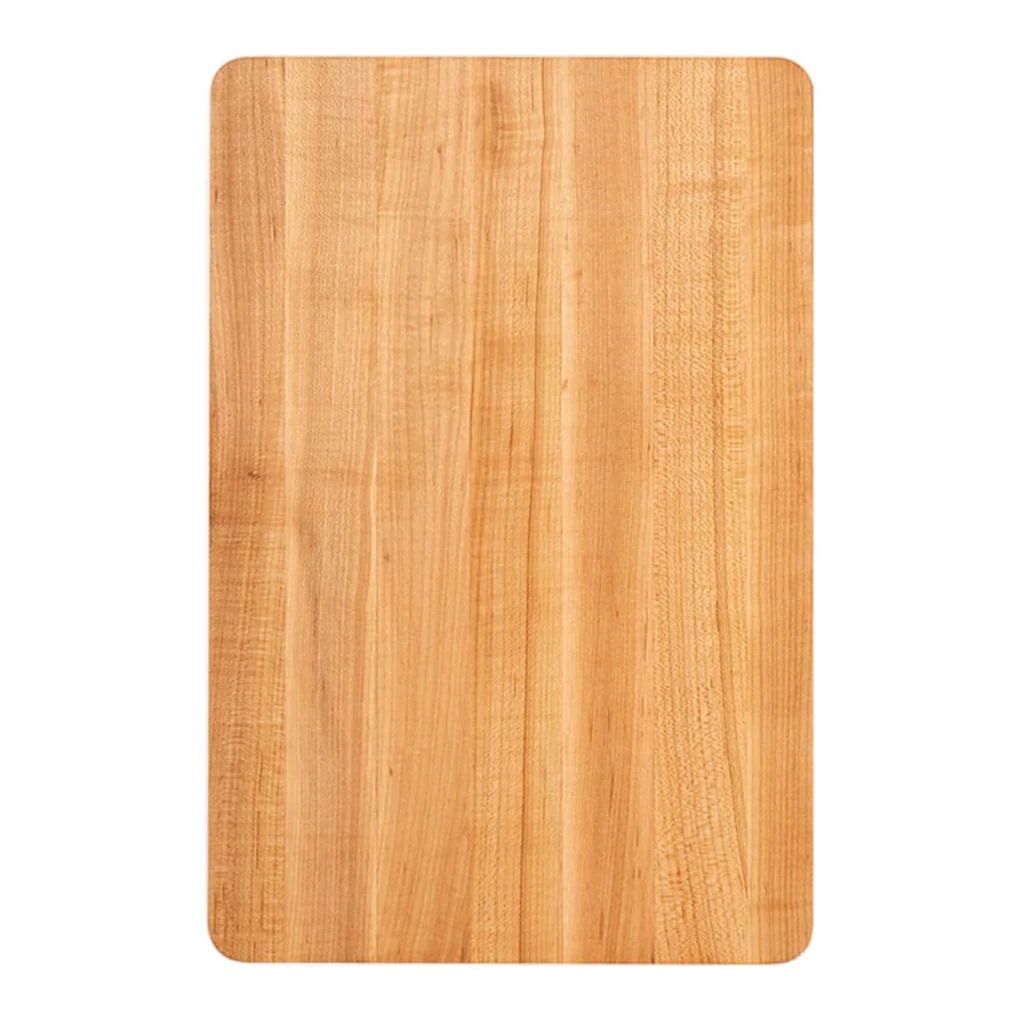
John Boos has been making butcher blocks in Effingham, Illinois since 1887. The Chop-N-Slice line is their entry-level board and it’s still better than ninety percent of what’s sold as “premium” elsewhere. Edge-grain maple, made in the USA, reversible, food-safe finish.
Material: Edge-grain hard maple, food-safe oil finish.
Size: 16 x 10 x 1 inch, 4.5 lb.
Price: Around $30.
My take: Lives on my counter, gets oiled with food-grade mineral oil every couple of months, looks the same as the day I bought it. If you want a single board that’ll last a decade and stop the microplastic shedding, this is the one.
Tramanto Olive Wood Utensil Set (the everyday utensils)
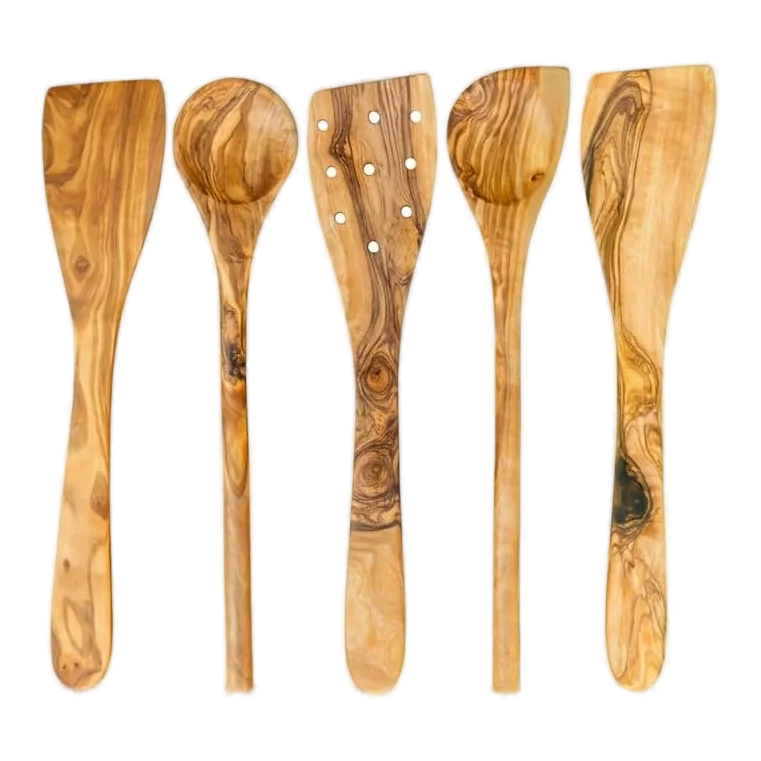
Five pieces of hand-carved olive wood. A flat spatula, a slotted spoon, a serving spoon, a corner spoon for stirring, and a long spoon. Olive wood is dense, doesn’t crack like cheaper woods, and develops a nice patina with use. Comes in a wooden gift box if you want to gift one.
Material: Solid olive wood, hand carved.
Pieces: 5, all 12 inches long.
Price: Around $35.
My take: The set that replaced every plastic spatula in my drawer. Wash by hand, occasional oil rub, and these will outlive most of the rest of your kitchen.
Anchor Hocking 10-Piece Glass Mixing Bowl Set (the prep bowls)
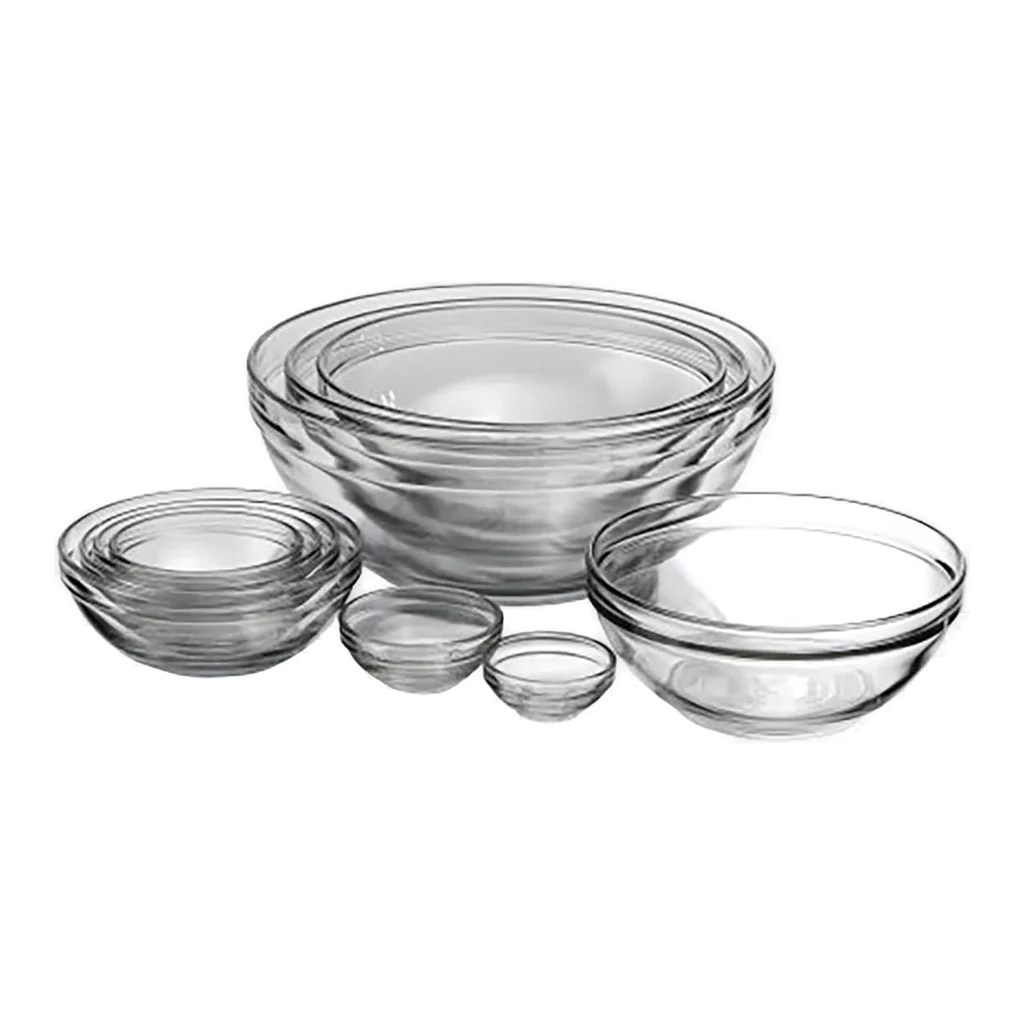
Ten nested glass bowls, sizes from 1 oz up to 3.5 quarts. The small ones are for mise-en-place (chopped garlic, measured spices), the big ones for whisking dressings or holding salad. Anchor Hocking has made this glass in Lancaster, Ohio for over a century. Microwave, oven, dishwasher safe.
Material: Heat-tempered glass.
Pieces: 10, ranging from 1 oz to 3.5 qt.
Price: Around $30.
My take: The small ones get more use than I expected. Once you start prepping with proper mise-en-place bowls it’s hard to go back. The big ones double as serving bowls when people are over.
Pyrex 3-Piece Glass Measuring Cup Set (1, 2, and 4 cup)
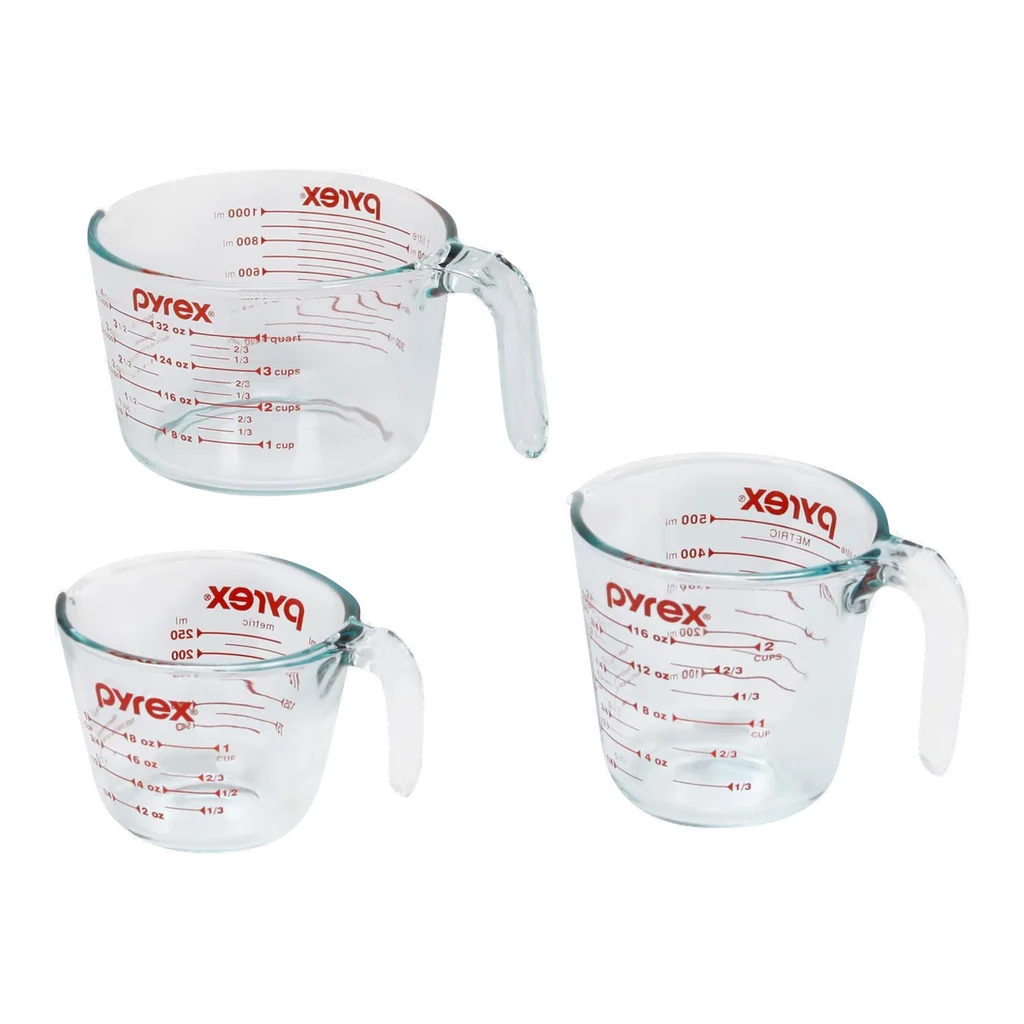
The Pyrex measuring cup is iconic for a reason. Heat-resistant borosilicate-style glass, the red markings don’t wear off, and the spout actually pours. You can measure hot oil, melted butter, or cold water in the same cup without thinking about whether the plastic is going to leach.
Material: Tempered glass.
Pieces: 3 (1 cup, 2 cup, 4 cup).
Price: Around $25.
My take: The 1-cup is on my counter every single day. If you only buy one piece from this article, buy this set.
Wüsthof Classic 8″ Chef’s Knife (the one knife to own)
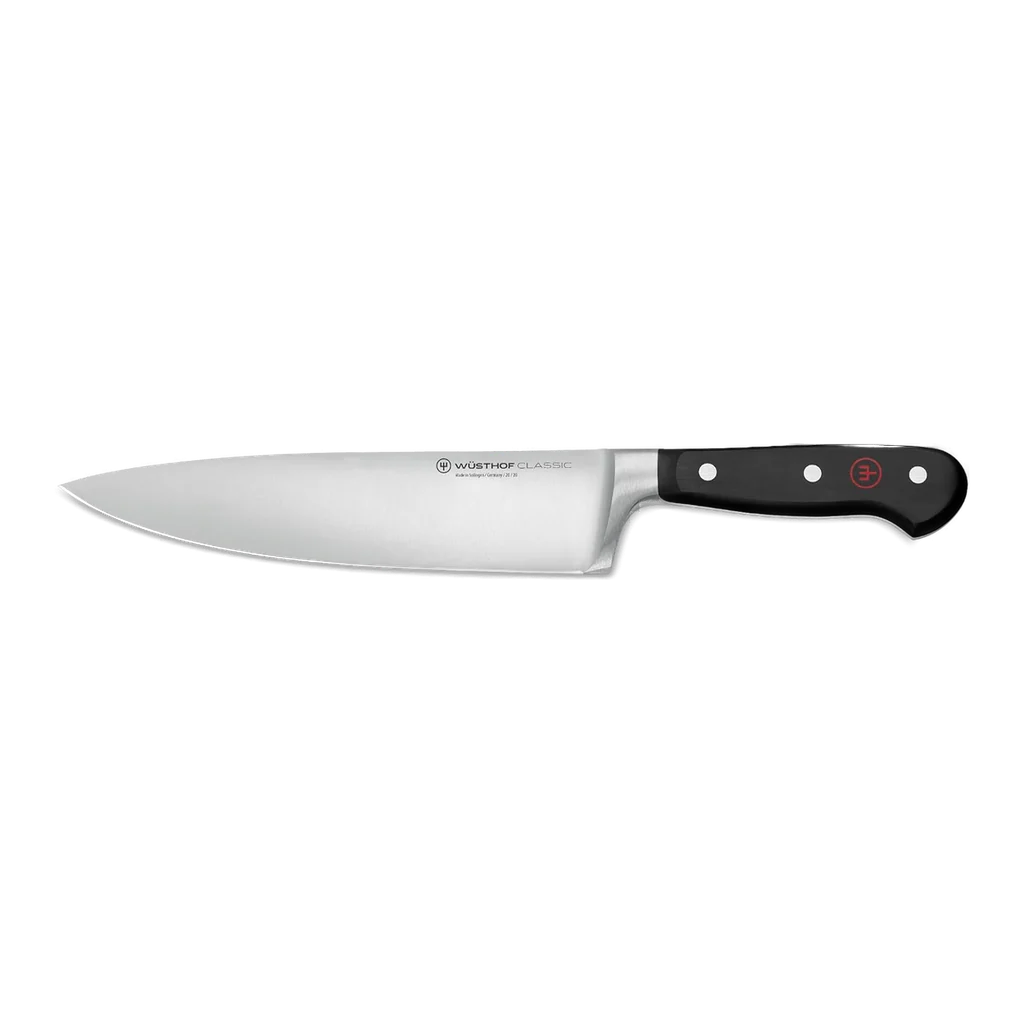
Made in Solingen, Germany, since the 1800s. Forged from a single piece of high-carbon stainless, full tang, riveted handle. The Wüsthof Classic is the chef’s knife most cooking schools default to and the one most professional cooks recommend when asked for a single knife.
Material: High-carbon stainless steel, synthetic handle.
Size: 8 inch blade.
Price: Around $170.
My take: A sharp knife is the difference between cooking being a chore and being something you enjoy. Buy one good knife instead of a bargain block set, learn to maintain it, and you’re set for ten or twenty years.
Presto 08800 EverSharp Electric Knife Sharpener (the budget pick)
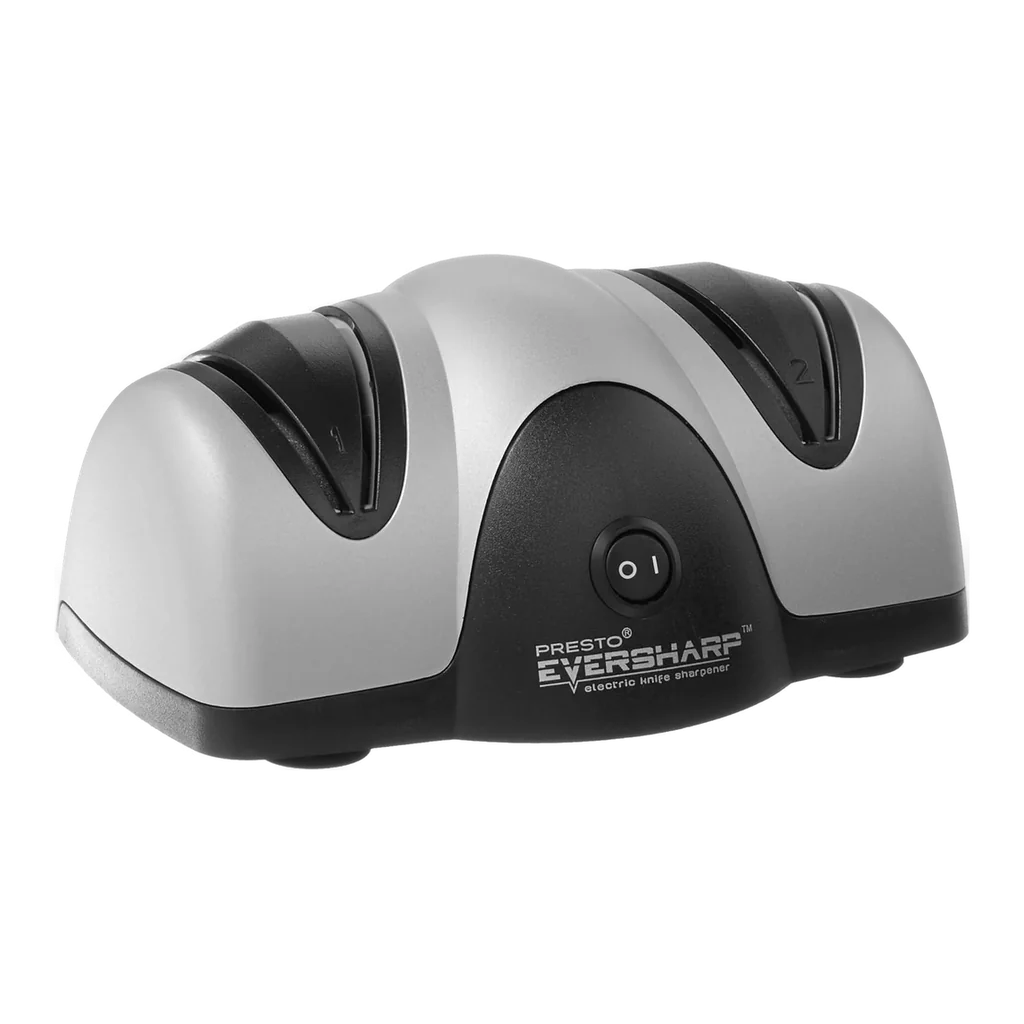
Do all knife sharpeners do the same thing? Not really, but for most home cooks the gap is smaller than the price gap suggests. The Presto EverSharp is a two-stage electric pull-through that has been on Amazon’s best-seller list for over a decade. Stage one is a coarse sapphirite wheel that establishes the edge, stage two is a finer wheel that polishes it. Pull the knife through each slot a few times and you have a sharp edge.
Material: Sapphirite abrasive wheels, two stages.
Stages: Coarse sharpen, fine polish.
Price: Around $30.
My take: The honest difference: pull-through sharpeners like the Presto are more aggressive on the steel, so a Wüsthof will lose blade mass faster than it would on a belt-style sharpener like the E5. If you cook a few times a week and keep your knives moderately sharp, this is plenty. If you’re spending $170 on a knife and want it to last twenty years instead of ten, the belt sharpener is the safer call.
Work Sharp Culinary E5 (the sharpener that keeps the knife working)
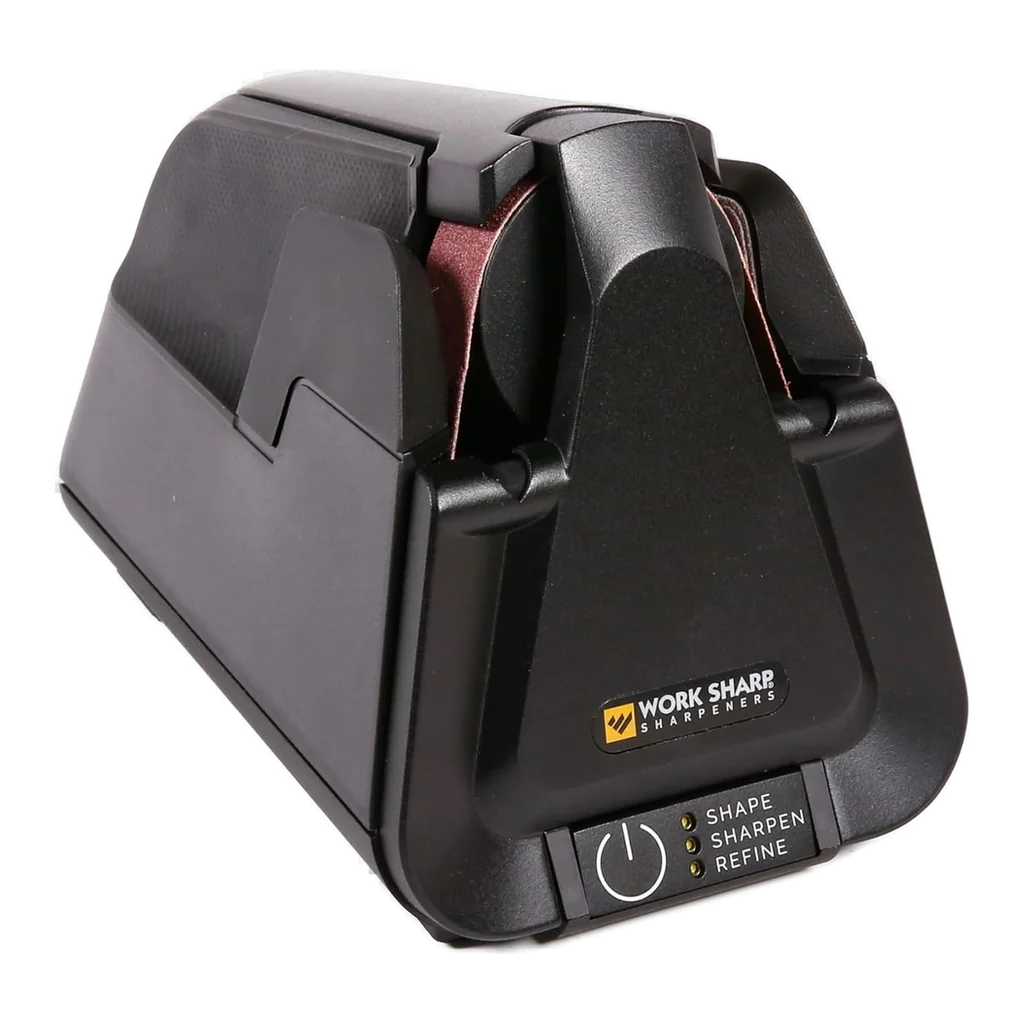
An expensive chef’s knife is only as good as its edge. Most people buy a great knife and let it go dull within a year because hand sharpening with a whetstone is intimidating. The E5 is the easy way out. Three-stage automatic sharpening, integrated honing pass, built-in brush to clear metal dust.
Material: Electric ceramic abrasive belts.
Stages: Sharpen, refine, hone (built-in).
Price: Around $200.
My take: I pull this out every few weeks for thirty seconds per knife and my edges stay where they were on day one. If a whetstone feels like too much commitment, this is the no-fuss alternative.
What I actually use
Here’s the exact setup on my counter right now:
- John Boos maple edge-grain cutting board, lives out on the counter, gets oiled with mineral oil every couple of months
- Tramanto olive wood utensil set in the crock by the stove
- Anchor Hocking mixing bowls, three of the smaller ones in daily rotation, the rest in the cabinet
- Pyrex measuring cup set, the 1-cup lives on the counter
- Wüsthof Classic 8″ chef’s knife on a magnetic strip
- Work Sharp E5 sharpener in the drawer below the knives, pulled out every few weeks
That’s basically the whole article. If you bought every item I just listed, your daily microplastic load from kitchen tools drops to about zero.
FAQ
Is bamboo a good plastic-free option?
Real bamboo (one solid piece) is fine. The problem is most “bamboo” cutting boards sold cheap are bamboo fibers glued together with resin. The resin is the part you want to avoid. If you go bamboo, buy from a brand that explicitly states the adhesive (FSC-certified formaldehyde-free), or go with hardwood and skip the question entirely.
How do you keep a wooden cutting board from cracking?
Two things. Don’t put it in the dishwasher (ever) and oil it occasionally. Mineral oil from the drugstore is fine. I do mine roughly every two months, more often if it’s looking dry. Wash it with soap and water by hand and prop it up on its edge to dry so air gets to both sides.
Are silicone utensils plastic-free?
Technically silicone is a polymer, not a plastic, and food-grade silicone is considered safe for cooking. The catch is “food-grade.” Cheap silicone tools sold by no-name brands sometimes use fillers that aren’t food safe. Buy from established kitchen brands and you’re fine. I use silicone for the spatulas where flex matters, wood for everything else.
Do glass mixing bowls really stay safer than plastic?
Yes, in the sense that glass doesn’t leach anything into food regardless of temperature or acidity. The trade-off is they break. I’ve replaced one bowl in about three years of daily use, which feels reasonable.
Should I throw out all my plastic kitchen tools at once?
You don’t need to. Replace the ones in heaviest contact with hot food first (spatulas, slotted spoons, anything that touches the pan), then the cutting board, then everything else as it wears out. The black plastic utensils are the priority. Don’t even wait to finish reading this article on those.
References
The microplastic shedding and black plastic flame retardant findings are from peer-reviewed studies. The two most directly relevant:
- Yadav H, Khan MRH, Quadir M, Rusch KA, Mondal PK, Ferdous J. Cutting boards: an overlooked source of microplastics in human food? Environ Sci Technol. 2023 Jun 6;57(22):8225-8235. PubMed
- Liu M, Jia S, Dong T, Zhao Y, Xu T, Han W. The detection of flame retardants in black plastic kitchen utensils. Chemosphere. 2024;355:141877. PubMed
- Hu CJ, Garcia MA, Nihart A, Liu R, Yin L, Adolphi N, Gallego DF, Kang H, Campen MJ, Yu X. Microplastic presence in dog and human testis and its potential association with sperm count and weights of testis and epididymis. Toxicol Sci. 2024 Aug 1;200(2):235-240. PubMed