For about four years I ignored my indoor air. Filtered my water, picked over my food, kept the windows cracked when I cooked. Felt like I had the bases covered. Then I got an air quality monitor for Christmas and the numbers it threw up made me kind of sick to look at. PM2.5 hitting 80 micrograms per cubic meter on nights I cooked anything in oil. VOCs spiking when I lit a candle. The cleaning product aisle pulled twice that.
It turns out indoor air is on average about three to five times worse than outdoor air, according to the EPA. Most of us spend 90% of our time inside. The math is bad.
This article is the four air purifiers I’d actually pay for, what they do differently, and what to look for if you want to spend less than I did.
What an air purifier actually does
A purifier pulls the room’s air through a stack of filters and pushes it back out cleaner. Two of those filter layers do almost all of the work that matters.
Layer one is the HEPA filter. HEPA is a spec, not a brand. A filter only earns the name if it catches 99.97% of the particles passing through it at 0.3 microns. Tiny. The stuff you’d otherwise be inhaling: smoke, pet hair micro-shed, pollen, the airborne particulate when you sear something in oil. One quick warning if you’re shopping. The phrase you want on the label is “true HEPA.” If it says “HEPA-type” or “HEPA-like,” that’s marketing for “almost HEPA but cheaper to make.” Skip those.
Layer two is activated carbon. It works differently. Instead of trapping particles in a mesh, the porous carbon surface chemically binds gas molecules. Which is great, because all the stuff HEPA can’t see (formaldehyde from your couch, chemicals from this morning’s cleaning spray, paraffin candle byproducts, last night’s salmon) is gas. The catch is that carbon only works in proportion to how much of it is in the filter. A real unit packs three to five pounds of the stuff. The bargain units throw in a few ounces and slap “HEPA + carbon” on the box. Check the spec sheet.
Run both layers and you’re covered for basically everything floating around a normal house. Run one or the other and you’ve solved roughly half the problem.
The other spec worth glancing at is CADR. Stands for Clean Air Delivery Rate. It tells you how fast the unit actually moves air through its filters, with three separate scores for smoke, dust, and pollen. Bigger is better, and the rating has to fit your room. Sticking a purifier rated for a 250 sq ft bedroom into a 600 sq ft open living room is more decoration than air quality.
Product recommendations
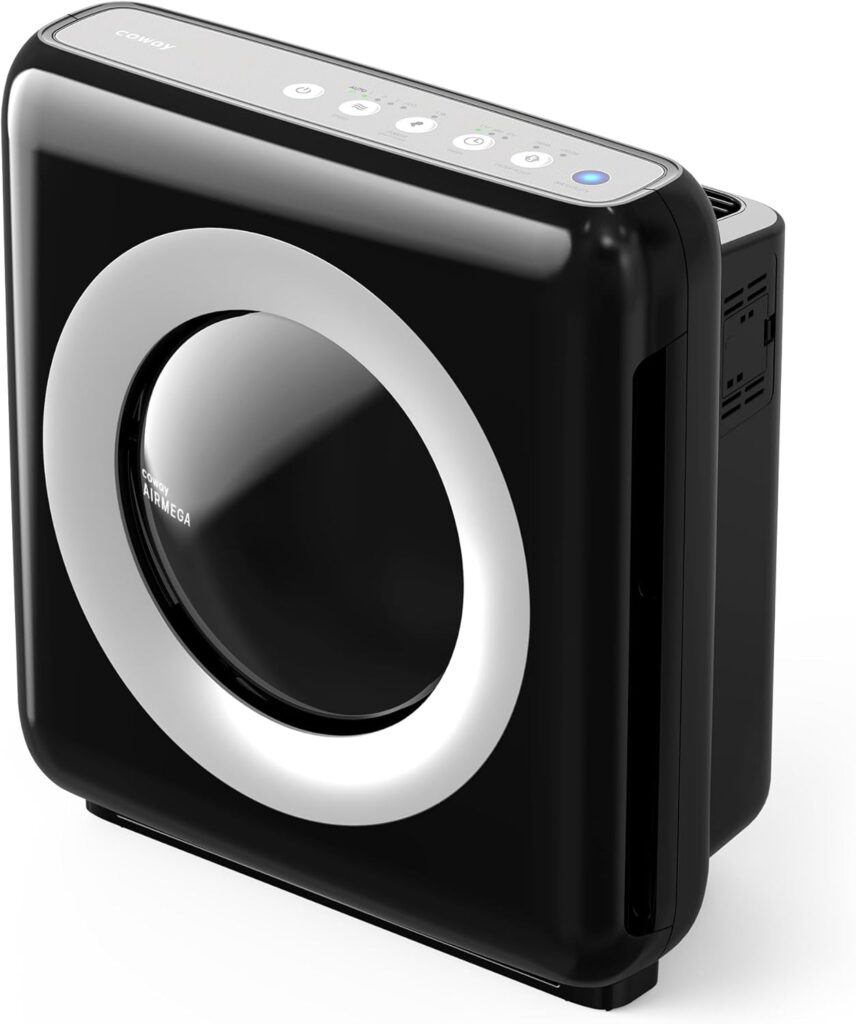
Coway Airmega AP-1512HH Mighty (the bedroom workhorse)
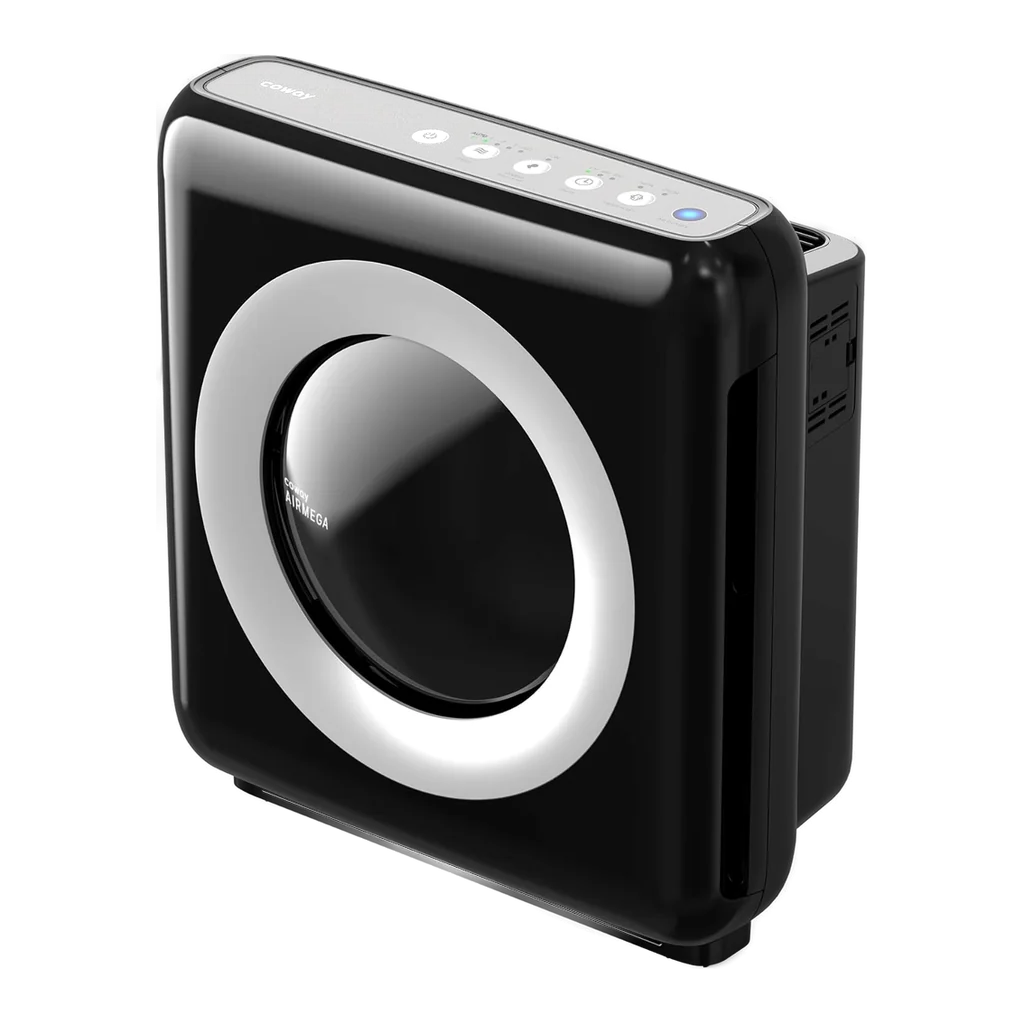
The AP-1512HH has been the consensus pick for “best mid-range air purifier” for almost a decade and earns it. True HEPA, activated carbon, a four-stage filter system, and an air quality indicator that actually responds in real time. Quietest of the four picks on its low setting (you can sleep right next to it). Rated for rooms up to 361 square feet, so it covers most bedrooms and small living rooms.
Filtration: Pre-filter + activated carbon + true HEPA + ionizer (can be switched off).
Room size: Up to 361 sq ft.
Price: Around $230.
My take: What I have in the bedroom. Set it on auto, forget it exists, change the filters twice a year. If you want one purifier and aren’t sure where to start, start here.
Levoit Core 400S (the budget pick for big rooms)
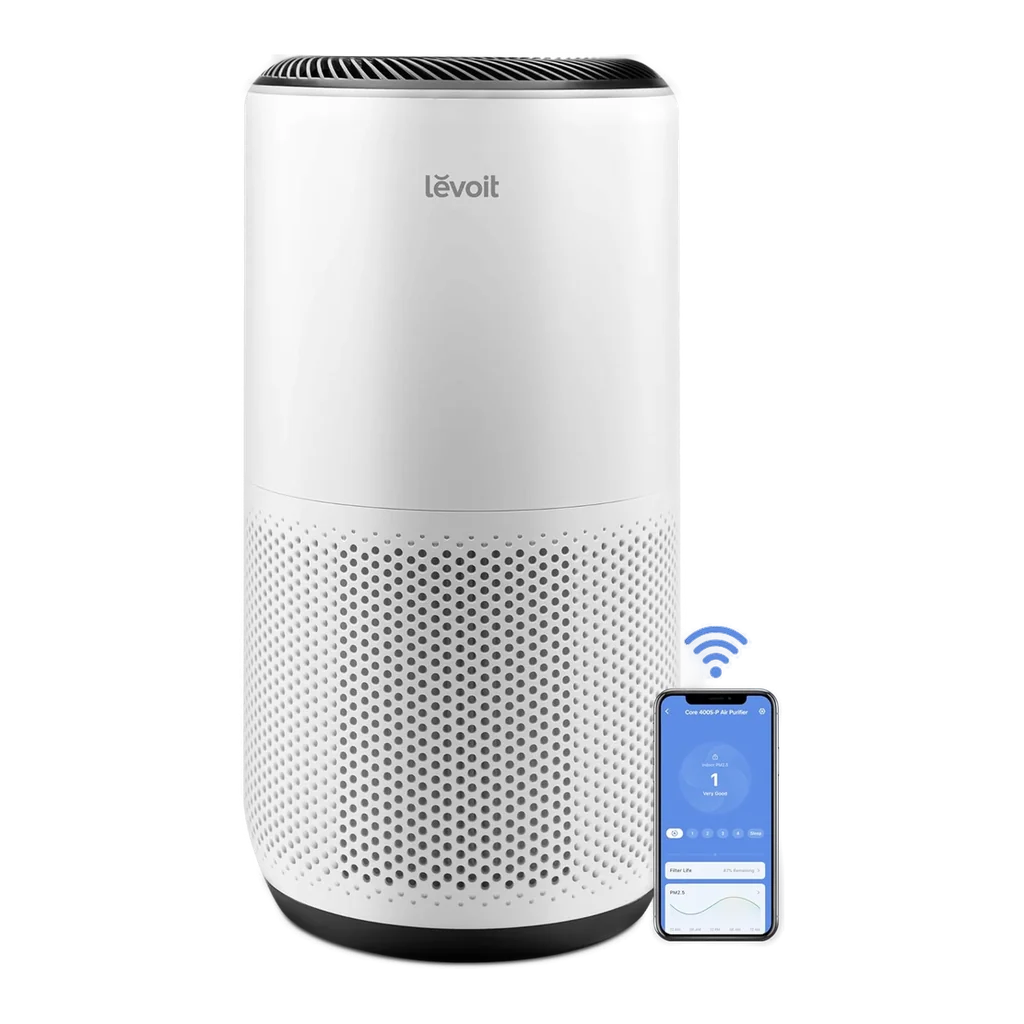
The Core 400S handles a bigger room than the Coway at a similar price. Rated up to 1,733 square feet, enough for most open plan living rooms or a large primary bedroom. App control over Wi-Fi if you care about that, plus an air quality sensor that updates in real time. The catch is it’s slightly louder on high than the Coway, and the carbon filter layer is thinner so it lasts about six months instead of twelve.
Filtration: Pre-filter + true HEPA + activated carbon.
Room size: Up to 1,733 sq ft.
Price: Around $220.
My take: What I run in the living room. Best coverage per dollar of the four. Wi-Fi control is genuinely useful. I can crank it up from my phone before I start cooking instead of running into the room to hit the button.
Blueair Blue Pure 211+ (the Scandinavian pick that looks like decor)
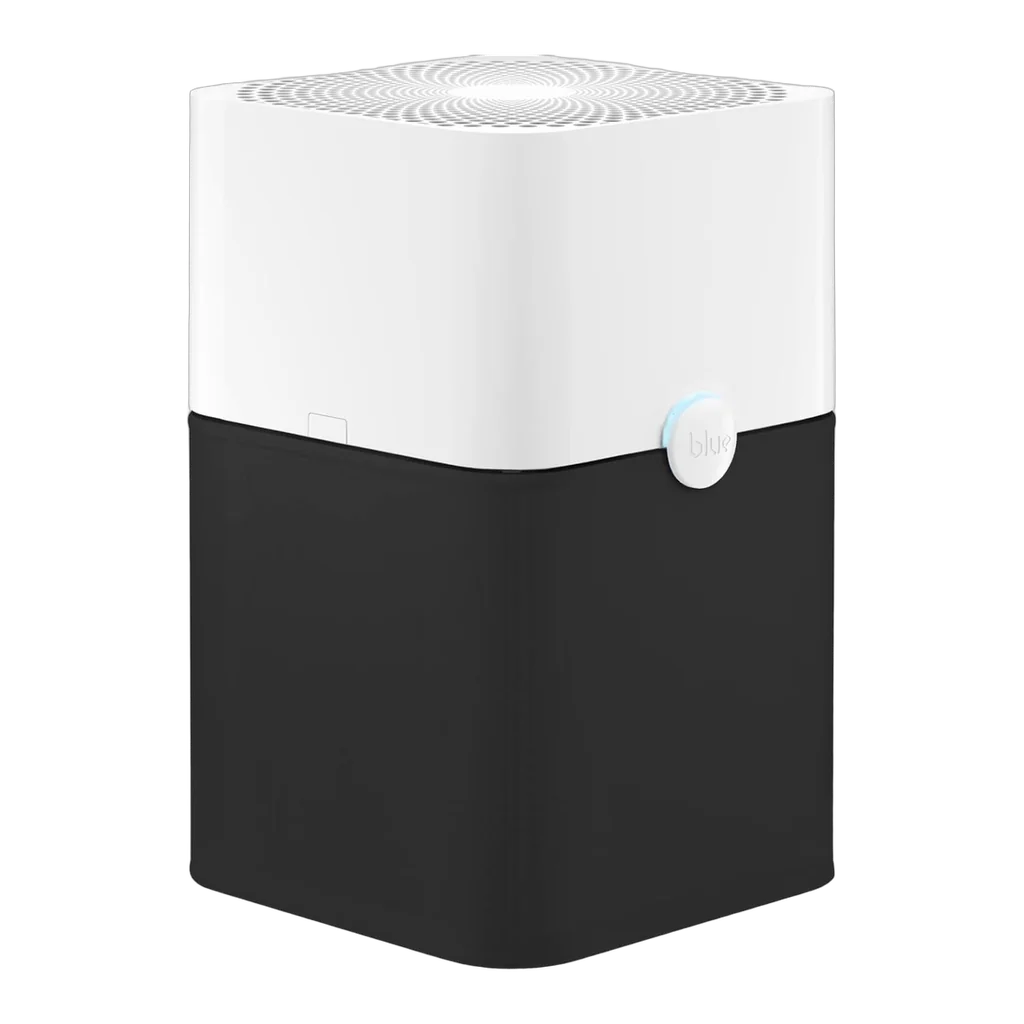
Blueair is Swedish and the 211+ has a removable fabric pre-filter sleeve in colors that don’t look like a standard appliance. It moves a lot of air for the price, 540 CFM, and uses a “HEPASilent” hybrid filter that combines fiber filtration with electrostatic charging to catch smaller particles. Louder than the other three on high, quieter on low. The fabric pre-filter sleeves are machine washable, which means you replace the carbon-HEPA core less often.
Filtration: Washable fabric pre-filter + HEPASilent hybrid + activated carbon.
Room size: Up to 540 sq ft (covers a typical living room).
Price: Around $300.
My take: If aesthetics matter and your purifier is going to be visible, this is the one that doesn’t look like medical equipment. Friends with the gray or rose-pink sleeve get more compliments on it than on any of their actual décor.
IQAir HealthPro Plus (the medical grade splurge)
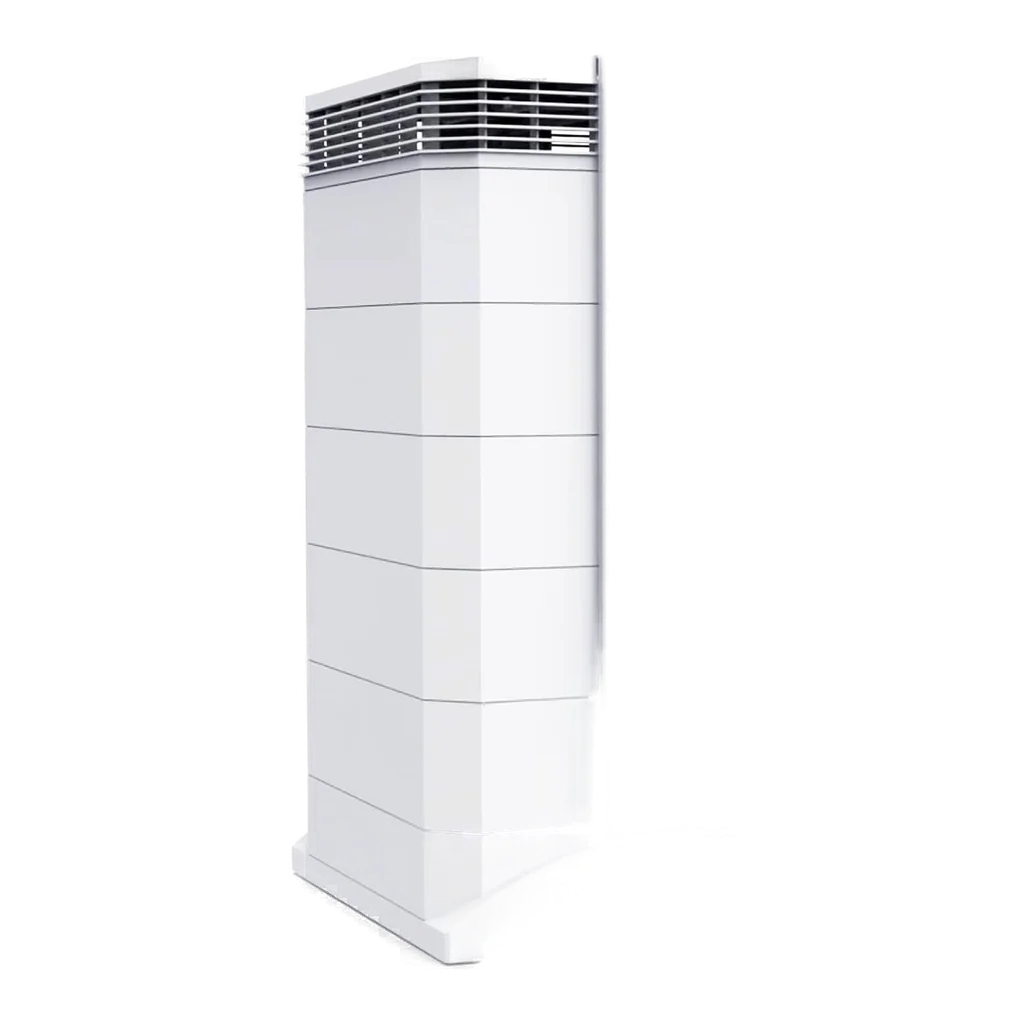
IQAir is what you’d buy if you have a serious indoor air problem: wildfire smoke that won’t quit, a family member with chronic respiratory issues, or a renovation that won’t stop off-gassing. The HyperHEPA filtration catches particles down to 0.003 microns (vs. 0.3 for standard HEPA), the carbon stage is huge by volume, and the build quality is on a different planet from the consumer brands. Made in Switzerland. Filters last 2 to 4 years instead of 6 to 12 months.
Filtration: Pre-filter + HyperHEPA + V5-Cell activated carbon.
Room size: Up to 1,125 sq ft.
Price: Around $900.
My take: Overkill for most households. The right pick if you’ve already tried a Coway or Levoit and your symptoms haven’t improved. The build is genuinely “owns this thing for 15 years” durable.
What I run in my own house
One Coway in the bedroom on night mode (it gets whisper quiet on the lowest setting). One Levoit 400S in the living room, the largest open space. The kitchen doesn’t have its own. I crack a window when I cook and let the living room unit handle the overflow. Filters get changed every six months for the HEPA and every three for the carbon. The combined annual filter cost is around $80 across both units, which is way less than I expected when I first bought them.
FAQ
Do I need a purifier in every room?
No. One sized to your biggest open living space (living room or an open kitchen and living area) plus one in the bedroom is enough for almost any home. Bedrooms matter because you spend a third of your life in there breathing.
Are ionizing or UV purifiers worth it?
Skip them. Ionizers can produce small amounts of ozone (the EPA explicitly recommends against them for indoor air). UV-C lamps in purifiers are mostly marketing. The air moves past the UV light too fast to do anything useful. Stick with HEPA + carbon.
What about HVAC filters?
A high-MERV HVAC filter (MERV 13 or higher) helps with whole house dust but doesn’t run continuously and doesn’t touch VOCs. Use it as a baseline and add standalone purifiers to the rooms you live in.
How loud are these?
On the lowest setting, all four picks are quiet enough to sleep next to. On the highest setting (which you’d only use during cooking or after a smoke event), they’re noticeable. Coway is the quietest of the four. Blueair is the loudest.
Do they actually help with allergies?
Yes, with one caveat. They reduce airborne allergens (dust, dander, pollen). They don’t do anything about allergens that have settled on surfaces. So if your nose runs when you walk into a room, a purifier helps. If you’re petting a cat, no purifier in the world will help.