In This Article
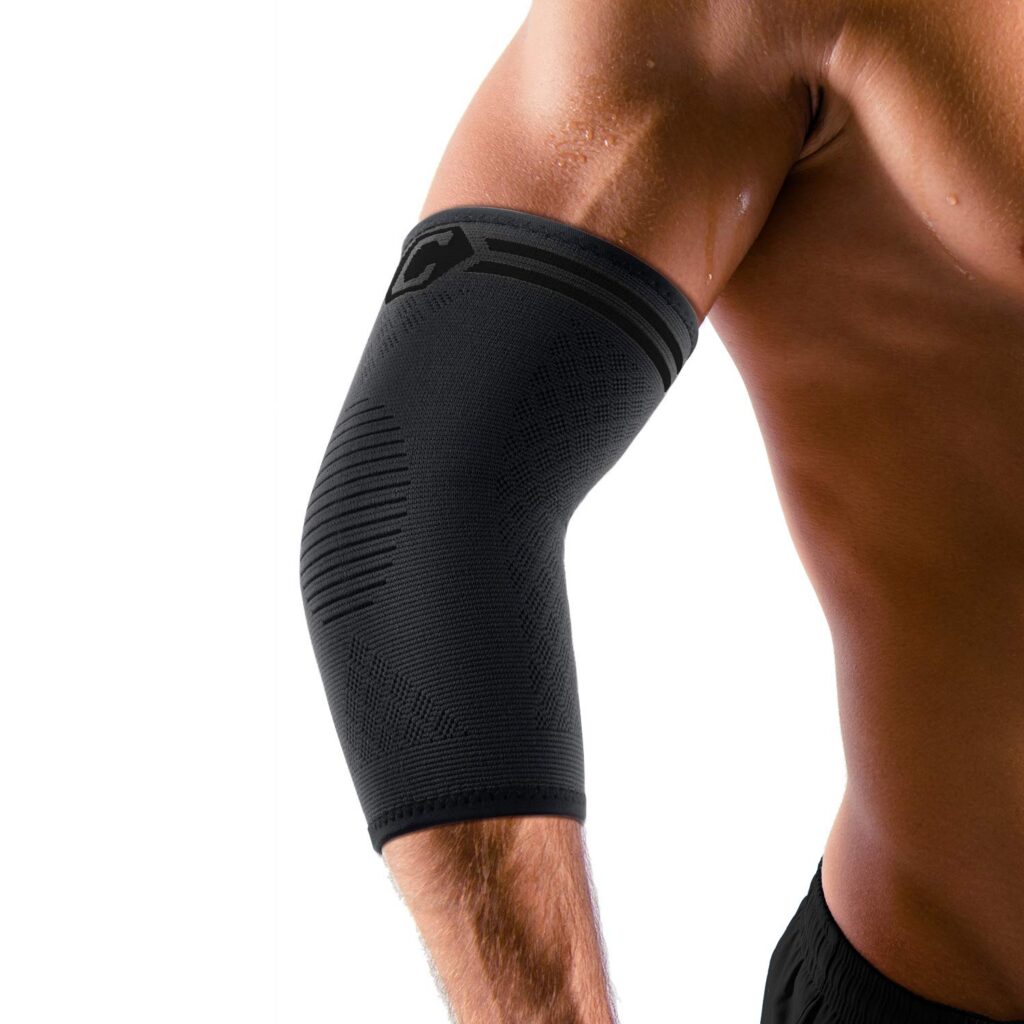
In 2025 I bought an elbow brace. The one in my order history is a CAMBIVO compression sleeve, a knitted tube that pulls on over the joint, two in the pack.
That detail matters more than it sounds. The biggest pooled review of braces for tennis elbow is about a different device: the counterforce strap, a single band with a pressure pad that sits a couple of inches below the joint. So this is a post about the evidence for a strap, from someone whose order history has a sleeve in it.
I am not going to tell you whether mine helped. One person wearing a brace cannot tell whether the brace did the work, which is the entire reason anybody bothers running trials on a ten dollar piece of elastic.
What a counterforce brace is supposed to do
The theory is old and it is tidy, which is usually a warning sign.
Lateral elbow tendinopathy, which most people call tennis elbow, is a problem where the forearm tendons attach to the bony bump on the outside of your elbow. The idea behind the strap is that if you clamp the muscle a little further down, you create a new anchor point, and the load passing through the sore attachment drops.
It makes sense when someone says it out loud. That is a different thing from it working.
The pooled result
A 2020 systematic review gathered every randomised trial it could find on counterforce braces for this injury. Seventeen studies, 1,145 people.1
Here is what came back.
For pain in the short term, comparing the brace against physiotherapy, the standardised difference was -0.02, with a confidence interval running from -0.85 to 0.80. A difference of -0.02 is, in practical terms, nothing at all, and the interval around it is wide enough to contain a decent benefit and a decent harm at the same time.
In people aged 45 and under, the brace looked better, at -0.86. The interval on that one ran from -2.45 to 0.72.
Over the longer term, the comparison treatments came out ahead of the brace. Physiotherapy at 1.17, with an interval of -0.00 to 2.34. A wrist splint at 0.35, interval -0.07 to 0.76. Laser therapy at 0.58, interval -0.44 to 1.59.
What that actually means, and what it does not
It does not mean the strap does nothing. An interval that includes zero also includes a real benefit. Absence of a clear answer is not the same as an answer of no.
What it means is that after seventeen attempts, nobody has demonstrated an effect big enough and consistent enough to show up above the noise. If the strap had a large, reliable effect, a thousand people would have found it.
The opposite case does exist. For compression stockings on long flights there is a Cochrane review with the words high-certainty evidence attached to one of its findings. That is what it looks like when the research actually lands. This is what it looks like when it does not.
The thing with the better standing costs nothing
Buried in that same review is the more useful signal. Over the longer run, the comparison that kept edging ahead of the brace was physiotherapy.
I am not going to overstate it, because that interval did not clear zero either. But it points the same direction as the rest of the tendon literature, which has moved fairly firmly toward loading the tendon rather than resting it. Slow wrist extensions against a weight, adding load as it gets easier. Weeks of it.
That is free, and it is boring, and it is the part almost nobody does, which is precisely why the nine dollar strap sells so well. The strap asks nothing of you.
Where a sleeve fits
A compression sleeve is not a counterforce brace. It has no pressure pad and no anchor point. It wraps the whole joint in even, light compression and a bit of warmth. So the seventeen trials above are not evidence about a sleeve in either direction, good or bad.
If the research is what you are buying on, the strap with the pad is the design that was actually tested, thin as that testing turned out to be. I have not used one, so that is the literature talking and not experience.
So should you buy one
I am not going to tell you not to. Either kind costs about ten dollars, the review found no meaningful harm from the strap, and if wearing a brace lets you grip a kettle or get through a shift, that is a real thing that improved your day.
Buy it as a comfort aid. Do not buy it as a treatment, and do not let it become the reason you never start the loading work.
CAMBIVO Elbow Brace Compression Sleeve (2 pack)
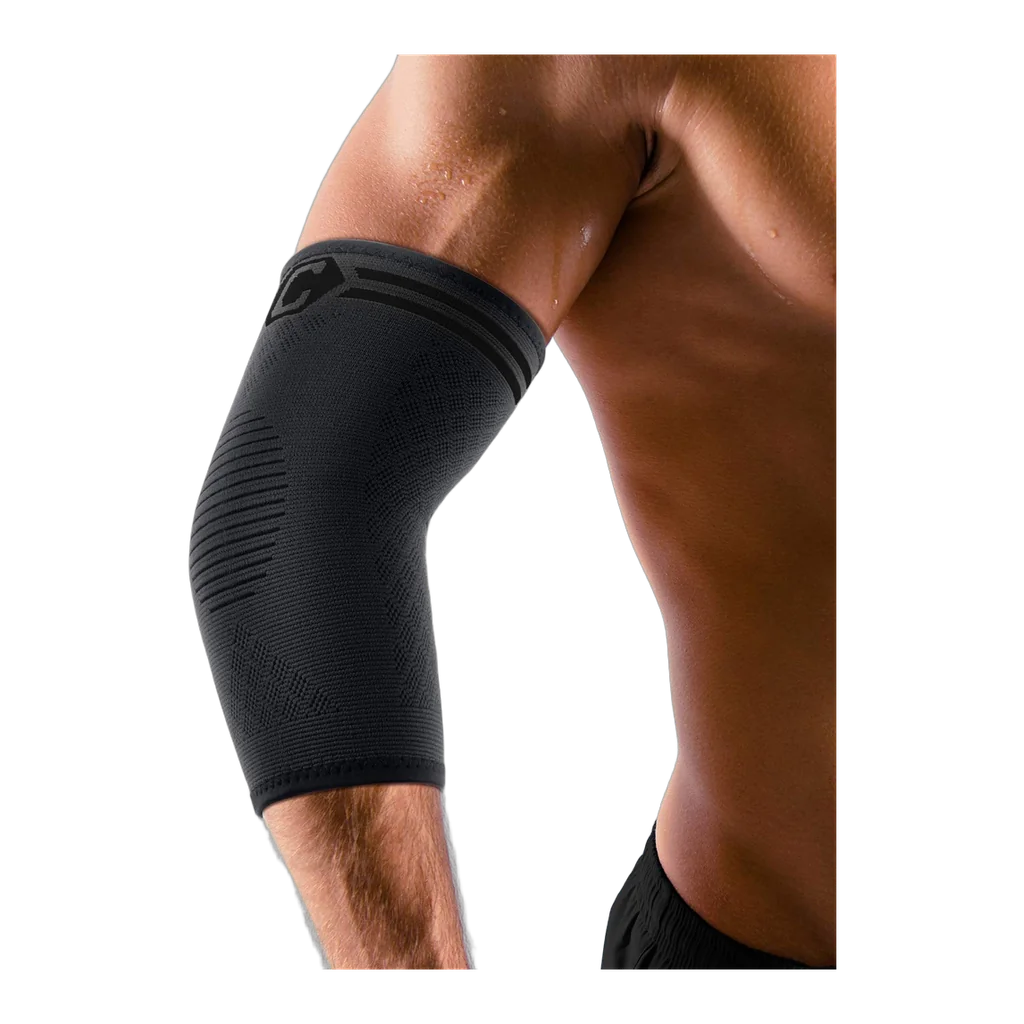
The brace in my 2025 order. A knitted sleeve that pulls on over the elbow for even compression, with no pressure pad. It is not the counterforce design the seventeen trials tested, so nothing above counts for or against it. The record shows one purchase and says nothing about how it worked out, so neither will I.
Purchase signal: Bought once, 2025.
Price: Around $9.99 for two.
When it is not a shopping problem
Pain that started after a fall or a wrench rather than gradually. Numbness or pins and needles running into your hand. Pain that wakes you up. Or months going by with no change at all.
None of those are a brace problem. Those are worth an actual appointment, because a few things that are not tendinopathy present in roughly the same place.
Quick questions
Do tennis elbow straps work?
The most complete pooled analysis, seventeen trials and over a thousand people, could not separate them from the comparison treatments on pain. That is not proof they do nothing, it is a demonstration that any effect is small enough or inconsistent enough to hide. Plenty of people find them comfortable, which is a fair reason to own one.
Where exactly should the strap sit?
Below the elbow crease, over the muscle belly of the forearm, not on the bony point itself. Snug enough that the pad presses in when you clench your fist, loose enough that your hand does not tingle. If it hurts more with it on, it is too tight or in the wrong place.
Strap or sleeve?
They are different devices. The strap applies focal pressure below the joint and is what the counterforce research tested. The sleeve gives light all round compression and warmth over the joint itself. I bought the sleeve. If you are choosing for tennis elbow on the evidence alone, the strap is the one with the literature attached, thin as that literature turns out to be.
How long does tennis elbow take to settle?
Often months, which is the honest and unwelcome answer. Most cases do resolve. The reason so many products get bought along the way is that the timeline is long enough for anything you happen to be wearing at the end to look like the cure.
References
- Shahabi S, Bagheri Lankarani K, Heydari ST, Jalali M, Ghahramani S, Kamyab M, Tabrizi R, Hosseinabadi M. The effects of counterforce brace on pain in subjects with lateral elbow tendinopathy: a systematic review and meta-analysis of randomized controlled trials. Prosthetics and Orthotics International. 2020;44(5):341-354. PMID 32635812
Nothing here is medical advice. Persistent elbow pain, pain following an injury, or any numbness or weakness in the hand deserves assessment by a clinician rather than a brace bought online.
I earn a small commission if you purchase through these links, at no
additional cost to you. I only recommend products I’ve personally used or
researched thoroughly. This helps support the work behind Better Living
Every Day.