In This Article
There is a stack of bone broth cartons in my pantry right now, and I have been rebuying them for a few years, which on this site is the whole ballgame. But this post needs to open with a consumer warning rather than a love letter, because the category has a price problem, and the brand I like most is the worst offender.
So, both things at once: bone broth earned a permanent pantry slot in this house, and the way I buy it has changed, because the fancy cartons quietly became a luxury good while nobody was looking.
What I am actually buying it for
Not healing. Let me get that out of the way, because bone broth marketing is a gut cure carnival and I am not joining it. If you want my take on collagen as a supplement, that is its own post. A carton of broth contains some of the same protein, but if collagen is your goal, buy collagen, where the dose is measured instead of implied.
What broth is, honestly, is savory, salty, protein containing comfort in a mug, and there are three moments it owns in this house.
After a longer fast. This is the big one for me. I have written about my fasting routine, and when a longer fast ends, a warm mug of broth is the first thing in. Gentle, warm, salty, a little protein, nothing that asks much of a stomach that has been off duty.
Two different things get run together here, so let me separate them. A 16:8 window is a daily rhythm, and broth shows up in it as an ordinary cup in the morning or the afternoon. A three day fast is an entirely different animal, and that is where the first mug afterwards is genuinely one of the better things I drink all year. Three days is also roughly where I stop feeling like I am getting more out of it, which is my own experience and not advice for anybody else.
I am describing what I do, not prescribing a protocol, but it is the use that keeps the pantry stocked.
The sick-ish day. Not sick enough for the couch, not well enough for a real appetite. Chicken soup’s job, without cooking a chicken.
As a cooking base. Rice cooked in broth, pan sauces, braises. This is where the powder sticks earn their place, a stick dissolved in hot water is stock you did not have to store. And I should admit the sticks stopped being a side note here some time ago: there was a stretch last year where I ordered Bare Bones sticks six times in two months, beef and chicken both, which is hoarding behavior and also the strongest purchase signal in this post.
One buying rule cuts through most of the label noise: I stick to grass fed beef, and occasionally pasture raised chicken. That is the entire filter, and it matters a great deal more than which brand is on the front.
The price problem, named
Kettle & Fire makes, to my taste, the best carton in the game, rich enough that it reads as food rather than salted water. It has also become wildly expensive. I am not going to dance around it: the per carton price has crept to the point where a nightly mug habit would rival a streaming bundle, and no amount of grass fed branding changes that arithmetic.
Here is the part a site running affiliate links is not supposed to tell you: if bone broth is going to be a volume habit for you, go to Costco. The warehouse option costs a fraction per serving, and there is no link for me to earn on that sentence, which is exactly why you should trust it. I keep K&F in the rotation anyway, at the treat tier, bought on sale and saved for the mugs I am actually going to sit down and drink, and I wrote more about that kind of price reasoning in a separate post.
Best bone broth, by the job
If you are searching for the best bone broth, my experience says the answer splits by use, not by brand loyalty.
For drinking straight: the premium cartons win. Richness is the whole product when the broth is the meal, and this is the one place the K&F money buys something you can taste.
For cooking: the cheap stuff, and it is not close. Once there is rice, fat, and a deglazed pan involved, nobody can find the boutique broth in the dish, me included.
For the pantry shelf and travel: the powder sticks. Less romantic than a simmering carton, immune to the freezer space problem, and always there.
What I stock
Kettle & Fire Classic Beef Bone Broth (6 Pack)
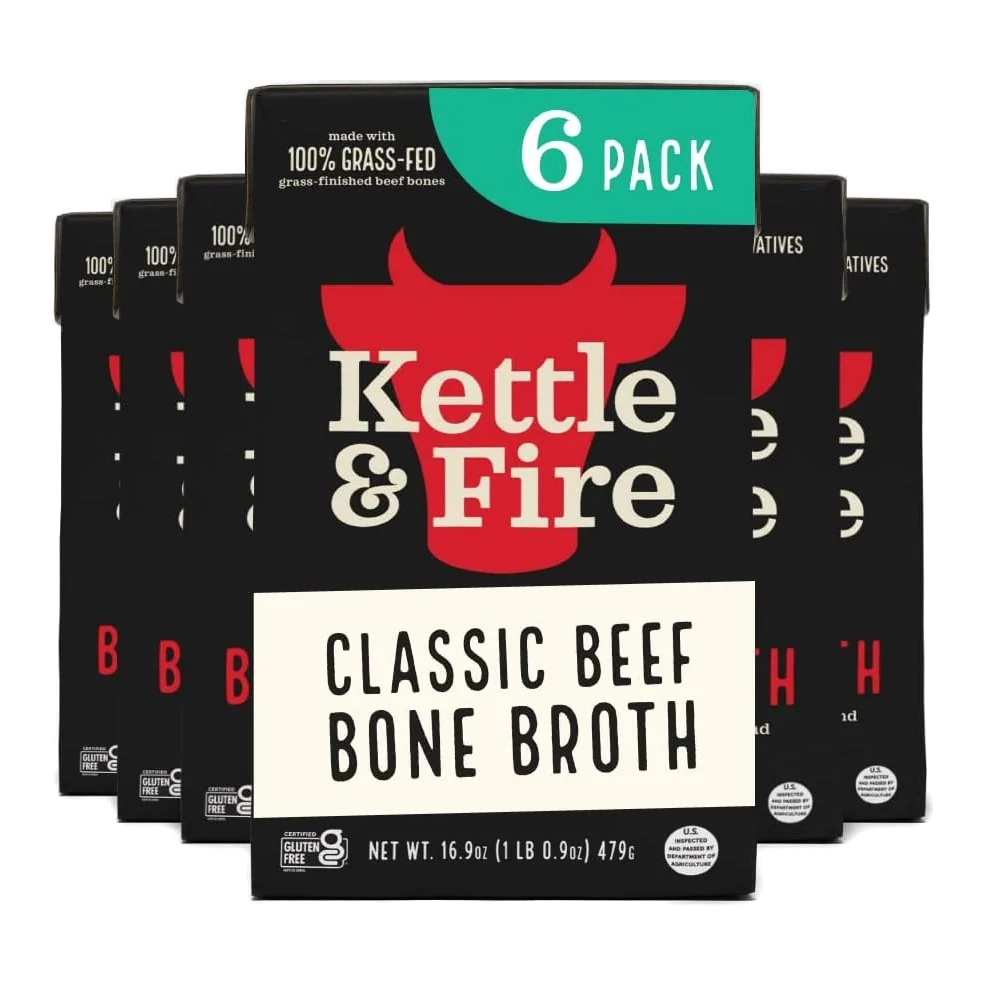
The carton I bought for years, and the one that got expensive enough to earn a paragraph about it. In honesty the Bare Bones sticks below have overtaken it for drinking, but if you want a carton this is still the one. Buy it on sale, and do not cook with it, that is what cheap broth is for.
Purchase signal: Repeat buy across a few years · treat tier now
Price: Around $35.53 for six, so about $5.92 a carton.
Bare Bones Instant Broth Sticks (Grass Fed Beef)

The sleeper pick that quietly became the volume buy: six orders in one two month stretch, beef and chicken both. The grass fed beef ones are the ones I would actually push at you. They are delicious, with enough spice and aromatics behind them that you drink them because you want one rather than because they are good for you, which is more than I can say for most of this category. Stock that lives in a drawer, dissolves on demand, travels, and never asks for freezer space.
Purchase signal: Heavy repeat buy · six orders in two months · the grass fed beef is the pick
Price: Around $48.50 for 32 sticks, so about $1.52 each.
Quick questions
Is bone broth actually good for you?
It is warm, salty, and has some protein, and that is as far as I will go in print. The gut healing and joint claims run far ahead of the evidence. I buy it because of how it fits the moments above, not because I think it is medicine.
Is it worth the money?
For drinking straight, the good cartons are worth something, whether they are worth current prices is between you and your budget, and Costco is sitting right there. For cooking, no, use the cheap stuff.
What about the sodium?
It is salty, that is part of why it works after a fast and when you are run down, and it is worth knowing if you watch sodium. The labels vary a lot between brands and flavors, so read them.
Homemade?
Better and cheaper per serving if you have the bones, the hours, and the freezer space. I do it occasionally and buy cartons the other fifty weeks, which tells you what you need to know about my relationship with simmering something for a day.
A mug of broth is food, not treatment. If you are fasting for extended periods or managing a condition that cares about sodium or protein, those are conversations for a professional, not a pantry post.
I earn a small commission if you purchase through these links, at no
additional cost to you. I only recommend products I’ve personally used or
researched thoroughly. This helps support the work behind Better Living
Every Day.