Best Seed Oil Free Snacks in 2026: Chips, Bars, Jerky, and More
Every product label-verified. No soybean oil. No canola. No “and/or” loopholes.
Go grab a bag of chips from your pantry. Any bag. Flip it over and look at the ingredients. I bet you ten bucks there’s canola oil, sunflower oil, or soybean oil in there. Maybe all three, hiding behind one of those shady “and/or” lists where the manufacturer just uses whatever industrial oil was cheapest that week.
That bag of chips? One of the biggest seed oil delivery systems in your whole kitchen. And you probably never thought twice about it.
I sure didn’t. I used to crush “healthy” veggie straws like they were going out of style. Then one day I actually bothered to flip the bag over. Canola oil. Sunflower oil. Something called “maltodextrin” that I’m still not sure how to pronounce. Those “veggie” straws had about as much real vegetable in them as a parking lot.
That was my wake-up call. I spent the last few months buying every seed oil free snack I could find and reading every single ingredient label. Some brands are doing great work. Others? Charging you $8 for a tiny bag of mediocre chips cooked in slightly less terrible oil. Big difference.
Here’s what actually made the cut.
Quick Picks: Best Seed Oil Free Snacks at a Glance
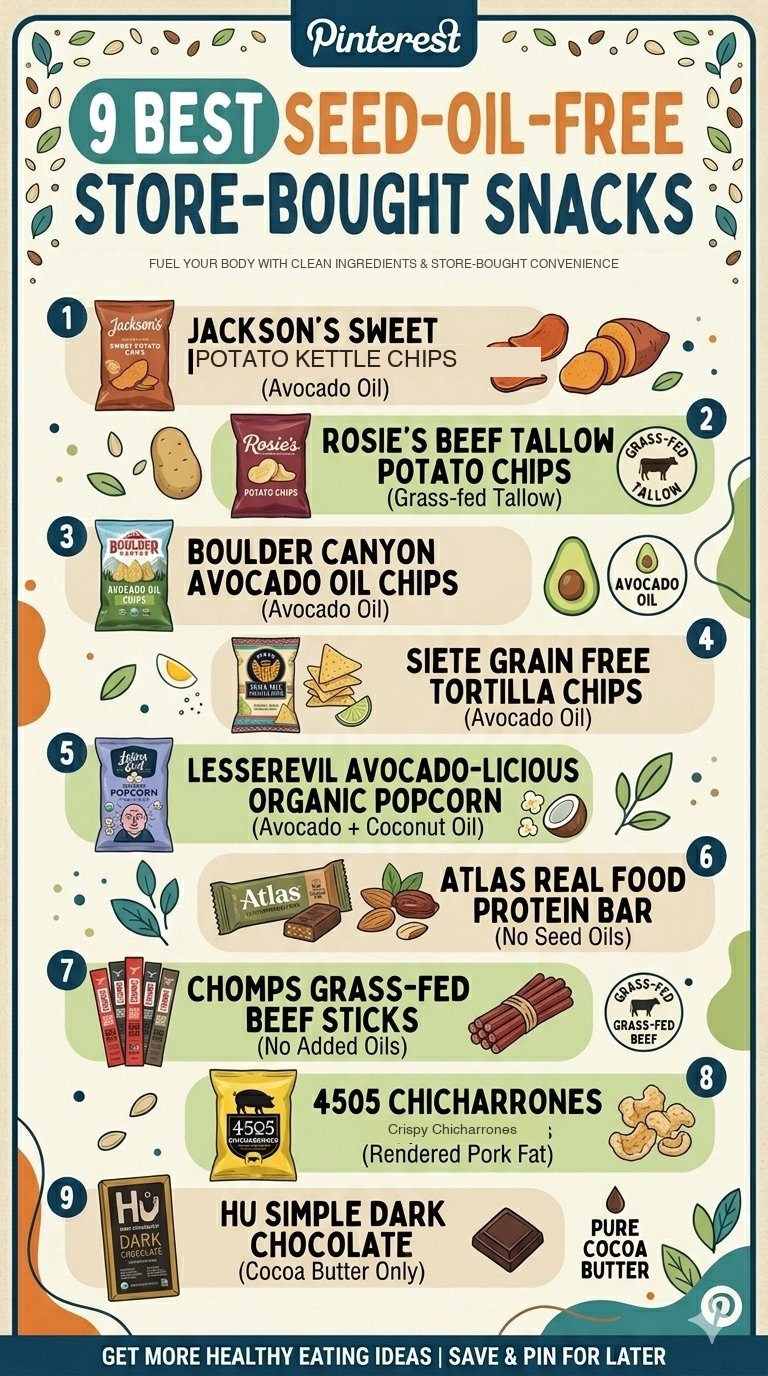
| Category | Our Pick | Cooked In |
|---|---|---|
| Potato Chips | Jackson’s Sweet Potato Chips | Avocado Oil |
| Tallow Chips | Rosie’s Beef Tallow Chips | Grass-fed Tallow |
| Tortilla Chips | Siete Grain Free Tortilla Chips | Avocado Oil |
| Popcorn | LesserEvil Avocado-licious | Avocado + Coconut Oil |
| Protein Bars | Atlas Real Food Protein Bar | No Seed Oils |
| Beef Sticks | Chomps Grass-Fed Beef Sticks | No Added Oils |
| Pork Rinds | 4505 Chicharrones | Rendered Pork Fat |
| Crackers | Hu Kitchen Crackers | No Seed Oils |
| Chocolate | Hu Simple Dark Chocolate | Cocoa Butter Only |
Potato Chips
If seed oils have a home base, it’s the potato chip aisle. Frito-Lay and friends fry everything in canola or soybean oil because it’s dirt cheap at industrial scale. But a few smaller companies have figured out how to make chips that taste legitimately good without any of that stuff.
Jackson’s Sweet Potato Kettle Chips
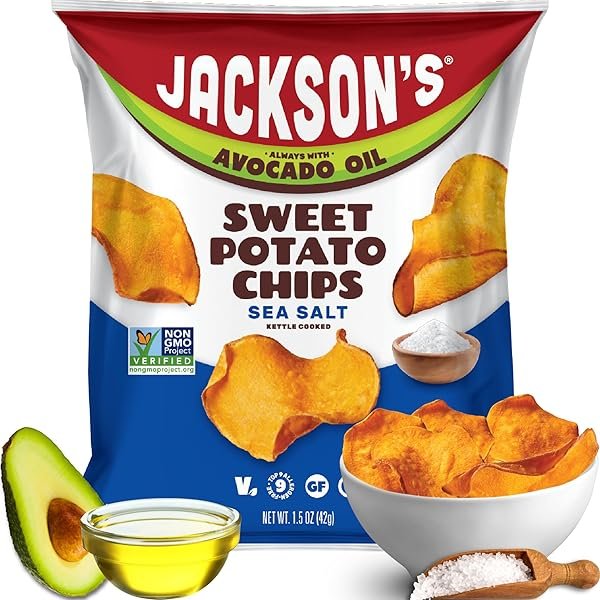
Cooked in: Avocado Oil
Jackson’s went all in on avocado oil back when most people still thought seed oils were fine. Sweet potatoes, avocado oil, sea salt. That’s the entire ingredient list. I was skeptical about the sweet potato base at first, but the natural sweetness works surprisingly well with sea salt, and the kettle cooking gives them real crunch without breaking a tooth.
You might have seen these on Shark Tank. The product was already good before that, but the TV bump helped get them into more stores. They do Sea Salt, BBQ, Ranch, and Habanero Nacho. I keep going back to the Sea Salt, but the Habanero has a sneaky amount of heat that grows on you.
Price is the one thing that stings. You’ll pay about double what a bag of Lay’s costs. Once you stop eating industrial oil though, it’s hard to go back, so the markup starts feeling less painful pretty quickly.
Pros: Clean 3-ingredient list, genuinely good sweet potato flavor, widely available on Amazon and in stores, multiple flavors.
Cons: Premium price point, sweet potato flavor isn’t for everyone, smaller bag sizes than mainstream brands.
Rosie’s Beef Tallow Potato Chips
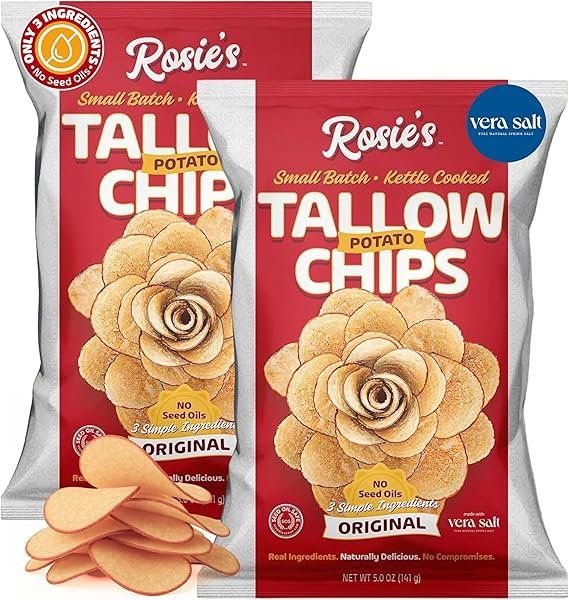
Cooked in: 100% Grass-fed Beef Tallow
Want to know what chips tasted like before the seed oil takeover? Rosie’s is probably the closest thing you’ll find. Non-GMO Idaho potatoes, 100% grass-fed and grass-finished beef tallow, Vera sea salt. The Vera salt is microplastic-free, and it’s something we regularly buy from Vera directly. Which is a detail I didn’t think I cared about until I read it on the bag and thought, “huh, I guess I do care about that.”
The tallow does something avocado oil just can’t do. There’s a richness to these that reminds people of old-school McDonald’s fries (back when McDonald’s actually used beef tallow). If you’re curious why tallow is such a game changer for frying, we break it all down in our tallow vs lard comparison. Thick cut, kettle cooked, serious crunch. I’ve been reordering these more than anything else on this list.
Fair warning though: they sell out constantly on Amazon. I’ve hit “add to cart” and gotten the out-of-stock message more times than I’d like to admit. Price per bag isn’t cheap either, but these are the chips I reach for first when they’re in my pantry.
Pros: Incredible tallow flavor, only 3 ingredients, grass-fed sourcing, thick satisfying crunch.
Cons: Frequently out of stock, premium pricing, only one flavor currently, not ideal for anyone avoiding beef.
Boulder Canyon Avocado Oil Chips
Cooked in: Avocado Oil
Boulder Canyon has been at this longer than most of the newer brands on this list. They sell chips cooked in avocado oil, olive oil, and coconut oil, so you can pick your fat based on what you actually like. The avocado oil Sea Salt is my go-to from their lineup.
I’d call these the “nobody will ask questions” chip. You bring a bag to a barbecue and people just eat them. No twenty-minute conversation about what seed oils are. No weird looks. They taste like normal good chips because, well, they are. Not as exciting as Rosie’s tallow flavor, not as different as Jackson’s sweet potato thing, but solid every single time. And you can actually find them at regular grocery stores, which matters more than people realize.
Pros: Widely available in grocery stores, multiple oil options, competitive pricing for the category, familiar chip taste.
Cons: Thinner cut than some competitors, avocado oil flavor is subtle, some flavors better than others.
Tortilla Chips
The tortilla chip situation used to be hopeless. Every “restaurant style” bag at the store? Corn oil, soybean oil, sunflower oil, pick your poison. That’s finally starting to change, mostly thanks to one brand that kind of owns this space now.
Siete Grain Free Tortilla Chips
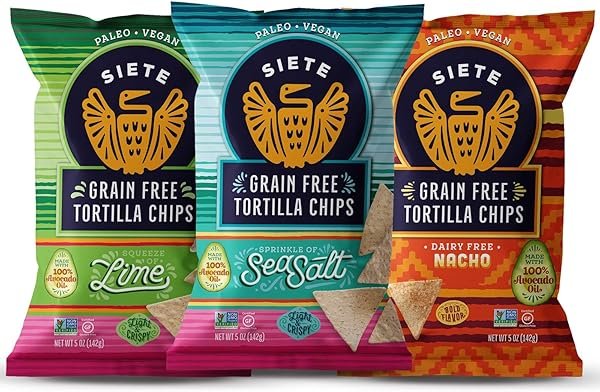
Cooked in: Avocado Oil
Siete has basically become the default answer when someone asks “what tortilla chips don’t have seed oils?” and honestly, they’ve earned it. The cassava flour base with avocado oil gives them a lighter crunch than traditional corn tortilla chips, almost more like a cracker-chip hybrid.
They’re grain free, which is a bonus if that matters to you, but more importantly they hold up to salsa and guacamole without breaking apart like wet cardboard. The Lime flavor is probably the standout. Sea Salt is the safe bet. Nacho is surprisingly good for a “healthy” chip.
You’ll find these in most Whole Foods, Target, and Sprouts locations. Amazon carries them in variety packs, which is the best way to figure out which flavor you like before committing to a bulk order.
Pros: Excellent flavor range, grain free, holds up well for dipping, widely available in stores and online.
Cons: Thinner and lighter than traditional tortilla chips (some people don’t love the texture), price is higher than Tostitos.
Popcorn
Microwave popcorn might be the sneakiest seed oil offender in your kitchen. That “butter flavor”? Usually just soybean oil with artificial butter flavoring sprayed on top. Real butter is nowhere near the bag. Luckily, a few brands actually pop with coconut oil or avocado oil instead.
LesserEvil Avocado-licious Organic Popcorn
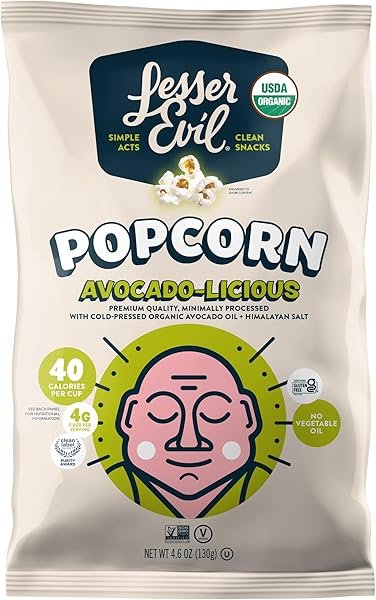
Cooked in: Avocado Oil + Coconut Oil
LesserEvil air-pops their kernels first, then coats them in organic avocado oil and coconut oil with Himalayan pink salt. I expected this to taste like diet food. You know, “healthy popcorn” that makes you sad to be eating popcorn. Nope. It’s actually fluffy, actually salty enough, and actually enjoyable to eat.
The brand says each handful has oil from over one and a half avocados. That sounds like a marketing stat and maybe it is, but I can tell you the popcorn tastes good regardless. Not oily, not dry and bland. Just solid popcorn. Organic popcorn, organic avocado oil, organic coconut oil, Himalayan pink salt. Four things.
If you like variety, they also make Himalayan Gold (coconut oil only) and a “No Cheese” Cheesiness that is, against all odds, not bad for vegan cheese popcorn. Everything they make is seed oil free.
Pros: Certified organic, clean short ingredient list, light and not greasy, multiple flavor options.
Cons: Bags are smaller than you’d expect for the price, can be hard to find outside of natural food stores.
Protein Bars
Protein bars drove me crazy during this research. The front of the wrapper screams “20g protein!” and the back quietly lists soybean oil, sunflower lecithin, and a bunch of emulsifiers you’d need a chemistry degree to identify. I went through way more labels than I expected before finding one I could actually recommend, because honestly lately I’m not into protein bars and would rather eat a hardboiled egg, tbf.
Atlas Real Food Protein Bar
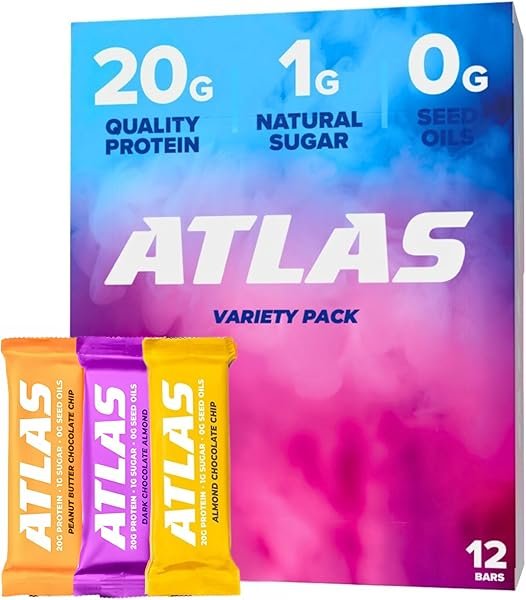
No Seed Oils
Here’s what I like about Atlas: the first ingredient is peanuts. Actual food. Most protein bars lead with some “proprietary protein blend” and then bury the seed oils three lines down. Atlas gives you 20 grams of protein from whey and milk protein isolate, and they sweeten with monk fruit instead of sucralose or the sugar alcohols that wreck your stomach.
No seed oils anywhere in the bar. No soy lecithin either (they use coconut oil as the emulsifier, which is a smart move). There’s also an independent study floating around showing these bars produce roughly 80% lower glucose response compared to bread. Worth noting if you care about blood sugar stuff.
I’ve tried the Peanut Butter Chocolate Chip, Dark Chocolate Almond, and Peanut Butter Raspberry. The PB Chocolate Chip is the obvious winner. Tastes like actual food instead of whatever that chalky protein taste is that most bars can’t seem to escape.
Pros: 20g protein with only 1g sugar, real food ingredients, no seed oils or artificial sweeteners, good flavor.
Cons: Contains dairy (whey), pricier than mainstream bars, texture is dense (not soft and chewy like Clif bars).
Beef Sticks and Jerky
Jerky sounds like it should be simple: dried meat with salt and spices. But most commercial brands add soybean oil, canola oil, or “vegetable oil” to the marinade for texture. Traditional jerky didn’t need this. Modern jerky does it for cost and shelf life.
Chomps Grass-Fed Beef Sticks
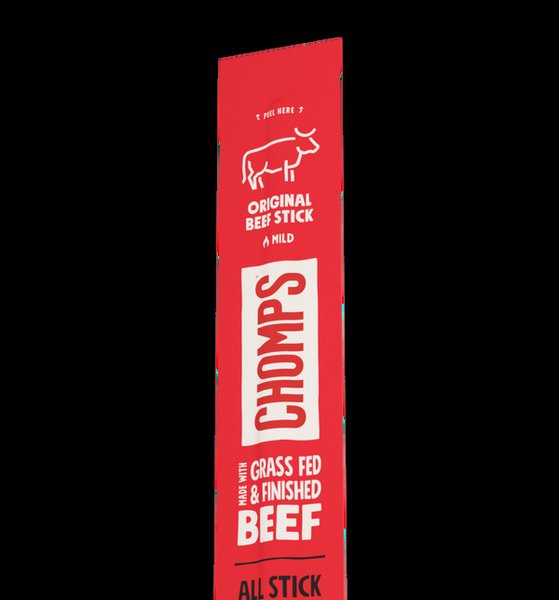
No Added Oils
These are delicious on-the-go snacks but very pricey at about a buck a pop. I went through about a dozen beef stick brands while writing this. Most had soybean oil or some form of sugar hiding in the marinade. Chomps didn’t. Their ingredient list reads like something your great-grandmother would recognize: grass-fed beef, water, sea salt, celery juice, black pepper, red pepper, garlic powder, coriander. Zero seed oils. Zero sugar.
10 grams of protein per stick, 100 calories. Got the Whole30 stamp, keto friendly, and they’re free of the top 9 allergens too. The Original has this black pepper bite that I really like. Tastes like beef, not like whatever processed mystery flavor most gas station jerky has going on.
I keep a box at my desk and another in my car. Original and Jalapeño are my go-to flavors, but they also do Sea Salt, Taco, and Smoky BBQ. When I need something fast with actual protein, Chomps is what I reach for every time. Most useful snack on this whole list, hands down.
Pros: Grass-fed sourcing, zero sugar, no seed oils, no top 9 allergens, tons of flavor options, great for travel.
Cons: More expensive per stick than gas station jerky (obviously), smaller than a traditional Slim Jim, beef-only protein source.
Pork Rinds
Pork rinds are having a moment, especially with the keto crowd. The good news is that pork rinds are naturally seed oil free when done right, because they’re fried in their own rendered fat. The bad news? Some brands still manage to sneak in canola or sunflower oil. Always check. If you like the hot pork rinds, also be mindful that most of the hot-flavored rinds include MSG, an endocrine disruptor. What I like to do is add some chili powder and other natural seasonings to the regular ones to make them spicy.
4505 Chicharrones
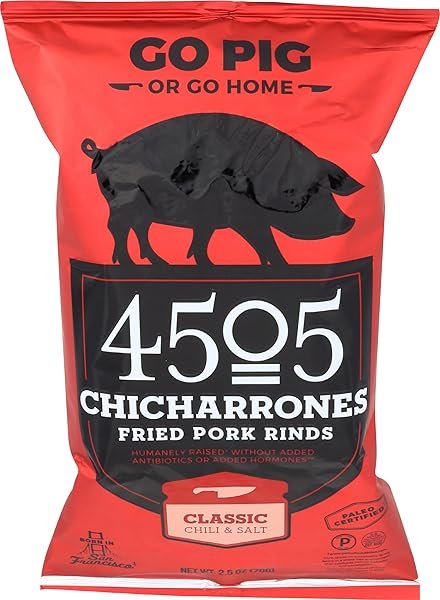
Cooked in: Rendered Pork Fat
4505 is a San Francisco brand, and they make my favorite pork rinds by a wide margin. I got hooked on the Classic Chili & Salt flavor first. They use three different types of chilies plus sea salt and a little coconut palm sugar to balance the heat. All fried in rendered pork fat the way pork rinds were always supposed to be made.
The sourcing is legit too. US family farms, no antibiotics, humanely raised pork. And the texture is what sets them apart for me. Big puffy pieces with real crunch. Not those sad little flat shards you get from gas station brands.
They also do Sea Salt, BBQ, and Jalapeño Cheddar. BBQ is good. Jalapeño Cheddar tastes great but has a longer ingredient list than the simpler flavors, so check the label if you’re trying to keep things really clean.
Pros: Fried in pork fat (not seed oil), humanely raised pork, great seasoning, widely available.
Cons: Not suitable for anyone avoiding pork, Jalapeño Cheddar flavor has a longer ingredient list, can get greasy at the bottom of the bag.
Crackers
Oh, crackers. I checked Ritz, Triscuit, Wheat Thins, even Club crackers. Every single one had soybean oil or canola oil. If you want a cracker without seed oils, you’re shopping from smaller brands that cook with olive oil, coconut oil, or actual butter. If you have any suggestions please hit us up!
Hu Kitchen Crackers
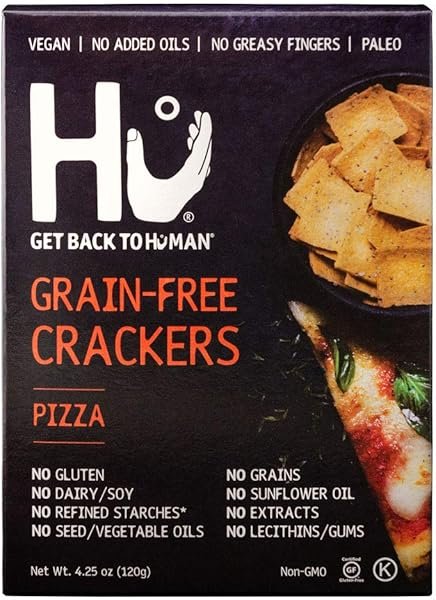
No Seed Oils
Hu takes a completely different approach to crackers. Grain free base made from cassava and coconut, no seed oils in the recipe, and none of those weird gums or refined starches you see in most “healthy” cracker brands.
The Pizza flavor caught me off guard. It actually has real flavor on its own, which sounds like a low bar but most crackers are basically just edible cardboard waiting for cheese. Sea Salt is the neutral option. Great with dips, works on a charcuterie board.
I’ll be upfront though: if you love Ritz, these will feel very different. The texture is grainier, denser, more substantial. I hated them the first time I tried them because I was expecting that light buttery thing. Second time around, once I stopped comparing, I realized they’re actually really good. Just different.
Pros: Grain free, no seed oils, no gums or refined ingredients, Pizza flavor is genuinely tasty.
Cons: Texture is different from traditional crackers, small box for the price, limited flavor selection.
Chocolate
Here’s one most people don’t think about: chocolate. Go look at your favorite chocolate bar’s ingredient list. Odds are high you’ll see soy lecithin (comes from soybeans, which is a seed oil crop). Some bars also throw in vegetable oil or palm oil to cut costs. What you actually want is chocolate made with cocoa butter and nothing else for the fat.
Hu Simple Dark Chocolate
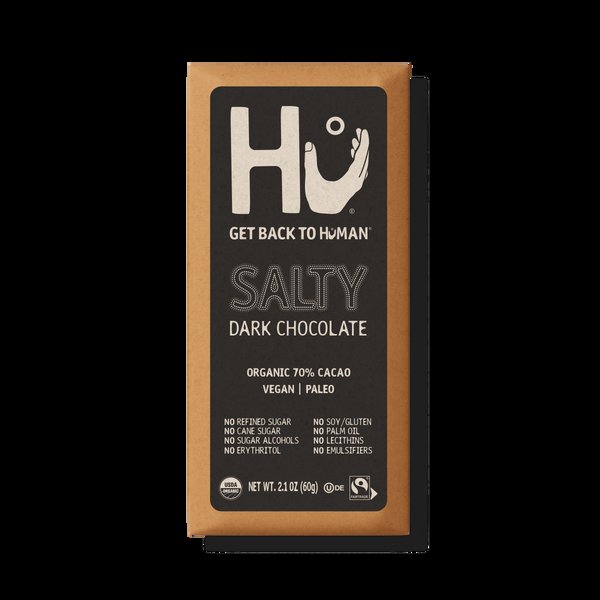
Cocoa Butter Only
Hu is the name that keeps coming up whenever anyone talks about clean chocolate, and for good reason. Their Simple Dark bar is about as stripped down as chocolate gets: organic fair trade cacao, organic coconut sugar, organic cocoa butter. That’s the whole bar. No soy lecithin, which honestly shows up in like 95% of the chocolate bars at the grocery store. No dairy. Nothing to emulsify or bind or whatever else those mystery ingredients do.
Fair warning, this is real dark chocolate. It’s bitter. But there’s a clean snap when you break off a square, and something about the coconut sugar gives it this caramel undertone. Regular cane sugar doesn’t do that. It’s one of those things you don’t notice until someone points it out, and then you can’t un-taste it.
Hu makes other bars too: Almond Crunch, Hazelnut Butter, Cashew Butter. All clean. I grab the Almond Crunch when I want crunch, and the Simple bar is my everyday “I want chocolate right now” option.
Pros: Only 3 ingredients, no soy lecithin, organic and fair trade, rich flavor, multiple varieties available.
Cons: Premium price for a chocolate bar, coconut sugar is still sugar, dark chocolate intensity not for everyone.
The Buyer’s Guide: What to Look for (and What to Avoid)
Red Flags on Snack Labels
Any time you see these on a snack label, put it back on the shelf:
- “Vegetable oil” without specifying which one. This almost always means soybean or canola.
- “And/or” oil lists like “contains one or more of: sunflower oil, canola oil, soybean oil.” They use whatever is cheapest that week.
- “Made with olive oil” on the front, soybean oil on the back. Classic bait and switch.
- Sunflower lecithin or soy lecithin in chocolate and bars. Not the worst offender, but worth knowing about.
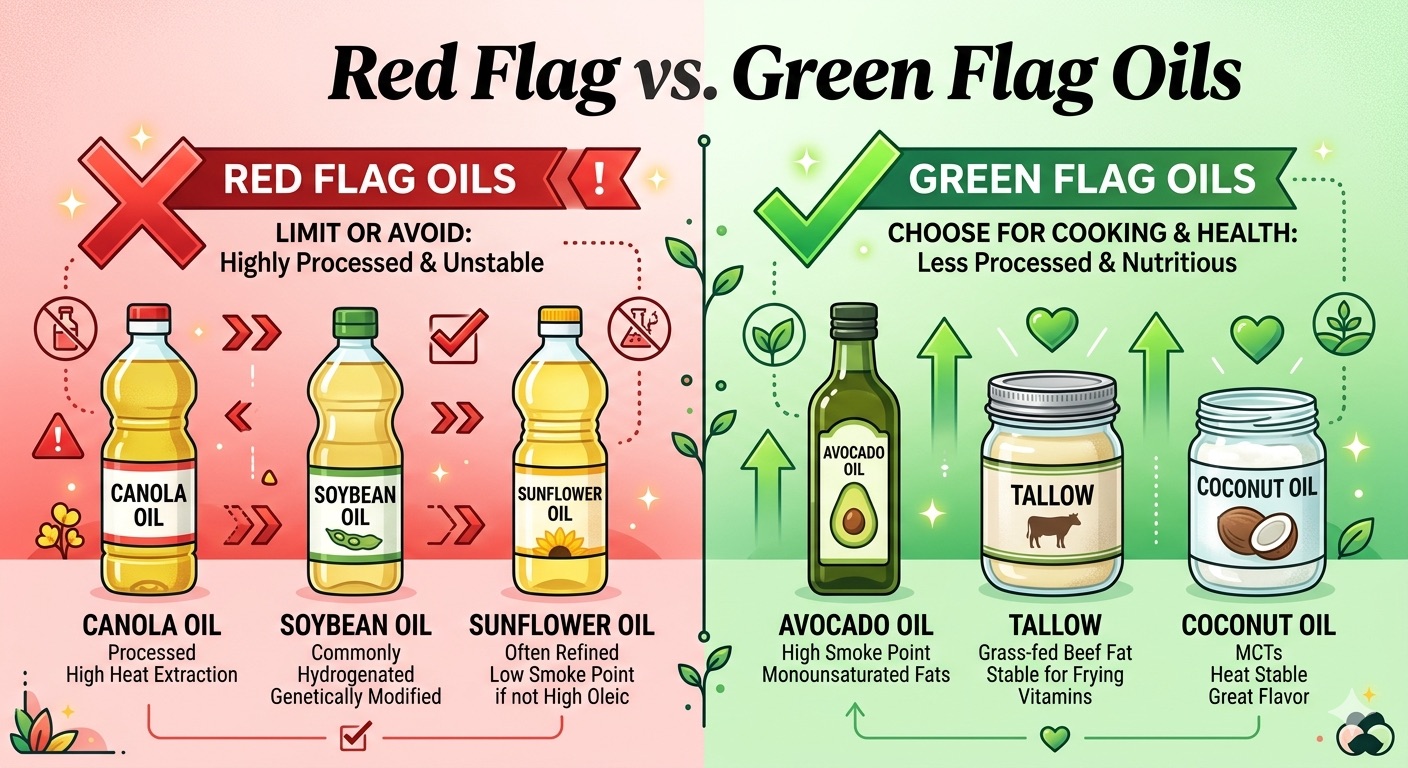
The oils to avoid vs. the ones worth cooking with.
Good Oils to Look For
Snacks cooked in these fats are what you want:
- Avocado oil: High smoke point, neutral flavor, works great for chips and frying.
- Coconut oil: Good for popcorn and baked snacks. Adds a slight sweetness.
- Beef tallow: Traditional frying fat. Rich flavor. Making a huge comeback in the chip space.
- Olive oil: Best for crackers and baked snacks. Lower smoke point limits frying use.
- Ghee/Butter: Shows up in some specialty crackers and popcorn. Clean and traditional.
- Rendered pork fat (lard): The original pork rind cooking fat. Simple and effective.
For a deeper dive on which oils are seed oils and which aren’t, check out our full explainer: What Are Seed Oils? A No-Nonsense Explainer.
The Price Reality
Let me be real: these snacks cost more. Sometimes a lot more. Rosie’s tallow chips run three to four times the price of a bag of Lay’s. A Chomps box costs way more than grabbing a handful of Slim Jims at a gas station. And Hu chocolate is definitely not trying to compete with Hershey’s at the register.
What I’ve noticed though is that I snack less now, and what I do eat is significantly better. I used to plow through an entire family-size bag of tortilla chips in one sitting. A bag of Siete takes me three. When you do the per-serving math, the gap shrinks a lot from what the sticker price would have you believe.
Tight budget? Start with homemade stovetop popcorn and a box of Chomps. Best bang for your buck in this whole category.
My Personal Snack Rotation
If you’re curious what my actual pantry looks like (for the times we can’t make from scratch): Rosie’s tallow chips (salty cravings), Chomps in the desk drawer and car (protein on the go), stovetop popcorn with coconut oil (movie nights), Hu dark chocolate (after dinner), and Siete when people come over. That rotation handles about 90% of my snacking. Not a single drop of seed oil in any of it.
Frequently Asked Questions
Look, a chip is still a chip. Swapping the oil doesn’t turn it into a health food. But avocado oil, coconut oil, and tallow are way less processed than canola or soybean oil, and they don’t dump a ton of omega-6 into your diet the way seed oils do. Most Americans already eat too much omega-6. So yeah, the oil switch matters, even if the snack itself isn’t exactly a superfood. More on this in our seed oils explainer.
Avocado oil costs somewhere between five and ten times more than soybean or canola oil. Tallow from grass-fed cows? Even more than that. So when a small chip company swaps out canola for avocado oil, their costs jump hard, and you feel it at checkout. These brands don’t have Frito-Lay’s production scale either, so they can’t spread those costs as thin. Good news is the price gap has been shrinking as more brands jump in and demand keeps growing.
More and more, yeah. I see Siete at Target and Walmart now, which was not the case even a year ago. Jackson’s is in Whole Foods and Sprouts. Boulder Canyon has been in regular grocery stores for a while. Your easiest bet is still Whole Foods or Natural Grocers, but mainstream stores are catching up fast. For brands like Rosie’s that sell out quickly, Amazon is still your most reliable option.
Not automatically. “Baked” just means the chip wasn’t deep fried. Many baked chips still contain seed oils in the recipe. Baked Lay’s, for example, contains sunflower oil and/or canola oil. Always check the ingredient list regardless of whether the bag says “fried” or “baked.”
Plain, raw, or dry-roasted nuts and seeds are naturally seed oil free and make great snacks. The issue comes with flavored or honey-roasted varieties, which often add soybean oil or canola oil for texture and flavor adhesion. When buying nuts, look for “dry roasted” or “roasted in avocado oil/coconut oil” on the label. Or just buy them raw and season at home.
Chomps mini sticks (Chomplings) are great for lunchboxes. Siete chips are kid-approved in most households I know. LesserEvil popcorn is another easy win. Hu chocolate works as a treat that you don’t have to feel weird about. The key is finding flavors your kids actually like, because the cleanest snack in the world doesn’t help if it sits in the pantry untouched.
Already cleaned out your condiment shelf? If not, start there. It’s the easiest win in your kitchen. Here’s our full guide: Best Seed Oil Free Condiments in 2026.
And if you want to see the full list of foods that secretly contain seed oils (the ones that surprised me the most aren’t even snacks), check out Foods With Seed Oils to Avoid.
If you’re ready to overhaul your cooking fats too, we put together a full breakdown: Best Seed Oil Free Cooking Oils and Fats. Curious about tallow or lard specifically? That gets its own deep dive: Tallow vs Lard. And if you want to understand which oils actually protect your heart (spoiler: it’s not the ones the grocery store puts on sale), check out Heart Healthy Cooking Oil.
Related reading: Best Seed Oil Free Condiments · Foods With Seed Oils to Avoid · What Are Seed Oils? · Best Seed Oil Free Cooking Oils and Fats · Tallow vs Lard · Heart Healthy Cooking Oil