In This Article
- The real problem with conventional cookware (PFAS, PTFE, cheap coatings)
- Material breakdown: cast iron, stainless steel, carbon steel, ceramic
- Specific product picks with affiliate links
- What I actually use in my own kitchen
- FAQ: answering your toughest cookware questions
The Problem Nobody Wants to Talk About
You’ve cleaned up your diet. No more seed oils (or at least that’s the goal). You’re reading labels. Checking ingredient lists. Actually paying attention to what lands in your body. Good. But there’s something most people completely miss: what you cook your food in matters.
Like, it matters a lot.
Non-stick pans sound perfect. Throw something on, it doesn’t stick, you’re done eating in twenty minutes and cleanup takes maybe three minutes. But that slippery coating? It’s basically PFOA or other PFAS chemicals. The same chemicals showing up in water supplies across America. And when you heat that thing, especially at high temps or if you scratch it (which you will), those chemicals don’t stay in the pan. They migrate. Into your food. Into you.
Sound paranoid? Maybe. But the EPA’s getting serious about this stuff now.
PFAS gets called “forever chemicals” because your body doesn’t break them down. They don’t leave. Scientists have linked them to immune problems, thyroid dysfunction, weird cholesterol numbers, possibly cancer. And honestly, we’re probably not even at the full list yet. The research is still catching up to how much we’ve been exposed.
And if you needed one more reason to care: researchers have found both PFAS and microplastics accumulating in human testicular tissue.[1][2] Yup. The balls. These chemicals don’t just float around in your bloodstream. They settle into reproductive organs. A 2024 study out of the University of New Mexico found microplastics in every single human testis sample they tested, averaging 329 micrograms per gram of tissue. That’s nearly three times higher than what they found in dogs. Think about that for a second. PFAS compounds like PFOA and PFOS have also been shown to accumulate in testicular tissue and are associated with reduced sperm quality and count. Your non-stick pan isn’t just a convenience tradeoff. It’s potentially a reproductive health issue.
Then there’s cheap aluminum cookware. Bare aluminum reacts with basically everything. So manufacturers coat it. But those coatings are thin garbage that wear through if you look at them wrong. Once they’re gone, you’re cooking in aluminum. Is aluminum toxic? That’s still up for debate, but we know it crosses the blood-brain barrier. A meta-analysis of eight studies found that people chronically exposed to aluminum were 71% more likely to develop Alzheimer’s disease.[3] Aluminum has also been linked to dementia risk more broadly. The science isn’t settled, but the direction it’s pointing isn’t great. I’m not comfortable betting my long-term brain health on “probably fine.”
The Materials That Actually Last
Cast Iron: The Old Reliable
Cast iron is uncomplicated. Iron. Carbon. That’s it. You season it, you create a natural non-stick surface, and it gets better the more you use it. Unlike synthetic coatings (which eventually flake off into your eggs), this seasoning actually improves with time.
But it’s not magic. Cast iron has real drawbacks. It heats unevenly, corners get hot faster than the center. It weighs a ton. You can’t be lazy with maintenance or it’ll rust. And it puts iron into acidic food, especially if you’re simmering tomato sauce for hours. Whether that’s a problem depends entirely on your bloodwork. If you’re anemic or low on iron, some extra dietary iron from the pan is actually a bonus. But if your iron levels are already high (like mine), you want to be careful. I use cast iron less frequently for exactly this reason and stick to stainless steel most of the time. Get your iron checked and make the call from there.
Use it for: searing meat (it’s incredible for this), frying, baking. Anything that doesn’t involve acidic stuff sitting in the pan.
Real maintenance talk: Wipe it down while it’s warm. Every few months, scrub with coarse salt and a tiny bit of oil. Once or twice a year, throw it in the oven at 500 degrees for an hour to refresh the seasoning. Honestly? It’s easier than people make it sound. Way easier.
One more thing: if you don’t own a cast iron Dutch oven, you’re missing out. A good Dutch oven is unbeatable for low and slow cooking. Stews, chili, soups, braises, all of it. The heavy lid traps moisture and the thick walls hold heat like nothing else. And they’re incredible for camping. Throw one over a wood fire, set it on a gas burner, bury it in coals. Doesn’t matter. Cast iron doesn’t care what heat source you give it. A Dutch oven might be the single most versatile piece of cookware you can own, and it’ll outlive your grandkids.
Stainless Steel: The Workhorse
Stainless steel doesn’t have a natural non-stick surface. That means there’s actually technique involved. Preheat the pan. Use enough fat. Let the food sit and develop a crust before you touch it. But once you learn this (and it takes like a week), you’ve got your everyday pan.
Why bother? It’s inert. Won’t react with acidic foods. Heats evenly if you get multi-ply construction. Lasts forever. You can scrub the hell out of it, throw it in the dishwasher if you’re lazy, beat it up and it doesn’t care. The learning curve is real, but honestly steep it ain’t.
One thing: get a 5-ply pan over a 3-ply. The difference in heat distribution is noticeable. A 5-ply has alternating layers of stainless steel and aluminum that spread heat more evenly across the entire cooking surface. With a 3-ply, you’ll still get hot spots. A 5-ply is where it’s at if you’re serious about cooking on stainless.
Best for basically everything: sauces, braising, pasta water, sauteing vegetables. One good stainless pan can probably handle 80 percent of your cooking.
Pro tip that changes everything: Cook at medium to medium-high heat. Let the pan preheat properly. Add your fat, let it shimmer. Then add your food and leave it alone. Once you learn this technique, not even eggs will stick to stainless steel. Seriously. I’d recommend watching steelpanguy on YouTube/TikTok for some killer techniques on how to use stainless properly, plus some great Italian recipes from his nona. That channel changed how I think about stainless steel cooking.
Carbon Steel: The Middle Child That Actually Works
Carbon steel is basically cast iron’s cooler cousin. Thinner. Lighter. Heats faster and more evenly. You season it like cast iron but it develops a non-stick surface in weeks instead of months. And you can actually use it on delicate stuff once you get going.
The tradeoff: more maintenance than stainless, less than cast iron. Can’t let water sit on it. Acidic foods mess with the seasoning. But if you develop a relationship with it (and I mean that), carbon steel is genuinely special. Heat transfer feels responsive and direct. Cooking on it feels alive.
Use it for: French omelets, fish, delicate proteins. People who want cast iron’s efficiency but faster seasoning and less fussing.
Ceramic Coated Cookware: The Honest Assessment
Ceramic sounds natural and healthy. But. Most “ceramic” cookware is aluminum with ceramic coating. Coatings wear off. That’s not a maybe, it’s when. Some brands are better than others but you’re always fighting against degradation.
Want ceramic? Buy from a company with an actual warranty. Understand you’re replacing it every five to ten years. It’s fine. Not ideal. But fine.
The Products I Actually Recommend (And Use)
Lodge Cast Iron Skillet 10.25″ (12 inch)
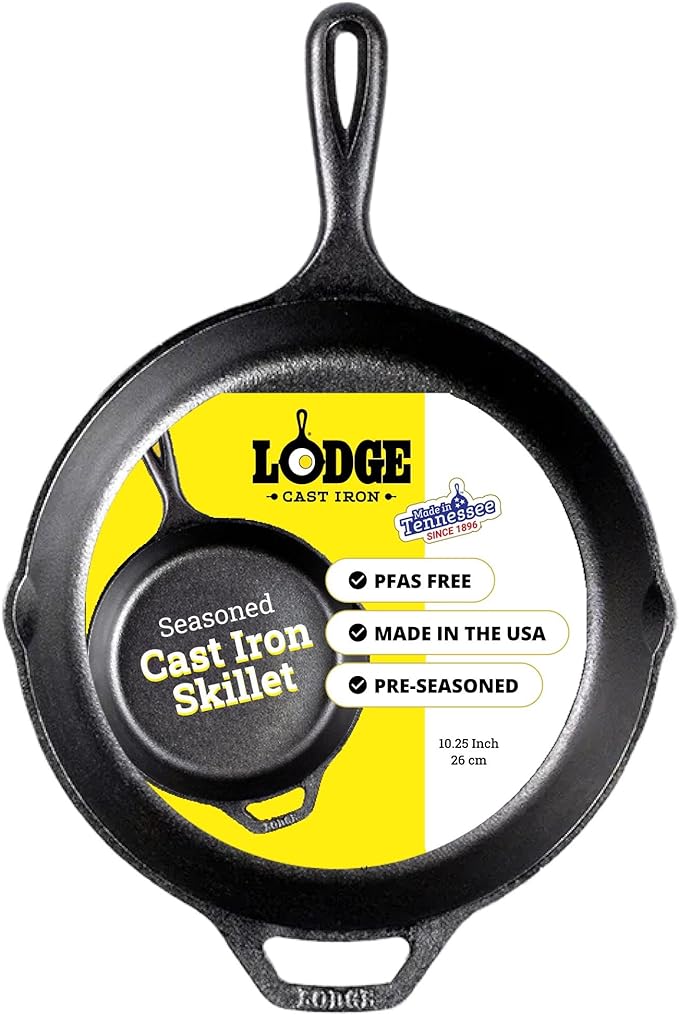 Lodge is basically the only major company still making cast iron in America. Pre-seasoned, ready to use immediately. No weird seasoning ritual before you can cook anything. The 10-inch gets used in my kitchen almost daily. Searing steaks, frying chicken, everything.
Price: $15-20 (honestly ridiculous value). Why: Made properly, affordable, outlives everyone who buys it.
All-Clad D5 Stainless Steel 10-Inch Fry Pan (5-Ply)
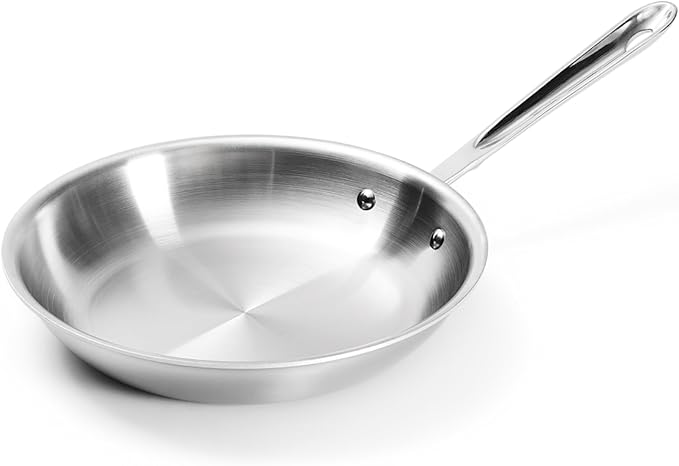 Yeah it’s pricey. But All-Clad exists for a reason. This is their 5-ply line, alternating layers of stainless and aluminum for heat distribution that’s genuinely even across the entire surface. No hot spots. Handle stays cool. If you’re buying one stainless pan and actually committing to learning technique, this is it. Skip the 3-ply versions. The D5 is the pan you’ll use for the next fifteen years.
Price: $150-200. Why: 5-ply construction is a real upgrade over 3-ply. Build quality is genuinely exceptional, no marketing bullshit.
de Buyer Mineral B Carbon Steel Frying Pan 12.5 inches
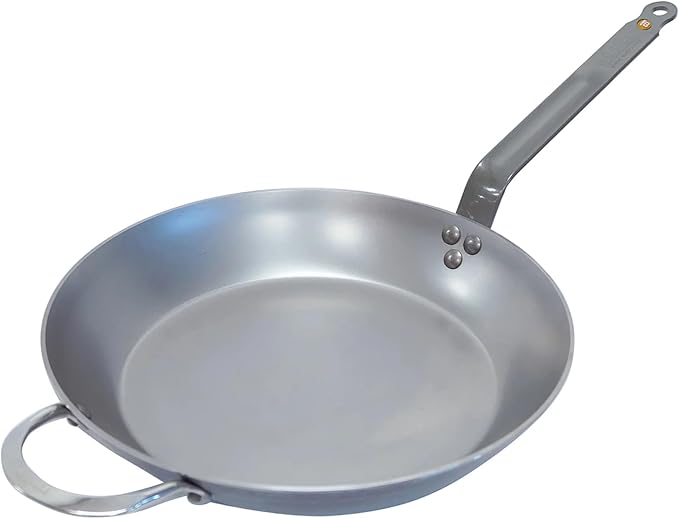 de Buyer makes industrial carbon steel that’s also beautiful. This 12.5-inch skillet seasons fast, handles heat like a boss, can go from fish to vegetables without complaining. Weight and heat distribution are both solid.
Price: ~$100. Why: Seasons faster than cast iron, better heat response than ceramic, lighter than both. Carbon steel is its own category and this is the best entry point.
Caraway Home Cookware Set (ceramic, if you’re going that route)
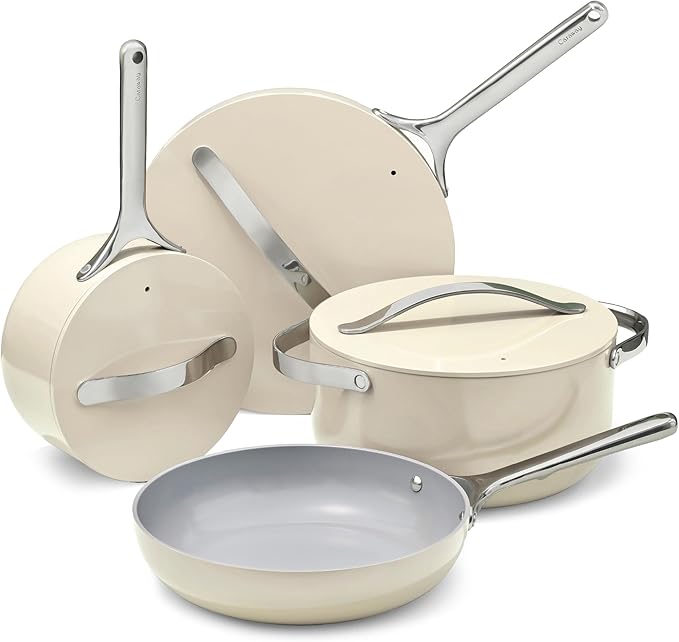 If ceramic is your thing, Caraway’s the honest version. Transparent about what’s in the coating. They’ve got a replacement program when coatings inevitably wear. Pans heat reasonably well for ceramic. It’s not perfect but at least they’re not bullshitting you.
Price: $445 for the 12-piece set. Not cheap, but you’re getting pots, pans, lids, and storage. Why: Most transparent ceramic option out there. You know what you’re getting into.
Budget-Friendly 5-Ply Stainless Steel Alternatives
Look, I love the All-Clad D5. But not everyone wants to drop $180 on a single pan, and I get that. Good news: there are a couple of 5-ply options that cost significantly less and still perform. No coatings, no nonstick garbage. Just steel and aluminum doing what they’re supposed to do.
Misen 5-Ply Stainless Steel 10″ Frying Pan
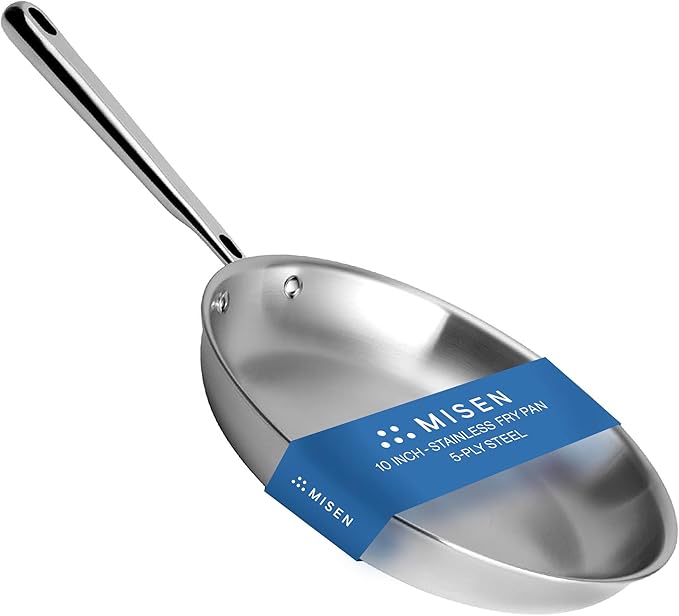 I kept seeing this one pop up in forums and cookware rabbit holes, so I dug in. Three layers of steel, two layers of aluminum in between. The thing that surprised me? Oven safe to 800 degrees. That’s broiler territory. Most pans tap out way before that. Handle stays cool on the stovetop too, which sounds basic but a lot of “premium” brands screw that up. At $100, it’s basically half what you’d pay for All-Clad D5 and the reviews from people who own both say the gap isn’t as big as the price difference suggests.
Price: $100. Genuinely hard to find a better 5-ply value right now.
Made In Cookware 10″ 5-Ply Stainless Steel Frying Pan
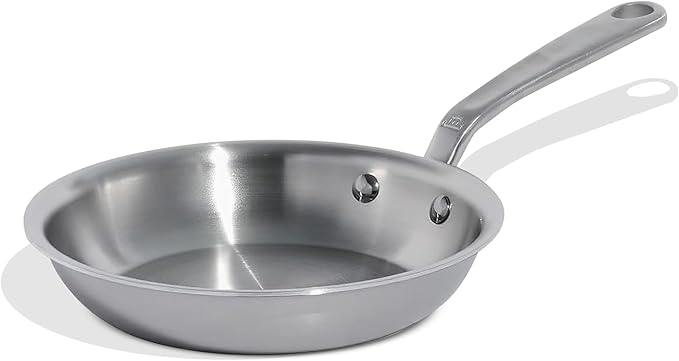 Made In started as a direct-to-consumer play out of Austin, Texas, and they’ve gotten weirdly popular with actual restaurant kitchens. Five ply construction, stays cool handle, and you can tell when you pick it up that someone gave a damn about how it was built. I like that they cut out the middleman markup because honestly, cookware retail margins are absurd. At $129, you’re getting something restaurants beat the hell out of daily and it holds up. If “made in the USA” matters to you and you don’t want to pay All-Clad prices, this is your pan.
Price: $129. American-made quality without the prestige tax.
What I Actually Use in My Kitchen Every Day
I’ll be straight with you. I always reach for the stainless steel now that I know how to cook with it. My All-Clad D5 handles pretty much everything I throw at it. Sauces, eggs, searing, vegetables, pasta. Once you learn the technique (medium heat, let it preheat, don’t touch the food too early), stainless steel is genuinely the only pan you need.
I still have a 10-inch Lodge that I pull out occasionally for certain things, like when I want a really aggressive sear on a steak. But since my iron levels run high, I don’t use it as often as I used to. The stainless handles almost everything better anyway. I also have a carbon steel I grab when I want something lighter or need a different heat feel.
Non-stick? I don’t own any. Never have. Once you learn to cook on stainless or cast iron, non-stick feels restrictive. Plus I’d rather not breathe PTFE particles while I’m making dinner.
The Questions People Always Ask
Is seasoning cast iron really that hard?
No. Heat the pan. Wipe it with barely any oil. Wipe the excess off (and I mean wipe it). Use it again tomorrow. That’s the whole thing. You’re not building enamel. You’re preventing rust. Honestly people overthink this to death. For a deeper seasoning reset, thin coat of any high smoke point oil, upside down in the oven at 500 degrees for an hour. That’s it.
Can I use metal utensils on cast iron?
Yes. The seasoning isn’t fragile. It’s a cooking surface, not a museum display. Metal won’t hurt it. Use wood or silicone if you want to be precious about it, but you’re not hurting anything.
Why does my stainless steel always stick?
You’re moving the food too soon. Preheat fully. Heat the fat until it shimmers. Let the food sit two to three minutes minimum before you touch it. That’s literally the secret. Everything else is just details.
Is enameled cast iron (like Le Creuset) actually worth the money?
For Dutch ovens and braising? Yes. For skillets? Hard no. You lose the seasoning benefits and you’re paying triple. Just get regular cast iron.
What about induction cooktops?
Good news: cast iron, stainless, and carbon steel all work. Non-stick and ceramic usually don’t. This is another reason to skip non-stick. You’re limiting your future cooking options for a short-term convenience thing.
Should I stress about iron leeching into acidic food?
Depends on your bloodwork. If you’re anemic, some extra dietary iron from the pan could actually help. If your iron is already high, simmering acidic foods in cast iron for long periods isn’t ideal. Quick sautes and searing release minimal amounts either way. Get your levels tested and decide from there. I run high, so I keep most of my acidic cooking on stainless steel.
The Bigger Picture
Switching cookware won’t fix a diet full of seed oils. But if you’ve already cleaned up your cooking oils and you care about real food, then cookware is the next logical step. You’re already watching what goes in the pan. Might as well watch what the pan’s made of too.
And honestly? Cast iron and stainless steel last forever. You’re buying once, not replacing every few years. That’s cheaper long-term than the non-stick cycle of buying new pans every five years because the coating finally gave up.
Start simple. One good stainless steel pan. One cast iron skillet. Learn to use them right. In a month you’ll realize non-stick was never worth it. In five years, when everyone else has replaced their non-stick twice, you’ll still be using the exact pans you bought today.
You’ve got the cookware down. Make sure your oils are equally solid. Check out my guide on the best seed-oil-free cooking fats so you’re not pouring garbage into your new non-toxic pans. And while you’re cleaning up the kitchen, take a hard look at what’s coming out of your faucet. Your cookware and oils won’t matter much if you’re cooking with contaminated tap water.
References
[1] Yu X, et al. “Microplastic presence in dog and human testis and its potential association with sperm count and weights of testis and epididymis.” Toxicological Sciences, 200(2):235-240, 2024. PubMed: 38745431
[2] Louis GM, et al. “Perfluoroalkyl Chemicals and Male Reproductive Health: Do PFOA and PFOS Increase Risk for Male Infertility?” Int J Environ Res Public Health, 18(7):3794, 2021. PubMed: 33916482
[3] Wang Z, et al. “Chronic exposure to aluminum and risk of Alzheimer’s disease: A meta-analysis.” Neuroscience Letters, 610:200-206, 2016. PubMed: 26592479